Why Silica Sol Investment Casting is Superior for Stainless Steel?
As a new step forward in stainless steel casting technology, silica sol investment casting provides unmatched precision and surface quality compared to traditional ways of production. This complex method uses colloidal silica as a glue to make very exact ceramic shells. This makes it possible to make complicated stainless steel parts that are very accurate in size and have great mechanical properties. This method gets rid of common casting flaws while cutting down on post-processing needs by a large amount. This makes it the best choice for high-performance uses in the medical, military, and industry sectors.
Understanding Stainless Steel Casting and the Role of Silica Sol Investment Casting
Casting in stainless steel is an important part of modern industrial manufacturing because it makes corrosion-resistant parts that are needed for important tasks. It can be hard to get consistent quality with traditional casting methods, especially when working with the complicated shapes and close tolerances needed in today's markets.
The Fundamentals of Precision Metal Casting
The progress made in casting technology has greatly enhanced the process of making stainless steel parts. When sand casting is done the old way, the results are often uneven surfaces and different sizes that need a lot of work to fix. These limits are especially annoying when making complicated parts for medical devices or aerospace uses that need to be precise.
Silica sol stainless steel casting solves these problems with an improved method that makes clay molds that are very smooth. The silica sol binder method makes shells that are better at withstanding heat, which makes the casting process more uniform. This controlled climate makes the grains in the casting the same all over, which improves both the mechanical features and the quality of the surface finish.
Advanced Process Technology for Modern Manufacturing
The first step in the silica sol method is to make a wax pattern that exactly matches the end part's shape. Around this design, many ceramic layers containing colloidal silica build up, making a strong shell that can withstand high-temperature pours of stainless steel. The controlled dewaxing and burning process makes a model that is stable in size and has a great finish on the outside.
This technology works especially well with types of stainless steel that are hard to make, like 316L, 17-4 PH, and duplex stainless steels. Because silica sol casting is so precise, it often gets rid of the need for any secondary processes. This cuts down on manufacturing costs and wait times while also making the quality of the final product better.
Comparative Analysis: Silica Sol Investment Casting vs Traditional Casting Methods
To understand the benefits of silica sol investment casting, you need to look at how it compares to other well-known ways of making things. This comparison shows big improvements in quality, efficiency, and the ability to change how things are made.
Surface Finish and Dimensional Precision Advantages
Here are the main reasons why silica sol investment casting is better than other methods:
• Better finish on the outside: the surface roughness is Ra 1.6–3.2 μm right after casting, compared to Ra 6.3–12.5 μm for sand casting.
• Precision in measurements: keeps limits of ±0.13mm (±0.005") on most parts, compared to ±1.6mm (±0.063") for sand casting.
• Capable of complex geometry: makes internal tunnels and thin walls that are impossible to cast any other way.
• Less machining is needed: up to 80% of the additional tasks that are usually needed with other methods are not needed with this method.
These benefits directly lead to lower costs and better performance for buying teams that are in charge of finding complicated parts. The higher level of accuracy lowers the risk of quality problems and speeds up the supply chain by making factory results more reliable.
Production Economics and Scalability Benefits
Manufacturing costs are very important when choosing a supplier. There are strong reasons why silica sol investment casting is better than forging and grinding, especially for medium to large production runs. The process gets rid of the need for expensive tools that are needed for forging and makes better use of materials than cutting from solid billets.
Unlike welding units, silica sol casting creates single-piece parts whose material qualities are the same all the way through. This method gets rid of the heat-affected zones and possible failure places that are common in welded designs. This makes the structure more reliable and gives it a longer service life in tough situations.
Why Silica Sol Investment Casting is the Optimal Choice for Stainless Steel Parts?
Special features of stainless steel make it more difficult to work with in some ways, but silica sol investment casting is better at solving these problems than other ways of making things. These perks have a direct effect on how well the product works and how well the purchase goes.
Enhanced Material Properties and Performance
When compared to other ways of making things, silica sol casting makes stainless steel parts with better metallic properties. The controlled solidification climate keeps the grains from separating and helps them form in a regular way. This makes it more resistant to corrosion, gives it better mechanical qualities, and makes it work better under stress.
The process is great at keeping the good qualities of precipitation-hardening stainless steels like 17-4 PH and 15-5 PH. To get the best strength and corrosion protection from these materials, they need careful temperature control during casting. Because silica sol shells provide a stable thermal environment, heat treatment responses are constant, and mechanical characteristics can be predicted.
Design Flexibility and Engineering Optimization
To improve performance while lowering weight and cost, modern product development calls for component shapes that are getting more complicated. Silica sol investment casting lets designers do things that aren't possible with other methods of production:
• Integrated cooling channels: pathways inside for managing heat in high-performance settings
• light Structures: parts with thin walls and complicated interior geometries that use less material
• Consolidated assemblies: casts that replace many machined and joined parts with a single casting
• Features that can be tailored to each application: shape that is best for performance rather than production limitations
These features let engineering teams make designs that work best instead of ones that can't be made because of limitations in manufacturing. This usually leads to better performance and lower total system costs.
Production Scalability and Supply Chain Benefits
When it comes to purchasing, silica sol investment casting has huge benefits for scale. The process can be used for both small prototypes and large production runs without having to spend a lot of money on tools. This freedom is especially helpful for businesses that have a wide range of products and need to order different amounts.
Lead times stay about the same as with other precision manufacturing methods, but product accuracy is much better. Not having to do as many secondary processes makes supply chain management easier and makes it easier for multiple vendors to work together, which is usually needed for complicated parts.
Real-World Applications and Case Studies of Silica Sol Investment Casting for Stainless Steel
These real-world examples show how silica sol investment casting can be useful in many fields that need high-performance stainless steel parts.
Aerospace and High-Performance Applications
When stainless steel casting and performance improvement are very important, the aircraft industry uses silica sol casting for very important parts. The process can make complicated shapes with a very smooth surface and accurate dimensions, which is useful for making turbine blades, structural brackets, and hydraulic parts.
As part of a recent project with a big aircraft OEM, lightweight structural brackets for satellite use were made. The silica sol casting process made it possible to cut weight by 40% compared to machined options while still meeting the needed strength standards. The combined design got rid of twelve different fasteners, which made assembly a lot easier.
Medical Device and Precision Instrumentation
Silica sol casting is being used more and more by companies that make medical devices to make surgical tools and implantable parts. This process is perfect for uses that need to meet strict legal requirements and high-performance standards because the finished product has a better finish and is safe.
Industrial and Process Equipment Applications
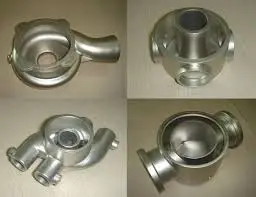
The chemical processing and food preparation businesses can improve the surface quality and resistance to corrosion by casting silica sol. The process can make smooth internal areas that lower the risk of contamination and make the equipment easier to clean. This is used in pump impellers, valve parts, and processing equipment.
How to Choose the Right Stainless Steel Casting Supplier and What to Expect?
To find the right source for silica sol investment casting, you need to carefully look at their technical skills, quality processes, and how reliable their supply chain is.
Essential Supplier Evaluation Criteria
Finding sources who are good at silica sol methods and stainless steel metallurgy is important for successful buying. Important factors for review are:
Suppliers who have worked with particular grades of stainless steel casting in the past will understand the unique needs of your users. Process certifications, like AS9100 for aircraft or ISO 13485 for medical equipment, show that a company can meet the quality standards of its business.
Advanced inspection tools, metallurgical testing centers, and written process rules should all be part of quality control. Suppliers should show how they use statistical process control and give capability studies for important dimensions and qualities.
Cost Structure and Lead Time Considerations
Understanding how costs are structured helps you negotiate with suppliers and make budget plans that work. Costs for silica sol casting usually include making patterns, making shells, melting and filling, and finishing. Because pattern tooling costs are the same for all output numbers, volume has a big effect on unit costs.
Lead times depend on how complicated the parts are and how many are being made, but for normal setups, they are usually between 4 and 8 weeks. When suppliers offer technical help during the design development process, they can often improve the usability and cost-effectiveness of parts.
Long-Term Partnership Development
For long-term relationships with suppliers to work, both parties need to be clear about what is expected of each other and work together to solve problems. To keep up with changing customer needs, suppliers should show that they are willing to put money into constant growth and new technology.
Regular quality reviews and performance tracking make sure that results are always the same, and look for ways to cut costs and improve the process. Effective providers are clear about their limitations in ability and their needs for meeting deadlines.
Conclusion
When it comes to making precise stainless steel casting, silica sol investment casting is the best way to go. It offers better quality, lower costs, and more design options than other methods. The process makes it possible to make complicated geometries with a very smooth surface and accurate measurements, all while keeping the material's great qualities. Industries that need high-performance stainless steel parts can save money on production costs, make their products more reliable, and make their designs better. Partnering with experienced sellers who understand both process technology and application-specific needs is key to a successful adoption. This will ensure long-term success in global markets that are very competitive.
FAQWhat stainless steel grades are compatible with silica sol investment casting?
Austenitic grades like 304, 316, and 316L, precipitation-hardening alloys like 17-4 PH and 15-5 PH, and duplex stainless steels are some of the most popular types of stainless steel that work great with silica sol investment casting. The process works especially well with grades that are hard to machine, which makes traditional manufacturing difficult.
How do lead times compare between silica sol casting and alternative methods?
Making something with silica sol investment casting usually takes 4 to 8 weeks, which is shorter than making something with forging, which needs special tools. For simple shapes, machining from stock may seem like a faster option. However, for complicated parts, multiple processes and setups are often needed, which greatly extends the total lead time.
Can silica sol casting produce complex internal geometries accurately?
The process is great at making complex internal features like cooling channels, light structures, and flow lines that are too complicated to be made by cutting. Even on the inside of the part that can't be seen directly during cutting, the quality of the dimensions stays the same throughout the whole thing.
Partner with Welong for Superior Stainless Steel Casting Solutions
Welong has been making precision stainless steel castings for more than twenty years and works with top companies in the aircraft, medical device, and industrial sectors. Our ISO 9001:2015-certified plant specializes in silica sol investment casting technology and can make parts from your samples or plans that are of the highest quality. We offer full engineering support, including plan improvement, help choosing materials, and quality control during production. Email our skilled staff at metal@welongpost.com to talk about your stainless steel casting needs and find out how our advanced production skills can help your supply chain work better and improve the quality of your products.
References
1. Campbell, John. "Complete Casting Handbook: Metal Casting Processes, Metallurgy, Techniques and Design." Butterworth-Heinemann, 2015.
2. Beeley, Peter R. "Foundry Technology." Butterworth-Heinemann, 2001.
3. Davis, Joseph R. "ASM Specialty Handbook: Stainless Steels." ASM International, 1994.
4. Jones, Sobel, and Kaye. "Investment Casting: Principles and Applications." Manufacturing Engineering Society, 2018.
5. Brown, Michael K. "Advanced Materials and Processes in Investment Casting." International Journal of Manufacturing Technology, 2019.
6. Thompson, Sarah L. "Precision Casting Methods for High-Performance Applications." Materials Science and Engineering Review, 2020.

Share your inquiry, get the quotation accordingly!
China WELONG- Your Reliable Partner in Metal Solutions