Choosing Between Sand Casting and Die Casting for Your Project
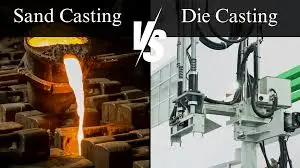
The choice between sand casting and die casting has a big effect on production times, prices, and the quality of the finished product when you're trying to figure out the best casting method for your project. Die casting is a precise way to make things that involves pressing liquid metal into steel molds under a lot of pressure. For large production runs, it gives you very accurate measurements and a smooth surface. Sand casting is better for making parts with complicated shapes and longer lengths, but it takes longer to make. When buying managers and engineering teams know about these basic differences, they can make sure that the castings they choose meet the needs of the project, their budget, and quality standards. This complete guide looks at both processes through the lens of real-world manufacturing choices. It will help you figure out the technical and business issues that make industrial relationships work.
Understanding Sand Casting and Die Casting Processes
The success of your manufacturing depends on how well you choose the metal-making technology that fits your project's needs and output goals. In current industrial production, sand casting and die casting are used in different ways and have different benefits in different situations.
Sand Casting Process Overview
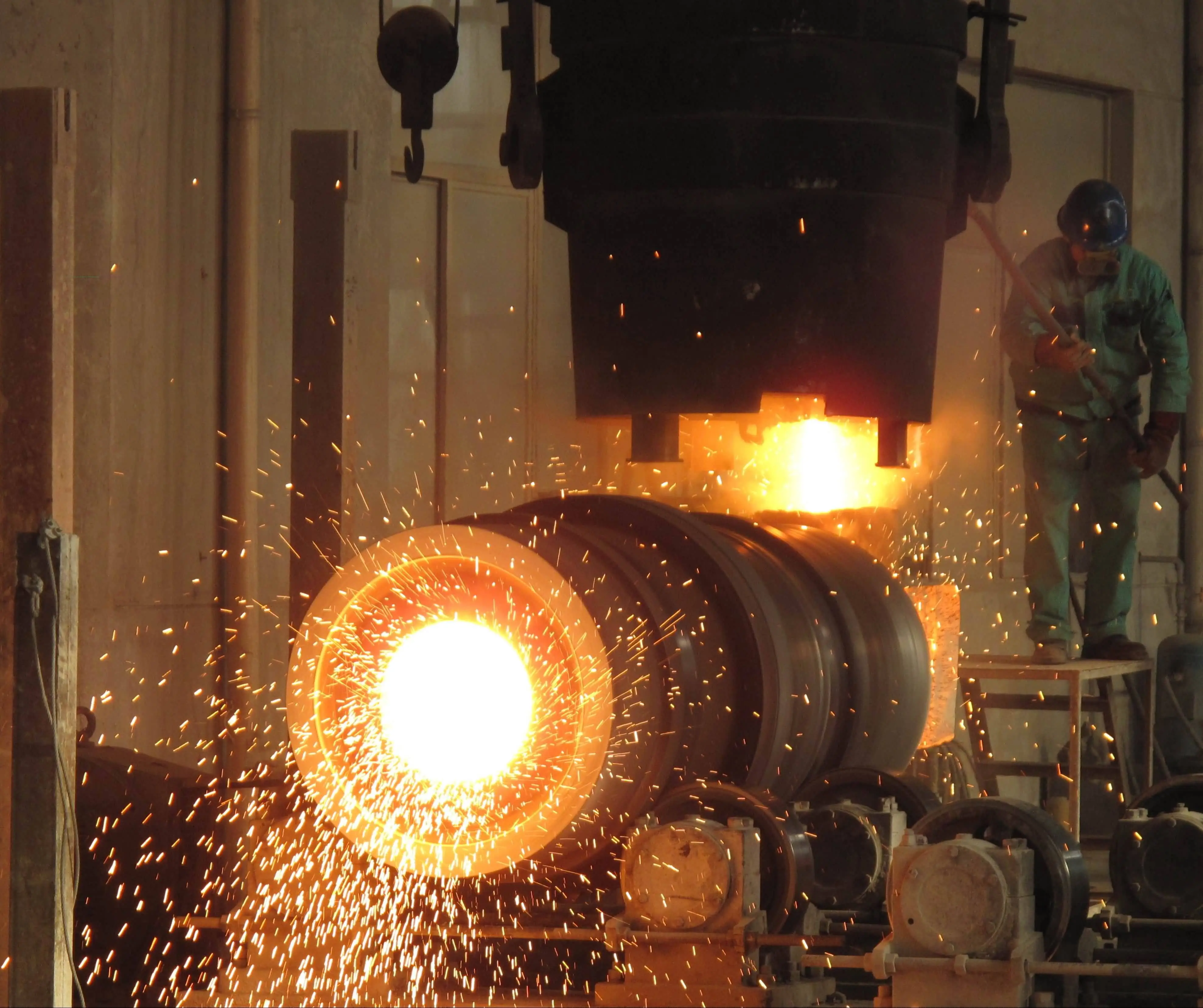
One of the oldest and most useful ways to shape metal in production is through sand casting. Specially mixed sand is used in this process to make molds. This gives makers a lot of freedom when it comes to making complex shapes and big parts. The sand mold can handle complicated internal passages, undercuts, and different wall thicknesses that could be hard to make with other methods. The process starts with making a design, then the sand mold is prepared in parts for cope and drag. Carefully planned gate systems let molten metal flow through them, filling the hole and hardening into the shape that is needed. The sand model breaks off when the casting is cool, showing the finished product that may only need minor machining to meet final requirements.
Die Casting Manufacturing Excellence
When you die cast, you force liquid metal into precisely made steel molds under a lot of pressure. This makes parts that are very accurate in their dimensions and have a smooth surface. This method works great in places with a lot of output, where accuracy and quick cycle times are important for making things efficiently. There are four main steps in the die-casting method that make sure the same high-quality results every time. To prepare a mold, negative prints are machined into hardened tool steel dies. Depending on the needs of the production, single or multiple hole shapes can be made. For material preparation, controlled furnace settings are used to melt non-ferrous metals like zinc, magnesium, or aluminum. During the injection phase, pressures ranging from 1,500 to 25,400 PSI push liquid metal into the die cavity. This makes sure that the cavity is filled and that the dimensions are accurate. Finally, the hardened part comes out of the mold and is ready for some light finishing.
Material Compatibility and Applications
Steel, iron, aluminum, bronze, and special materials needed for tough jobs can all be made in sand casting, which works with both ferrous and non-ferrous metals. Because of this, sand casting is very useful for industries like aircraft, heavy machinery, and custom tooling that use material properties to guide design choices. Because ferrous metals have high melting points that can shorten the life of dies, die casting mostly uses non-ferrous metals. Due to their high strength-to-weight ratios and corrosion protection, aluminum alloys rule die-casting uses. Magnesium alloys are used to make lightweight structural parts for the electronics and car industries, while zinc alloys are better for making thin walls.
Comparing Sand Casting and Die Casting: Advantages and Disadvantages
Knowing the pros and cons of each casting method lets you make smart choices that improve both the quality of the casting and its ability to make money. When manufacturing teams look at casting choices, they have to weigh a lot of things, such as the amount of work that needs to be done, the quality standards, the time limits, and the budget.
Sand Casting Strengths and Limitations
For small to larger production runs, sand casting gives you a lot of freedom in how you build your tools and keeps the costs down. The process can handle almost any size of part, from tiny precision parts to huge industrial casts that weigh several tons. Pattern costs are still lower than die-casting equipment costs, which means that sand casting is a good way to make prototypes and small batches of products. But sand casting has some problems that make it hard to plan output and get good results. Preparing the sand, filling it, and cooling it all take longer because they can't be done as quickly as automatic die-casting operations. To get tight specs and smooth curves, the surface finish quality usually needs more machining steps. Dimensional consistency changes more than die casting because of differences in how dense the sand is and how much it expands when heated or cooled.
Die Casting Performance Advantages
The accuracy and repeatability of die casting are so high that they meet the strict needs of current industrial uses. According to GB/T 1800-2009 standards, parts have dimensional ranges between IT10 and IT15. This means that extra machining processes are often not needed. The high-pressure injection method makes small, tight grain structures that improve mechanical qualities like toughness, strength, and longevity. Another big benefit of die-casting technology is that it makes production more efficient. Cycle times can be minutes to hours, based on how complicated the part is. This allows for high-volume production, which lowers the cost per unit by a large amount. Because the surface finish is smooth and uniform, it often doesn't need any extra post-processing. This speeds up the manufacturing process and lowers the total time it takes to make something.
Cost Structure Analysis
When you start die casting, you have to spend a lot of money on precise tools. The costs of these tools can be 10–50 times higher than the costs of sand casting patterns, based on how complicated the part is. For mid to high-volume uses, however, the higher investment in tools is spread out over higher production volumes, which lowers the cost per unit. When die casting is used correctly, the lower need for extra processes makes the total cost equation even better. For low-volume production, custom uses, and cases where design changes need to be made often, sand casting is still the most cost-effective method. Rapid prototyping and engineering development processes that would be too expensive with die-casting tools are made possible by the ability to make new models quickly and cheaply.
Evaluating Which Casting Method Fits Your Project Needs
To choose the right casting, you need to carefully consider a lot of technical and business factors that affect how the product is made. When figuring out the best way to make something, procurement teams and engineering managers have to look at things like the amount of work that needs to be done, the quality standards, the time limits, and the features of the materials.
Production Volume Considerations
The amount of production is the main thing that determines which casting method to use. Die casting is usually profitable when it makes more than 1,000 to 5,000 units per year, but this depends on how complicated the part is and how much the tools cost. The high-pressure method allows for short cycle times that meet the needs of mass production while keeping quality standards high throughout long production runs. Sand casting is still a good way to go for low-volume production (less than 1,000 units per year), prototype development, and uses that need to change the design often. Lower setup and tooling costs make short-run production more cost-effective and help with custom uses and unique industry needs.
Quality and Precision Requirements
Die-casting technology is best suited for uses that need tight limits on dimensions and a smooth surface finish. The high-pressure casting method is naturally accurate and repeatable, which makes it useful for making precision instrument parts, electronic housings, and transmission parts for cars. Die-cast parts often have multiple features built in, such as threads, bosses, and fixing holes that remove the need for assembly. Sand casting can be used in situations where a moderately smooth surface and accurate measurements are enough to meet the needs of the job. Parts of heavy machinery, valve bodies, and structural elements that are sand cast often work well enough, especially after they are machined to meet critical measurements and surface requirements.
Material Property Requirements
In difficult situations, the choice of casting method is based on the features of the material. Because die casting can't work with all kinds of materials, sand casting is usually used for aerospace parts that need high-temperature steel metals. Standard die-casting tools can't handle the heat because metal materials have higher melting points. Die casting works best with metals made of aluminum, magnesium, and zinc because they are easy to cast and have good mechanical qualities. Today's aluminum die-casting alloys are getting stronger, almost as strong as worked metals, but they still have the design freedom and cost savings of casting.
Industry-Specific Applications
For engine parts, transmission housings, and structural parts that need to be made in large quantities and with uniform quality, die casting is highly used in the automotive industry. Increased use of aluminum and magnesium die-casting methods is a result of the car industry's focus on weight reduction. For complex engine parts, structural fittings, and alloy needs that are too big for die-casting materials, aerospace uses often choose sand casting. The unique needs of aircraft manufacturing are met by the ability to cast big, complex geometries out of rare materials. Die casting is used in the production of electronics for EMI protection, heat sinks, and holding parts that need to have thin walls, exact measurements, and good thermal conductivity. Die casting eliminates a lot of extra steps in the electronics making process due to its precise dimensions and smooth surface.
How Die Casting Enhances Modern Manufacturing: Insights for B2B Buyers?
To keep up with the changing needs of modern industry, advanced die-casting technology is constantly being developed. When buying teams and engineering managers understand these changes in technology, they can use die casting to gain a competitive edge in their own markets.
Technological Advancements in Die Casting
Modern die-casting machines have advanced process controls that watch and change the filling settings in real time. Computers control the temperature, pressure, and fill rates of the metal to get the best quality parts with the fewest flaws. These improvements make it possible to consistently make thin-wall casts with walls as thin as 0.3 mm for zinc alloys and 0.5 mm for aluminum alloys. Vacuum-assisted die casting is another important step forward in technology that makes parts better by reducing holes and gas buildup. These technologies make it possible to make castings that can be heated and welded later on. This means that die-cast parts can be used in more serious structural situations.
Quality Control and Defect Prevention
Die-casting providers with extensive experience use thorough quality control systems to stop common casting flaws like porosity, cold shuts, and dimensional changes. Statistical process control keeps an eye on important factors during production, which lets process differences be quickly found and fixed before they affect the quality of the part. Coordinate measure tools, X-ray inspection systems, and metallurgical analysis are some of the modern inspection technologies used in die-casting facilities to check the quality of the parts and the features of the materials. These quality assurance steps make sure that the company always meets customer needs and industry standards, such as the requirements for ISO 9001:2015 approval.
Selecting Reliable Die Casting Partners
For die-casting relationships to work, providers must have a track record of designing tools, improving processes, and managing quality. Potential providers should be judged by their credentials, mechanical skills, and past work with similar projects. To make it easier for designers to work together, suppliers should show that they know how to use CAD tools like AutoCAD, Pro-Engineering, and SolidWorks. A global manufacturing footprint lets suppliers meet the needs of foreign buyers while keeping quality standards the same in all of their production sites. Look for providers that have well-established quality management systems and clear communication rules that will help you build long-lasting partnerships.
Making the Final Choice: Useful Hints and Real-Life Examples
Real-life production choices show how different fields make good decisions when deciding between sand casting and die casting. These cases show how technical and business factors can be used in real life to improve manufacturing results.
Automotive Industry Success Stories
A big company that makes transmissions for cars switched from sand casting to die casting for their metal transmission cases. This cut costs by 35% per unit and made the sizes more consistent. The die-casting process got rid of three extra steps of cutting and cut the time it took to put together each unit by 20 minutes. Even though the company had to spend $180,000 on tools at the beginning, they were able to repay those costs within 18 months by being more efficient and needing fewer workers. Another car supplier started using high-pressure die casting to make aluminum suspension parts, which made them 15% lighter than steel options while keeping the structural integrity. The die-casting process made it possible to combine mounting clamps and threaded inserts, which cut down on the number of steps needed to put each part together by twelve.
Electronics Manufacturing Applications
For high-performance computing uses, a major technology company chose die casting for aluminum heat sinks. The die-casting method made it possible to get the thin-wall sections and complicated fin shapes needed for the best thermal performance while still being cost-effective for making more than 50,000 units per year. The quality of the surface finish got rid of the need for extra steps and allowed straight anodizing to protect against corrosion.
Decision Framework Summary
When looking at casting choices, output volume should be the main thing you think about. For die casting, volumes above 5,000 units per year are best. Quality standards, such as dimensional tolerance and surface finish, often make die casting the best choice for precision uses, even when volume is a factor. Sand casting may be the only way to make metal alloys or other specific materials that die casting can't handle. Due to time constraints, die casting is better for quickly starting production after the tools are finished, while sand casting is better for faster development cycles and design changes. To properly compare options, you need to include tooling amortization, secondary operations, and quality-related costs in your total cost study.
Conclusion
When deciding between sand casting and die casting, you need to carefully look at the amount of work that needs to be done, the quality standards, the material requirements, and the time frame. Die casting is best for high-volume jobs that need accuracy and a smooth finish, while sand casting is more adaptable for jobs with complicated shapes and different material needs. Knowing these basic differences helps you make smart choices that improve manufacturing results and give you a long-term edge over your competitors. Working together with experienced casting suppliers in a successful way gives you the technical know-how and quality guarantee you need for tough industrial uses in the aircraft, electronics, automotive, and other specialized manufacturing sectors.
FAQ
What are the main things that determine whether sand casting or die casting is better?
Production rate is the most important factor in choosing a method. Depending on the complexity of the part, die casting becomes cost-effective above 1,000 to 5,000 units** per year. Quality standards, such as tolerances for dimensions and surface finish, also have a big impact on the choice of method. For example, die casting is more precise and consistent than sand casting options.
How do quality control and the number of flaws in sand casting and die casting compare?
Die casting usually has lower failure rates because the injection settings are controlled and the process is monitored automatically. Statistical process control and advanced screening technologies are used in modern die-casting plants to keep quality standards high. The quality of sand casting rests more on the skill of the operator and the variables in the process. This means that quality can vary more, but it is still good enough for many commercial uses.
Can die casting technology help with small-scale production?
For low-volume uses, die casting may be the best option when quality standards are too high for sand casting or when the complexity of the part makes it possible to get rid of a secondary process. Specialized die-casting providers offer trial tooling and short-run production services that lower the initial investment while improving the quality of die casting for development programs and small production needs.
Partner with Welong for Your Die Casting Manufacturing Needs
Welong can help you with your industrial problems because he has more than twenty years of experience in precision die casting and managing foreign supply chains. Our methods are ISO 9001:2015 approved, which means that the quality is always the same for die casting in aluminum, magnesium, and zinc. We offer full engineering help, from optimizing the initial design to scaling up production. We use AutoCAD, Pro-Engineering, and SolidWorks to make teamwork easy. Contact our knowledgeable staff at info@welongpost.com to talk about your specific needs with a reliable die-casting company that is dedicated to providing cost-effective, high-precision production solutions that meet quality standards around the world.
References
1. Campbell, John. Complete Casting Handbook: Metal Casting Processes, Metallurgy, Techniques and Design. Oxford: Butterworth-Heinemann, 2015.
2. Vinarcik, Edward J. High Integrity Die Casting Processes. New York: John Wiley & Sons, 2003.
3. Beeley, Peter R. Foundry Technology. Oxford: Butterworth-Heinemann, 2001.
4. Street, Arthur C. The Die Casting Book. Wheeling: Society of Die Casting Engineers, 2008.
5. Brown, John R. Foseco Non-Ferrous Foundryman's Handbook. Oxford: Butterworth-Heinemann, 1999.
6. Allsop, Donald F. Die Casting Engineering: A Hydraulic, Thermal, and Mechanical Process. New York: Marcel Dekker, 2004.

Share your inquiry, get the quotation accordingly!
China WELONG- Your Reliable Partner in Metal Solutions