Why Do Sand Casting Parts Fail Under Load and How Can Root Causes Be Identified?
Sand casting parts are one of the most versatile metal forming methods in the world. But when sand castings fail under stress, the results may be expensive downtime or catastrophic equipment failure. Usually, failures are caused by process-generated errors, design flaws, and material inconsistencies that impair structural performance under stress. The study presents typical defects, failure analysis techniques, good manufacturing practices, and supplier selection factors affecting the dependability of sand casting components in critical industrial applications.
What Are the Most Common Defects in Sand Casting Parts?
Surface and Subsurface Porosity
Porosity is one of the most common faults seen in sand cast parts. It appears as microscopic cavities or gas pockets on or just under the surface of the casting. These spaces are produced when the gases evolved during pouring and solidification cannot escape through the mould. In load-bearing applications, porosity is a stress concentrator, decreasing the effective cross-section and speeding fracture development under cyclic or impact loads.
Shrinkage Cavities and Hot Tears
Shrinkage faults happen when the molten metal cools and shrinks without adequate feed metal to replace it. Poor gating systems or inadequate risers in sand castings may result in interior shrinkage voids that can affect structural integrity. Hot tears form at the section transitions of sand casting parts when they contract, due to the restraint of the partly formed metal by the mould, causing cracks that quickly spread under service loads.
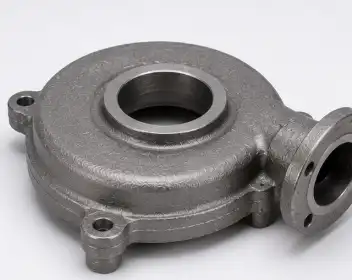
Sand Casting Parts Failure Analysis: Porosity, Shrinkage, Inclusions, and Cracking Explained
Non-Metallic Inclusions and Their Structural Impact
Inclusions are foreign particles such as loose sand grains, slag pieces, or oxide coatings that are caught in the sand casting portions during pouring and solidification. These uneven inclusions provide local weak zones under load where stress is more concentrated and act as sites of fracture initiation. In sand casting parts, engineers may use metallographic inspection and scanning electron microscopy to identify the inclusion kinds and sources related to the integrity of moulding sand, slag skimming, or the cleanliness of the melt.
Cracking Mechanisms Under Service Loads
Cracking in sand casting parts occurs in the form of hot cracking during solidification or cold cracking after cooling. Uneven cooling causes residual strains, and sudden changes in section thickness tend to produce cracks in castings when they are put to use. The examination of fracture surfaces by stereomicroscopy provides information on the origin and direction of propagation of cracks, and the mechanism of fracture, which helps the manufacturer to understand whether the failure is due to flaws in the process or due to a stress concentration connected to the design of the sand casting part.
Sand Casting Parts Manufacturing Guide: Process Control, Defect Prevention, and Quality Standards
Mold and Core Process Optimization
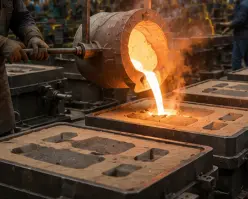
Good process control starts with the management of the moulding sand. Controlling grain fineness, clay binder concentration, moisture, and compactability directly impacts surface finish and fault rates in sand casting parts. The basic design must allow for appropriate venting of gases and regulated collapsibility. Modern casting simulation software enables foundries to forecast flow patterns, solidification sequences, and defect sites before production, significantly increasing the first-pass yield of sand cast parts.
Quality Standards and Inspection Protocols
Sand cast parts must meet standards such as ASTM A27, ISO 4990 and EN 1561, which specify mechanical qualities, dimensional tolerances and acceptance levels for non-destructive testing. Complete inspection procedures include radiographic testing, ultrasonic testing, and dye penetrant testing to verify internal soundness. Consistent quality of sand casting parts may be assured by a written quality system with verification of incoming material, monitoring throughout the process, and final certification.
How to Choose Reliable Sand Casting Parts for Automotive, Mining, Agricultural, and Industrial Applications?
Application-Specific Material and Design Considerations
For sand casting parts that will be used in automotive, mining, or agricultural applications, you have to think about the service conditions such as the amount of load, operating temperature, exposure to corrosion, and fatigue cycles. The material choice should be driven by the application: ductile iron for parts that experience significant stress, grey iron when vibration dampening is needed, and carbon steel when impact resistance is important. Working with foundries that provide design-for-manufacturability assessments can help you get geometries that are optimised for both performance and castability of sand casting parts.
Supplier Evaluation and Certification Requirements
Suppliers of sand casting parts may be relied upon to have ISO 9001 quality processes, complete material traceability, and third-party inspection capabilities. In oil drilling or aircraft, for safety-sensitive applications, there may be extra certifications required, like API requirements. Procurement teams may reduce risk and develop sustainable relationships for procuring sand casting components by assessing a supplier's failure rates, delivery execution, and engineering assistance.
Conclusion.
Process-induced flaws such as porosity, shrinkage, inclusions, and cracking, together with design problems that magnify stress, are the causes of failure of sand casting parts under load. Root cause identification requires a systematic failure study including visual inspection, non-destructive testing, metallographic examination and fracture mechanics. Strict process control, adherence to international quality standards and use of approved suppliers may help producers in minimising failures to a large extent. Welong was formed in 2001 and has been ISO 9001:2015 certified. With more than 20 years of experience in supplier development and quality control of industrial metal products. Partner with recognised professionals. Your components deserve no less.
FAQ
Q1: What is the most common cause of failure in sand casting parts under load?
A: Porosity and shrinkage cavities are the most prevalent causes. These internal voids act as stress concentrators that initiate cracks under cyclic or heavy loading, leading to premature fracture.
Q2: How can non-metallic inclusions in sand casting parts be minimized?
A: Proper melt treatment, controlled pouring temperature, effective slag skimming, clean molding sand, and optimized gating system design collectively reduce inclusion formation during production.
Q3: Which non-destructive testing methods detect internal defects in sand casting parts?
A: Radiographic (X-ray) inspection, ultrasonic testing, and dye penetrant examination are standard NDT methods used to identify internal and surface-breaking defects in cast components.
Q4: What international quality standards apply to sand casting parts?
A: Common standards include ASTM A27 (steel castings), ISO 4990 (casting tolerances), and EN 1561 (gray iron castings), covering mechanical properties and NDT acceptance criteria.
Q5: How does Welong ensure consistent quality of sand casting parts?
A: Welong implements ISO 9001:2015 quality systems, material verification, in-process monitoring, non-destructive testing, and documented final inspection backed by over 20 years of experience.
Ready to Source Reliable Sand Casting Parts?
With over 20 years serving customers across the UK, Germany, France, the USA, Canada, and Australia, Welong delivers precision-cast sand casting parts backed by ISO 9001:2015 certification. From automotive and mining to agriculture and aerospace, our engineering team supports your projects from drawing to delivery. We accept AutoCAD, Pro-Engineering, and SolidWorks files, and our engineering department can also design drawings to your specifications. Our products have been shipped to more than 100 customers worldwide, boosting China's intelligent manufacturing and leading the world. Send your drawings or samples today—contact us at metal@welongpost.com and let Welong empower your supply chain with the finest manufacturing capabilities in China.
References
1. Campbell, J. (2015). Complete Casting Handbook: Metal Casting Processes, Metallurgy, Techniques and Design (2nd ed.). Butterworth-Heinemann.
2. ASM International. (2008). ASM Handbook, Volume 15: Casting. ASM International, Materials Park, OH.
3. Beeley, P. R. (2001). Foundry Technology (2nd ed.). Butterworth-Heinemann, Oxford.
4. Brown, J. R. (2000). Foseco Foundryman's Handbook (10th ed.). Butterworth-Heinemann, Oxford.
5. Stefanescu, D. M. (2015). Science and Engineering of Casting Solidification (3rd ed.). Springer, New York.
6. Davis, J. R. (1996). Cast Irons (ASM Specialty Handbook). ASM International, Materials Park, OH.

Share your inquiry, get the quotation accordingly!
China WELONG- Your Reliable Partner in Metal Solutions