How to Choose the Right Engine Valve for Your Application?
The choice of the right engine valve has a direct effect on the efficiency of combustion, the lifetime of the engine and overall performance. This selection is thus much more essential than it would initially seem. When seeking components for automotive manufacturing, heavy-duty diesel systems, or high-performance racing applications, the proper engine valve has to meet your engine’s operating temperature, pressure, and material requirements. This article goes thru the important considerations, kinds, materials, and selection tactics customers should consider when selecting an engine valve for their application.
What Factors Should You Consider When Selecting an Engine Valve?
Before looking at particular kinds of valves, it is useful to consider the operating circumstances that most affect engine valve choices.
Operating Temperature and Pressure Conditions
Each engine valve has to endure the severe heat and pressure cycles created during combustion, especially on the exhaust side where temperatures are high. Selecting an engine valve that is suitable for your unique temperature climate will help avoid early warping or seat wear that can diminish sealing effectiveness over time. Buyers should check the engine valve specs for peak operating temperatures and pressure ranges; inadequate ratings generally lead to a shorter service life.
Engine Type and Performance Requirements
The requirements of an engine valve vary widely depending on whether it will be used in a passenger car, an industrial generator, or a heavy equipment engine. High-revving performance engines demand an engine valve capable of quick, repetitive actuation without fatigue, whereas heavy-duty diesel applications value durability under prolonged load. Rather than accept a generic, one-size-fits-all approach, matching the engine valve to these particular performance criteria enables dependable operation across the planned duty cycle.
Engine Valve Types and Applications: Finding the Best Fit for Your System
Understanding the numerous engine valve types helps purchasers discover which design best meets their system's airflow and sealing demands.
Intake and Exhaust Valves
In an engine, an intake valve regulates the flow of air and fuel mixture into the combustion chamber. An exhaust valve discharges the combustion gases after that. Both exhaust valves and inlet valves have a similar poppet-style construction; however, exhaust valves need to be more heat-resistant owing to their direct contact with the combustion byproducts. Choosing the suitable valve for each location in the engine rather than considering intake and exhaust needs as identical will provide the optimal combustion timing and long-term engine dependability.
Poppet Valves and Specialized Designs
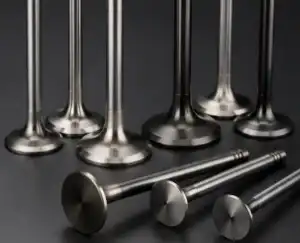
The poppet valve is still the most extensively used engine valve design for both petrol and diesel engines, since it provides dependable sealing and is easy to manufacture. Specific thermal management issues in high-performance or heavy-duty applications are addressed by specialized versions, such as sodium-filled valves for enhanced heat dissipation. Choosing an engine valve design involves a trade-off between manufacturing costs and the particular airflow and heat transfer demands of the target engine platform.
How Do Materials and Designs Affect Engine Valve Performance?
The behavior of an engine valve under cyclic thermo-mechanical loading is affected by the combination of materials selection and design geometry.
Valve Materials and Heat Resistance
The materials for engine valves vary from martensitic stainless steels for conventional usage, to nickel-based superalloys for severe heat applications. An engine valve made from the suitable alloy will provide sufficient resistance to oxidation, creep, and fatigue over the component’s service life. An engine valve fabricated from heat-resistant alloys is especially suited to high-temperature exhaust applications and retains dimensional stability significantly better than ordinary steel equivalents during prolonged thermal cycling.
Valve Head and Stem Geometry
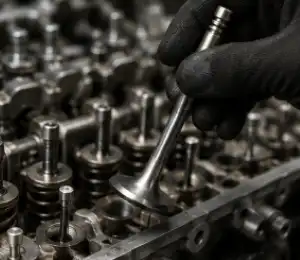
The efficiency of airflow and sealing quality of the combustion chamber are affected by the head diameter, stem length, and seat angle of an engine valve. An engine valve is built with a head size to allow sufficient flow, yet the stem is strong enough to endure repetitive valve train operation. Such geometric elements must be machined to a high degree of precision, since even little variations from the specified dimensions of an engine valve may impair compression, combustion efficiency, and long-term wear patterns.
Engine Valve Selection Guide for Different Engine Requirements
Different engine platforms need different engine valve specs depending on fuel type, duty cycle, and performance requirements.
Gasoline vs Diesel Engine Considerations
Gasoline engines are usually working on higher rpm ranges and need an engine valve suited for fast actuation and low thermal demands. Diesel engines, in contrast, have higher compression pressures and generally need an engine valve of greater mechanical strength and longer exposure to heat. Knowing these basic distinctions enables purchasers to avoid choosing an engine valve more appropriate for another fuel system, which might impact performance and dependability.
High-Performance and Heavy-Duty Applications
In racing and high-performance applications, a lightweight engine valve is often required to reduce valve train inertia and allow operation at higher RPM, made from titanium alloys. On the other hand, for heavy-duty industrial and commercial vehicle engines, the focus is on an engine valve designed for maximum durability under continuous, high-load operation. Choosing the right valve for these varying needs guarantees maximum performance without compromising service life for every application group.
Conclusion
Choosing the right engine valve is a key factor, based on the operating conditions, type of valve, material composition, and requirements of your engine platform. Founded in 2001, China Welong brings more than 20 years of supply chain expertise in industrial custom metal products, including precision-engineered engine valve components for automotive and industrial manufacturers worldwide. Certified to ISO 9001:2015 and trusted by more than 100 global customers, Welong is well positioned to support your next engine valve sourcing project with reliable quality and engineering support.
FAQ
Q1: What is the most important factor when selecting an engine valve?
A: Operating temperature and pressure conditions are typically the most critical factors, since an undersized engine valve rating often leads to premature failure.
Q2: Are intake and exhaust engine valves interchangeable?
A: No, exhaust engine valves generally require greater heat resistance due to direct exposure to combustion gases compared with intake valves.
Q3: What materials are commonly used for high-performance engine valves?
A: High-performance engine valve applications often use titanium alloys for reduced weight, while heavy-duty engines use nickel-based superalloys for heat resistance.
Q4: How does engine type affect engine valve selection?
A: Gasoline engines favor an engine valve optimized for rapid actuation, while diesel engines require valves built for higher compression and heat loads.
Q5: Can engine valve geometry affect engine performance?
A: Yes, the head diameter, stem length, and seat angle of an engine valve directly influence airflow, sealing, and combustion efficiency.
Partner with Welong for Precision Engine Valve Manufacturing
Looking for a reliable manufacturing partner for precision engine valve components? China Welong combines over 20 years of supply chain expertise with ISO 9001:2015 certified quality control, serving automotive and industrial manufacturers across the UK, Germany, the USA, and beyond. Our engineering team works from your drawings and samples using AutoCAD, Pro-Engineering, and SolidWorks to deliver components built to exact specifications. Contact us today at metal@welongpost.com to discuss your engine valve requirements and discover why global manufacturers trust Welong as their supply chain partner.
References
1. Heywood, J. B. (2018). Internal Combustion Engine Fundamentals. McGraw-Hill Education.
2. Stone, R. (2012). Introduction to Internal Combustion Engines. Palgrave Macmillan.
3. SAE International. (2015). Valve Train Design Manual, SAE J-Series Standards. SAE International.
4. Pulkrabek, W. W. (2004). Engineering Fundamentals of the Internal Combustion Engine. Pearson Prentice Hall.
5. Kalpakjian, S., & Schmid, S. R. (2014). Manufacturing Engineering and Technology. Pearson.
6. ASM International. (2015). ASM Handbook, Volume 1: Properties and Selection of Irons, Steels, and High-Performance Alloys. ASM International.

Share your inquiry, get the quotation accordingly!
China WELONG- Your Reliable Partner in Metal Solutions