Why Choose Vacuum Casting for Medical Devices?
Medical device makers have special issues with prototyping and low-volume products with strict tolerances and biocompatible materials. Vacuum casting has become the solution of choice within the industry, providing a speedy and cost-effective method of producing high-quality parts without the expenditure of expensive tooling. In this article, we will talk about why vacuum casting is the best for medical device applications. We will also discuss how vacuum casting promotes surface polish and design correctness, the manufacturing process, and why manufacturers use this approach for quick prototyping and custom part production.
What Makes Vacuum Casting Ideal for Medical Device Prototyping and Production?
Rapid Turnaround for Prototype Development
Medical device firms may move fast from concept to functioning prototype using vacuum casting, frequently in days rather than weeks. Vacuum casting uses silicone moulds from a master design, which reduces the lengthy lead times of hard tooling, and allows engineers to evaluate form, fit, and function early in the development cycle, before committing to full production.
Cost-Effective Low-Volume Manufacturing
For medical equipment that needs limited production runs, vacuum casting provides substantial cost reductions compared to injection moulding. Silicone moulds are far less costly than steel tooling, making vacuum casting a viable solution for clinical trial batches, bespoke instrument components and niche devices when manufacturing numbers don't justify the investment in permanent moulds.
Material Versatility for Medical-Grade Applications
“A whole range of polyurethane resins are available for vacuum casting, which can simulate the properties of many engineering plastics, including those found in medical housings, handles and device casings. This flexibility enables the producers to choose a material with similar mechanical properties to the actual production material during the prototype testing stages.
How Does Vacuum Casting Improve Surface Finish, Accuracy, and Complex Medical Designs?
Achieving Smooth, Production-Quality Surfaces
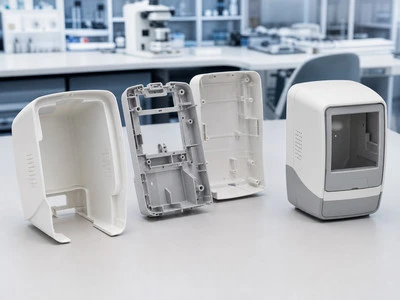
Vacuum casting generates pieces that come out of the mould with a good finish, which is especially important for medical equipment where look and feel are important. A silicone mould replicates delicate surface textures correctly, avoiding the need for lengthy post-processing, and enabling manufacturers to assess the genuine appearance and feel of their product earlier in the development process.
Dimensional Accuracy for Precision Components
Many medical equipment components need strict tolerances to provide correct fit for component-to-component assembly, particularly for devices with moving parts or sealed housings. The
process provides uniform dimensional precision for all the cast parts produced. This allows the engineers to verify the compatibility of the parts on assembly and their functional performance before mass production techniques are used.
Replicating Complex Geometries and Fine Details
Medical equipment can have complex geometries with thin walls, tiny internal passages, and sophisticated surface textures. The vacuum casting process can produce these complicated designs with a good level of detail, which may be difficult to do with other quick prototyping technologies, and is thus a good candidate for devices with intricate internal mechanics or ergonomic outward elements.
Vacuum Casting Manufacturing Guide: Process, Materials, Quality Control, and Applications
Understanding the Vacuum Casting Process Step by Step
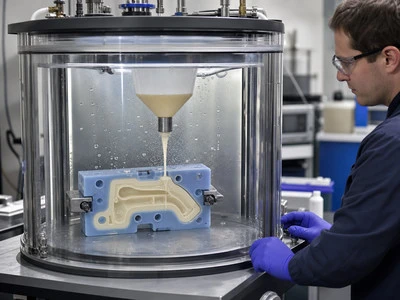
Vacuum casting starts with the creation of a master pattern, often made by CNC machining or 3D printing. A silicone mould is then cast around this master, and liquid polyurethane resin is put into the mould under vacuum to remove air bubbles. This vacuum atmosphere guarantees that each cast part is void and fault-free, resulting in excellent quality output.
Material Selection and Quality Assurance
The choice of the suitable resin for vacuum casting will depend on the mechanical and cosmetic needs of the medical device. Quality control procedures such as dimensional inspection and material testing help guarantee that each batch of vacuum casting components meets specification criteria. Manufacturers use ISO-certified methods, which further assures medical device projects that need established quality requirements.
Applications Across Medical Device Categories
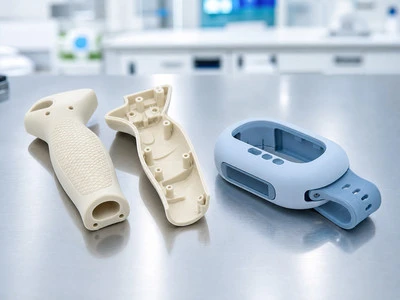
Vacuum casting is used in a wide variety of medical applications including housings for diagnostic equipment, handles for surgical instruments, and components for wearable devices. The flexibility of vacuum casting makes it a viable option for many phases of medical device development from early concept validation to pre-production verification batches.
Why Do Medical Device Manufacturers Use Vacuum Casting for Rapid Prototypes and Custom Parts?
Supporting Design Iteration and Validation
“Medical device development often requires several design iterations before deciding on a product. Vacuum casting allows engineers to create numerous iterations of a prototype rapidly and at a low cost, enabling teams to test various configurations, get user input, and iterate on ideas without the expense of a series of hard equipment expenditures.
Bridging the Gap to Full Production
Vacuum casting is an excellent bridge between prototype and large production, especially for medical equipment waiting for regulatory clearance. Once the design is thoroughly proven, tooling selections may be made for ultimate high-volume manufacture, and functioning units can be produced for testing and restricted market release utilising vacuum casting.
Customization for Specialized Medical Needs
Some medical devices need very specialised components that are suited for a unique patient or a specific clinical purpose. Vacuum casting is the perfect process for this kind of customisation, enabling producers to create small quantities of unique parts without the limitations and expense of conventional production tools.
Conclusion
Vacuum casting is a rapid, precise, and inexpensive way to prototype and produce in low volume for medical device makers. This technique offers the accuracy and versatility required for medical applications, from quick design validation to complicated geometry reproduction. China Welong has over 20 years of expertise in the worldwide supply chain and helps manufacturers discover dependable vacuum casting solutions that meet their precise requirements. Contact our team now to bring your medical gadget idea to reality!
FAQ
Q1: Is vacuum casting suitable for medical-grade materials?
Vacuum casting supports various polyurethane resins that can simulate medical-grade plastic properties, making it suitable for prototyping and low-volume production.
Q2: How quickly can vacuum casting produce prototypes?
Vacuum casting typically delivers prototypes within days, since silicone molds require far less lead time than traditional hard tooling.
Q3: What surface quality can be expected from vacuum casting?
Vacuum casting produces smooth, production-quality surface finishes directly from the mold, minimizing the need for additional post-processing.
Q4: How many parts can be produced from a single vacuum casting mold?
Silicone molds used in vacuum casting typically produce twenty to fifty parts before wear affects dimensional accuracy, depending on part complexity.
Q5: Is vacuum casting cost-effective for small production runs?
Yes, vacuum casting is significantly more affordable than injection molding for low-volume manufacturing, making it ideal for clinical trials and niche devices.
Start Your Vacuum Casting Project With Us
Ready to bring your medical device from concept to prototype? China Welong provides ISO:9001-2015 certified vacuum casting services backed by an experienced engineering team using AutoCAD, Pro-Engineering, and SolidWorks. Whether you need rapid prototypes or custom low-volume parts, our supply chain expertise ensures quality and reliability. Email us today at metal@welongpost.com to discuss your medical device requirements and get started.
References
1. Society of Manufacturing Engineers, Rapid Prototyping and Manufacturing Handbook.
2. American Society for Testing and Materials (ASTM), Standard Guide for Rapid Prototyping Processes.
3. Chua, C. K., and K. F. Leong, Rapid Prototyping: Principles and Applications.
4. U.S. Food and Drug Administration, Guidance on Prototyping in Medical Device Development.
5. Gebhardt, A., Understanding Additive Manufacturing: Rapid Prototyping, Rapid Tooling, Rapid Manufacturing.
6. Kai, C. C., Fai, L. K., and Chu-Sing, L., Rapid Prototyping: Principles and Applications in Manufacturing.

Share your inquiry, get the quotation accordingly!
China WELONG- Your Reliable Partner in Metal Solutions