Can the Complex Shell Process Integrate with Additive Manufacturing Technologies?
More and more manufacturers are considering how the complex shell process might be combined with additive manufacturing to obtain higher accuracy and more design flexibility in metal casting. As the technology of 3D printing advances, the combination of 3D printing with classic shell casting processes offers new options to create complex components with higher speed and precision. In this article, we’ll explore how the intricate shell process integrates with 3D printing, the benefits of this combination, the main stages in the production cycle, and the industries that gain the most from this sophisticated casting method.
How Does the Complex Shell Process Work with 3D Printing to Improve Casting Accuracy?
Digital Pattern Creation Through Additive Manufacturing
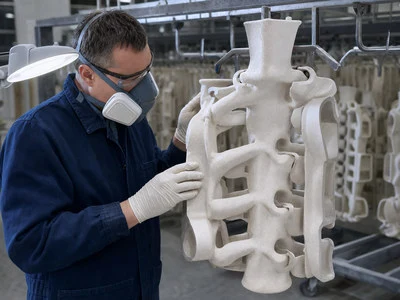
The intricate shell technique normally requires wax or other sacrificial designs, but additive manufacturing enables manufacturers to 3D print these patterns directly from digital models. This integration removes the tooling requirement, and the sophisticated shell process is able to replicate complex geometries with an accuracy very close to the original CAD design.
Enhancing Shell Precision with Printed Patterns
The use of 3D printed patterns in the complicated shell process may generate ceramic shells with finer features and more consistent wall thicknesses than patterns made with traditional tooling. This increased dimensional accuracy results directly in castings with tighter tolerances, lowering the amount of variability possible with conventional pattern-making techniques.
Rapid Iteration Between Design and Casting
By adding additive manufacturing to the complex shell process, engineers can rapidly iterate on component designs. The complicated shell process may be made more responsive to design changes using 3D-printed designs that can be digitally updated and duplicated within hours, reducing development periods for parts that need many rounds of refining.
What Are the Advantages of Combining the Complex Shell Process with Additive Manufacturing?
Eliminating Tooling Costs and Lead Times
A notable benefit of the coupling of additive manufacturing with the complicated shell process is the removal of costly tooling. Traditional pattern tooling may take weeks to make and cost thousands of dollars, but 3D printed patterns enable the intricate shell process to go straight from digital design to actual casting without this upfront expenditure.
Enabling Greater Design Complexity
Additive manufacturing eliminates many of the geometric constraints of traditional pattern manufacture. This implies that the complicated shell process may now manufacture parts with internal lattice structures, organic forms, and consolidated assemblies that would be hard to or impossible to accomplish with standard tooling-based pattern forming processes.
Improving Consistency Across Production Batches
The sophisticated shell technique of the complex shell process benefits from less fluctuation between production runs since designs are produced digitally and printed reliably. This printout is an actual scale model of the original design parameters. This allows manufacturers to produce several batches of cast parts at the same quality level. This is especially important for businesses that need exact dimensional repeatability.
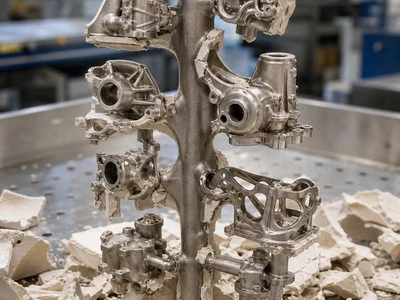
Complex Shell Process Guide: Digital Pattern Making, Shell Building, and Quality Control
Digital Pattern Making and Design Preparation
The intricate shell process starts with thorough design preparation; engineering teams optimise the CAD models for printability and castability. This is the step that deals with shrinkage rates, gating systems, and shell thickness requirements to ensure that the digital pattern will properly transform into a functioning casting once the shell construction process is underway.
Shell Building and Ceramic Coating Techniques
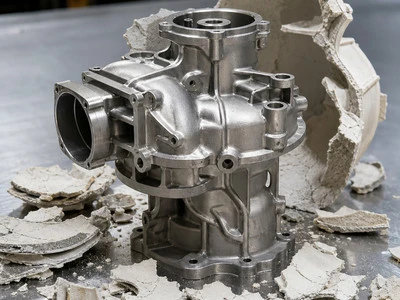
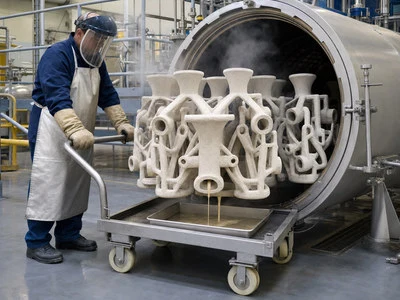
After the design is printed, it undergoes the classic shell construction procedure, where many layers of ceramic slurry and stucco are poured to make a lasting mold. Controlling the coating thickness and the drying time is a hard task for the shell process, but it must be done so that the shell can endure the thermal stresses of pouring metal without splitting or distorting.
Quality Control and Dimensional Verification
But quality control is still needed throughout the intricate shell process, especially when you mix in additive manufacturing technology. Finished castings are dimensionally inspected, X-ray analysed, and tested for material to ensure that the advantages of digital pattern creation are realised in dependable, defect-free final parts.
How Is the Complex Shell Process Used in Aerospace, Medical, Automotive, and Precision Engineering?
Aerospace Component Manufacturing
Aerospace industries are increasingly using additive manufacturing along with the complex shell process for lightweight component fabrication with complex interior geometry. This technique enables the manufacture of turbine components, structural brackets, and other flight-critical components that need both accuracy and lower weight without sacrificing structural performance.
Medical Device and Implant Production
The complicated shell method allows for customisation for medical applications requiring patient-specific geometry. Manufacturers may include 3D printed designs to create medical implants and instrument components to precise specifications, using the design flexibility that additive manufacturing provides over conventional shell casting processes.
Automotive and Precision Engineering Applications
The complicated shell method is used in the automotive and precision engineering industries for components with tight tolerances and complex interior features, such as valve bodies and housing assemblies. Partnering with skilled vendors that know both digital pattern creation and conventional casting procedures helps ensure these components fulfil high-performance standards.
Conclusion
The complex shell technique, when combined with additive manufacturing, provides producers with more design flexibility, quicker development cycles, and higher dimensional precision. This combination continues to push the limits of what is feasible in precision casting, from aerospace to medical applications. China Welong has more than 20 years of experience in international production and assists customers in discovering new casting solutions. Looking to talk about your next difficult shell process project? Contact our team now!
FAQ
Q1: How does 3D printing improve the complex shell process?
3D printing allows manufacturers to create precise patterns directly from digital models, improving accuracy and eliminating traditional tooling requirements.
Q2: Does integrating additive manufacturing increase costs for the complex shell process?
While printing equipment requires investment, eliminating tooling costs often makes the overall process more cost-effective, especially for complex or low-volume parts.
Q3: What industries benefit most from this integrated approach?
Aerospace, medical device manufacturing, automotive, and precision engineering sectors benefit significantly from the complex shell process combined with additive manufacturing.
Q4: Can the complex shell process handle highly intricate geometries?
Yes, additive manufacturing integration allows the complex shell process to produce complex internal structures and organic shapes not achievable with traditional tooling.
Q5: How is quality controlled in the complex shell process?
Quality control involves dimensional inspection, X-ray analysis, and material testing to ensure finished castings meet exact specification requirements.
Explore Complex Shell Process Solutions With Us
Interested in leveraging additive manufacturing for your next casting project? China Welong offers ISO:9001-2015 certified manufacturing services, supported by an engineering team skilled in AutoCAD, Pro-Engineering, and SolidWorks. Whether you need aerospace-grade precision or custom medical components, our complex shell process capabilities can help. Email us at metal@welongpost.com to discuss your project requirements and get started today.
References
1. American Foundry Society, Investment Casting Handbook.
2. ASM International, Metals Handbook: Casting, Volume 15.
3. Gibson, I., Rosen, D., and Stucker, B., Additive Manufacturing Technologies.
4. Investment Casting Institute, Rapid Prototyping in Investment Casting Guidelines.
5. Society of Manufacturing Engineers, Fundamentals of Investment Casting Technology.
6. Wohlers, T., Wohlers Report: Additive Manufacturing and 3D Printing State of the Industry.

Share your inquiry, get the quotation accordingly!
China WELONG- Your Reliable Partner in Metal Solutions