How to prevent failures in cast aluminum?
More often than not, cast metal parts break, and once you know where to look, the problems aren't hard to figure out. As the metal melts, pours, and solidifies, pores, shrinkage, and hidden cracks form. These problems show up later as leaks, fatigue failures, or warranty claims, after the part has been used. This article talks about why cast aluminum fails, how flaws are found before they reach customers, and which process controls stop them from happening in the first place. This guide gives you a useful way to judge the quality of a supplier if you need or buy cast metal parts.
Why Does Cast Aluminum Fail? Material Selection, Design, and Process Optimization
Alloy Selection and Gas Absorption Risk
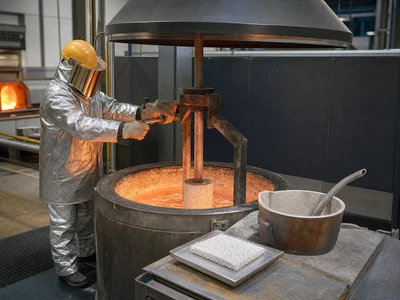
In the mold, not every aluminum alloy acts the same way. When aluminum is melted, it dissolves easily in hydrogen gas. However, as the metal cools and hardens, it loses a lot of its ability to dissolve hydrogen gas. This forces stored hydrogen out of the melt as gas pores if the melt wasn't properly degassed first. Alloys that don't absorb as much gas and have cleaner melt chemistry tend to make more consistent, flaw-free castings. This is why choosing an alloy should be done carefully before the tooling process starts.
Part Design and Wall Thickness Transitions
A common and overlooked reason why cast metal fails is that the part wasn't designed well. When the thick and thin sections change quickly, hot spots form where the molten metal cools down slowly. If the feed metal can't get to these areas in time, shrinkage cavities appear right where structural strength is most important. During the design phase, looking at how uniform the wall thickness is and making the transitions smoother greatly lowers this risk before even a single part is poured.
Process Parameters During Pouring and Solidification
During filling, metal flow that is too rough can trap air, and mold temperatures and cooling rates that aren't constant can mess up controlled solidification. Both of these issues directly raise the risk of internal flaws in cast aluminum parts. Manufacturers who use simulations and process monitoring to control the fill speed, pressure profile, and cooling channels always make more reliable castings than those who make changes after the fact.
Inspection and Testing for Cast Aluminum: How to Detect Cracks, Porosity, and Shrinkage
X-Ray and Radiographic Inspection
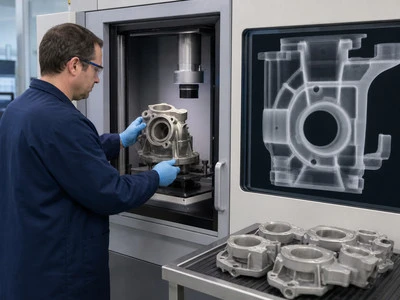
Radiographic testing is the usual way to find shrinkage and holes inside a finished cast metal part that would be hidden otherwise. Because X-ray imaging shows changes in density below the surface, it lets inspectors find flaws that cause holes in parts before they are sent to be machined or put together. This saves a lot of money on rework compared to finding the same problem after they have been finished.
Ultrasonic Testing for Cracks and Discontinuities
Radiography and ultrasonic tests work together to find cracks and other breaks in the material that might not be obvious on an X-ray. High-frequency sound waves bounce off of internal flaws differently than they bounce off of sound metal. This lets inspectors figure out where the flaw is and how big it is without hurting the part. Using both ways together gives a much fuller picture of quality for structural or pressure-bearing cast aluminum parts than using just one.
Surface Inspection Methods
Not all flaws in cast aluminum are below the surface. Magnetic particle tests and dye penetrant checking are still low-cost ways to find surface cracks, cold shuts, and other flaws that you might miss with a quick eye check. When these low-cost surface methods are added to internal testing, they give manufacturers a fuller picture of defects without making inspection costs go through the roof.
How Can Heat Treatment and Quality Control Improve Cast Aluminum Performance?
Heat Treatment for Mechanical Properties
The internal substructure of cast aluminum can be changed with the right heat treatment, which makes it stronger, harder, and more stable in its shape after it has solidified. For structural metals, solution treatment and controlled aging are typical steps. If you skip or mess up this step, the part might not be as strong as the alloy standard says it is, even if it looks perfect on the outside. Because of this, it is just as important to get the heat treatment parameters right as it is to get the casting process right.
Degassing and Melt Treatment Practices
One of the best ways to make cast metal less porous is to treat the melt before filling. Degassing gets rid of hydrogen that has dissolved, and filtering gets rid of impurities that would weaken the finished part otherwise. When melt treatment is a standard, documented step instead of an occasional change, manufacturers tend to see much lower defect rates across production runs.
Building Quality Control Into the Supply Chain
Finding a flaw after the part is finished is much more expensive than stopping it before it happens. Layered quality checks, such as verifying arriving materials, keeping an eye on the process, and final non-destructive testing, help makers find problems with cast aluminum parts before they're sold. Structured quality control like this is what sets reliable suppliers apart from ones that just pass the risk on to you.
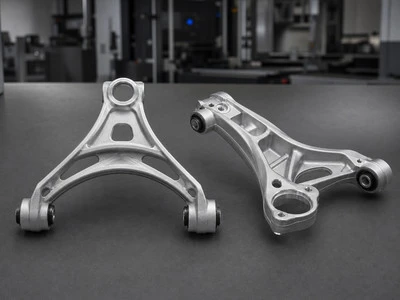
Cast Aluminum Failure Prevention Guide
Combining Design, Process, and Inspection Discipline
No one fix can stop cast aluminum failures on its own. Design reviews that avoid problematic wall transitions, focused melt and filling control, and stacked inspection that gets whatever slips through are all needed to stop them. When manufacturers see these three areas as connected instead of separate boxes, they consistently make more reliable parts, even when they're making a lot of them.
Applying These Standards to Your Supply Chain
When looking at a provider of cast aluminum, make sure you ask them how they keep an eye on the quality of the metal, the degassing process, and the temperature of the mold. You should also ask what testing methods they use as normal, not just as an extra cost. Suppliers who can show test records and documented process data, not just a finished part, are much more likely to keep quality high across multiple production batches and repeat orders.
Conclusion
To keep cast aluminum from breaking, it's important to choose the right material, build parts well, and check them carefully at every step of the production process. China Welong was established in 2001 and is ISO 9001:2015 approved. For more than twenty years, it has been handling sourcing, buying, and quality control for customers around the world in industries like medical, aerospace, oil drilling, and manufacturing. If you need reliable, defect-free cast aluminum parts for your project, the next best thing to do is to work with an expert supply chain company that focuses on quality.
FAQ
Q1: What are the most common causes of cast aluminum failure?
Gas porosity, shrinkage cavities, and internal cracks caused by poor alloy quality, part design, or process control are the leading causes.
Q2: How is porosity detected in cast aluminum parts?
X-ray radiography reveals internal porosity and shrinkage, while ultrasonic testing detects cracks and other discontinuities.
Q3: Does heat treatment really affect cast aluminum reliability?
Yes, proper solution treatment and aging significantly improve strength and dimensional stability compared to untreated castings.
Q4: Why does aluminum absorb gas so easily during casting?
Molten aluminum readily dissolves hydrogen, and its solubility drops sharply as the metal cools, pushing gas out as porosity if not properly degassed.
Q5: What should I ask a supplier to reduce the risk of defective cast aluminum parts?
Ask about alloy sourcing, degassing procedures, mold temperature control, and what non-destructive testing they apply as standard practice.
Partner With a Trusted Cast Aluminum Supply Chain Expert
Sourcing dependable, defect-free cast aluminum components starts with the right partner. China Welong brings over 20 years of supplier development, quality control, and custom engineering experience to manufacturers across the UK, Germany, France, the USA, and beyond. Reach out to metal@welongpost.com today to discuss your drawings, specifications, or quality requirements — our team is ready to help you build a more reliable supply chain.
References
1. American Foundry Society (AFS) — Aluminum Casting Technology.
2. ASM International — Metals Handbook, Volume 15: Casting.
3. American Society for Testing and Materials — ASTM E155: Standard Reference Radiographs for Inspection of Aluminum and Magnesium Castings.
4. Campbell, J. — Complete Casting Handbook: Metal Casting Processes, Techniques and Design, Butterworth-Heinemann.
5. North American Die Casting Association (NADCA) — Product Specification Standards for Die Castings.
6. ASM International — Heat Treating of Aluminum Alloys, ASM Handbook Volume 4.

Share your inquiry, get the quotation accordingly!
China WELONG- Your Reliable Partner in Metal Solutions