Why Choose Cast Annealing Tray Over Fabricated Alternatives?
When it comes to selecting tray systems for their production lines, furnace operators who are responsible for high-temperature heat treatment operations are confronted with a decision that might have significant implications. In circumstances that include repeated thermal cycling and prolonged exposure to high temperatures, a cast annealing tray offers significant structural and metallurgical advantages over alternatives that are fabricated and welded. These advantages are particularly advantageous in high-temperature environments. The situations in which the temperature is very high are particularly conducive to this effect. We analyse the reasons why cast construction is preferable to fabrication in terms of durability, creep resistance, and distortion control in this article. Cast construction is superior to fabrication in all of these areas. Furthermore, we study how the optimal tray selection might reduce the amount of time that the furnace is idle and improve its overall efficiency over the long term of operation.
What Makes Cast Annealing Trays More Durable Than Fabricated Trays?
Single-Piece Structural Integrity
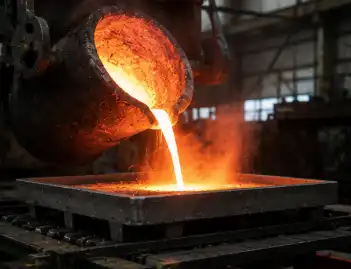
It is feasible to remove the welded connections that are present in fabricated forms because cast annealing trays are created as a single, homogeneous piece. This makes it possible to eliminate the need for welding. By using this unified structure, the weak regions that are often associated with heat-affected zones surrounding welds are avoided. This is because these weak areas are eliminated. It is in this particular region where cracking and premature failure originate the majority of the time. As a consequence of the fact that the whole tray has metallurgical properties that are consistent throughout, it is able to distribute thermal and mechanical stress across the surface in a more equal manner during the course of numerous cycles in the furnace.
Superior Resistance to Joint Failure
When exposed to cyclic heating and cooling, welded seams, which are fundamental to the construction of fabricated trays, are inherently more sensitive to fatigue cracking. This is because fatigue cracking is caused by strain on the material. The use of a cast annealing tray completely removes this problem since it does not have any different weld surfaces that have the potential to grow weaker throughout the course of utilisation. Because of this structural advantage, service intervals are significantly prolonged, which in turn minimises the frequency of tray replacement and the expenditures associated with production interruptions in continuous annealing operations. In addition, this advantage also means that service intervals are much longer.
How Does Cast Construction Improve High-Temperature Creep Resistance?
Alloy Composition Optimized for Heat Exposure
The creation of cast annealing trays often involves the use of heat-resistant alloys, such as compositions based on nickel or high chromium, by the producers. For the purpose of withstanding prolonged exposure to high temperatures in furnaces, these alloys have been specifically created. Standard-produced steel plates, which were not originally meant to endure the constant heat loads that are present in industrial annealing settings, are not nearly as effective as these alloys in resisting progressive deformation, which is more often referred to as creep. This is because this kind of deformation is caused by the gradual accumulation of heat over time.
Uniform Microstructure Under Sustained Heat
In contrast to welded assemblies, a cast annealing tray develops an inner microstructure that is more uniform across the whole structure. This is because casting enables controlled solidification, which provides the reason for this result. The tray can maintain its dimensional stability even after thousands of heating cycles because of its homogeneity that it has. On the other hand, produced trays often develop localised soft patches around weld zones, which speeds up creep deformation and reduces the component's overall lifespan for which it may be used.
Thermal Cycling, Distortion Resistance, and Long-Term Tray Performance
Withstanding Repeated Expansion and Contraction
During the heating and cooling cycles, furnace trays are exposed to a constant process of expansion and contraction. This process occurs as the trays go through the furnace. It is possible for a cast annealing tray that has been constructed with careful consideration to absorb these thermal stresses without warping. This is because the wall thickness of the tray is homogeneous, and there are no stress-concentrating welds present. This resilience allows the tray to continue to offer flat and reliable support for the components that are being processed, even after prolonged durations of service in production schedules that are tough. This is because the tray is able to maintain its flat configuration.
Maintaining Dimensional Accuracy Over Time
It is possible for the arrangement of parts, the flow of air, and the overall homogeneity of the heat treatment to be disrupted when boiler trays are warped. A suitably constructed cast annealing tray is able to resist warping for a much longer amount of time than alternatives that are produced, and as a result, it is able to keep its dimensional perfection across hundreds of production cycles. Because of this stability, there is less of a need to replace trays on a regular basis or to make costly alterations to the procedures for loading the furnace, both of which are often caused by equipment that gradually deforms over time.
Can Cast Annealing Trays Reduce Failures and Furnace Downtime?
Fewer Unplanned Replacements
Failure of a tray that was not expected has the potential to cause production to be interrupted and to cause damage to components that are already being processed. In a cast annealing tray, the weld-related weak regions that are characteristic of fabricated designs are absent, which results in a considerable reduction in the number of catastrophic failures that occur in the tray. As a result of this reliability, maintenance teams are able to schedule tray replacements around scheduled downtime. This eliminates the need for them to respond to emergency shutdowns that are brought on by sudden structural cracking in the midst of the maintenance cycle.
Lower Total Cost of Ownership
However, the fact that it has a longer service life often results in a lower total cost of ownership. Although it is conceivable that the initial cost of a cast annealing tray is more than the cost of a comparable fabricated counterpart, this is not always the case. Cast trays are a financially feasible alternative for high-volume annealing operations over the long term. This is due to the fact that they minimise the frequency of replacement, there are fewer production interruptions, and there is less scrap as a result of difficulties linked to the tray. When taken together, all of these elements contribute to a balanced starting expenditure.
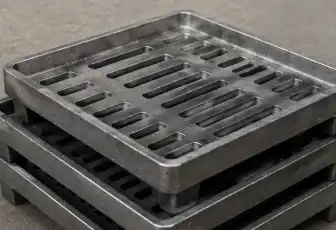
How Can You Choose the Right Cast Annealing Tray for Your Furnace?
Matching Alloy Grade to Furnace Conditions
In order to choose the cast annealing tray that is most suited for your furnace, it is vital to have a comprehensive understanding of the temperature range, environment, and cycle frequency that are specific to your furnace. It is possible to ensure that the material composition you pick is in accordance with your operational conditions if you collaborate with a knowledgeable supplier. This will allow you to maximise the service life of your product and eliminate early degradation that is caused by the selection of an alloy that is not a good fit. When compared to reducing atmospheres, oxidising atmospheres are more favourable for the performance of various grades of stainless steel.
Working with Experienced Engineering Partners
Custom-designed trays often function better than generic equivalents that are available on the market. This is due to the fact that there is such a wide variety of conceivable configurations for furnaces. A provider that provides engineering help may evaluate existing drawings or generate new designs for a cast annealing tray in order to guarantee that the completed product will integrate seamlessly into your current furnace system without needing expensive adjustments or having fitting concerns. This will ensure that the finished product will be able to be used without any problems. Specific load capabilities, dimensions, and mounting requirements may be accommodated by these designs so that they can be customised.
Conclusion
A cast annealing tray provides superior durability, creep resistance, and dimensional stability in comparison to other options that are manufactured. As a consequence of this, it is a more reasonable investment for the utilisation of furnaces over the long run. China Welong, which was founded in 2001 and is certified to the ISO 9001:2015 standard, has been supplying precision-cast components to more than one hundred customers in Germany, the United Kingdom, and other countries for more than twenty years. China Welong is also certified to the ISO 9001:2015 standard. Through the provision of comprehensive technical support, Welong helps its clients reduce the amount of time their furnaces are offline and significantly improve the reliability of their furnaces. Please get in contact with Welong as soon as possible in order to enhance the operations of your heat treatment facility.
FAQ
Why does a cast annealing tray last longer than a fabricated tray?
Cast trays have no welded joints, eliminating the weak points where fatigue cracking typically begins in fabricated designs.
What alloys are commonly used for cast annealing trays?
High-chromium and nickel-based heat-resistant alloys are commonly selected for their creep resistance and thermal stability.
Do cast annealing trays resist warping better than fabricated trays?
Yes, their uniform structure and absence of weld-related stress points help maintain flatness across many thermal cycles.
Is a cast annealing tray more cost-effective in the long run?
Despite a higher initial cost, reduced replacement frequency and fewer failures often lower the total cost of ownership.
Can cast annealing trays be custom-designed for specific furnaces?
Yes, manufacturers with engineering support can design trays based on drawings or specifications matching your furnace requirements.
Ready to Upgrade to a More Reliable Annealing Tray Solution?
If frequent tray failures or furnace downtime are impacting your production, China Welong can help. With over 20 years of experience, ISO 9001:2015 certification, and in-house engineering support using AutoCAD, Pro-Engineering, and SolidWorks, our team delivers precision-cast annealing trays built to withstand demanding furnace conditions. Contact us today at metal@welongpost.com to discuss your specifications and discover how Welong can strengthen your heat treatment operations.
References
1. American Foundry Society, "Heat-Resistant Casting Alloys for High-Temperature Applications," AFS Technical Publications.
2. ASM International, "Metals Handbook: Properties and Selection of Heat-Resistant Alloys," Volume 1.
3. Kalpakjian, S., and Schmid, S., "Manufacturing Engineering and Technology," Pearson Education.
4. ASTM International, "Standard Specification for Centrifugally Cast Heat-Resistant Steel Fittings," ASTM A297.
5. International Organization for Standardization, "ISO 9001:2015 Quality Management Systems Requirements."
6. Metal Treating Institute, "Furnace Fixturing and Tray Design for Heat Treatment Operations," MTI Technical Reports.

Share your inquiry, get the quotation accordingly!
China WELONG- Your Reliable Partner in Metal Solutions