How Do Rolling Mill Machine Components Impact Production Stability?
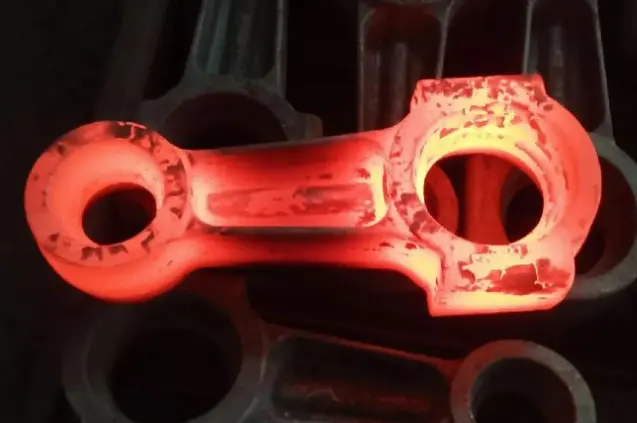
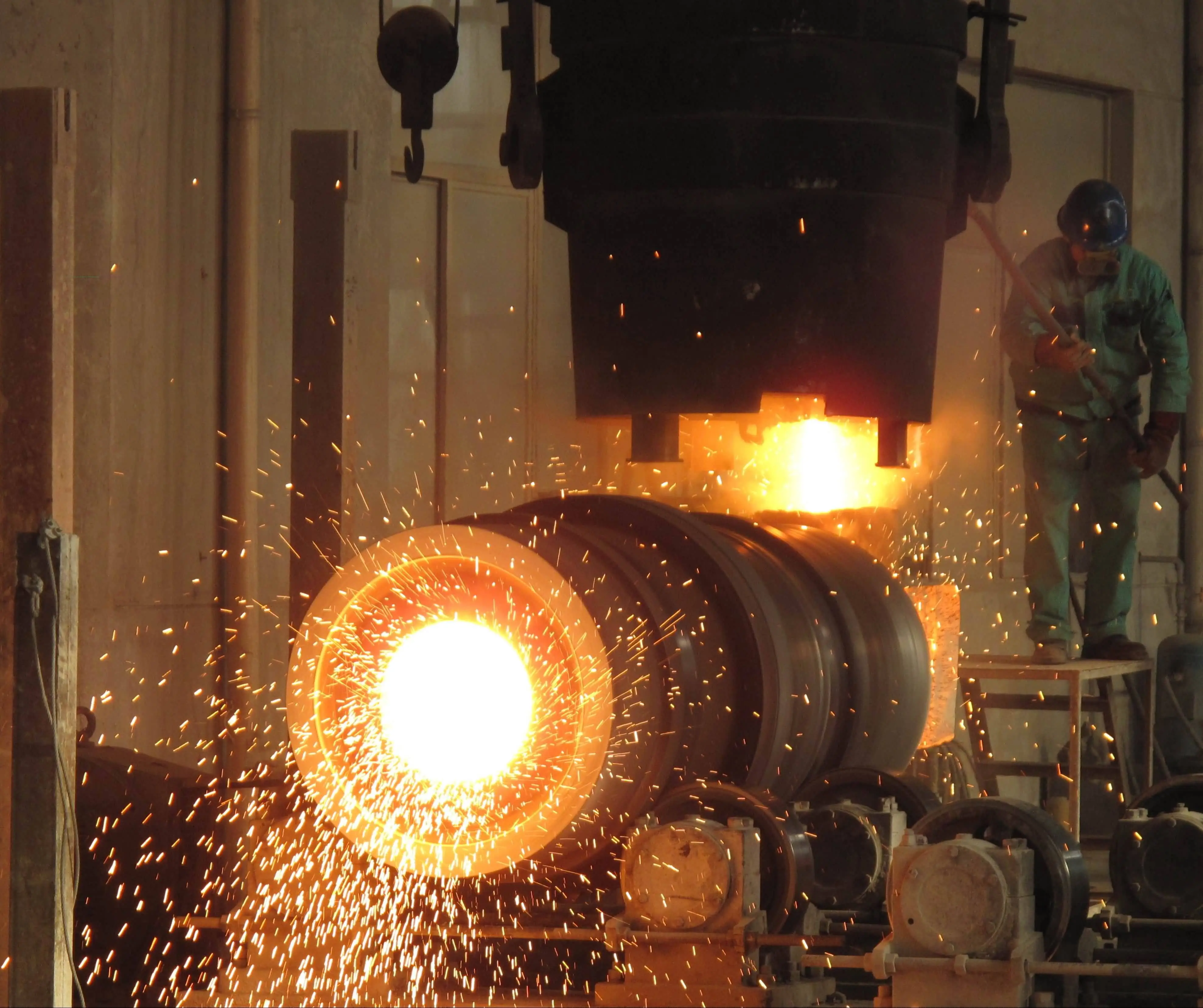
The condition and accuracy of the equipment that is driving the operation are two of the most essential elements that affect the consistency of output in steel and metal processing facilities. This is because the machinery is the one that is driving the operation. Every single component of the rolling mill machine component, from the work rolls to the bearings and housings that they contain, has a direct impact on the preservation of dimensional accuracy, the reduction of vibration, and the avoidance of unexpected downtime. These are all factors that are directly impacted by the rolling mill machine. When appropriate engineering and maintenance are conducted on these components, mills are able to work more effectively, with fewer failures and longer production cycles. This is because the mills are able to function more efficiently. The objective of this article is to study which components are the most significant, how they impact rolling accuracy, the threats that are posed by wear, and the practical solutions that may be employed to provide the highest possible level of dependability throughout the whole rolling application.
Which Rolling Mill Machine Components Are Critical for Stable Production?
Work Rolls and Backup Rolls
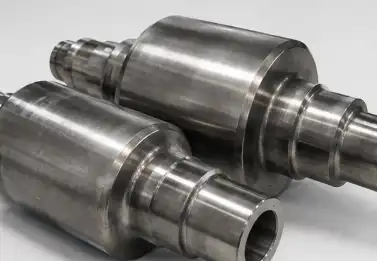
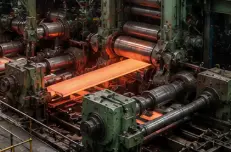
Work rolls and backup rolls are among the most important components of any mill. They are the core rolling mill machine components that are responsible for shaping metal stock into the required dimensions. Work rolls and backup rolls are also among the most important components of any mill. At the same time as work rolls are coming into direct contact with the material, backup rolls are providing structural support that helps to avoid deflection when heavy loads are being applied. There is a possibility that any disparity in their hardness, surface quality, or alignment might rapidly result in flaws on the surface of the final product, in addition to variances in thickness inside the product itself.
Housing and Structural Frames
The housing assembly serves as the structural backbone that guarantees the rolls, bearings, and drive systems are in perfect alignment with one another when the machine is in operation. It is necessary for the housing, which is a vital rolling mill machine component, to be able to withstand significant rolling forces without bending or shifting position inside the machine. Housings that are either poorly made or worn out may be the source of misalignment that develops over time. This misalignment might lead to rolling pressure that is not equal, which will ultimately lead to a reduction in the overall product homogeneity all throughout the manufacturing runs.
How Do Rolls and Bearings Affect Rolling Accuracy and Reliability?
Bearing Precision and Load Distribution
The huge radial and axial forces that are generated during rolling are controlled by bearings, which are found in rolling machines. Moreover, they provide support for rollers that are designed to spin. The degree to which the machine distributes load evenly over the roll surface is directly influenced by the bearing quality of rolling mill machines. Bearing quality is a component of rolling mill machines. Play and vibration may be caused by bearings that are worn out or that are not properly oiled. This can lead to thickness deviations, surface scoring, and higher wear on adjoining components throughout the mill stand. Bearings that are not properly oiled can also cause play and vibration.
Roll Surface Condition and Alignment
Surface smoothness and roll alignment are two of the most essential aspects that influence rolling accuracy. Rolling accuracy is determined by a number of factors. Any rolling mill machine component that belongs to this category and is properly maintained ensures that the contact pressure remains constant over the whole width of the material that is being processed from the beginning to the finish of the operation. Even minute surface imperfections or misalignment between the top and bottom rolls may be the source of camber, edge cracking, or uneven gauge. Camber can also mean that the gauge is uneven. There is a possibility that this may ultimately have an effect on the subsequent processing as well as the approval of the finished product by the client.
Can Component Wear Cause Downtime and Product Quality Problems?
Progressive Wear and Unplanned Stoppages
Over the course of time, every component of a rolling mill machine will gradually degrade due to the continuous friction and temperature cycling that occurs from the machine. In particular, this is the case with regard to the rolls, bearings, and guiding systems that are used in the rolling mill. Wear that is permitted to continue unchecked often results in an unforeseen failure of the mechanical system, which in turn causes output to stop without any previous thought being given to the matter. Not only can these interruptions result in the cessation of production, but they also necessitate the need for emergency repairs, which are often more costly and time-consuming than the routine maintenance that is performed prior to the critical wear thresholds being reached.
Quality Defects Linked to Deteriorating Parts
Not only can worn rolling mill machine components result in downtime, but they also directly contribute to a decline in the overall quality of the product. A component of the rolling mill machine that has deteriorated in quality may be responsible for the introduction of surface imperfections, dimensional irregularities, or internal stress concentrations into the material that has been rolled. Components that were past due for inspection, replacement, or precise reconditioning are often the cause of repeated quality complaints for manufacturers. These manufacturers need to adhere to rigorous tolerances for applications in the automotive, construction, or industrial sectors.
How Can You Optimize Rolling Mill Machine Components for Reliability?
Scheduled Inspection and Predictive Maintenance
When preventative maintenance plans are implemented, there is a link between the detection of wear patterns and the prevention of problems from manifesting themselves. When they do periodic inspections of each component of the rolling mill machine, the maintenance workers are able to arrange replacements during planned downtime rather than reacting to emergencies. This allows them to avoid having to deal with unexpected problems. The vibration analysis and temperature monitoring that are performed in addition to these checks are also performed. The use of this strategy results in an increase in the equipment's lifespan, a reduction in the amount of unexpected expenditures, and an easier time maintaining a consistent level of product quality during extended processes of production.
Sourcing Precision-Engineered Replacement Parts
There are several factors that contribute to dependability, one of which is the acquisition of replacement parts of superior quality from manufacturers that possess substantial knowledge. A component of a rolling mill machine that has been well-engineered and constructed in accordance with precise specifications and adequate metallurgical standards is more predictable in terms of its performance, and it is able to endure more demanding situations for a longer length of time. You can ensure that replacement components quickly integrate with existing mill configurations by developing relationships with suppliers that provide technical help and the ability to generate custom designs. This will allow you to guarantee that the components will be simply integrated. The prospect of introducing new alignment or fit issues is eliminated as a result of this occurrence.
Conclusion
Rolling mill machine components provide the foundation for production that is both consistent and of high quality. The condition of these components has a direct influence on the functioning of the mill itself. For more than twenty years, China Welong, which was founded in 2001 and is certified to the ISO 9001:2015 standard, has been delivering precision-engineered components to more than one hundred customers in Germany, the United Kingdom, and other countries. These customers come from all over the world. Through the provision of rigorous engineering support and thorough quality control, Welong makes it possible for mills to operate in a dependable manner. It is imperative that you get in contact with Welong as soon as possible in order to improve your rolling operations by including components that are long-lasting and constructed with precision.
FAQ
Which rolling mill machine components most affect product quality?
Work rolls, backup rolls, and bearings have the greatest direct influence on dimensional accuracy and surface finish quality.
How often should rolling mill components be inspected?
Inspection frequency depends on production volume, but predictive maintenance schedules based on vibration and thermal data are recommended.
What causes premature wear in rolling mill machine components?
Common causes include inadequate lubrication, misalignment, excessive load, and insufficient scheduled maintenance over time.
Can worn components be reconditioned instead of replaced?
In some cases, rolls and housings can be reconditioned, but severely worn parts typically require full replacement for reliable performance.
What should I look for when sourcing replacement components?
Prioritize suppliers with ISO certification, engineering design support, and a proven track record of precision manufacturing.
Get in Touch
If unplanned downtime or inconsistent quality is affecting your production line, China Welong can help. With over 20 years of experience, ISO 9001:2015 certification, and full engineering design support using AutoCAD, Pro-Engineering, and SolidWorks, our team delivers precision-engineered rolling mill machine components built for demanding industrial environments. Contact us today at metal@welongpost.com to discuss your specifications and discover how Welong can strengthen your production stability.
References
1. Association for Iron & Steel Technology, "Rolling Mill Equipment and Process Fundamentals," AIST Technical Reports.
2. ASM International, "Metals Handbook: Forming and Forging," Volume 14.
3. Roberts, W. L., "Hot Rolling of Steel," Manufacturing Engineering and Materials Processing Series.
4. Kalpakjian, S., and Schmid, S., "Manufacturing Engineering and Technology," Pearson Education.
5. International Organization for Standardization, "ISO 9001:2015 Quality Management Systems Requirements."
6. Society of Tribologists and Lubrication Engineers, "Bearing Reliability in Heavy Industrial Machinery," STLE Technical Papers.

Share your inquiry, get the quotation accordingly!
China WELONG- Your Reliable Partner in Metal Solutions