How Do Hot Forging Parts Improve Wear Resistance in Mining Tools?
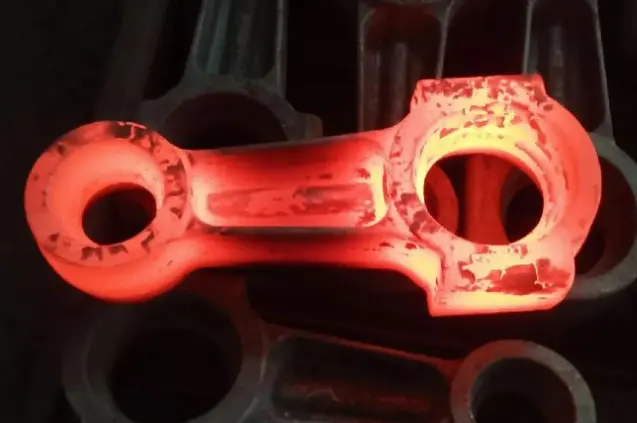
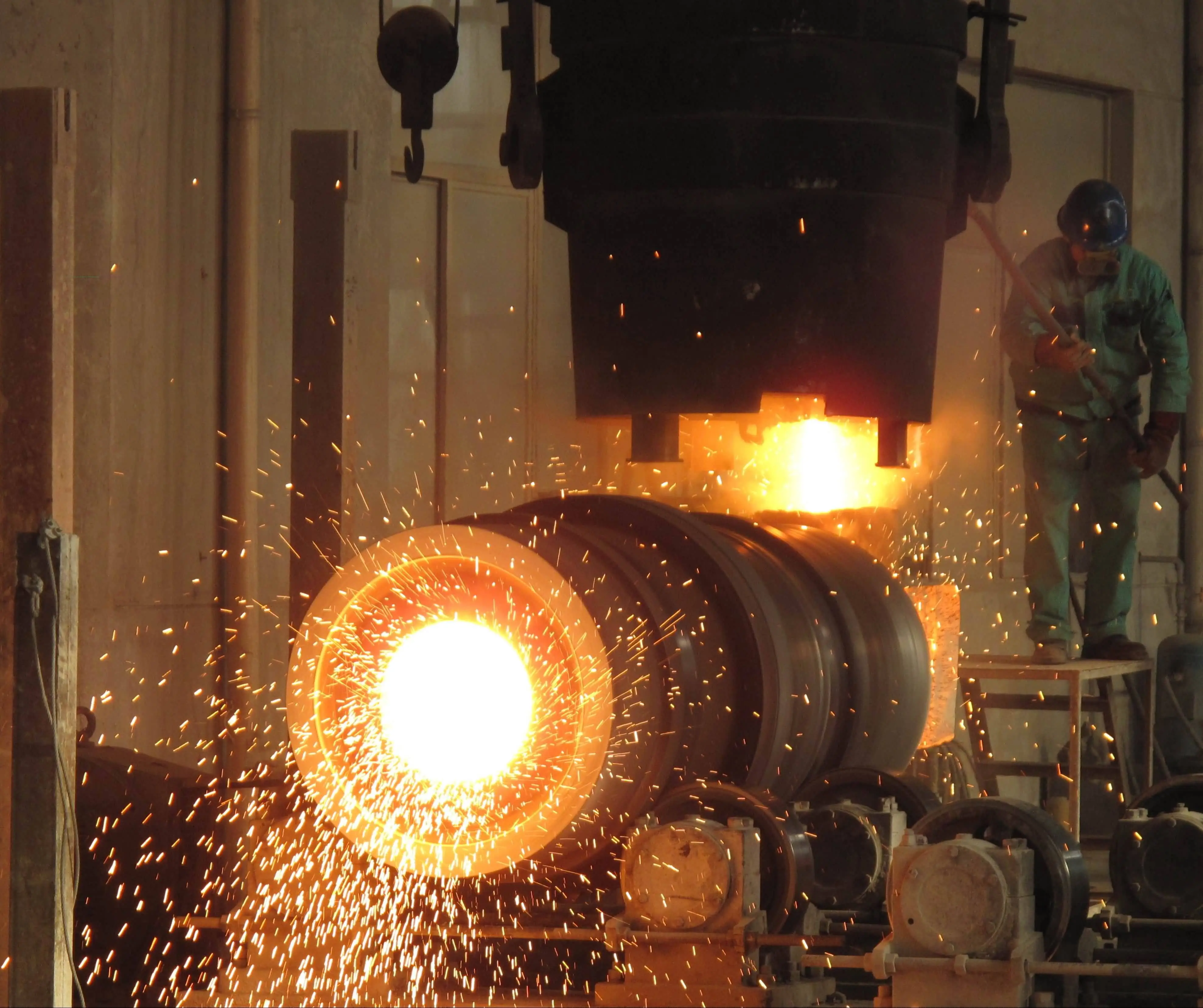
When mining activities are carried out, the machinery that is used is often exposed to abrasion, impact, and enormous loads. There is a tremendous amount of strain placed on the machinery by mining operations. The internal structure of the metal is refined by the process of hot forging, which leads to the fabrication of components that are far more resistant to wear than their cast or machined counterparts. The utilisation of hot forging parts is widespread within this sector of the economy. Under harsh conditions, the performance of forged components, such as drill bits and crusher jaws, is maintained. This is in contrast to the performance of materials that are less robust, which quickly deteriorate. In order to determine whether or not hot forging parts are a viable choice for extending the service life of mining equipment, this article investigates the elements that contribute to their dependability. The selection of materials, the degree of hardness, the capability to adjust temperature, and the management of the process are all variables that fall under this category.
Material Selection and Heat Treatment for Better Wear Performance
Choosing the Right Alloy Composition
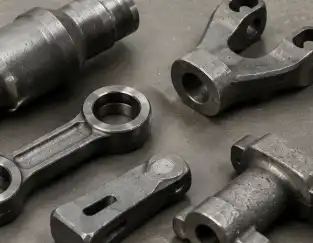
To begin the process of establishing the wear resistance of hot forging parts, the first step is to choose the alloy that will be used. High-carbon or alloy steels that include chromium, manganese, or molybdenum are often the materials of choice for manufacturers. This is due to the fact that these elements enhance the steel's resistance to abrasion and increase its hardness. As a consequence of the processing of these elements, carbides are formed. These carbides act as minute barriers that provide protection against surface wear. The selection of the proper base material for mining tools that are exposed to rock, ore, and soil is the foundation for achieving long-lasting performance in the field. This is the premise for achieving long-lasting performance.
Post-Forging Heat Treatment Processes
After the pieces have been formed, they are subjected to a controlled heat treatment, which may involve quenching and tempering, in order to get the necessary level of hardness without sacrificing their ductility. This is done in order to achieve the desired level of hardness. As a result of this process, the microstructure is polished even further, which guarantees that the top layer is able to withstand repeated friction while the core retains adequate flexibility to absorb shock loads without becoming stiff. As a consequence of the fact that improper cooling rates might potentially result in brittleness or uneven hardness over the working surface of the component, it is essential to have heat treatment plans that are acceptable.
Can Hot Forging Increase the Toughness of Mining Tool Components?
Grain Refinement Through Plastic Deformation
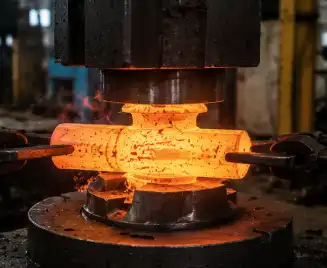
The process of forging involves repeated compression, which has the effect of breaking down coarse cast structures and significantly refining grain size compared to the original structure. One of the key reasons why hot forging components have a better level of toughness compared to cast components is that the internal fibres of the metal are aligned with the contour of the part as a consequence of this mechanical action. This alignment is one of the reasons why hot forging components are preferred. When exposed to the recurrent impact pressures that are usual in mining applications, grains that are finer and more uniform transfer stress more consistently, which decreases the likelihood of cracking. This results in a reduction in the likelihood of cracking.
Reducing Internal Defects and Porosity
The use of casting processes often leads to the introduction of defects such as voids, gas pockets, or shrinkage, all of which contribute to the degradation of a component from the inside out. The high pressure that is applied during the shaping process forces any internal porosity to collapse, which ultimately results in a structure that is denser and more uniform than it was with the previous structure. Consequently, this makes it possible for hot forging parts to avoid these issues. Mining tools are able to sustain sudden shocks and cycle loads without prematurely fracturing since they do not have any weak places within their own structure. This is the case even when they have been in continuous use for extended periods of time.
How Do Forging Temperature and Process Control Affect Durability?
Maintaining Optimal Forging Temperature Ranges
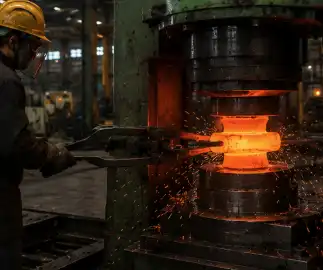
It is very necessary to maintain adequate temperature control throughout the whole of the production process in order to guarantee that the final product will be of superior quality. Forging the metal within the required temperature window, which is often a significantly higher temperature than the recrystallisation point of the material, ensures that the metal will flex plastically without breaking as a result of the operation. It is possible for internal stresses to develop during the shaping process if temperatures drop too low. These stresses may lead to microfractures, which can reduce the tool's lifetime when it is exposed to substantial mining pressures.
Monitoring Strain Rate and Die Design
There are a number of elements that have a significant influence on the uniformity of hot forging parts that are not related to temperature. These aspects include the management of strain rate and the use of dies that have been well-engineered. An uneven flow of material may be the result of high strain rates, and stress concentrations at critical areas may be the result of dies that have been manufactured in an incorrect manner with regard to their construction. For the purpose of fine-tuning these elements, reputable manufacturers make use of simulation software and operators with extensive experience. This guarantees that every batch of forged mining components fulfils the precise dimensions and mechanical requirements that have been established.
How Can Hot Forging Parts Extend the Service Life of Mining Tools?
Improved Fatigue Resistance Under Repeated Loading
The failure of mining tools is virtually never the consequence of a single event; rather, they degrade as a result of repeated cycles of stress. A single incident is nearly never the cause of failure. In contrast to cast components, hot-forged parts have a much longer resistance to fatigue cracking than parts made from cast components. This is because they have a refined grain flow and fewer internal faults than other pieces of the same material. As a direct consequence of this, mining companies that are dependent on the ongoing operation of their equipment under challenging conditions will see a reduction in the number of replacements, a reduction in the amount of downtime, and a reduction in their long-term operating expenditures.
Compatibility With Custom Engineering Requirements
When it comes to mining equipment, application-specific geometries are often something that is necessary in the mining sector. The components that are created by hot forging may be made according to the precise designs and specifications provided by the client. The final component will be able to integrate without any problems with the equipment that is already in place, and it will also be able to provide the wear resistance and structural dependability that mining operators rely on on a daily basis. When it comes to meeting the unique operating needs of their companies, suppliers that have great technical assistance are able to change dimensions, tolerances, and surface treatments to satisfy those requirements.
Conclusion
Hot forging parts provide mining operators with a tried-and-true solution for reducing wear, fatigue, and impact damage in situations that are very demanding. This solution is provided by the use of hot forging. Over one hundred customers in Germany, the United Kingdom, and the United States of America have been receiving precision-forged components from China Welong, which was founded in 2001 and is certified to the ISO 9001:2015 standard. China Welong has been delivering these components for more than twenty years. In spite of the fact that it is backed by strong technical capabilities, Welong remains committed to advancing China's intelligent manufacturing. You should get in touch with Welong right away in order to get forged parts that are meant to operate incredibly well in the most challenging mining scenarios. These parts are made to endure for a long time and are custom-engineered.
FAQ
Why are hot-forged parts preferred over cast components for mining tools?
Forging refines grain structure and eliminates internal voids, resulting in greater strength, toughness, and wear resistance under heavy mining loads.
What alloys are commonly used in hot forging parts for mining applications?
High-carbon and alloy steels containing chromium, manganese, or molybdenum are frequently chosen for their hardness and abrasion resistance.
Does heat treatment affect the wear resistance of forged mining tools?
Yes, controlled quenching and tempering after forging optimize surface hardness while maintaining core toughness for impact resistance.
Can hot-forged parts be customized for specific mining equipment?
Absolutely. Manufacturers with engineering support can adjust dimensions, tolerances, and treatments to fit unique operational requirements.
How does forging temperature control impact part durability?
Maintaining proper temperature ranges during forging prevents microfractures and internal stress, ensuring long-term structural reliability.
Ready to Upgrade Your Mining Equipment with Durable Forged Parts
If your mining operation demands components that can withstand relentless wear and heavy impact, China Welong is ready to deliver. With over 20 years of experience, ISO 9001:2015 certification, and full engineering design support, our team can transform your drawings into precision-forged mining tools built to last. Contact us today at metal@welongpost.com to discuss your project and discover how Welong can strengthen your supply chain with reliable, high-performance forged solutions.
References
1. American Society for Metals, "Metals Handbook: Forming and Forging," ASM International, Volume 14.
2. Forging Industry Association, "Wear-Resistant Alloys for Heavy Equipment Applications," Technical Reference.
3. Kalpakjian, S., and Schmid, S., "Manufacturing Engineering and Technology," Pearson Education.
4. Society for Mining, Metallurgy & Exploration, "Equipment Durability in Abrasive Mining Environments," SME Technical Papers.
5. International Organization for Standardization, "ISO 9001:2015 Quality Management Systems Requirements."
6. ASTM International, "Standard Specification for Carbon and Alloy Steel Forgings," ASTM A668/A668M.

Share your inquiry, get the quotation accordingly!
China WELONG- Your Reliable Partner in Metal Solutions