Which Casting Method is Best for Your Part?


It can be hard to pick the right casting method for your project when you have to think about cost, quality, and delivery times. The truth is that there is no one right answer, but there is an organized way to figure out what works best for you. Casting parts are essential to many fields, from cars and airplanes to medical devices and oil and gas. The way you choose impacts the accuracy of the measurements, the mechanical qualities, the cost of production, and the wait time. Knowing the main differences between sand casting, die casting, and investment casting will help you make smart purchasing decisions that meet your technical needs and business goals, whether you're looking for aluminum housings for aerospace assemblies or steel brackets for drilling equipment.
Understanding Casting Methods and Their ImportanceWhat Are Casting Parts and Why Do They Matter?
When making something, casting is the process of pouring liquid metal into a mold and letting it harden into the desired shape that is wanted. Metals like aluminum, steel, iron, bronze, and zinc mixtures are often used as casting materials. This method makes it possible to make complicated shapes that would be hard or expensive to make using only cutting or forging.
The Role of Casting in Industrial Manufacturing
Casting parts have a direct effect on how long products last, how much they weigh, and how cost-effective they are across all industries. Precision investment Casting parts are used in aircraft to make turbine blades and structural parts with the tight tolerances that are needed. Heavy-duty sand molds are used in oil and gas operations to make valve bodies and pump housings that can handle high pressures.
Overview of Primary Casting Methods
Most business uses can be solved with three main techniques:
- Sand Casting: Molds made of crushed sand mixed with bentonite clay binding. This method is flexible, doesn't cost much, and can be used with almost any metal combination and low to medium production rates. Casting parts made from sand casting can weigh anywhere from a few hundred grams to several tons.
- Die Casting: In die casting, liquid metal is pushed into steel molds under a lot of pressure. This method is great for making a lot of non-ferrous metals, like magnesium, aluminum, and zinc, because it gives the metals a smooth surface and consistent dimensions.
- Investment Casting: Also called "lost-wax casting," it makes models out of ceramic that are shaped like wax designs. It makes complicated forms with a smooth surface and close tolerances, which makes it perfect for medical and aircraft parts that need to be very precise.
When procurement workers understand these basics, they can better evaluate providers and make sure that technical needs are communicated properly throughout the sourcing process.

Key Criteria to Choose the Best Casting Method for Your Part
Introducing the F-1 Criteria Screening Approach
The F-1 criteria screening approach is a structured way to compare casting methods based on five important factors: Form (part shape), Function (mechanical requirements), Forecast (production volume), Finances (cost goals), and Flexibility (lead time and design changes). This organized method keeps mistakes from happening that are too expensive to fix when manufacturing skills don't match project needs.
Evaluating Part Complexity and Geometry
Which casting method can actually make your Casting parts, depending on how complicated the design is. Investment casting can handle internal openings, undercuts, and walls that are as thin as 0.5 mm. Die casting works best for moderately complicated parts, but it can only be used at draft angles of about 1 to 3 degrees. Sand casting can handle big, easy forms, but it might need more work to get close to the right size.
Production Volume Considerations
Volume economics are very different depending on the method. Because die casting tools are expensive and can be used hundreds of thousands of times, it only makes sense to do more than 5,000 units per year. With a lower initial investment, sand casting is a flexible way to make samples and small or large production runs of 10 to 10,000 pieces. In the middle is investment casting, which can be used for anywhere from 100 to 50,000 Casting parts, based on their size and complexity.
Material Compatibility and Performance Requirements
For each metal, there are different ways to make it. You can use sand casting on almost any metal, even steels with a high melting point and nickel alloys. When you use die casting, you can only use metals made of aluminum, zinc, and magnesium that have melting points below 700°C. Investment casting works with titanium, superalloys, and stainless steels that are used in tough aircraft applications. The material you choose must work with both the casting process and the conditions in which the Casting parts will be used, including temperature changes, rust resistance, tensile strength, and wear resistance.
Balancing Cost, Quality, and Lead Time
There are trade-offs in every project. If procurement managers really want to cut costs, they might choose sand casting because it doesn't require a lot of expensive tools, even if it means waiting longer for pattern development and possibly doing some secondary cutting. People who need to get into the market quickly and make a lot of products would buy die casting tools, even though they cost more at first. Investment casting is used in situations where exact measurements and a smooth surface are important enough to support the higher cost. Misalignment and price overruns can be avoided by being open with potential providers about these goals early on in the planning phase.
Detailed Comparison of Popular Casting Methods for B2B ClientsSand Casting: Versatility and Cost-Effectiveness
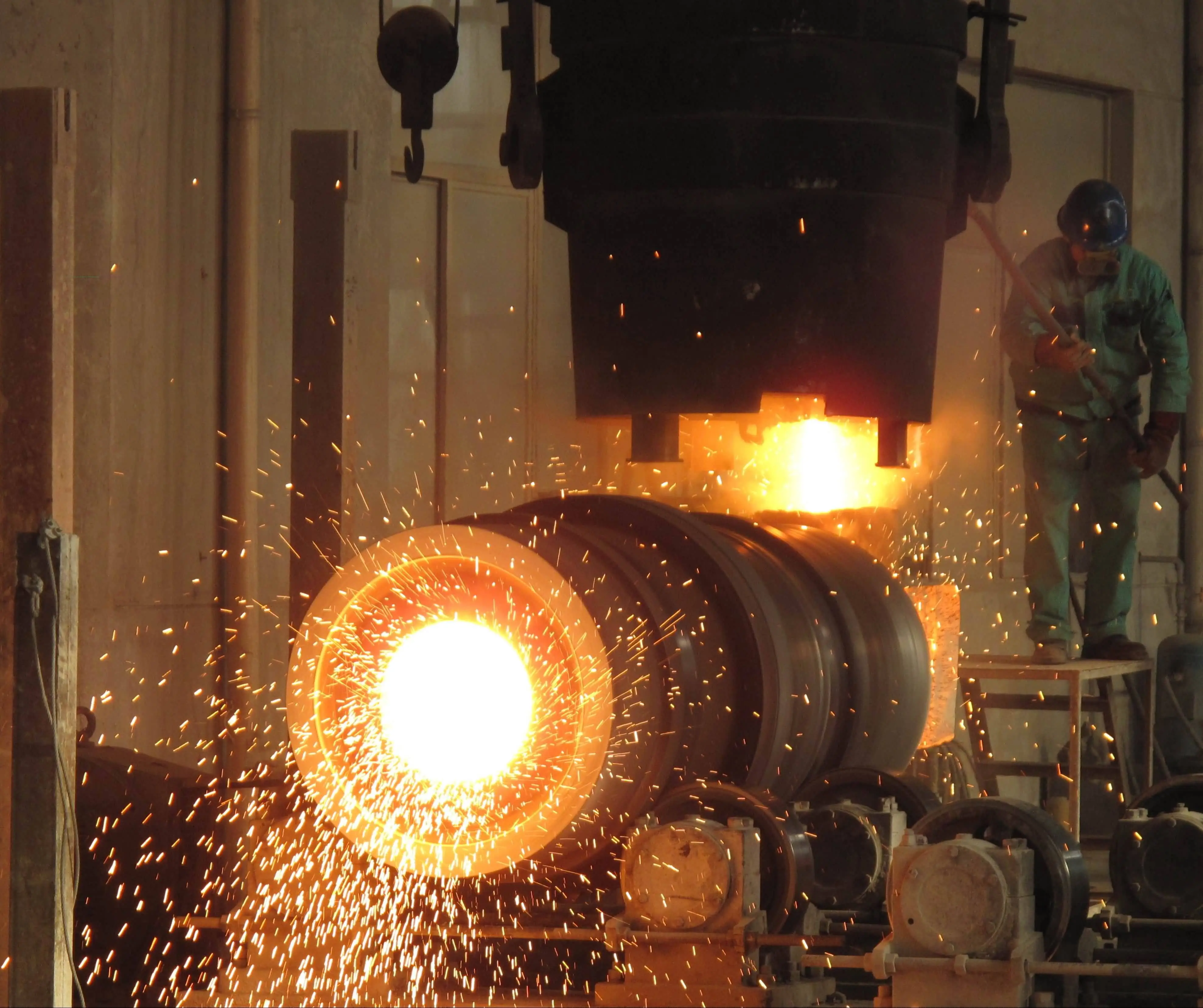
About 70% of all Casting parts made are still made using the sand casting method, which is still the most common. The first step is to make a design out of something like wood, metal, or plastic that looks like the end part. In order to make a mold, this design is pressed into a mixture of high-quality silica sand (about 85%), bentonite clay (10%), water (2–5%), and carbonaceous additives (5%). The mold has two parts: the cope (on top) and the drag (on the bottom). Once the pattern is taken off, molten metal runs into the hole through gates and runners. It then cools and takes the shape of the mold. Sand casting can be used for casting parts weighing as little as 0.5 kg and as much as 200 tons. It can be used for iron, steel, aluminum, or bronze, requiring low tool investment.
Die Casting: Precision and High-Volume Efficiency
When die casting, molten metal is pushed into precise steel molds called dies under pressures ranging from 10 to 175 MPa. There are two types: a hot chamber for low-melting-point magnesium and zinc alloys and a cold chamber for aluminum alloys. For small Casting parts, the process can get cycle times as low as 60 seconds, which lets more than 1,000 casting parts be made every day. Dimensions can be controlled to within 0.1 mm without extra work. Surface finish achieves Ra 0.8–3.2 μm, eliminating the need for painting or coating. With wall pieces as thin as 0.75 mm, less material is used, and Casting parts are lighter. The die can last for more than 100,000 rounds.
Investment Casting: Complexity and Superior Surface Quality
Investment casting makes ceramic molds from wax forms that can be thrown away, giving designers more freedom. Wax is first injected into metal dies. Several patterns are attached to a center tube, creating a "tree." This assembly is repeatedly dipped in ceramic slurry and covered with fine sand, forming a shell 5–10 mm thick. The wax melts away, hence the name "lost-wax casting," leaving a hollow ceramic model that can handle temperatures above 1,600°C. It can make complex shapes with internal tunnels, very low draft angles (0.5 to 1 degree), and walls as thin as 0.5 mm.
Quality Control and Standards Compliance
As a basic quality control measure, reputable casting providers keep their ISO 9001:2015 certification up to date. Aerospace needs AS9100 certification, while car suppliers want IATF 16949 certification. Good quality control includes checking dimensions with coordinate measuring machines (CMM), checking for internal flaws with non-destructive tests like X-rays, and mechanical testing to verify the strength of the alloy. European and American industrial standards, such as ASTM, DIN, and EN specifications, define acceptable levels of porosity and mechanical qualities. Need custom casting parts?Contact us for a quick quote.
How to Optimize Your Casting Parts Design for Best ResultsDesign Principles for Manufacturability
A good casting design combines the needs of usefulness with the limitations of production. When engineering teams and casting suppliers work together early on in the planning phase, it's good for procurement pros. This partnership finds possible flaws before investing in tools, which cuts down on sample versions and speeds up time-to-market.
Wall Thickness and Draft Angles
Having walls that are all the same thickness stops different cooling rates that can lead to buckling or stress clusters. Aim for pieces between 3 and 6 mm for die-cast aluminum Casting parts and 5 to 12 mm for sand-cast iron Casting parts. Gradual changes between thick and thin parts (with ratios no higher than 2:1) keep shrinking porosity to a minimum. Draft angles make it easier to take a pattern or part out of a mold. Investment casting can handle 0.5 to 1 degree of draft, while sand casting needs 1-3 degrees. Die casting usually needs between 1 and 3 degrees.
Gating and Riser Systems
The quality of the Casting parts is greatly affected by the flow of metal during mold filling. Engineers create gating systems to bring molten metal to the hole smoothly to ensure gas doesn't get trapped. Risers add more liquid metal to make up for shrinkage during solidification, preventing holes in heavy parts. Simulation software, such as MAGMA or ProCAST, can predict flow patterns and solidification processes, letting improvements be made before a real prototype is made.
Material Selection Strategies
The choice of alloy affects both how easy it is to make the Casting parts and how well they work. For use in cars and airplanes, aluminum alloys like A356 and A380 are great because they are easy to make, don't rust, and are strong for their weight. Ductile iron is great for heavy industrial tools because it doesn't break down easily. Stainless steel types don't rust, which is important for medical gadgets and food processing equipment. Your provider should help you choose an alloy based on working temperatures, climate exposure, and necessary mechanical qualities.
Heat Treatment and Post-Processing
A lot of Casting parts need to be heated up to get the right mechanical features. Through solution treating and fake aging, the T6 heat treatment for aluminum Casting parts raises their tensile strength by 40 to 60%. Stress relieving gets rid of leftover stresses from cooling, lowering the chance of damage during cutting. Surface treatments like shot peening make things resistant to wear, and coats keep things from rusting. Knowing about these post-casting processes during the design phase ensures that cost estimates and output schedules are accurate.

Procuring Casting Parts: What B2B Clients Need to KnowIdentifying Qualified Casting Suppliers
More than any other factor in buying, choosing the right supplier is what makes or breaks a project. Check for ISO 9001:2015 approval as proof of well-thought-out quality management systems. Check credentials like AS9100 for aircraft, IATF 16949 for cars, or FDA registration for medical products. Ask for customer examples from businesses with similar technology needs. Check the supplier's production ability to make sure they can handle your growing number without affecting delivery times.
Assessing Technical Capabilities
In addition to certifications, you should also look at how well the seller can help with research. Can they look over your drawings to make sure they can be made before they quote? Do they offer suggestions for design improvements that cut costs without lowering performance? Check out their testing methods and inspection tools, such as CMM machines, spectrometers, and X-ray systems. Suppliers who have their own metals labs can figure out problems with materials faster. Specialized knowledge will keep you from having to go through expensive learning curves as you ramp up production.
Managing Custom and Bulk Orders
Good procurement combines inventory costs with supply chain dependability. Before making production tools for new goods, you should start with small batches of prototypes (10 to 50 pieces) to validate design and manufacturing methods. Set clear acceptance criteria, such as required surface finish and size limits, and write them down in official First Article Inspection reports. As the number of orders grows, try to come to an understanding that locks in prices for 6 to 12 months. Set up vendor-managed inventory plans for casting parts that are used a lot to save money on storage while ensuring parts are available at the right time.
Leveraging Digital Procurement Platforms
Modern B2B buying relies more and more on digital tools that make it easier to find suppliers, compare quotes, and handle orders. Prices, wait times, and supplier reviews are clear in these systems, and audit trails are kept for proof of compliance. Integration with enterprise resource planning (ERP) tools makes it easier to manage business by automating tasks like purchase orders and billing. Digital platforms make it easier to communicate across time zones and language barriers when sourcing abroad, speeding up reaction times during technical talks or quality problems.
Conclusion
To choose the best casting method, you have to weigh technical needs, production costs, and the stability of the supply chain. For small to medium quantities with simple shapes, sand casting is flexible and doesn't cost much for the tools. Die casting is a cost-effective way to make a lot of aluminum, zinc, and magnesium casting parts with accurate dimensions. For specific uses, investment casting allows for more complicated designs and better surface quality, which is why it costs more. The F-1 criteria screening method, which looks at Form, Function, Forecast, Finances, and Flexibility, gives you an organized way to make a choice. Choosing the right method and working with qualified providers who show technical know-how and open communication are both important for successful buying.
FAQWhat factors should influence casting method selection for automotive components?
When used in cars, output volume, weight reduction goals, and dimensional limits need to be carefully thought through. Die casting is often used for high-volume inner brackets and gearbox housings because it saves money and can be done over and over again for more than 10,000 units per year. Sand-cast ductile iron is often used for suspension Casting parts that need to be strong and flexible at the same time. Sand casting is good for prototyping because it doesn't require a lot of expensive tools and can make patterns quickly.
How can buyers evaluate casting quality before committing to bulk purchases?
You should ask for full First Article Inspection (FAI) records that include measurements, material certifications, and technical test results from the prototypes you sent in. Use metallographic research to find out about the structure of the grains, the amount of pores, and the presence of inclusions. Look at the supplier's PFMEA to see how they manage important process factors. Ask for witness points during production trials to keep an eye on the pouring temperatures, how the molds are handled, and the checking processes.
What are typical lead times for different casting processes?
Lead times for sand casting are between 4 and 8 weeks, which includes making the pattern (2 to 3 weeks) and the first production (2 to 5 weeks). Before production starts, die casting needs 10 to 16 weeks for designing, making, and testing the tools. Once the tools are ready, however, parts can be delivered in days. Investment casting takes 12 to 18 weeks, which includes 6 to 8 weeks for pattern making, 3 to 4 weeks for developing the ceramic shell, and 3 to 6 weeks for casting production. With extra fees, rush services cut these times by 20 to 30 percent. As much as manufacturing time, communication frequency, and technical response also affect plans. This shows how important it is to have sources who are committed to partnership over transactional relationships.
Partner with Welong for Your Casting Parts Needs
To get casting parts from other countries, you need a partner with a lot of technical knowledge and experience managing supply chains. Since 2001, Welong has worked with makers around the world, focusing on making custom metal Casting parts for the aerospace, automotive, oil and gas, and medical device businesses. Our ISO 9001:2015-certified methods make sure that the quality is the same from the sample to the final product. Our engineering team uses AutoCAD, Pro-Engineering, and SolidWorks to help with design optimization. To protect your interests, we work directly with the best Casting parts manufacturers throughout China's industrial centers and do thorough source audits and on-site quality checks. Whether you need sand castings for heavy machinery, investment castings for aerospace assemblies, or die castings for car uses, we can help. We communicate clearly, offer low prices, and keep our delivery dates. Email our team at info@welongpost.com to talk about your project needs and get sample reviews. We're dedicated to forming long-term relationships that lower your sourcing risk and speed up your time-to-market.Need custom casting parts? Contact us for a quick quote.
References
1. Campbell, J. (2015). Complete Casting Handbook: Metal Casting Processes, Metallurgy, Techniques and Design. Butterworth-Heinemann.
2. American Foundry Society. (2018). Casting Design and Performance. AFS Technical Publications.
3. Beeley, P. R., & Smart, R. F. (2017). Investment Casting. Institute of Materials, Minerals and Mining.
4. Kanicki, D. P. (2019). "Quality Control Methods in Modern Metal Casting Operations." Journal of Materials Processing Technology, 267, 112-128.
5. European Foundry Association. (2020). Best Practice Guidelines for Die Casting Production. EFA Industry Standards.
6. Zhang, L., & Huang, W. (2021). "Comparative Analysis of Casting Processes for Automotive Applications." International Journal of Advanced Manufacturing Technology, 113(5-6), 1547-1562.

Share your inquiry, get the quotation accordingly!
China WELONG- Your Reliable Partner in Metal Solutions