How do professional foundries perform gravity casting for metal parts?
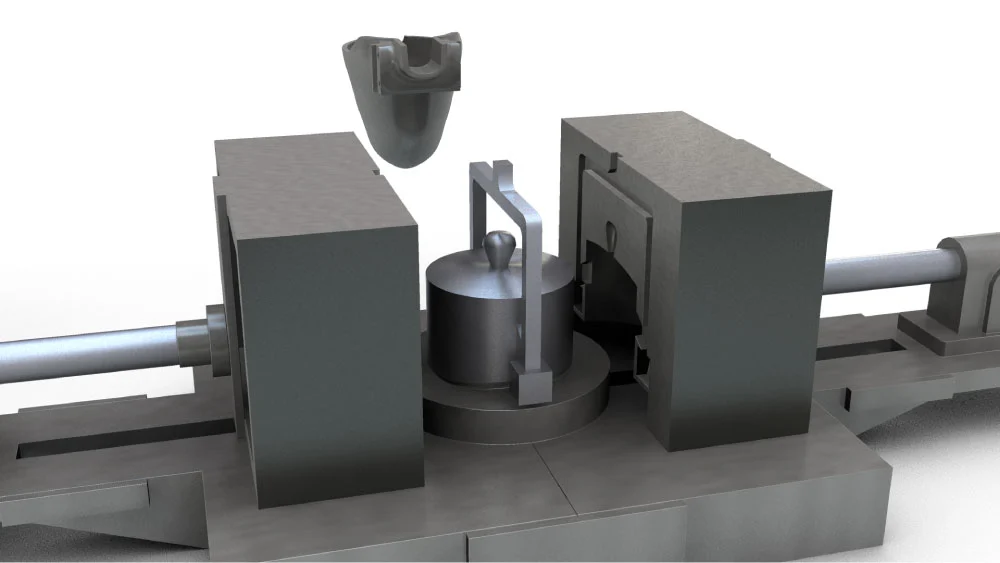
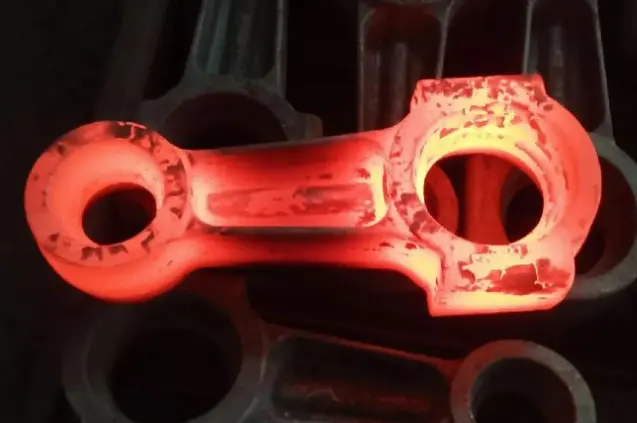
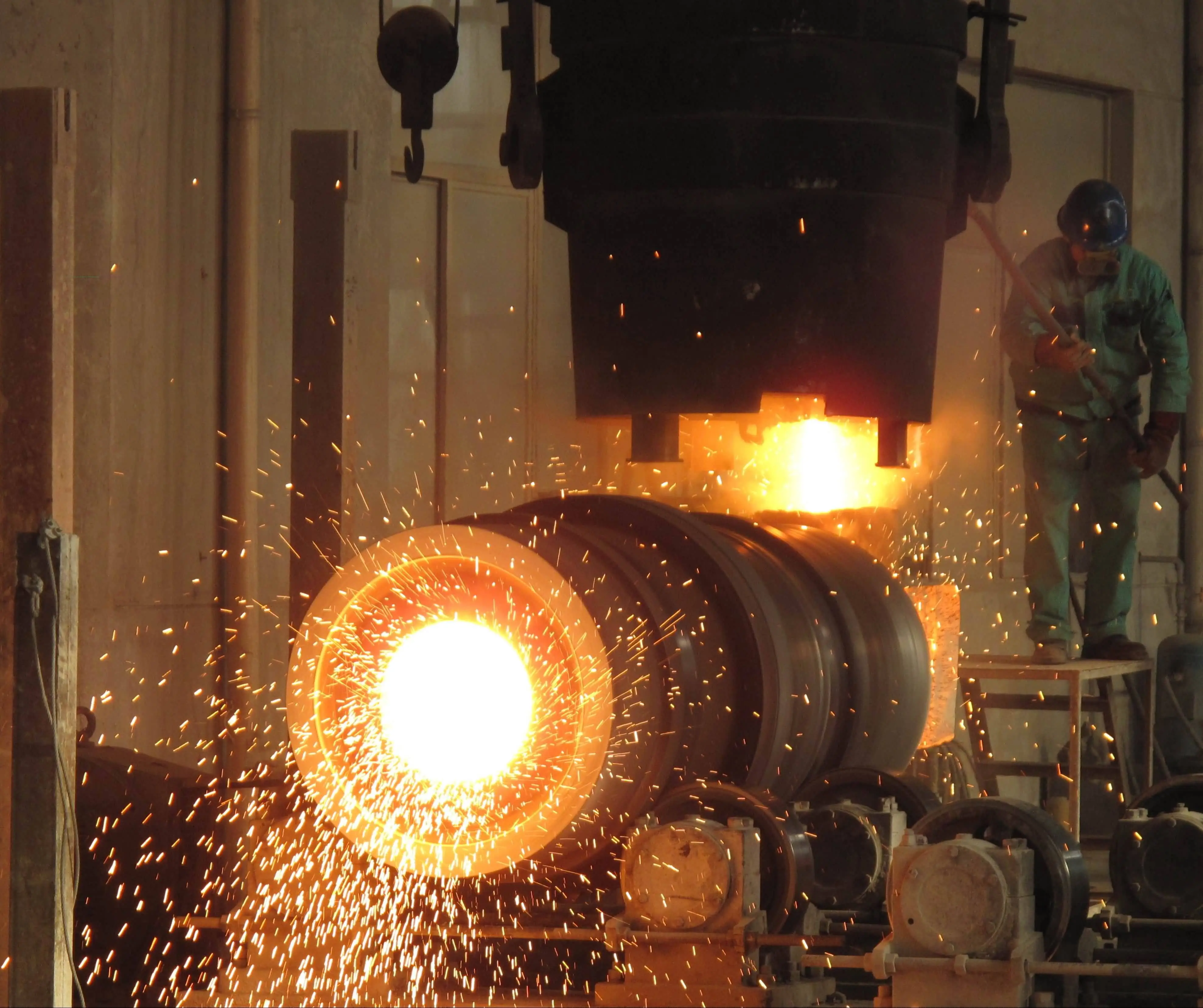
Gravity casting is done by professional foundries that pour liquid metal into a mold using only gravity, without adding any extra pressure or suction. This tried-and-true method of making things uses permanent molds that are carefully prepared and usually made of steel or cast iron. Before filling, foundries coat the molds with release agents. After being poured, the metal naturally cools and solidifies, creating parts with good mechanical qualities and accurate dimensions that can be used in the aerospace, medical device, and car industries.
Understanding Gravity Casting: The Foundations of Professional Foundry OperationsWhat Makes Gravity Casting Distinct in Metal Manufacturing
Gravity casting and die casting are methods of making things that can be used over and over again. It uses gravity alone to fill lasting forms with molten non-ferrous metals. Unlike vacuum-assisted or high-pressure die casting, this method relies on a well-designed mold, the right metal temperature, and controlled pouring rates to fill all the holes. Professional foundries like this way of making parts out of aluminum, brass, bronze, and some zinc alloys that need a good surface finish and good mechanical qualities.
Material Selection and Metallurgical Considerations
Aluminum metals are most often used in Gravity casting because they are easy to make, strong for their weight, and don't rust. Specifications that are often used include A356.0 for aircraft parts that need to be very strong, A380 for general-use parts, and special alloys for heat management. Brass metals are used to make plumbing fittings, decorative gear, and parts for boats. Bronze, on the other hand, is used for things that need to last a long time, like bushings and bearings.
Quality Standards and Safety Protocols in Professional Operations
Every part of Gravity casting is controlled by quality management methods that are used by certified foundries. With ISO 9001:2015 approval, you can be sure that there are written methods for controlling the process, following inspection protocols, and making improvements all the time. Aerospace and medical devices need more than just basic quality systems. For example, AS9100 is needed for aircraft parts, and ISO 13485 is needed for medical devices. These standards require full tracking, statistical process control, and strict non-destructive testing.
The Gravity Casting Process in Professional Foundries: From Mold to Metal PartMold Design and Preparation Fundamentals
The production cycle begins with mold design, where engineers take customer sketches and turn them into molding specs that take into account things like draft angles, shrinkage allowances, and the shape of the gating system. This is the first step in the production cycle. CAD tools like AutoCAD, SolidWorks, and Pro/ENGINEER are used by modern foundries to make three-dimensional mold models that are analyzed through simulations before the actual gear is made. This computer method finds possible fill problems, guesses how the concrete will harden, and finds the best place for risers to keep material waste to a minimum.
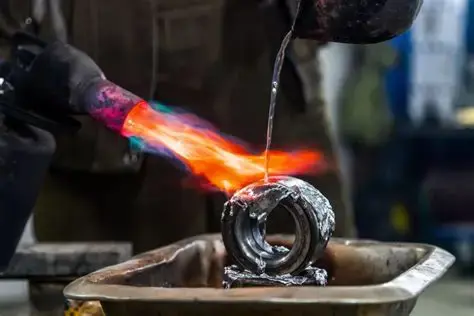
Permanent models are usually made of ductile iron or H13 tool steel, which can handle being cast thousands of times. Foundries make these molds with very precise standards and then cover them with refractory coats that do a few things: they insulate the mold surface to control how fast it cools, keep metal from sticking, and make the tools last longer. The coating thickness varies from 0.1 mm to 0.5 mm based on the shape of the part and the type of metal used. Before every casting cycle, workers use release agents, which are made of graphite or boron nitride, to make it easier for parts to come out of the mold without hurting the surfaces.
Melting, Pouring, and Solidification Control
Getting metal ready for use happens in special melting furnaces where the raw materials reach the right superheat temperature. Foundries carefully manage the atmospheres inside furnaces to keep metal loss and rust to a minimum. When heating aluminum, reverberatory or crucible furnaces with flux covers are usually used to keep dross from forming. Thermocouple tracking constantly checks the temperature, and automatic alarms stop the pours if the temperature falls outside of the specified ranges.
The most important part of preventing defects is solidification control. As melted metal cools, it shrinks by about 6 to 7 percent for aluminum alloys. If the metal isn't fed properly, this can cause shrinkage holes. Professional foundries make rising systems that keep the metal hot longer than the casting itself. This keeps the amount of the metal going even though it's shrinking. Thermal design is based on the idea of directional solidification, which makes sure that the material freezes gradually from the thinnest parts to the thickest ones. This gets rid of the small pockets of liquid that form internal gaps.
Common Defects and Prevention Strategies
Despite careful process control, several defect types can compromise the gravity casting integrity. Understanding these issues helps buying teams set reasonable standards for quality and the right way to check things:
• Porosity shows up as small holes spread out in the casting or grouped in certain areas. Gas porosity happens when hydrogen is rejected during solidification, and shrinking porosity happens when the material isn't fed enough. To stop this from happening, you need to degas well, make sure the risers are built correctly, and avoid filling them too quickly, which traps air bubbles.
• Cold shuts show up as joints where two metal streams didn't join together fully. These flaws make the part less strong and often cause it to break when pressure is put on it. Most cold shuts can be avoided by raising the dumping temperature, making the mold fill faster, or changing the gating system.
• Inclusions are outside substances, like oxides, hard bits, or slag, that are mixed in with the casting. Ceramic foam screens work well to catch these contaminants before they get into the mold hole. Regularly checking the cleaning of the melt through reduced pressure testing lets you know how much inclusion there is and helps you make changes to the process.
Technological Advancements Enhancing Process Capability
More and more modern foundries are using modeling software to guess the filling patterns, temperature distribution, and solidification processes before they cut the metal. Engineers can virtually try various gating designs on systems like ProCAST and MAGMASOFT, find possible defect sites, and find the best process parameters. This feature cuts down on trial-and-error rounds for developing new parts by a huge amount. This shortens lead times from weeks to days and raises first-run return rates.
Robotic mold handling, automatic coating application, and built-in quality checking stations are all examples of automation that go beyond filling systems. Before each cycle, vision systems check that the mold is properly closed and that the coating covers the whole surface. After casting, coordinate measuring machines and X-ray systems are used for an internal flaw inspection. These technologies make it easier to repeat processes and give buyers who care about quality the proof they need for tracking and compliance checks.Need custom gravity casting parts? Contact us for a quick quote.
Comparing Gravity Casting with Other Casting Methods: How Foundries Decide the Best Fit
Gravity Casting Versus Sand Casting
For one-of-a-kind samples or low-volume production, sand casting uses models that can be thrown away after use. These molds are made from bonded sand mixtures. Each casting needs a new mold, which means that the cost per part is higher than with fixed molds, but there is no need to buy tools for small runs. Surface finish and measurement accuracy aren't as good as with Gravity casting or die casting, so extra machining adjustments are usually needed.
Permanent Mold Methods: Gravity Versus High-Pressure Die Casting
In high-pressure die casting, liquid metal is poured into molds at speeds of more than 40 meters per second and pressures of up to 100 MPa. This intense filling makes parts with thin walls that have great surface texture and few holes in the walls. But the rough fill traps air and makes surface oxides that stay in the casting the whole time. This limits the mechanical properties and makes it hard to heat treat many metals.
Gravity casting and die casting fill molds slowly at room temperature, so there are no problems with air getting trapped, like there are in high-pressure methods. This method is best for making safety-critical parts for suspension systems in cars and airplanes because the parts have better mechanical qualities, especially better resistance to elongation and wear. On the other hand, it takes longer to make, and the thinnest walls can only be 3–4 mm, while 1.5–2 mm can be made with pressure die casting.
Specialized Processes: Investment and Centrifugal Casting
Investment casting uses clay shell molds that are built around wax forms to make very complex shapes with a very smooth surface. This method works well for making complicated turbine blades, oral devices, and jewelry, but each part costs a lot because making the molds takes a lot of work. Gravity casting and die casting don't have as much physical freedom as investment casting, but for simple forms, it's much more accurate and cost a lot less.
Application-Specific Selection Criteria
Professional foundries help customers choose the right method by looking at a lot of different factors at the same time. The shape of the part determines how feasible it is to make it. For example, thin walls may need pressure die casting, while internal openings may need cores that make lasting mold methods more difficult. Investing in tools only makes sense if they are used a lot. For example, Gravity casting die casting works best when between 1,000 and 100,000 pieces are made each year.
Procurement Considerations for Gravity Casting Services: What B2B Buyers Need to KnowSupplier Qualification and Certification Verification
To find good Gravity casting makers, you need to carefully look at their professional skills, quality systems, and business practices. ISO 9001:2015 certification is a basic way to make sure that sellers have documented quality management systems in place. However, procurement teams should check certificates directly with the organizations that issued them instead of taking copies that haven't been checked. Standards for each industry—AS9100 for aerospace and IATF 16949 for automotive—show that providers have the extra process controls and traceability systems that are needed for important uses.
Understanding Lead Times and Pricing Models
Tooling development takes the most time in new Gravity casting projects, taking between 8 and 12 weeks from approval of the plan to production of the first item. Before starting full production, foundries have to make models, do test casting runs, and make sure the dimensions are correct. When planning when to release new products, procurement teams should include these dates. They should also keep in mind that rushing the creation of tools often leads to lower quality and longer project durations.
Minimum Order Quantities and Volume Flexibility
Due to the time it takes to prepare the mold and the ease of melting the metal, Gravity casting die casting costs favor batch production over one-off production. Most foundries have minimum order quantities—often 100 to 500 pieces, based on the size of the part—below which the cost of each part becomes too high to be worth it. Buyers who only need a few should look into sand casting options or talk to a representative about sample tooling options that require less initial investment and allow production proof.
Best Practices for Optimizing Gravity Casting Performance in ManufacturingDesign for Manufacturability Principles
When design engineers and Gravity casting technology teams work together early on in the development process, changes that are needed later don't have to be as expensive. Several design elements have a big effect on how easy and expensive it is to cast. Wall width consistency helps the concrete harden evenly and lowers the risk of defects. When designing, sections should be kept consistent between 4 and 8 mm, avoiding sudden changes that can cause hot spots or cold shuts. Draft angles between 1-3 degrees make it easier for parts to come out of molds without hurting them. This increases the life of the tools and lowers the cost of upkeep.
Process Control and Continuous Improvement
Leading foundries use lean manufacturing concepts to get rid of waste, cut down on variation, and speed up production. Visual management systems show real-time performance measures like cycle times, scrap rates, and equipment usage, so when things go wrong, they can be fixed quickly. Standardized work directions make sure that workers follow the steps the same way every time, and regular training keeps skills up to date as the workforce changes.
Emerging Trends Shaping Future Capabilities
Internet of Things monitors, AI algorithms, and predictive repair systems are changing the way foundries work as part of digital transformation projects. Real-time tracking of furnace performance, mold temperature profiles, and part dimension data creates huge datasets that machine learning models use to find process correlations that humans can't see. These new insights open up chances for improvement that cut down on flaws even more and make better use of materials.
Conclusion
Professional Gravity casting uses tried-and-true metalworking principles along with up-to-date process control, modeling technology, and quality management systems to make metal parts that can be used in a wide range of tough industrial settings. Knowing how foundries do each step of the process, from making the mold to controlling the solidification, helps buying teams judge the skills of suppliers, set reasonable goals, and form partnerships that make the supply chain work. The method is great for making medium to large metal parts for the car, aircraft, and industrial equipment industries because it strikes a good balance between precision in measurements, mechanical qualities, and cost-effective production. As foundries accept digital tools and adapt to the need for sustainability, Gravity casting die casting keep changing while keeping the basic benefits that have made it useful for many generations of manufacturers.Need custom gravity casting parts? Contact us for a quick quote.
FAQWhich metals work best for gravity casting applications?
Gravity casting is mostly done with aluminum metals because they are very fluid, have good strength-to-weight ratios, and don't rust. The A356.0 is good for aerospace uses that need great integrity, and the A380 is good for general industry components. Brass and bronze metals are good for making plumbing tools, marine gear, and parts that don't break down easily. Zinc metals aren't used much in Gravity casting because they melt at lower temperatures, which makes high-pressure die casting better. After all, it makes the walls smaller and the cycle time faster.
How do casting defects affect part performance, and what mitigation strategies exist?
Porosity lowers mechanical qualities and makes it harder to keep air inside. This is especially a problem for hydraulic parts or structural parts that have to deal with cyclic loads. Stress builds up in shrinkage holes, which cause fatigue cracks to form. Foundries get rid of these flaws by controlling solidification rates, degassing well, and designing risers in the best way possible. Instead of applying the same standards to all parts, procurement teams should be clear about what inspections are needed, such as X-rays, leak tests, and mechanical property checks, based on how important the application is.
What lead times and cost drivers should buyers expect?
Developing tools takes 8–12 weeks and is the main thing that affects the plan for new projects. Standard orders can be made in 3–4 weeks, but longer wait times are needed for bigger orders or more complicated finishing. Some of the things that affect costs are the investment in tools ($5,000 to $50,000), the choice of material, the complexity of the part, which affects cycle times, and the need for extra operations. By amortizing tools and improving production efficiency, which lowers the cost of each part as the quantity increases, volume agreements make it possible for better prices.
Partner with Welong for Reliable Gravity Casting Solutions
Since 2001, Welong has been a reliable Gravity casting provider, putting buyers from around the world in touch with approved Chinese foundries that meet high quality standards. Our supply chain management is approved by ISO 9001:2015 and includes qualifying suppliers, overseeing output, and checking quality all the way through the manufacturing process. We make custom metal parts for the aircraft, automobile, oil drilling, and medical device businesses. Based on your drawings or examples, we can deliver parts that are exactly what you want. Email our engineering team at info@welongpost.com to talk about your Gravity casting needs, get competitive quotes, and get prototype help that speeds up the time it takes to make your product.
References
1. Campbell, John. Complete Casting Handbook: Metal Casting Processes, Metallurgy, Techniques and Design. Butterworth-Heinemann, 2015.
2. American Foundry Society. Aluminum Casting Technology. Des Plaines, IL: American Foundry Society, 2013.
3. Beeley, Peter R., and Richard F. Smart. Investment Casting. London: Institute of Materials, 1995.
4. ASM International Handbook Committee. ASM Handbook Volume 15: Casting. Materials Park, OH: ASM International, 2008.
5. Jolly, Mark R., and Luisa Huicochea. "Casting simulation software development and validation." Proceedings of the Institution of Mechanical Engineers, Part B: Journal of Engineering Manufacture 224.9 (2010): 1417-1428.
6. Brown, John R. Foseco Ferrous Foundryman's Handbook. Oxford: Butterworth-Heinemann, 2000.

Share your inquiry, get the quotation accordingly!
China WELONG- Your Reliable Partner in Metal Solutions