What are the advantages of gravity casting?
Products and services
Apr 21, 2026
0
Share This Article To:


Using gravitational force to fill molds with liquid metal, Gravity casting stands out as a reliable and cost-effective method of metal making. This tried-and-true method has great mechanical qualities, allows for flexible design, and has low tooling costs, which makes it the best choice for making complex metal parts in medium quantities. More and more, purchasing managers in the automobile, aircraft, and industrial sectors are using this method because it balances quality with cost and works with a variety of alloys, such as bronze, cast iron, and aluminum. Through controlled solidification, the process reduces flaws and creates parts with consistent dimensional accuracy. This makes Gravity casting a smart sourcing option for companies looking for reliable Chinese production partners.
Understanding Gravity Casting: Process and Fundamentals
This basic casting method works on a simple idea: liquid metal runs into ready frames by its own weight, rather than being pushed or pulled by outside forces like high pressure or centrifugal action. This method is easy to use, which directly leads to manufacturing benefits that smart buying workers can take advantage of.
How the Process Works
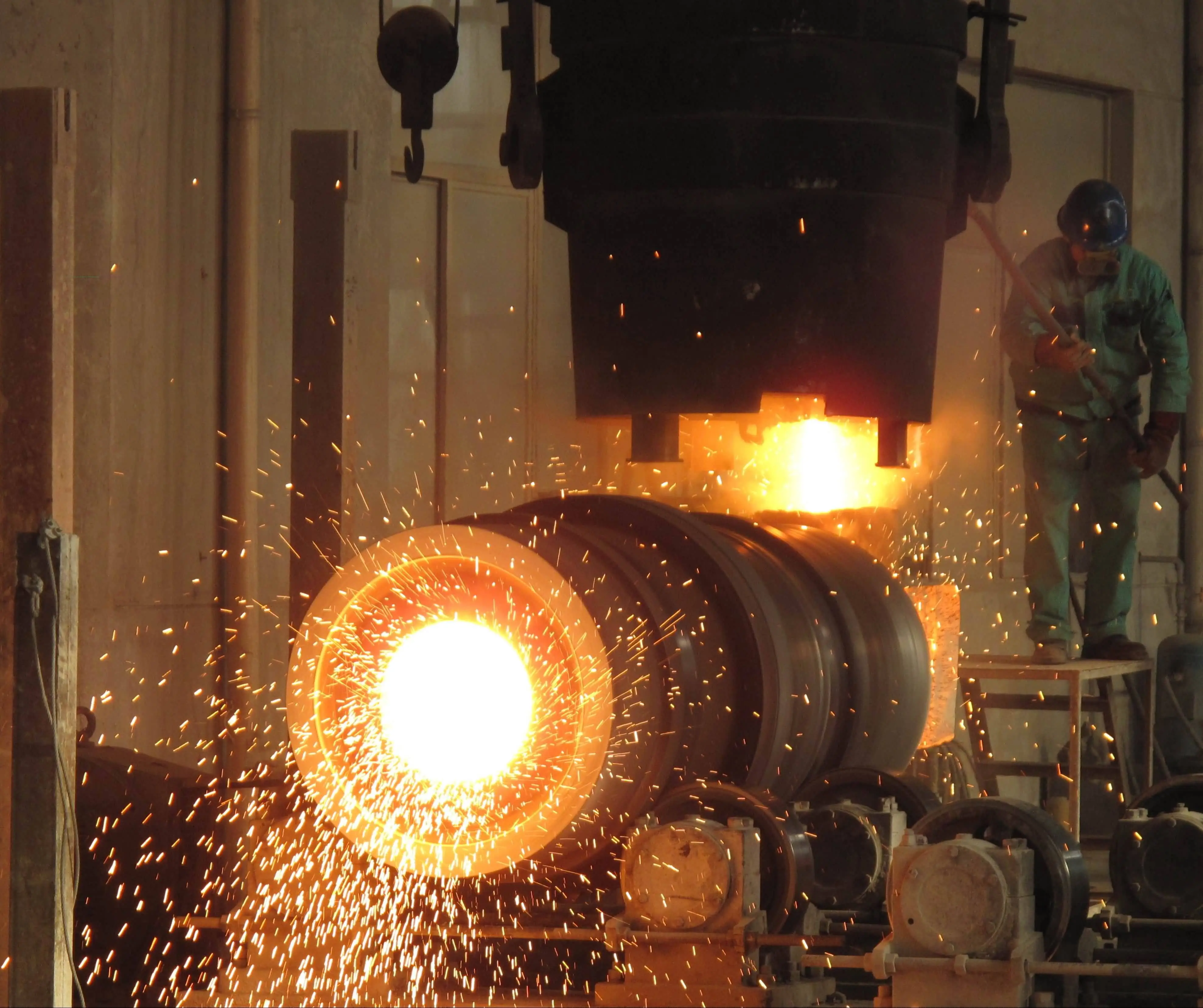
Mold preparation is the first step in the manufacturing process. This is where permanent metal dies, or disposable sand molds, get release agents or coats. Then, the chosen alloy is melted until it reaches the right temperature for fluidity. For aircraft uses, aluminum alloys are often used, bronze for industrial bearings, and cast iron for heavy machinery parts. Teams in the foundry use ladles or automatic pouring systems to move the wet metal into the mold. Gravity pulls the stuff down, filling in narrow spaces and complicated passageways.
Materials and Mold Types
Most Gravity casting jobs are done with non-ferrous metals. For example, aluminum alloys are very strong for their weight and are used to make parts for cars and spacecraft. Bronze is better at resisting wear for bushings and valve bodies, and certain copper metals meet the needs for electrical conductivity. Permanent metal models made of steel or cast iron can be used thousands of times, which spreads the cost of the tools over more production runs.
Critical Quality Factors
The quality of the surface finish rests a lot on the mold material chosen and how well the temperature is controlled. Permanent molds usually make surfaces that are smoother and fit together better than sand options. Cooling rates change the structure of the metal's grains, which has a direct effect on its tensile strength and bending qualities. Foundries with a lot of experience keep an eye on the filling temperatures, fill rates, and solidification times to get the best mechanical performance. When looking for parts for tough jobs that need material certifications and test records to make sure they meet foreign standards, these technical factors become very important.
Key Advantages of Gravity Casting Compared to Other Methods
Working with global makers for 20 years has shown us that Gravity casting gives clear competitive benefits in several performance areas. When procurement professionals look at Chinese supply chain choices, these benefits directly address the worries they have.
Economic Benefits and Tooling Efficiency
When you look at the total cost of the project, Gravity casting makes a strong financial case. When compared to die casting tools, permanent mold tooling needs a much smaller investment. For similar part geometries, molds usually cost 30% to 60% less. For production rates between 500 and 50,000 units per year, this cost structure makes economic sense. This is the sweet spot that many industrial makers aim for. The process doesn't need complicated hydraulic systems or pressure settings, so setup times are kept to a minimum. Molds are easier for engineering teams to change than high-pressure dies, so they can make changes to designs during the product development process without having to pay a lot of money for retooling.
Design Flexibility and Geometric Capability
Gravity casting makes it possible to make structures with complicated internal paths, walls of different thicknesses, and complex exterior features that aren't possible with other methods. Metal can get to tight spots and deep pockets that high-pressure methods might miss because of turbulence, because of the way metal naturally flows. Different types of sand casting allow for almost net-shape production of large industrial parts that weigh hundreds of kilos, while fixed mold techniques work best for making smaller precision parts that are always the same size.
Superior Mechanical Properties and Reduced Defects
One big reason why Gravity casting is better than other methods is that it allows for directional solidification. The molten metal cools slowly from the outside of the mold inward, which reduces the amount of trapped gases and shrinking pores. This managed pattern of solidification makes microstructures that are denser and have better tensile strength and wear resistance. Comparative metallurgical testing reliably shows that aluminum parts that are Gravity cast have elongation values that are 15–25% higher than similar pressure die cast parts. This is because Gravity cast parts have less internal porosity. When there is no turbulent filling, oxide inclusions and gas trapping are less likely to happen.
When to Choose Gravity Casting: Decision-Making Insights
To make strategic sourcing choices, you have to match the production methods to the needs of the project. Gravity casting is a good compromise between low-volume investment casting and high-volume die casting, making it the best choice in some situations.
Production Volume Considerations
Crossover places in the economy help figure out the most cost-effective way to do something. When machine depreciation costs are high, investment casting usually only makes sense for fewer than 500 units per year. Above 50,000 units, die casting becomes more efficient because the shorter cycle time more than makes up for the large inputs in tools. In this range, Gravity casting offers reasonable prices per piece while keeping high quality standards. The fixed mold method works well for long-term production plans that last for several years because it spreads the cost of tools over many long production runs. Different types of Gravity casting, like sand casting, can be used for smaller amounts or samples when money for tools is tight.
Material Selection Drivers
Gravity casting is most often used for aluminum metals because it makes the best use of their natural casting properties. The controlled solidification of Gravity casting makes the 356 and A356 aluminum alloys, which are used a lot in aircraft, have excellent mechanical qualities. Both sand casting and fixed mold casting can be used to make bronze alloys that don't break down easily. When production rates are too low for automatic molding lines, this method works well for cast iron parts. Even though magnesium metals aren't very common, they can be made well using gravity for certain lightweighting tasks.
Application-Specific Advantages
For transmission housings and engine blocks that need to be very stable in size and tight against pressure, automotive motor components use Gravity casting. The better mechanical qualities and tracking that Gravity casting offers are needed for aerospace structural fittings and actuator housings. The process can make complex internal openings, which are useful for industrial pump bodies and valve housings. When biocompatibility certifications and strict quality paperwork are a must, medical device makers choose Gravity cast components.
Process Limitations to Consider
Cycle times are longer than die casting options, which slows down very high-volume projects. While thin-wall skills are good, they aren't as good as the thinnest walls that can be made with pressure die casting. When comparing precision die casting to sand molds, the surface finish quality from sand molds needs more cutting or finishing processes. These trade-offs must be taken into account when deciding if Gravity casting fits with certain project deadlines, quality standards, and budget limits. Open conversations with possible manufacturing partners help you figure out if the method meets the needs of your component.Need custom gravity casting parts? Contact us for a quick quote.

Gravity Casting Challenges and How to Overcome Them
To do great manufacturing, you have to be aware of possible flaws and take steps to stop them. Through systematic rules and technical know-how, our quality management methods deal with common problems.
Common Defect Types and Root Causes
Porosity happens when gases get caught during solidification. This can happen when liquid aluminum absorbs too much hydrogen or when mold designs don't allow enough air flow. Cold shuts happen when two different metal streams don't join together fully. This usually happens because the pouring temperature isn't high enough or the metal solidifies too soon. Misruns happen when the metal freezes before it fills the mold hole all the way, which could be a problem with temperature control or the design of the gates. When there isn't enough filtering in a casting, foreign materials like oxides or grit can get in and change its mechanical properties.
Prevention Through Process Optimization
To start strict process control, the liquid metal must be properly degassed by purging it with argon or using chemical fluxing to reduce the amount of hydrogen that is released. Preheating the mold to the right temperature makes sure that the temperature stays stable, which keeps the filling from freezing too soon. Computer simulations and real-world tests were used to improve the design of the gates so that metal flows smoothly without any turbulence. Placed in the gating system, ceramic foam screens catch oxides and inclusions before they get into the mold hole. C
Quality Assurance and Partner Selection
ISO 9001:2015 approval is a basic way to make sure that sellers keep their quality management systems well-documented. In addition to certificates, buying teams should look at the specific Gravity casting experience of providers by looking at failure rates, first-pass yield data, and how well correction actions work. Welong's network of suppliers goes through strict qualification checks. Trial production runs and mechanical tests are used to confirm the technical skills of foundries.
Procuring Gravity Casting Parts: Best Practices for B2B Buyers
To successfully source components, you need to do more than just find manufacturers who can do the job. You also need to use structured review methods and relationship management techniques that keep the supply chain stable over the long term.
Supplier Qualification Criteria
The first step in figuring out a company's technical capabilities is to look at its casting equipment, such as its furnaces, mold handling systems, and heat treatment facilities. Manufacturing standards, like ISO 9001:2015, IATF 16949 for autos, or AS9100 for aircraft, show that a company is committed to managing quality in a planned way. Evaluation of production ability makes sure that providers can meet your volume needs without using up too many resources. Engineering support skills are very important, especially when it comes to optimizing designs or fixing problems. Infrastructure for metallurgical testing, such as spectrometers and mechanical testing tools, shows that it is possible to issue material licenses. Geographic factors weigh the benefits of being close to your operations against the costs of doing so.
Effective RFQ and Communication Strategies
Detailed technical packages make it easier to quote accurately and cut down on confusion. Three-dimensional CAD files in forms like STEP or IGES make it possible to accurately understand geometric needs. It is important for engineering plans to include important measurements, tolerances, surface finish requirements, and material grades, along with links to the right international standards. Forecasts of annual volume and expected shipping times help providers make the best offers. Clear paperwork is needed for material certifications, inspection standards, and packing specs.
Balancing Cost and Quality Objectives
When approved providers bid against each other, prices are set at market rates while quality standards are maintained. Don't just pick the lowest bid without looking into how the sellers came up with their prices. Unusually low quotes could mean that quality controls have been weakened or that the requirements have been missed. A total cost of ownership study looks at more than just the price of a single piece. It also looks at the costs of transportation, quality control, rework, and the wear and tear on tools.
Managing International Supply Chains
Chinese manufacturing partnerships need organized control that takes into account issues like time zones and distance. Third-party inspection services make sure that the quality is checked by someone else before it is shipped. This way, problems are found early, when they can still be fixed. Welong's full supply chain management takes care of these organizational problems, and it acts as an extra point of contact for foreign buyers who need to buy from China but don't want to open local offices.
Conclusion
In conclusion, Gravity casting offers a great mix of low cost, high mechanical performance, and design freedom that meets important buying needs in many industrial manufacturing sectors. Controlled solidification makes high-integrity parts with few defects while still being able to handle complex shapes. When compared to pressure-based options, these methods are cheaper because they require fewer tools and are easier to use. Aluminum, bronze, and cast iron can all be used in a wide range of businesses, including automotive, aircraft, oil and gas, and medical devices. Partnering with skilled foundries that are dedicated to process optimization and quality testing is key to success. When making strategic sourcing choices, you should think about the process's strengths and weaknesses along with the amount of output needed, the materials needed, and the performance standards for each application.

FAQWhat metals work best for gravity casting applications?
Gravity casting is mostly done with aluminum alloys, especially A356, A380, and AlSi7Mg, because they are easy to cast, strong for their weight, and don't rust. Bronze alloys are good for use in bearing and bushing applications that need to prevent wear. Cast iron types are used to make heavy industrial parts that need to last and reduce vibration. Most non-ferrous metals can be used in the process, but each combination needs to be handled and heated in a certain way.
How does gravity casting quality compare to centrifugal or investment casting?
Gravity casting makes parts that are thicker and have fewer holes than regular sand casting, but the holes in Gravity cast parts are usually a little bigger than the holes in investment cast parts made with vacuum-assisted methods. Because of controlled solidification, the mechanical qualities are often better than die casting alternatives. Centrifugal casting makes parts with higher densities that are cylinder-shaped, but it can't make parts with different shapes. Based on shape complexity, volume needs, and speed requirements, each way is best for a different set of tasks.
Can gravity casting scale economically for large production volumes?
Depending on the complexity of the part and the cost of the tools, the process can still be done for about 50,000 units per year. After this point, die casting's faster cycle times usually offer better economics per unit, even though the original investment in tools is higher. Automated pouring devices and models with more than one hole make Gravity casting more competitive in some situations.
Partner with Welong for Your Gravity Casting Needs
Welong's main job is to connect foreign purchasing teams with China's best Gravity casting providers. This way, your parts will meet the highest standards while also being as cheap as possible. We've helped makers of aircraft, cars, oil and gas equipment, and medical devices in Europe, North America, and the Asia-Pacific region with their supply chains since 2001. Our management system is ISO 9001:2015 approved and strictly screens suppliers. It also oversees production and checks quality throughout the whole manufacturing process.
We use your plans or samples as a guide, and we offer engineering help for better design using AutoCAD, Pro-Engineering, and SolidWorks. Our expert team looks at your Gravity casting needs, suggests good foundry partners, and oversees the whole production process, from designing the mold to checking it for quality. We take away the risks of buying by using open communication and tried-and-true quality control methods. This is true whether you need metal housings, bronze valve bodies, or cast iron machinery parts. Get in touch with our team at metal@welongpost.com to talk about your project needs and get a thorough estimate from experienced Gravity casting manufacturers who are dedicated to providing accuracy, dependability, and value.Need custom gravity casting parts? Need custom casting parts? Contact us for a quick quote.
References
1. Campbell, John. "Complete Casting Handbook: Metal Casting Processes, Metallurgy, Techniques and Design." Butterworth-Heinemann Publishing, 2015.
2. American Foundry Society. "Gravity Permanent Mold Casting: Process Fundamentals and Quality Control Standards." Technical Publication Series, 2018.
3. Zhang, Wei, and Kumar, Rajesh. "Comparative Analysis of Casting Methods for Aluminum Alloy Components in Aerospace Applications." International Journal of Metalcasting, Vol. 14, 2020.
4. European Foundry Association. "Best Practices in Permanent Mold Casting: Quality Assurance Guidelines for Industrial Components." Technical Report EFA-2019-03.
5. Miller, Robert A. "Defect Prevention in Gravity Die Casting: Root Cause Analysis and Process Optimization Strategies." Materials Science and Engineering Quarterly, 2021.
International Organization for Standardization. "ISO 8062-3:2007 - Geometrical Product Specifications for Castings: Dimensional and Geometrical Tolerances for Moulded Parts." Geneva: ISO Standards, 2007.

Share your inquiry, get the quotation accordingly!
China WELONG- Your Reliable Partner in Metal Solutions