What parts are made by forging?
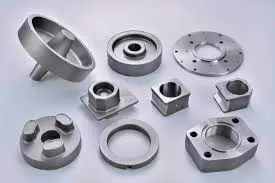
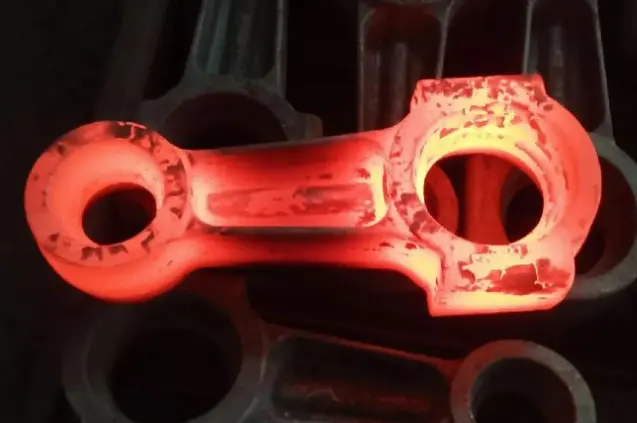
Forging parts are a wide range of parts that are made by applying pressure to hot or cold metal to make it into strong, long-lasting products. Some common forging parts are connecting rods, crankshafts, transmission parts, aircraft turbine blades, landing gear assemblies, and structural frames. Other common forging parts are axles and hydraulic cylinders for heavy equipment, and surgical tools for medical devices. These parts are made better by forging because it can smooth out the grain structure, get rid of internal voids, and give better mechanical qualities than other ways of making things. This makes them essential in fields that need stability and performance.
Understanding Forged Parts: Definitions and Manufacturing ProcessWhat Makes Forged Components Different
Forging parts are basically different from casting, machining, and pressing because the process deforms raw metal in a controlled way under high pressure. Forging is different from casting, which involves pouring liquid metal into shapes that may have holes in them. Forging presses solid material together to make dense, straight-grain structures. When you machine something, you take away material from the stock, which creates trash and could weaken the structure along the cut areas. In forging, the metal flows in three dimensions, but stamping only forms sheet metal through tools. Forging uses compressive forces to reshape metal grains along the shape of the part. This makes the part very strong for its weight and resistant to wear, which are important for tough uses.
Hot Forging and Cold Forging Methods
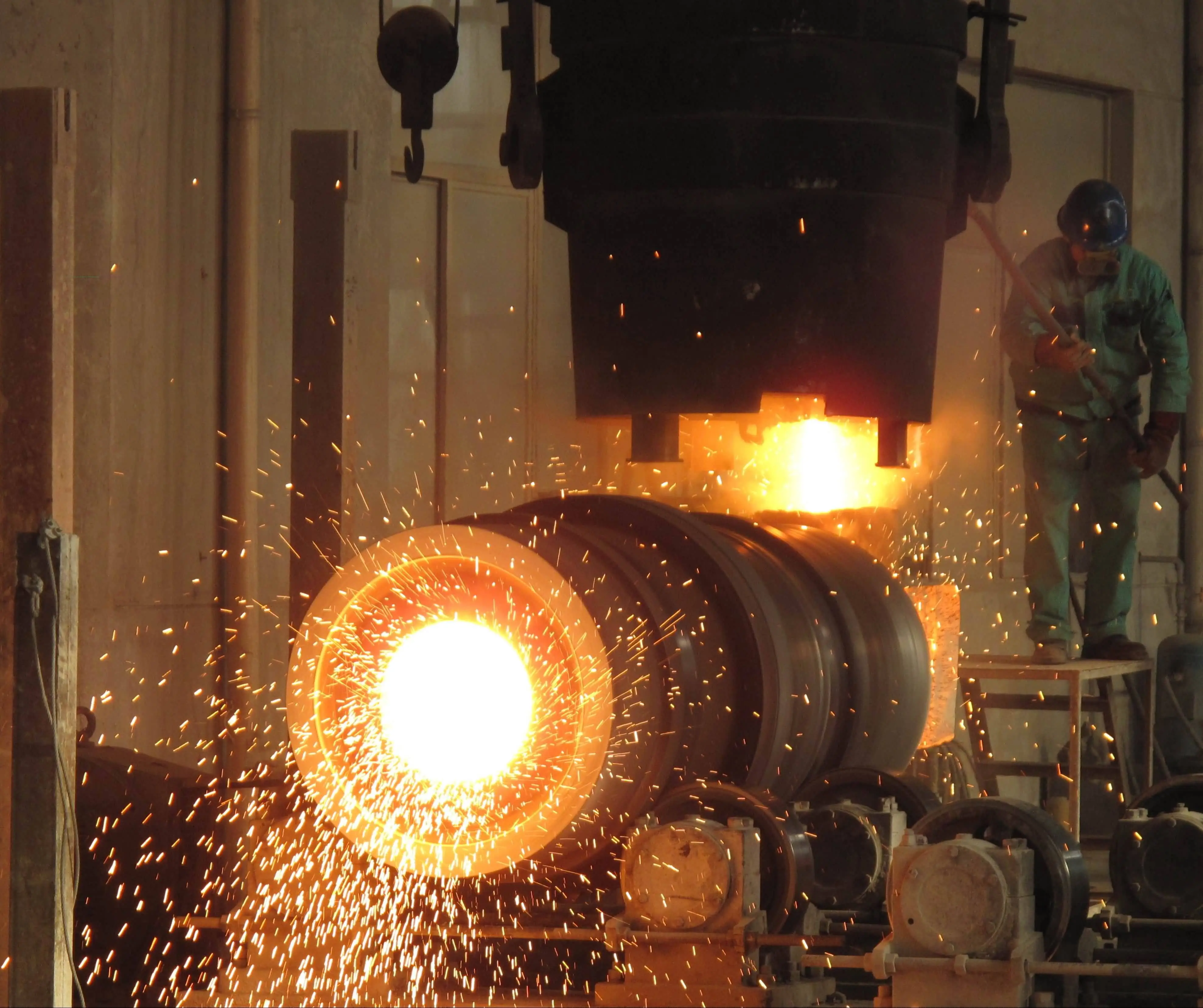
Based on temperature, the shaping process can be broken down into two main steps. When you heat something above its recrystallization point (for steel, this is usually between 950°C and 1,250°C), you can make complex forms with less force. Rocket blades and thrust reversers are very important parts of space power that have to be able to handle high temperatures and high loads. These parts are often made by hot forging, which makes complex forms while keeping the material's qualities the same all the way through. When cold forging is done at or near room temperature, the material is work-hardened to make it stronger. Tighter tolerances and better surface finishes are also possible. When precise measurements are needed, this method works great for smaller parts like bolts and frame parts for cars.
Materials and Heat Treatment
We work with a variety of steel alloys, from carbon steel to alloy steels. For uses that need to be light, we use aluminum alloys. For aerospace and medical devices, we use titanium, and for corrosion protection, we use stainless steel. The choice of material is based on mechanical needs, the working conditions, and cost. After shaping, heat treatment like quenching, tempering, and annealing improves toughness, hardness, and stress release. These heating processes keep the microstructure stable and make sure that all production runs work the same way. Our engineering team works with customers to choose the right material grades and heat treatment processes for each application.
Key Benefits and Advantages of Forged Parts in B2B ProcurementSuperior Mechanical Properties
When it comes to tensile strength, impact resistance, and wear life, forged parts always do better than cast or machined ones. By deforming metal in a certain way, you can keep the grain flow continuous, which has built-in structural benefits. Test results show that forged steel connecting rods can handle 20–30% more cyclic loads than cast versions. This means that they will last longer and require fewer guarantee claims. This dependability is very important when your product's image depends on the integrity of its parts working in harsh conditions, like when they're in oil drilling equipment that works at great depths or when they're in airplane systems that are vibrating and changing temperatures.
Cost Efficiency and Material Optimization
When compared to cutting, where up to 50% of the starting stock can become chips, forging wastes less material. Forging in a near-net form makes parts that don't need many other steps, which saves time and work. Most of the time, OEMs and Tier 1 providers buy in bulk, which makes these savings even bigger. Lead times for known forging dies are usually between 8 and 12 weeks, and once the gear is proven to work, production runs can be scaled up or down easily. We've worked with procurement managers who switched from machined to forged parts and cut total costs by 15 to 20 percent. They saved money on material, labor, and quality-related costs while keeping delivery plans across their global supply chains.
Quality Consistency Through Certified Partnerships
Working with providers like Welong that are ISO 9001:2015 certified ensures that quality control is standardized along the whole supply chain for forging. Our procedures for receiving inspection check the certifications of the materials, the accuracy of the measurements using a computerized measuring machine (CMM), and the mechanical qualities of sample lots by breaking them down. We keep track of everything from the heat numbers of the raw materials to the serial numbers of the finished parts. This gives important paperwork for meeting aircraft and medical device regulations. Through joint engineering support, customized forging solutions can handle unique needs such as unusual metal formulas, tight tolerance bands, or specific surface finish parameters.
Common Types of Forged Parts and Their Industrial ApplicationsAutomotive Forged Components
For automotive uses, parts need to be able to balance efficiency, safety, and cost-effectiveness. When the pistons move back and forth, the connecting rods turn the crankshaft. They have to go through millions of stress cycles over the course of an engine's life. Forging connecting rods gives current high-compression engines the wear strength they need without adding weight that makes the engine less efficient. Forging's grain orientation and material density are also good for crankshafts, transmission gears, differential parts, and wheel hubs. Forged aluminum or steel is needed for the impact strength that steering knuckles and suspension arms need to keep people safe in case of a crash. We've sold automobile forging parts to companies in Germany, the UK, and North America. These parts have been used in everything from passenger cars to heavy industrial trucks, where part failure is not an option.
Aerospace and Medical Device Applications
When aerospace parts are used in places where material performance is important, there are no other options. Forging is the only way to get a microstructure that is free of flaws in titanium or nickel-based superalloys that are used to make turbine blades, compressor discs, and landing gear parts. To find any cracks below the surface, these parts are put through a lot of thorough non-destructive testing, such as ultrasound inspection, magnetic particle examination, and X-ray analysis. For surgery tools, implant parts, and monitoring equipment where biocompatibility, corrosion resistance, and mechanical stability all come together, medical device makers choose forged stainless steel and titanium. Our quality control methods are in line with the strict paperwork and tracking needs of these regulated industries. We help our clients with first-article checks and ongoing production validation.
Heavy Equipment and Agricultural Machinery
Forging parts used in heavy equipment like excavator arms, bulldozer track links, crane hooks, and hydraulic cylinder rods are examples of places where wear resistance and shock loading ability decide how long a part lasts. These parts often work in rough, high-impact places where they are hard to reach for upkeep. Forged structure gives it the toughness it needs to stop cracks from starting and spreading. Agricultural equipment like tractor wheels, plow blades, and harvester parts also need to be durable because they are loaded and unloaded many times and are exposed to dirt, water, and waste. Forging makes the material more uniform, so there are no weak spots that could cause failures during busy seasons, when equipment downtime has a direct effect on profits and productivity.
Comparing Forged Parts with Other Manufacturing Methods: Making the Right ChoiceForging Versus Casting
Casting is the best way to make complicated shapes with inside pathways or outside features that are hard to forge. However, cast parts naturally have holes in them because of gas trapping and solidification shrinking, which can cause failure points when they are stressed. Forging parts have much better wear resistance and higher tensile strength, usually 15 to 25 percent higher. This makes them better for uses that are loaded and unloaded quickly. Casting is cheaper for small amounts of production because you don't have to buy as many tools, but forging costs go down as production goes up. We help procurement teams do this research by looking at things like output numbers, mechanical needs, and total lifetime costs instead of just piece price.
Forging Versus Machining
Machining from bar stock is good for trials and small runs because it gives you creative freedom and doesn't require expensive tools. But machined parts don't have the linear grain structure that forging parts do, and when material is removed, it goes through the grain limits instead of following the natural flow lines. This difference is very important in uses that are sensitive to fatigue and where the service life depends on how fast cracks spread. Forging also cuts down on waste, which is important for expensive metals like titanium, where 40–60% of the cost of a part is the raw material. When you combine near-net-shape forging with finish cutting, you can often get the best mix between using less material, getting accurate measurements, and good mechanical performance.
Material Selection: Steel Versus Aluminum
Forging parts made of steel are the strongest and stiffest of their size, which makes them perfect for situations where room is limited or where strong, small designs are needed. When compared to steel equivalents, aluminum forgings are about 65% lighter while still having good strength. This is helpful in aerospace and car uses where weight directly affects fuel economy or payload capacity. Titanium forgings are in the middle. They are strong enough to be like steel, but not as dense as aluminum. They also don't rust, but they cost more. We help engineering managers weigh these trade-offs against the needs of a specific application and suggest materials that meet performance goals while also making the best use of purchase funds.
Strategic Supplier Selection Criteria
When looking for trusted forge partners, you need to look at more than just price. Manufacturing certifications like ISO 9001:2015, AS9100 for aircraft, or ISO 13485 for medical equipment show that quality control is being done in a planned way. You can tell if a provider can meet your needs by looking at their production skills, such as their press tonnage, available die sizes, and secondary processes like heat treatment and machining. References from similar OEM partnerships can help you figure out how reliable the delivery is, how quickly the company responds to changes in tech, and how they solve problems when they come up. When you're in charge of just-in-time stocking systems, consistent lead times are important. When a product changes and needs new parts, you need to be able to customize things easily.
Practical Guide to Procuring Forged Parts with ConfidenceSelecting Certified Suppliers
When purchasing managers want to lower the risk of buying in China, they should work with well-known supply chain service providers that check makers against international standards. Look for providers that have ISO 9001:2015 certification and can show that they have written quality systems that cover things like process control, inspection methods, and how to take corrective action. Check that sources have the right testing tools, like a CMM to check the dimensions, a spectrometer to analyze the material, a hardness tester to make sure the heat treatment worked, and the ability to test important parts without damaging them. Ask for building audits or reports from a third party that prove the skills match what was said. We've built partnerships with forging makers in China's industrial regions and do ongoing management and supplier development to make sure their skills meet the high standards of clients in Europe, North America, and the Asia-Pacific region.
Understanding Pricing and Lead Times
The costs of forging parts include the metal itself, the wear and tear on the tools, the work needed to handle it, the heat treatment, the finishing steps, and the quality check. The prices of materials change with the market for those materials, but the cost of tools is a one-time investment that is spread out over a large number of pieces (usually 500 to 5,000), based on how complicated they are. There are two parts to lead times: tool development (8–12 weeks for new dies) and production runs (2–6 weeks, based on volume and heat treatment needs). When controlling supply chains for multiple product lines, negotiating bulk buy deals is especially helpful because it locks in stable prices and production capacity. Our buying supervision services help clients make deals that balance the costs of keeping inventory with the benefits of high prices and guaranteed lead times.
Managing Custom Orders Effectively
For custom forging projects, it's important to be clear about the requirements, such as standards for size and shape, material types, heat treatment needs, expected surface finishes, and testing methods. We are happy to accept thorough drawings in AutoCAD, Pro-Engineering, or SolidWorks forms. This clears up any questions that may come up during quoting and planning production. Our engineering staff checks designs to see if they can be made. If they can, they sometimes offer changes that make the designs easier to forge, require less machining, or make better use of materials without affecting the functionality. Before committing to full production runs, asking for first article examples lets you make sure that the tools and processes are working well.
Conclusion
Forging parts are the strongest, most reliable, and most cost-effective over their entire lifetime. They are used in heavy equipment, medical devices, industrial manufacturing, and aircraft. When procurement workers know the differences between forging methods, material choices, and different production processes, they can make smart sourcing decisions that balance performance needs with cost limits. Global buying can be turned from a risk management problem into a competitive advantage by forming strategic relationships with qualified suppliers who offer engineering support, quality certification, and open communication. As the needs of industry change to make parts that are lighter, stronger, and last longer, forging technology keeps improving to meet these needs while keeping the low cost that makes it possible for large-scale production.
FAQWhat Materials Are Commonly Used in Forging?
The most common metals that are made for forging parts are carbon steel, alloy steel, stainless steel, aluminum alloys, titanium, and brass. Steel alloys are the most common type of metal used in both cars and factories because they are strong, easy to work with, and cheap. Aluminum alloys make aircraft and high-performance car parts lighter. Titanium is used in aircraft and medical devices that need materials that are strong, light, and don't rust. The choice of material is based on the budget, the working surroundings, and the mechanical property needs.
How Do Hot Forging and Cold Forging Differ?
Forging metal above the temperature at which it recrystallizes lets it be shaped into complex forms with less force, though the surface finish is a little rougher, and the size limits are wider. Cold forging happens at temperatures close to room temperature. It work-hardens the metal to make it stronger while also getting better surface quality and tighter standards. Hot forging is best for bigger, more complicated shapes, while cold forging is best for smaller, more precise parts that don't need much secondary cutting.
Can Forged Parts Be Customized to Specific Standards?
Forging parts can be fully designed to meet the needs of specific industries, such as IATF 16949 for cars, AS9100 for airplanes, or ISO 13485 for medical devices. Customization includes choosing the right materials, heat treatment instructions, limits for size, surface processes, and quality records. During the design process, experienced suppliers work together to make sure that the parts meet both performance requirements and manufacturing efficiency standards. This makes sure that the parts supplied meet application needs while still being cost-effective.
Partner with Welong: Your Trusted Forging Parts Supplier for Global Procurement
Welong has been an ISO 9001:2015-certified foreign supply chain service provider for more than 20 years. They specialize in making custom metal parts for the aircraft, medical device, oil drilling, and industrial manufacturing businesses. Our full range of services, including developing suppliers, overseeing purchases, and strict quality control, ensures you can use China's production skills while lowering the risks of sourcing. We can read plans and samples in AutoCAD, Pro-Engineering, and SolidWorks forms, and our engineering team can help you improve your designs. We know what quality standards and delivery expectations you have because we've shipped forging parts and precision components to over 100 clients in the UK, Germany, France, Italy, Poland, the USA, Canada, the Netherlands, Sweden, Australia, New Zealand, Singapore, and India. Email us at info@welongpost.com to talk about your needs for forging parts, get prices, or learn more about how our custom solutions can help your supply chain and make your products work better.
References
1. American Society for Metals. "Forging Processes and Equipment: Comprehensive Guide to Hot and Cold Forging Techniques." ASM International Handbook Series, Volume 14A, 2018.
2. Altan, T., Ngaile, G., and Shen, G. "Cold and Hot Forging: Fundamentals and Applications." ASM International Materials Park, Ohio, 2005.
3. Semiatin, S.L. "Metalworking: Bulk Forming - ASM Handbook." ASM International, Volume 14A, 2005.
4. Thomas, A. "Forging Industry Association Technical Report: Material Selection and Process Optimization." Forging Industry Association, Cleveland, 2019.
5. Groover, M.P. "Fundamentals of Modern Manufacturing: Materials, Processes, and Systems." John Wiley & Sons, 6th Edition, 2016.
6. Dieter, G.E. and Bacon, D. "Mechanical Metallurgy: Applications in Forging and Metal Forming." McGraw-Hill Education, 4th Edition, 2020.

Share your inquiry, get the quotation accordingly!
China WELONG- Your Reliable Partner in Metal Solutions