How to design casting parts?
Whether the parts you manufacture will meet specs, come on time, and stay within budget depends on how well you design the Casting parts. Welong has worked with sourcing managers and engineering teams for more than 20 years, and they know how important this link is. Casting parts are essential to many types of manufacturing, from oil drilling tools to aerospace parts. The design of these parts has a direct effect on production prices, lead times, and the performance of the end product.
Understanding Casting Parts and Their Design Challenges
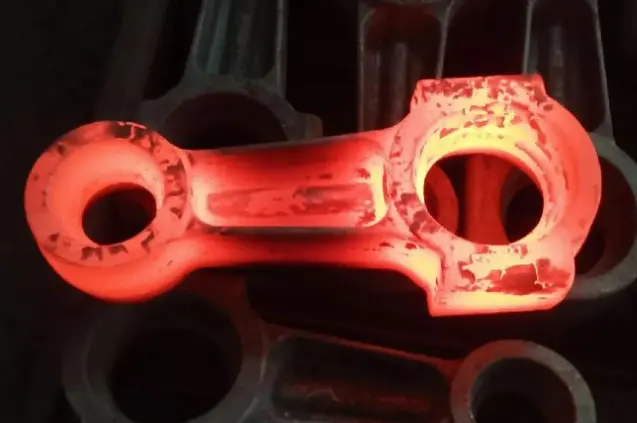
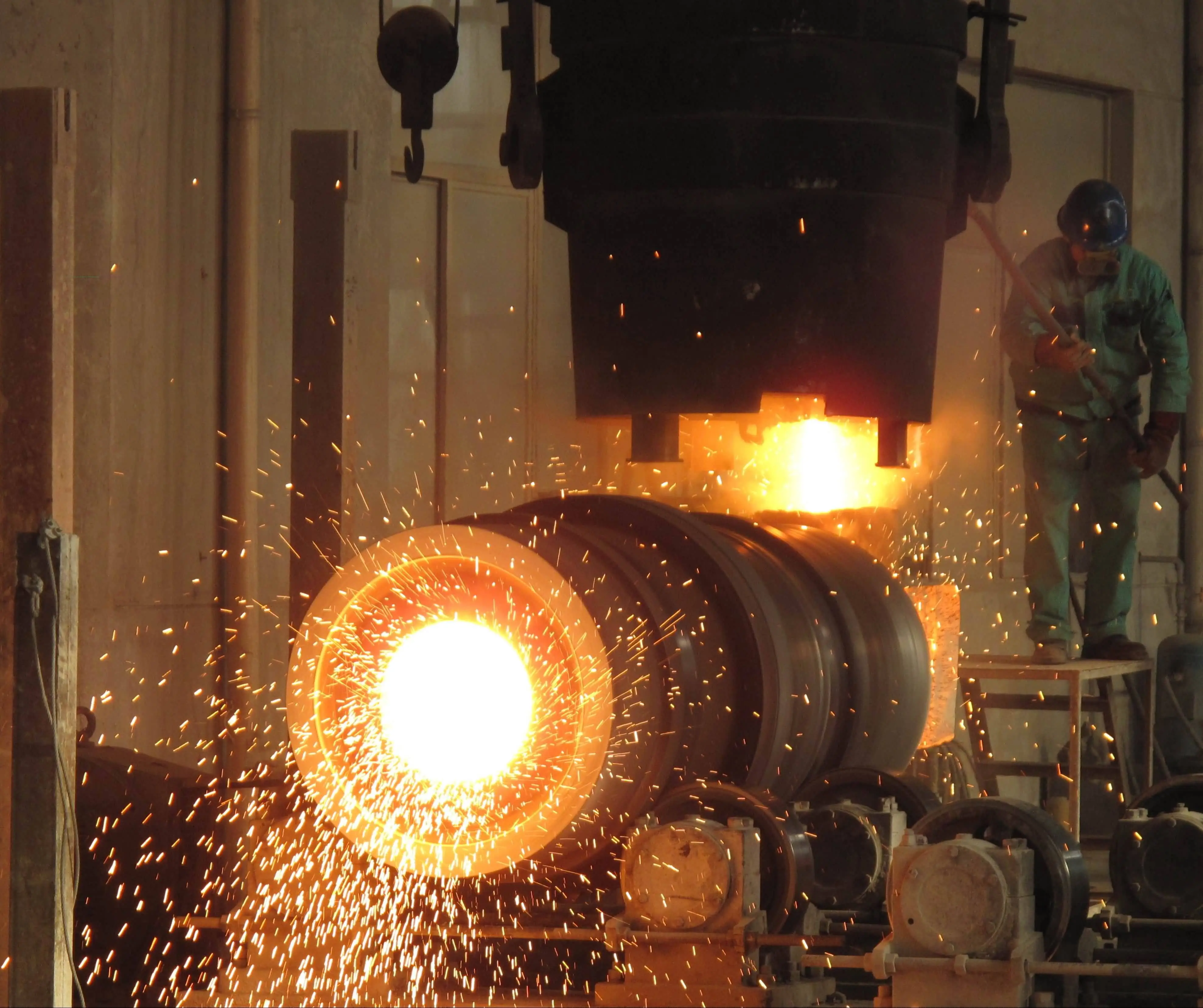
Casting parts are metal parts that are made by putting liquid metal into molds to make shapes that would be hard or too expensive to make any other way. Once it cools down, the process turns liquid metals like aluminum, steel, copper alloys, or other materials into solid parts that can be used. The most traditional method is sand casting, which uses high-quality silica sand mixed with about 10% bentonite clay as a glue, 2% to 5% water, and about 5% sea coal to make the surface smoother.
Common Design Obstacles in Casting Production
Designing Casting parts is hard because of several ongoing problems. When gases get caught during solidification, they make the part less stable. This is called porosity. Thermal contraction during cooling leads to inadequate tolerances, which cause physical changes that need to be fixed after casting. Geometries that are complicated and have sharp corners or quick changes in thickness create stress clusters that make cracks or warping more likely.
Critical Success Factors for Casting Design
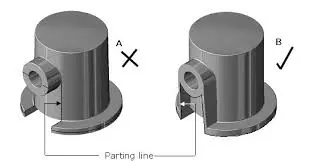
Design for Manufacturability concepts help with the development of good castings. Uneven wall thickness stops different cooling rates that cause bending or internal pressures. Draft angles, which are usually between 1 and 3 degrees, let you take patterns out of sand molds without hurting the hollow. Machining limits take into account the uneven surfaces and changes in dimensions that come with casting. This makes sure that the finished parts meet the requirements.
Systematic Approach to Designing Casting Parts
A thorough description of requirements is the first step in designing an effective Casting parts solution. We help our clients write down exact measurements, mechanical property goals (like tensile strength, hardness, and impact resistance), weather conditions (like high temperatures and corrosive exposure), and budget limits. This base keeps expensive changes from being made after the tools have been made and production has started.
Identifying and Preventing Common Defects
Understanding how defects happen lets you make strategic changes to the design. Porosity usually happens when the mold doesn't have enough airflow or when the metal flows quickly while it's being poured. To fix this, designers can use the right control systems to create smooth, laminar flow and put risers in a way that lets gases that are trapped escape. Shrinkage holes form in thick areas that cool slowly while being surrounded by solidified material. This risk can be reduced by making the walls the same thickness all the way through or placing chilled zones in appropriate places.
Applying Best Practices for Manufacturability
Machining allowances provide material for final processes that happen after casting. For sand castings, we usually say 0.060 to 0.125 inches, but this depends on the size and complexity of the part. For investment castings, we might only say 0.010 to 0.030 inches because they are more accurate as-cast. Finding carved features on surfaces that can be reached by standard tools cuts down on setup time and the cost of making things.
Learning from Industry Applications
A client in the car industry came to us with a plan for a transmission housing that had several overlapping bores and mounting bosses. The initial shape had sharp edges and sudden changes in thickness, which led to repeated breaking during prototype tests. Our engineering team rebuilt the part so that it has large fillet radii (at least 0.25 inches at all interior corners), even wall thickness (everything stays at 0.375 inches ±0.060 inches), and moved the mounting bosses to spread out the stress. These changes got rid of the cracking while keeping all the practical standards, which made it possible to successfully make 50,000 units per year.
Collaboration Strategies for Optimal Results
For casting parts design to work, buying teams, engineering staff, and factory partners need to keep talking to each other. As early as possible in the development process, we suggest sharing rough ideas before agreeing to specifics. This lets providers give feedback on how well the product can be made, suggest changes to the design that could lower costs or boost quality, and find problems before they affect production plans.
Comparison of Casting Design Methods and Materials
Choosing the right methods and materials for casting parts has a big impact on how well parts work, how much they cost, and how long it takes to make them. Each method has its own benefits that make it better for different uses, quantities, and quality standards.
Evaluating Major Casting Processes
Sand casting is a very flexible way to make parts that weigh anywhere from a few pounds to several tons. Since it doesn't require a lot of expensive tools, it's also a cheap way to make prototypes and small batches. The process can be used with almost any metal that can be made, and it can make parts with walls as thin as 0.25 inches. The surface finish is usually between 250 and 500 microinches Ra, and important areas often need to be machined. For sizes less than 12 inches, the tolerances for measurements are usually within ±0.030 inches. The tolerances get bigger for bigger features.
Material Selection Impacts on Design
Aluminum alloys are most often used in places where lightweight, good rust protection, and enough strength are needed. In their as-cast state, alloys like A356 have tensile strengths of about 34 ksi. After heat treatment, these strengths rise to 45 ksi. Excellent fluidity lets you make thin-wall parts and small features. Thermal conductivity speeds up the solidification process, which cuts down on cycle times but needs careful management to keep thin parts from freezing too soon.
Cost-Quality Trade-offs in Method Selection
To find the best balance between quality standards and production costs, you need to carefully look at the economics of each part. Sand casting requires little money up front, which makes it a good choice for development projects or output numbers that aren't known yet. However, extra machining is needed to get the minimum standards and surface finish. This adds to the cost of each piece and adds up over large production runs. If you need to machine a part a lot, die casting might be a cheaper option, even though the tools cost more when you make more than 10,000 pieces a year.
Optimizing the Casting Parts Manufacturing Process Through Design
Design decisions have an effect on the whole manufacturing process, including how well the Casting parts are made, how many defects they have, how long the tools last, and finally, the total cost of ownership. During development, strategic design optimization pays off for thousands of parts that are made.
Recognizing Design-Related Manufacturing Bottlenecks
Sharp corners intensify loads during solidification and create places where cracks can start. They also make the flow more turbulent while the mold is being filled, which makes gas trapping and porosity more likely. Deep pockets or cavities with high depth-to-width ratios catch gases and make it hard for air to flow properly. Isolated heavy sections create shrinkage holes as the material around them hardens, which stops risers from feeding.
Simplification Strategies That Maintain Functionality
Simplifying geometry often makes it easier to make something without hurting its performance. Sharp internal corners should be replaced with fillet radii that are at least a quarter of the thickness of the wall next to them. This spreads out pressures and helps the metal move smoothly. Changing undercuts to simpler shapes gets rid of the need for complex cores. For example, a mounting flange redesign with through-holes instead of blind-tapped holes makes the mold easier while still allowing screws to be used.
Leveraging Simulation for Early Validation
Advanced software for casting parts simulations shows how metal flows while the mold is being filled, so problems can be found before the real tools are made. The study of flow shows that there is partial filling, cold shuts where two flow fronts meet without properly fusing, and turbulence that traps gases. Solidification modeling finds the locations of shrinkage cavities, which lets you place risers strategically or change the shape in ways that help solidification move toward food sources.
Prototyping and Production Readiness
Even when simulations are very detailed, real samples are still needed for validation. Prototype runs show real-world manufacturing problems, like issues with mold handling, core setting, or access to finishing operations, that virtual models might miss. We usually make small amounts of prototypes (3 to 10 pieces) using methods and materials that are the same as those used in production. These are then inspected for dimensions, put through mechanical tests, and tested to see how well they work.
Measuring Optimization Success
Key performance indicators show how much better the plan is. Defect rates show what percentage of Casting parts need to be fixed or thrown away. Rates below 5 percent mean that the designs and methods are strong. The percentage of good castings to total filled shows how efficient the material is. For most uses, the goal is to have a yield of 90% or higher. Manufacturing cycle time is the amount of time it takes from making a design to delivering a finished casting. Shortening this time directly improves the ability to meet customer needs.
Procurement Insights for Ordering Custom Casting Parts Based on Design
Knowing how design standards turn into procurement requirements helps you choose suppliers, negotiate deals, and handle partnerships more effectively for your Casting parts. In different business situations, suppliers need to be able to do different things and work with you in different ways.
Matching Casting Solutions to Production Scenarios
For low-volume needs (less than 500 pieces per year), flexible methods with little tooling input are best. Sand casting is usually the least expensive option, especially when the design allows for milling to be done after casting to meet strict standards. When suppliers offer fast pattern creation through CNC machining or 3D printing, they can shorten the time it takes to make something, sending out the first models three to four weeks after the design is finalized.
Essential Supplier Capabilities for Design-Based Procurement
Suppliers who offer full design advice are worth a lot more than just making things. Getting help from engineers while working on an idea keeps you from making mistakes that cost a lot of money, and working together on design reviews makes sure that the specs match what can be made. Our engineering staff at Welong uses AutoCAD, Pro-Engineering, and SolidWorks to do full design work. They take in drawings and samples and make designs that work best with our industrial processes.
Streamlining Customization Through Advanced Collaboration
Digital contact tools make it easier for designers from different places to work together. Sharing CAD files in the cloud, using real-time videoconferencing, and managing projects all make it easy for people in different time zones to work together. Welong has put money into a strong digital infrastructure to help our foreign clients in Europe, North America, and the Asia-Pacific region. This makes sure that we can communicate quickly and easily during the design, development, and production processes.
Verifying Supplier Quality and Capability
Supplier checks give an unbiased look at a company's ability to make things, its quality control methods, and its overall business skills. Visits to the building show the state of the tools, the controls for the process, and the knowledge of the staff that written records alone can't fully show. We allow client checks at our sites because we know that procurement professionals are responsible for how well suppliers do their jobs and can benefit from seeing things for themselves.
Embracing Future-Focused Casting Approaches
Sustainability factors are becoming more and more important in purchasing decisions. Designs that use recycled metal, reduce waste by casting in a near-net form, and cut down on energy-intensive secondary processes are in line with companies' environmental goals and often save money. Suppliers who put money into closed-loop water management, waste heat recovery systems, and energy-efficient heating tools show they care about the environment and their long-term success.
Conclusion
To make good Casting parts, you have to find a balance between functional needs, manufacturing limitations, and business facts. This can only be done by working together with skilled sellers as a procurement team. The steps described here, including clearly defining the needs, proactively preventing defects, choosing the right process and materials, using simulations to improve performance, and involving suppliers strategically, lead to good results in a wide range of production volumes and applications. For 20 years, we've used these ideas to help clients in the automobile, aircraft, oil drilling, and medical device industries get parts that meet exact requirements while keeping costs and schedules as low as possible. The choices you make about casting parts design will eventually affect the quality of the product, how efficiently it is made, and how well the supply chain works. Putting in work during development to make designs easier to make, choosing suppliers with full engineering support and tried-and-true quality systems, and keeping good working relationships with them during production all pay off in the end with fewer defects, shorter lead times, and lower total costs of ownership.
FAQHow can I use design features to avoid common casting flaws?
Geometry is the first step in preventing defects in casting parts. Keep the wall thickness the same all the way through the part to help it cool evenly and stop any gaps from forming from twisting or shrinking. Include large fillet radii (at least 0.25 inches) at internal corners to spread out stress and make the metal move better. To make it easier to get rid of patterns, add draft angles of 1 to 3 degrees. Create gate and riser systems that help metal move smoothly and give it enough to feed while it hardens. Use simulation tools to make sure these features work before you commit to tooling. This way, you can find problems early on, when fixing them is still cheap.
Which casting method suits my part design best?
Choosing a process relies on looking at several things together. Sand casting is a cheap way to make big parts with complicated shapes out of almost any metal in small quantities. For large quantities of aluminum, zinc, or magnesium parts, die casting gives you tight specs and a great surface finish. Investment casting is a very accurate way to make complicated forms out of materials that are hard to work with, like titanium or stainless steel. Think about the tolerances, surface finish, output rate, price, and characteristics of the material. We help our clients carefully weigh these trade-offs by suggesting methods that meet both technology needs and business goals.
Can casting designs be modified after initial production?
Changes can still be made, but they will have different effects based on when and how much they change something. Pattern tweaks may only be needed for small changes that don't affect important measurements or features. When the shape changes a lot, new models or tools need to be made, which costs about the same as the initial development. Any changes to the material or method need to be fully revalidated. Change costs are lower later when you plan during the initial design and include options for changes you expect to make in the future. Talk to your provider early on when you want to make changes; engineering teams with a lot of experience can often offer ways to make changes that cost less and take less time.
Partner with Welong for Expert Casting Parts Manufacturing
Welong brings 20 years of specialized experience serving procurement managers and engineering teams who demand precision, reliability, and responsive collaboration. As an ISO 9001:2015-certified supplier of Casting parts, we've delivered customized metal components to more than 100 customers across the UK, Germany, France, Italy, Poland, the USA, Canada, and throughout Asia-Pacific. Our engineering staff uses AutoCAD, Pro-Engineering, and SolidWorks to help with all aspects of design. They make sure that your Casting parts are easy to make and meet all functional standards. We make things based on the plans and examples you send us, and we keep a close eye on quality throughout production and shipping. Contact our team at metal@welongpost.com to discuss your specific casting requirements and discover how our integrated supply chain services reduce sourcing risk while delivering the precision components your applications demand.
References
1. Campbell, John. "Complete Casting Handbook: Metal Casting Processes, Metallurgy, Techniques and Design." Butterworth-Heinemann, 2015.
2. Beeley, Peter R. and Smart, Richard F. "Investment Casting." Institute of Materials, 1995.
3. American Foundry Society. "Casting Design and Performance." Des Plaines, Illinois, 2009.
4. Heine, Richard W., Loper, Carl R., and Rosenthal, Philip C. "Principles of Metal Casting." McGraw-Hill, 1967.
5. Brown, John R. "Foseco Ferrous Foundryman's Handbook." Butterworth-Heinemann, 2000.
6. ASM International Handbook Committee. "ASM Handbook Volume 15: Casting." ASM International, 2008.

Share your inquiry, get the quotation accordingly!
China WELONG- Your Reliable Partner in Metal Solutions