What Is the Best Intake Valve Material for Performance?
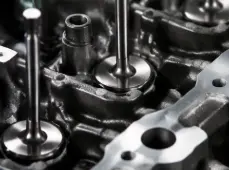
The material of the intake valves used in engine construction will directly affect power output, the capability to spin the engine, and long-term durability. From OEM martensitic stainless steels to aerospace-grade titanium alloys and nickel-based superalloys, each material provides unique benefits in weight, thermal stability, and wear resistance. This handbook reviews common intake valve materials, analyses their mechanical qualities, discusses how the choice of material affects engine economy and longevity, and gives selection criteria for racing and heavy-duty usage.
Which Materials Are Commonly Used for High-Performance Intake Valve Manufacturing?
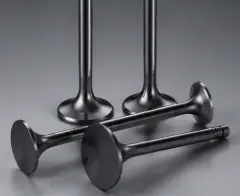
Martensitic Stainless Steel: The Industry Standard
Martensitic stainless steel remains the most common intake valve material used in production engines. The Silichrome 1 (SV1) and 410-series alloys are the most extensively utilised. These alloys provide great wear resistance, good machinability and affordable cost. Oxidation resistance at high temperatures increases with silicon concentration. Martensitic steel offers a proven combination of strength, durability and economic value for a typical intake valve (and other automotive and industrial applications) at working temperatures below 500 degrees Celsius.
Titanium Alloys for Lightweight Performance
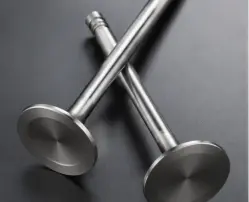
Weight reduction is important for high-performance intake valve applications, and titanium alloys, notably Ti-6Al-4V, have been favoured for these applications. Titanium is around 40 percent lighter than steel, hence greatly lowering reciprocating mass and allowing for greater engine speeds. Titanium intake valves provide lighter valve springs and less valvetrain parasitic losses. However, titanium has to be treated with specialised surface treatments, such as plasma nitriding or DLC coating, to obtain appropriate wear resistance in stems and seating surfaces.
Intake Valve Material Comparison: Stainless Steel, Titanium, and Advanced Alloys
Strength and Weight Trade-offs
When evaluating intake valve materials, the most important thing to look at is the strength-to-weight ratio. Stainless steel has high tensile strength and good fatigue life, but adds a large amount of reciprocating weight. Titanium has equivalent strength at approximately half the density, thus each intake valve is substantially lighter. Inconel 751 is a nickel-based superalloy and so has excellent high-temperature strength but is heavier and more expensive. Engineers must balance these trade-offs with speed requirements and budget restrictions to determine the ideal material for the intake valves.
Thermal Stability and Corrosion Resistance
Intake valves run at lower temperatures than exhaust valves, but thermal stability is still critical for performance engines. Martensitic stainless steel is dimensionally stable up to around 500 degrees Celsius. Titanium intake valve materials without protective coatings are prone to oxidation at temperatures exceeding 400 degrees Celsius. Austenitic steels and nickel alloys have excellent heat stability. Surface engineering methods like chrome plating, plasma nitriding, and ceramic coatings may greatly increase the operating temperature range of any intake valve material.
How Does Intake Valve Material Affect Engine Efficiency and Durability?
Reciprocating Mass and RPM Potential
The safe engine speed is directly affected by the mass of each intake valve. The lighter titanium valves minimise the inertia forces on the valvetrain, allowing for greater RPM before the valves float. This allows for more aggressive cam profiles and better volumetric efficiency at higher RPM. Heavier stainless steel intake valve assemblies need stiffer springs. This increases friction and parasitic losses. On competitive engines with peak power over 8,000 RPM, the titanium intake valve weight reductions may be translated into performance improvements.
Wear Resistance and Service Life
The intake valve material and surface treatment have a significant impact on durability. Passenger automobile servicing of stainless steel valves with hardened chrome-plated stems is often over 100,000 miles. The intake valve components of titanium need strong coatings to avoid galling against valve guides. Plasma nitriding produces a hardened diffusion layer that enhances wear resistance without loss of fatigue strength. The right surface treatment guarantees that the intake valve maintains its seating precision and dimensional correctness throughout the service period.
Choosing the Right Intake Valve Material for Racing and Heavy-Duty Applications
Racing-Specific Material Requirements
In racing, titanium intake valve materials dominate owing to their superior strength-to-weight ratio and RPM advantages. Formula 1, NASCAR, and drag racing engines feature titanium valves with DLC or ceramic coatings. For endurance racing when lifespan concerns arise, some teams choose austenitic stainless steel intake valve materials with nitriding treatments. The option depends on event length, engine speed range, fuel type, and whether the intake valve must withstand one race or a complete season.
Heavy-Duty and Industrial Application Considerations
For heavy-duty diesel and industrial gas engines, durability exceeds weight savings. The intake valve materials in these applications are preferably materials resistant to thermal fatigue and erosive wear, such as austenitic stainless steel or nickel alloy, and will last for thousands of running hours. In oil drilling, maritime and power-generating systems, intake valve parts that can keep the seal intact under constant high-load circumstances are needed. With 20+ years of expertise in the supply chain, Welong produces precision intake valve parts from client designs for demanding industrial situations.
Conclusion
The ideal material for intake valves should balance weight, thermal stability, wear resistance, and cost. Martensitic stainless steel is the solid standard for most applications, titanium shines in racing, and nickel superalloys serve severe environments. Also, surface treatments such as nitriding and DLC coatings boost performance. Welong, established in 2001 and ISO 9001:2015 certified, has over two decades of knowledge in industrial metal manufacture, servicing more than 100 clients globally. Opt for Welong for precise intake valve components because your engine deserves established quality.
FAQ
Q1: What is the most common material used for intake valve manufacturing?
A: Martensitic stainless steel, particularly Silichrome 1 (SV1), is the most common intake valve material due to its balance of wear resistance, strength, and cost-effectiveness for production engines.
Q2: Why is titanium preferred for racing intake valves?
A: Titanium is approximately 40 percent lighter than steel, reducing reciprocating mass and enabling higher RPM. This allows lighter valve springs and more aggressive cam profiles for greater peak power output.
Q3: What surface treatments improve intake valve durability?
A: Plasma nitriding, chrome plating, DLC (diamond-like carbon) coating, and ceramic coatings are commonly applied to intake valve surfaces to enhance wear resistance and extend service life.
Q4: Can stainless steel intake valves handle high-performance engines?
A: Yes. Austenitic stainless steels like 21-4N offer excellent thermal stability and fatigue resistance, making them suitable for high-performance and endurance racing intake valve applications.
Q5: Does Welong manufacture custom intake valve components?
A: Yes. Welong produces intake valve components from incoming drawings and samples, with engineering support using AutoCAD, Pro-Engineering, and SolidWorks, backed by ISO 9001:2015 certification.
Source Precision Intake Valve Components with Welong
With over 20 years serving customers across the UK, Germany, France, Italy, the USA, Canada, and Australia, Welong delivers precision-engineered intake valve components backed by ISO 9001:2015 certification. Our engineering department designs and manufactures using AutoCAD, Pro-Engineering, and SolidWorks, accepting drawings and samples. We have shipped to more than 100 international automotive customers, working to lead the global supply chain. Send your drawings today—contact us at metal@welongpost.com and let Welong empower your supply chain with China's finest manufacturing.
References
1. Heywood, J. B. (2018). Internal Combustion Engine Fundamentals (2nd ed.). McGraw-Hill Education, New York.
2. ASM International. (2008). ASM Handbook, Volume 2: Properties and Selection of Nonferrous Alloys and Special-Purpose Materials. ASM International, Materials Park, OH.
3. Lütjering, G., & Williams, J. C. (2007). Titanium (2nd ed.). Springer, Berlin.
4. Donachie, M. J., & Donachie, S. J. (2002). Superalloys: A Technical Guide (2nd ed.). ASM International, Materials Park, OH.
5. Hoag, K. L. (2006). Vehicular Engine Design. Springer, Vienna.
6. Totten, G. E. (Ed.). (2007). Steel Heat Treatment: Metallurgy and Technologies (2nd ed.). CRC Press, Boca Raton, FL.

Share your inquiry, get the quotation accordingly!
China WELONG- Your Reliable Partner in Metal Solutions