How Does an Engine Valve Work? A Complete Technical Guide
The engine valve is among the most critical components in internal combustion engines, regulating the precise flow of air-fuel mixture into the cylinder and exhaust gases out. Without properly functioning valves, combustion cannot occur efficiently. This technical guide explores what engine valves are, how intake and exhaust types differ, the mechanical opening and closing process, and the design and material considerations governing durability. Understanding engine valve operation is essential for appreciating modern engine performance.
What Is an Engine Valve and How Does It Control Combustion?
The Fundamental Role of Engine Valves in Combustion Cycles
Every engine valve functions as a precision-controlled gateway that opens and closes at exact moments during the four-stroke combustion cycle. During the intake stroke, the intake valve opens to allow the air-fuel mixture into the combustion chamber. During the exhaust stroke, the exhaust valve releases burned gases. Each engine valve must seal completely when closed to maintain compression, ensuring maximum cylinder pressure for efficient power generation.
Valve Timing and Combustion Efficiency
The timing of each engine valve directly determines combustion efficiency and overall output. Valve overlap—the brief period when both intake and exhaust valves are simultaneously open—scavenges exhaust gases and fills the cylinder with fresh charge. Advanced variable valve timing systems adjust the engine valve opening and closing points dynamically based on speed and load, optimizing volumetric efficiency across the entire operating range.
Engine Valve Types Explained: Intake Valve vs Exhaust Valve Functions
Intake Valve Design and Function
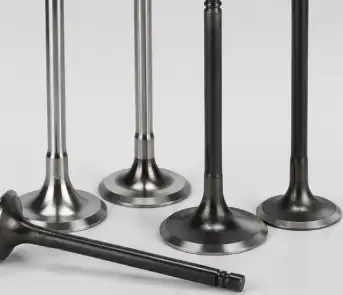
The intake engine valve is usually bigger in diameter than the exhaust valve, since it regulates the flow of the entering air-fuel combination and must have the least possible restriction. The charge air entering cools the intake valves to reduce temperatures. The intake engine valve is made of martensitic steel alloys with chrome-plated stems. It has to be wear-resistant and maintain accurate seating to avoid losing compression throughout the compression and power strokes.
Exhaust Valve Design and Thermal Challenges
The exhaust engine valve is under far more severe circumstances, exposed to combustion gases that surpass 800 degrees Celsius. Exhaust valves are made of austenitic steel alloys such as 21-4N or nickel-based superalloys such as Inconel to endure this temperature stress. Some exhaust engine valve designs include hollow stems filled with sodium for internal cooling. The exhaust valve must withstand oxidation, thermal strain, and seat wear and yet provide a gas-tight seal under harsh circumstances.
How Does the Engine Valve Opening and Closing Process Work?
Camshaft-Driven Valve Actuation Mechanics
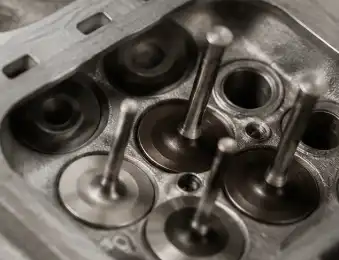
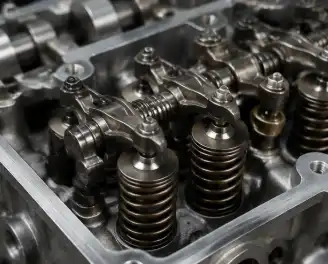
Each engine valve is opened and closed by a camshaft. The camshaft has lobes cut very precisely to press against the valve train components. As the cam lobe spins, it raises the valve from its seat against spring pressure, allowing the channel for gas flow. When the lobe falls back, the valve spring pushes the engine valve down on its seat, closing off the chamber. This is synchronised with crankshaft rotation to provide proper timing.
Valve Spring Dynamics and Sealing Performance
At high engine speeds, the valve springs keep the cam follower in touch with the cam lobe, preventing valve float. If the spring tension is not enough, then the engine valve may not shut entirely, and compression will be lost, and perhaps the piston may hit the valve. The right choice of springs and accurate machining of the valve seats guarantee a gas-tight seal for each engine valve. The harmonic performance across a range of speeds is improved with the beehive and multi-coil spring types.
Engine Valve Design, Materials, and Manufacturing Considerations
Material Selection for High-Temperature Durability
Material selection for each of the engine valves is a function of the environment in which it is functioning and the thermal load it is subjected to. The intake valves are made from silicon-chromium martensitic steel for wear resistance and mild temperature capabilities. For exhaust engine valve applications, there is a need for excellent heat resistance, and engineers have to resort to austenitic stainless steels or Nimonic superalloys. Surface treatments including plasma nitriding, chromium plating, and Stellite facing improve durability and increase service life under constant high-load operation.
Precision Manufacturing and Surface Treatment
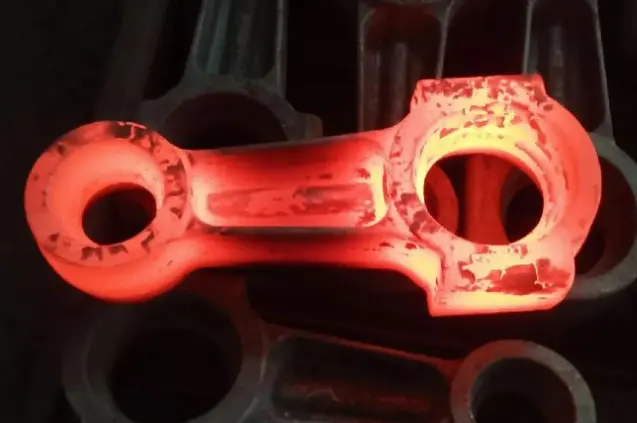
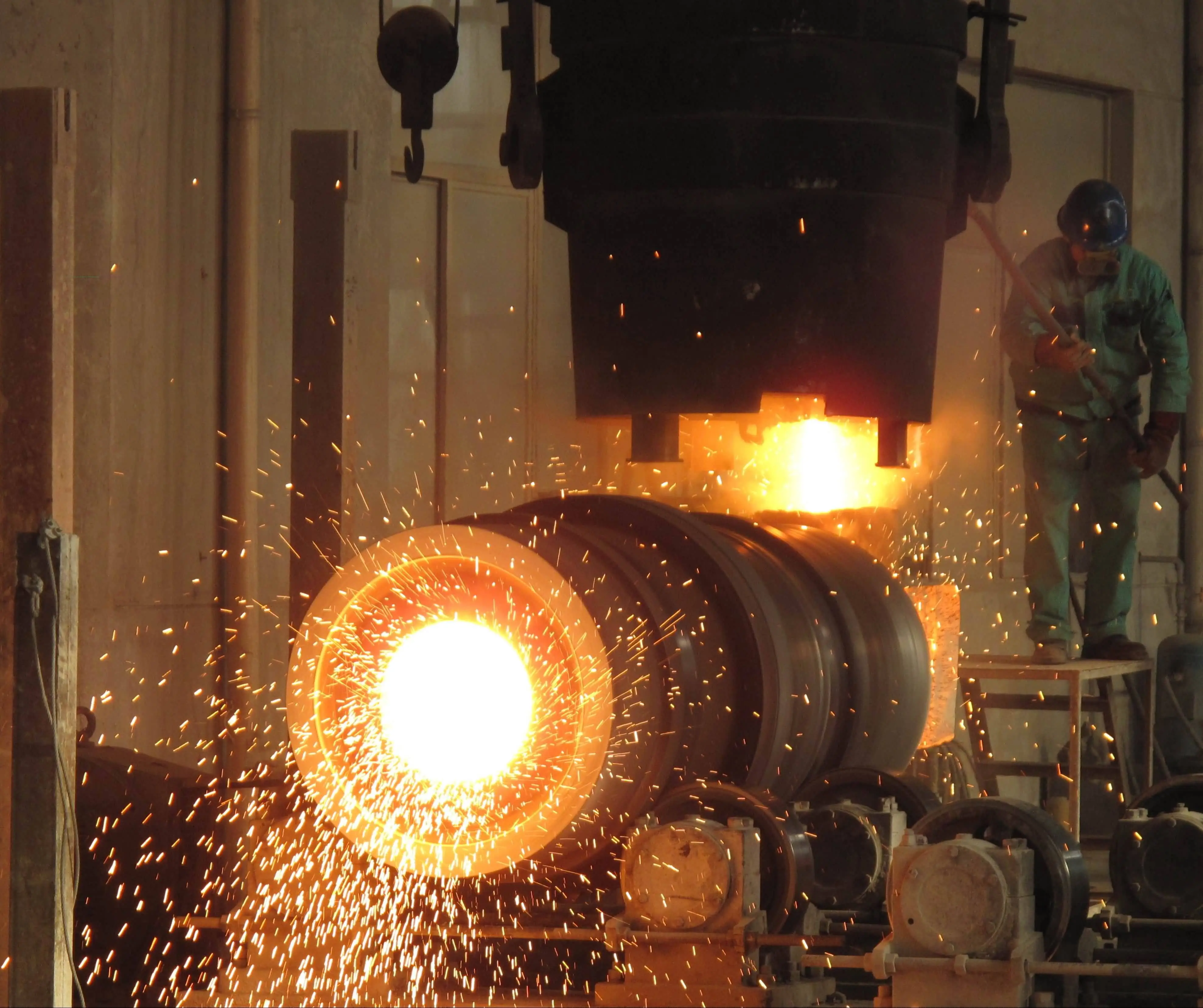
Precision forging, CNC machining, heat treatment, and severe dimensional inspection are required for high-quality engine valve manufacturing. The valve stem must be close-tolerance for smooth guiding action, and the head must be ground to a fine angle for optimal seating. The quality control involves ultrasonic testing, hardness control, and measurement of concentricity. Welong, for example, uses AutoCAD, Pro-Engineering, and SolidWorks to manufacture engine valve components from client designs or samples to match international specs.
Conclusion
Engine valves are precise components that regulate the flow of gases into and out of the cylinder and affect the efficiency of combustion. Their design, material choices, and manufacturing quality significantly affect the performance, fuel economy, and service life of the engine. Camshaft-powered actuation, sophisticated surface treatments- every detail counts. Welong was created in 2001. We are ISO 9001:2015 certified. We have more than 20 years of experience in the supply chains of industrial metal products. We serve more than 100 clients in the UK, Germany, the USA, and Australia. For your engine valve production requirements, trust proven competence.
FAQ
Q1: What is the main difference between an intake and exhaust engine valve?
A: Intake valves are larger and operate at lower temperatures, admitting the air-fuel mixture. Exhaust valves are smaller but endure extreme heat, requiring austenitic steel or superalloy construction for thermal resistance.
Q2: How does valve timing affect engine performance?
A: Precise engine valve timing determines when the cylinder fills with fresh charge and empties exhaust gases. Optimal timing maximizes volumetric efficiency, improving both power output and fuel economy across engine speeds.
Q3: What materials are commonly used for exhaust engine valves?
A: Exhaust valves typically use austenitic stainless steel (21-4N), nickel-based superalloys like Inconel, or sodium-filled hollow stems for internal cooling under extreme combustion temperatures.
Q4: What causes engine valve failure?
A: Common causes include thermal fatigue, valve seat wear, carbon buildup, insufficient spring tension causing valve float, and poor material selection leading to burning or recession at high operating temperatures.
Q5: Can Welong manufacture engine valves from custom drawings?
A: Yes. Welong produces components from incoming drawings and samples, with an engineering department capable of designing using AutoCAD, Pro-Engineering, and SolidWorks, backed by ISO 9001:2015 certification.
Partner with Welong for Precision Engine Valve Manufacturing
With over 20 years serving customers across the UK, Germany, France, Italy, the USA, Canada, Australia, and engine valve manufacturing, Welong delivers precision-engineered metal components backed by ISO 9001:2015 certification. Our engineering department designs and manufactures using AutoCAD, Pro-Engineering, and SolidWorks, accepting both drawings and samples. We have shipped products to more than 100 international customers in the automotive industry, always working diligently to lead the global supply chain. Send your drawings or samples today—contact us at metal@welongpost.com and let Welong empower your supply chain with China's finest manufacturing capabilities.
References
1. Heywood, J. B. (2018). Internal Combustion Engine Fundamentals (2nd ed.). McGraw-Hill Education, New York.
2. Ferguson, C. R., & Kirkpatrick, A. T. (2015). Internal Combustion Engines: Applied Thermosciences (3rd ed.). John Wiley & Sons, Hoboken, NJ.
3. Pulkrabek, W. W. (2014). Engineering Fundamentals of the Internal Combustion Engine (2nd ed.). Pearson, Upper Saddle River, NJ.
4. Hoag, K. L. (2006). Vehicular Engine Design. Springer, Vienna.
5. ASM International. (2008). ASM Handbook, Volume 1: Properties and Selection of Irons, Steels, and High-Performance Alloys. ASM International, Materials Park, OH.
6. Bosch, R. GmbH. (2022). Automotive Handbook (11th ed.). Robert Bosch GmbH, Plochingen, Germany.

Share your inquiry, get the quotation accordingly!
China WELONG- Your Reliable Partner in Metal Solutions