How Are Mandrel Bars Forged and Heat-Treated for Maximum Life?
Mandrel bars are a vital instrument in the production of seamless steel pipes. They are exposed to high temperatures, cyclic mechanical stresses, and abrasive wear in repeated rolling cycles. The quality of forging and heat treatment has a great impact on their service life. This tutorial covers the procedures involved in forging, heat treatment, material selection, and the whole production process that determines how mandrel bars attain optimal endurance in demanding industrial applications.
What Forging Processes Are Used to Manufacture High-Performance Mandrel Bars?
Controlled Forging for Large-Size Mandrel Bars
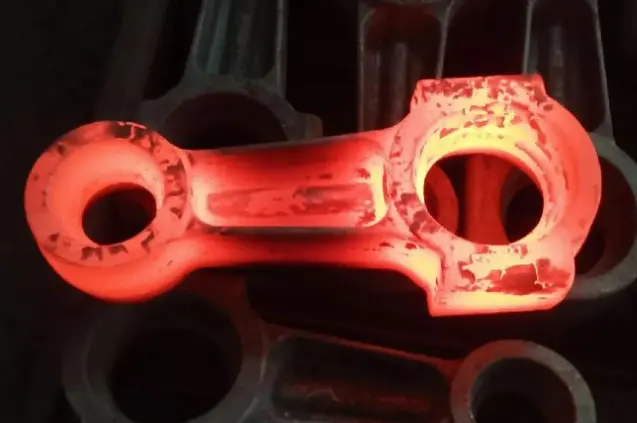
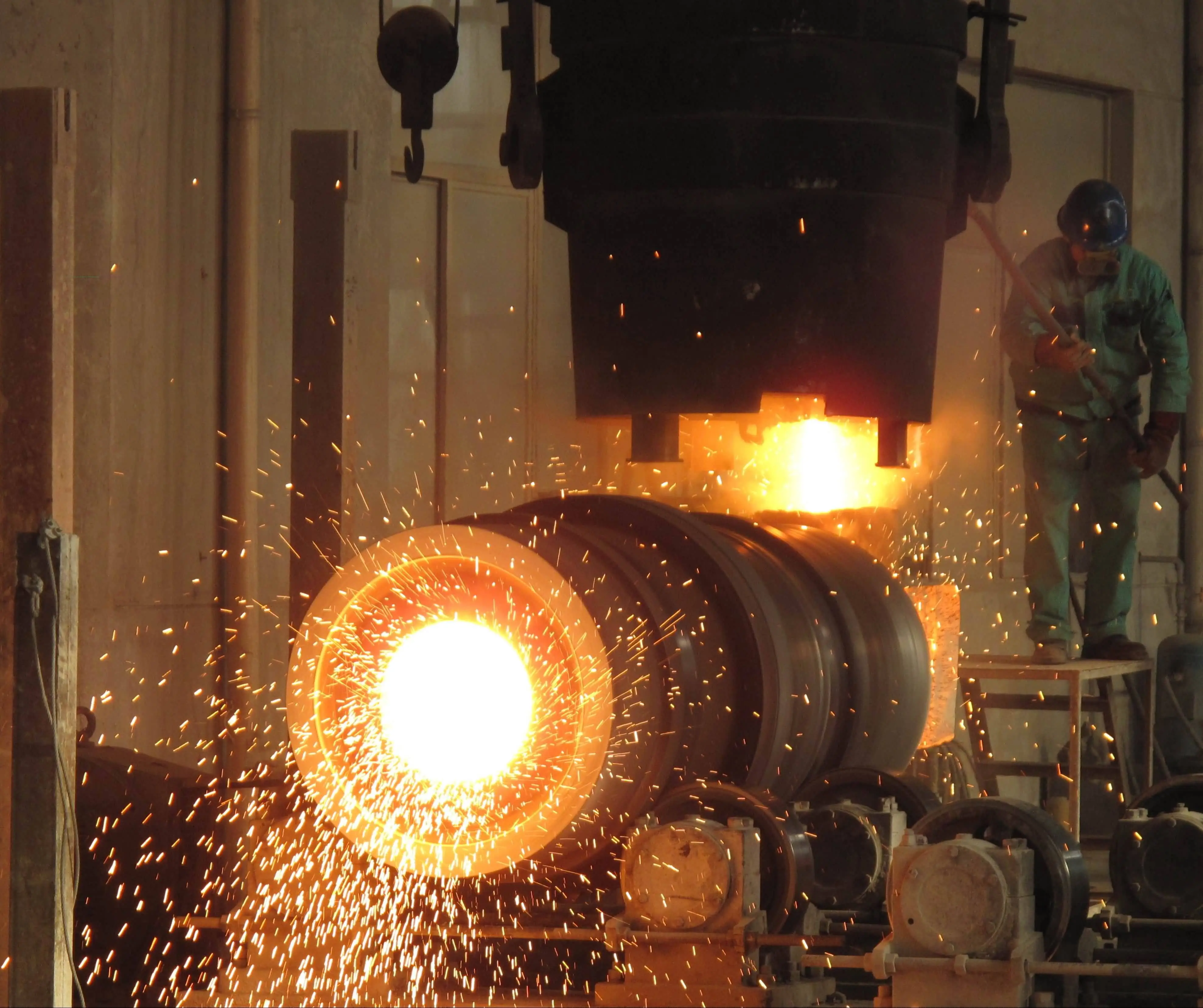
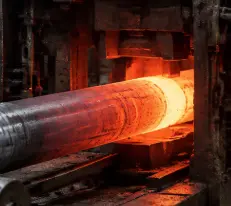
Controlled forging of large-format billets into precise bar stock produces high-performance mandrel bars. The metal is heated to a controlled temperature range and manipulated under hydraulic presses or forging hammers. This deformation improves the interior grain structure by removing porosity and enhancing isotropic mechanical characteristics. Controlled forging for mandrel bars from 90 mm to 500 mm diameter provides the structural integrity to endure multiple cycles of heat and mechanical stress.
Forging Parameters and Material Integrity
The forging parameters used on mandrel bars, including heating temperature, reduction ratio, and deformation rate, directly affect the final microstructure and mechanical properties. Proper forge reduction degrades the cast ingot structure and aligns the grain flow along the longitudinal axis to improve fatigue resistance. Avoid overheating, which causes grain coarsening and decarburisation. Each forged mandrel bar billet is ultrasonic tested before heat treating and machining to confirm internal soundness.
Mandrel Bars Heat Treatment Methods for Improved Strength and Durability
Quenching and Tempering for Optimal Hardness
The key procedure is heat treatment, which provides the requisite mix of hardness, toughness, and thermal fatigue resistance to mandrel bars. The H13 steel is converted to martensite by austenitizing at around 1020 to 1050 degrees Celsius and quick quenching. Subsequent tempering at regulated temperatures lowers the residual stresses and precipitates fine carbides to achieve hardness 330 to 390 HB. This treatment provides mandrel bars with dimensional stability during severe heat cycling while rolling seamless pipe.
Heat Treatment Control for Thermal Fatigue Resistance
Thermal fatigue is an important failure mechanism of mandrel bars, due to the repetitive heating and cooling during pipe rolling cycles. Control of heat treatment, soak duration, homogeneity of cooling rate, and tempering cycles affects resistance to surface cracking and heat checking. The many tempering cycles promote full transformation of carbides and reduce residual austenite. H13 mandrel bars properly heat treated have outstanding hot hardness and keep their strength even over 500 degrees Celsius and do not soften too soon.
How Do Material Selection and Heat Treatment Affect Mandrel Bar Service Life?
H13 Tool Steel: The Preferred Material Choice
H13 (4Cr5MoSiV1) tool steel is the most widely specified material for mandrel bars due to its exceptional combination of high-temperature strength, toughness, and wear resistance. Chromium, molybdenum, and vanadium form stable carbides that resist softening at elevated temperatures, while silicon provides oxidation resistance. For mandrel bars in seamless pipe mills, H13 offers superior thermal fatigue performance. Each batch is verified through metallurgical testing to ensure compliance with specified mechanical properties.
Extending Service Life Through Combined Metallurgical Strategies
The service life of mandrel bars results from the synergistic interaction between material quality, forging soundness, and heat treatment precision. Properly forged and heat-treated H13 mandrel bars achieve tensile strengths exceeding 1127 MPa with impact toughness above 20 joules for diameters up to 200mm. Surface treatments like nitriding further enhance wear resistance. Optimizing each metallurgical stage extends mandrel bars' service life, reducing replacement frequency and operational costs for pipe producers.
Mandrel Bars Manufacturing Process: From Forging to Precision Finishing
Precision Machining and Dimensional Accuracy
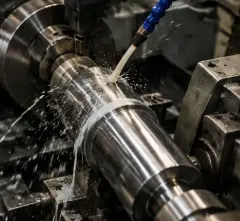
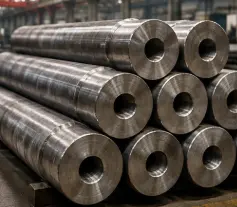
Mandrel bars are carefully machined after heat treatment and forging to accurate dimensional tolerances and high surface polish. CNC turning and grinding produce a straight bar profile. Special threading machines are used to manufacture trapezoidal connecting threads for mandrel bars of a length up to 18.5 m. Dimensional inspection confirms the straightness, diameter, and thread geometry against acceptability standards. The precise polish allows mandrel bars to easily slide into pipe shells and pull out cleanly after rolling.
Quality Inspection and Certification Standards
Mandrel bars are subjected to strict quality control procedures throughout the production process. Ultrasonic testing finds internal flaws after forging; hardness mapping checks for consistent heat treatment response; and dimensional inspection validates machining precision. Mandrel bars made under ISO 9001:2015 processes are supplied with material test certificates showing composition, mechanical qualities, and heat treatment records. With over 20 years of supply chain expertise, Welong manufactures mandrel bars from client designs for seamless pipe mills across the globe.
Conclusion
The greatest service life of the mandrel bar is a function of controlled forging, quench and temper heat treatment, tool steel selection (H13), and precision machining. Each step in the process contributes to the thermal fatigue resistance, mechanical strength, and dimensional stability that is necessary for demanding seamless pipe manufacture. Welong was created in 2001 and is ISO 9001:2015 certified, with more than 20 years of experience in producing industrial metal products and more than 100 clients in the UK, Germany, USA, and Australia. Trust proven competence. Your mandrel bars deserve no less.
FAQ
Q1: What material is most commonly used for manufacturing mandrel bars?
A: H13 (4Cr5MoSiV1) tool steel is the preferred material for mandrel bars due to its excellent high-temperature strength, thermal fatigue resistance, toughness, and wear resistance during seamless pipe rolling operations.
Q2: What heat treatment process gives mandrel bars their durability?
A: Mandrel bars are austenitized at 1020-1050 degrees Celsius, quenched to form martensite, then tempered to achieve a hardness of 330-390 HB, providing optimal strength and thermal fatigue resistance.
Q3: What sizes of mandrel bars can Welong manufacture?
A: Welong produces mandrel bars with diameters ranging from 90mm to 500mm and lengths up to 18.5 meters, customized to customer drawings, samples, or technical specifications.
Q4: What causes mandrel bars to fail in service?
A: Common failure modes include thermal fatigue cracking, surface wear, dimensional deformation, and heat checking—caused by repeated exposure to high temperatures and mechanical loads during pipe rolling cycles.
Q5: Does Welong provide quality certification for mandrel bars?
A: Yes. Welong manufactures mandrel bars under ISO 9001:2015 quality systems, providing material test certificates with chemical composition, mechanical properties, and heat treatment documentation for every batch.
Source High-Performance Mandrel Bars from Welong
With over 20 years serving customers across the UK, Germany, France, Italy, the USA, Canada, and Australia, Welong delivers forged and heat-treated mandrel bars backed by ISO 9001:2015 certification. Our engineering department designs and manufactures using AutoCAD, Pro-Engineering, and SolidWorks, accepting both drawings and samples. We produce mandrel bars from H13 tool steel with diameters from 90mm to 500mm and lengths up to 18.5 meters. Send your drawings today—contact us at metal@welongpost.com and let Welong empower your supply chain with China's finest manufacturing.
References
1. Roberts, G., Krauss, G., & Kennedy, R. (1998). Tool Steels (5th ed.). ASM International, Materials Park, OH.
2. ASM International. (2008). ASM Handbook, Volume 4: Heat Treating. ASM International, Materials Park, OH.
3. Dieter, G. E., & Bacon, D. J. (1988). Mechanical Metallurgy (3rd ed.). McGraw-Hill, New York.
4. Stahl, J. (Ed.). (2006). Steel Forging: Design, Production and Selection. ASTM International, West Conshohocken, PA.
5. Bhadeshia, H. K. D. H., & Honeycombe, R. W. K. (2017). Steels: Microstructure and Properties (4th ed.). Butterworth-Heinemann, Oxford.
6. API Specification 5CT. (2018). Specification for Casing and Tubing (10th ed.). American Petroleum Institute, Washington, DC

Share your inquiry, get the quotation accordingly!
China WELONG- Your Reliable Partner in Metal Solutions