What are the common types of forging processes?


Forging is one of the most important metalworking methods used in modern manufacturing. It has a direct effect on the performance and dependability of parts used in many different industries. When compared to casting or cutting alone, forging forms metal by applying compressive forces, resulting in forging parts with better grain structure and mechanical properties. Understanding the basics of forging helps you make better purchasing choices, whether you're looking for parts for airplane engines, car transmissions, or oil drilling equipment. The process not only produces materials with high strength-to-weight ratios but also wastes as little material as possible, which is something that procurement managers are becoming more and more aware of as they try to balance budgetary needs with quality standards and vows to sustainability.
Introduction to Forging Processes
Forging metal has grown from the old art of blacksmithing into a complex manufacturing field that blends the science of metals with the engineering of precision. Using hammers, presses, or special dies, this controlled deformation process uses localized compressive forces that change the internal structure of metals in a basic way. When you forge something, the grain flow of the metal lines up with the shape of the part. This gives the part linear strength that made or cast parts just can't match.
The 7 Major Types of Forging Processes Explained
To choose the right forging method, you need to know how each one deals with the behavior of the material, the accuracy of the measurements, and the cost of production. The seven methods listed above are the main ones that current makers use to make high-performance metal parts.
Open Die Forging
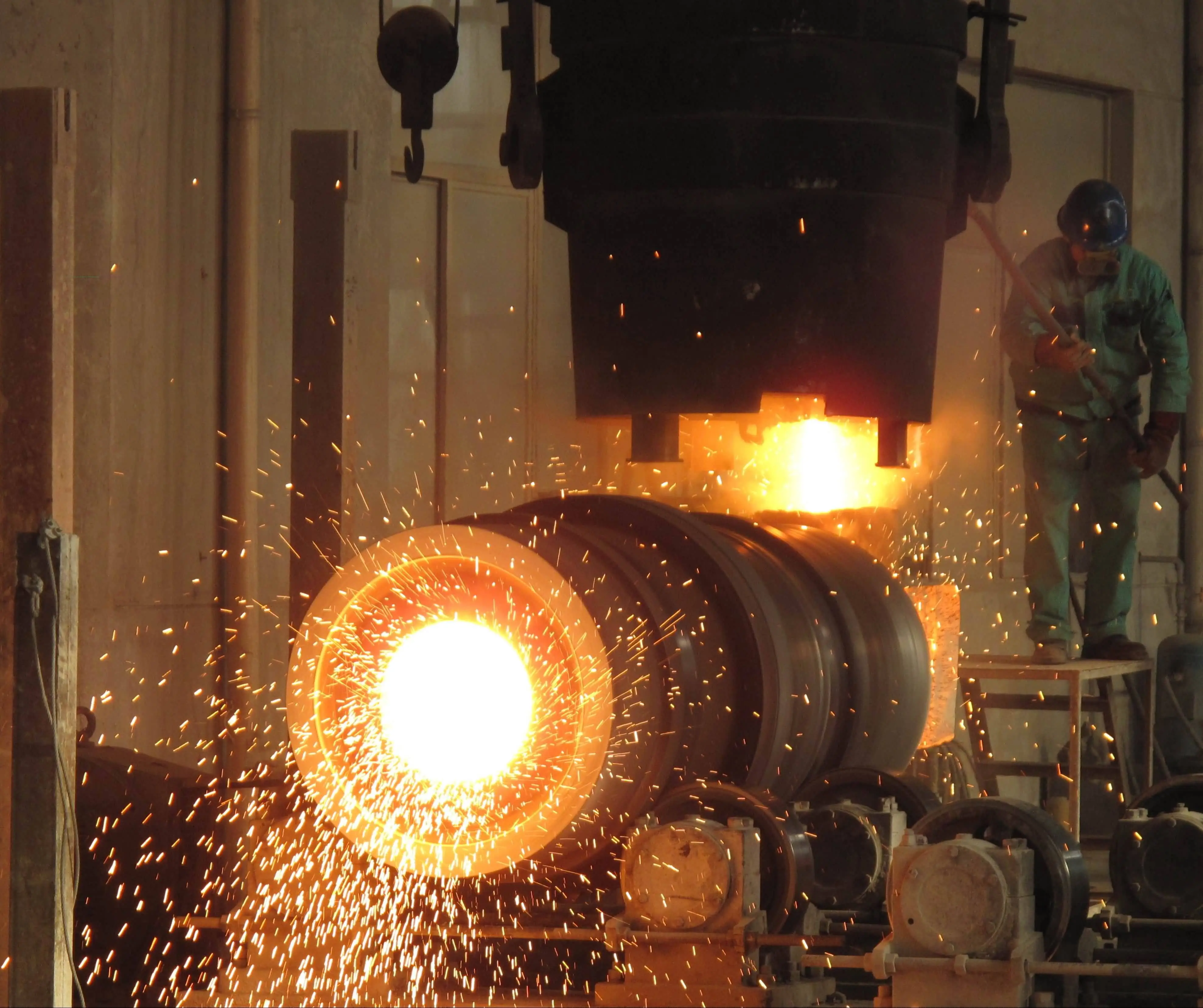
When you use open die forging, you squeeze metal between two flat or simple-shaped dies. This lets the metal flow side to side without being completely trapped. Because of this, the process works great for big parts like shafts, cylinders, and rings that are used in heavy industrial equipment and power plants. Open die forging is a good way for manufacturers to make unique pieces in smaller numbers because the cost of the tools is low. A lot of different metal alloys can be used with this method, like titanium, carbon steel, stainless steel, and nickel-based superalloys. The stability of the material is greatly enhanced as the cross-section as a whole deforms, filling in any gaps and improving the grain structure throughout the piece.
Closed Die Forging
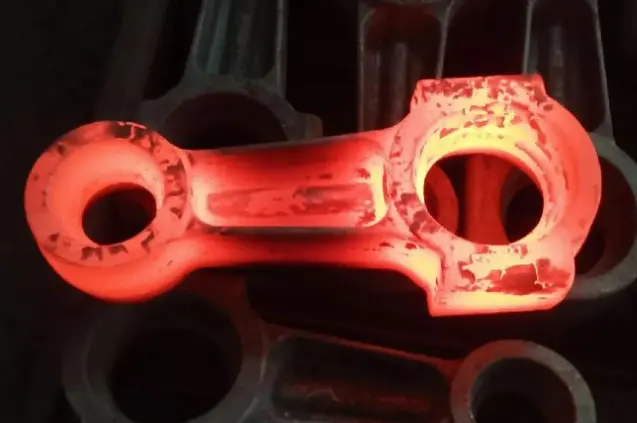
Closed die forging, which is also known as impression die forging, keeps the metal inside matching dies that have the right shape for the part. When there is a lot of pressure, the material flows into every feature of the cavity. This makes parts with tight tolerances and complicated shapes. This method works great for mass production, where making sure that thousands of parts are all the same size supports the higher original investment in tools. Closed die forging is a common way to make connecting rods, transmission gears, and suspension parts in industries like car making. Usually, the process needs more than one progressive prints, which shape the metal more and more toward its end shape while keeping its best properties.
Impression Die Forging
While impression die forging for forging parts is linked to closed die methods, it is different. In impression die forging, metal fills die holes after being hit over and over again, and the extra material forms flash around the parting line. This flash, which is later cut away, actually does something useful during forging—it causes backpressure that makes sure the die is filled. For airplane brackets, industrial fittings, and farming equipment parts, impression die forging is a popular method because it strikes a good balance between part complexity and production costs. The method handles intricate shapes while maintaining the superior mechanical properties that make forged components preferable to alternatives.
Roll Forging
By moving hot metal between spinning cylinder-shaped or semi-cylinder-shaped rolls, roll forging decreases the cross-sectional area and increases the length. The process is great for making shafts, axles, and leaf springs with uniform shapes and a great finish on the outside. When it comes to steering parts and drive shafts, where uniformity in size directly affects safety and performance, automakers use roll forging a lot. Since the process runs constantly instead of in separate hammer hits, production rates can be quite high. This makes it a good choice for medium to high volume needs.
Press Forging
Instead of blows that hit hard, press forging uses hydraulic or mechanical presses to apply slow, controlled force. This measured method lets you precisely control deformation rates and temperatures. This makes it useful for handling sensitive materials carefully in aircraft parts made of aluminum and medical implants made of titanium. When compared to hammer forging, the constant pressure goes deeper into the workpiece, making the features more uniform across the cross-section. For bigger parts where full through-thickness deformation is needed for structural stability, press forging is especially helpful.
Cold Forging
Cold forging is a way to shape metal that is at or near room temperature. It makes parts with very accurate dimensions and a smooth surface that often don't need any extra cutting. Cold forging is now used in the car business for fasteners, gears, and different chassis parts. In fact, studies show that it can be used in electric cars, heavy machinery, industry parts, home appliances, farm equipment, and electronics in many different fields. Cold material has a higher yield strength because it strain hardens, but it is less flexible. This trade-off is great for situations where strength is needed in shapes that aren't too complicated.
Hot Forging
Metal is heated above its recrystallization temperature during hot forging. This greatly lowers flow stress and makes it possible for complex shapes to form with less force. Spacecraft propulsion systems use hot forging to make parts that can handle high temperatures and high loads on their mechanics. Examples include rocket blades and thrust reversers. The process makes complicated shapes while keeping the material's features the same all the way through the structure. Titanium metals, Inconel, and tool steels are hard to work with and would crack or need too much force at lower temperatures. Hot forging can handle these materials.
Key Criteria for Selecting Forging Processes for Your Business Needs
Finding the right forging methods for a business requires a thorough analysis of many factors that have an immediate effect on the success of production and the overall cost of ownership.
Material Compatibility and Mechanical Properties
Metal alloys react to different forging methods in different ways, which changes the mechanical qualities that can be achieved and the ease of processing. Forging hot metals and high-strength alloys that don't bend at room temperature works best. Forging cold metals like aluminum, copper, and light steels that don't harden when heated works better. The direction of strength is determined by the grain flow patterns that are formed during forging. This makes process choice very important when parts are under unknown load directions.
Production Volume and Cost Considerations
An economic analysis has to take into account the cost of tools, the time and money needed to process each piece, and any other steps that need to be taken to meet the end requirements. Open die casting doesn't need many tools, so it's a cheap way to make prototypes and small quantities of unique parts. In contrast, closed die forging needs a big investment up front in precise dies but has the lowest costs per piece when producing a lot of them. Even though the forging forces are larger and the tools wear out faster, cold forging often gets rid of the need for milling.
Dimensional Precision and Surface Finish
Tight tolerances are often required by quality standards in aircraft, medical devices, and automobile uses for forging parts, which affects the choice of process. When cold forging, errors can be as low as ±0.1mm, and the surface treatments can be so good that grinding or sanding may not be needed at all. For hot forging, you usually need to leave a few millimeters of space around the edges and then machine the piece to its final size. Most of the time, closed die methods give better control over dimensions than open die methods. When buying, teams know about these differences in capabilities; they can make more realistic specs and avoid over-specifying tolerances that add costs without adding any functionality.
Lead Times and Scalability
How fast a supply chain is depends a lot on how long it takes to make things and how much they can make. Most of the time, simple open die parts can be made in a few weeks, but complicated closed dies may take several months to plan, build, and test. Most cold forging tools are in the middle of these two extremes. There are also differences in how easily production can be scaled up. For example, roll forging and press forging can increase output more easily than hammer forging. Procurement workers should make sure that the process capabilities match the demand patterns of the business. They should think about both normal production needs and extra capacity needs for new products or changes in the seasons.
Advanced Forging Techniques and Best Practices for Enhanced Part Performance
Adopting advanced manufacturing technologies that go beyond standard forging while keeping the process basics that produce better material features is becoming more and more important for staying ahead of the competition.
Isothermal and Precision Forging Methods
Isothermal forging keeps both the object and the dies at high temperatures during the shaping process. This keeps temperature differences to a minimum, which prevents uneven deformation and leftover stresses. This method works especially well for titanium and nickel-based superalloys that are used in turbine parts and need to stay the same size even when heated and cooled many times. Precision forging goes beyond traditional closed die methods by making it possible to get nearly-net forms that don't need much finishing. This cuts down on waste and machining time.
Temperature Control and Die Design Optimization
In modern forging processes, computer models are used to find the best heating plans and die shapes before the actual production starts. Predicting how materials will move, finding potential flaws like slips or cold shuts, and letting die changes fix problems before expensive tooling is made are all possible with finite element analysis. During the shaping process, precise temperature control keeps the metal in the best processing window, where it runs easily without the grains getting bigger or the surface getting worse. Die finishes and materials have changed a lot over the years, making tools last longer and keeping their dimensions accurate over thousands of production runs.
Integration of Digital Monitoring Systems
Real-time process tracking systems now keep an eye on parameters like force, temperature, position, and timing during each forging cycle. If these parameters change, the system will instantly alert the user to any problems that could point to defects or broken equipment. This method is based on data and lets you use statistical process control to find trends before they turn into scrap parts. Some modern facilities use machine learning algorithms to connect process factors with the properties of the end part. This keeps improving working windows to get the best quality and efficiency. Digital systems also make it easier to keep track of the paperwork needed by aircraft and medical device rules.
Leading Forging Solution Providers and Technologies for B2B Procurement
To find your way around the forging supply base, you need to know about both the different types of technology and the organizational skills that set competent suppliers apart from strategic manufacturing partners.
Evaluating Manufacturing Capabilities
Top-tier forging providers keep a wide range of process skills to meet customers' different production needs without forcing them to use less-than-ideal production methods. In addition to the basic tools, you should look for engineering materials that can help with design-for-manufacturability during the product creation process. The best partners question specs when there are other ways to do things that could save money or make things work better. This shows that they have expert knowledge that goes beyond basic manufacturing. Quality systems should at least meet ISO 9001:2015 standards. For military and medical companies, they should keep their AS9100 or ISO 13485 certifications.
In-House Production vs. Outsourced Services
More and more, procurement strategies are realizing that specialized forging parts providers often offer better costs and skills than trying to make things in-house for medium- to low-volume needs. Forging requires a lot of money to buy presses, kilns, and dies, as well as specialized metalworking knowledge that can be hard to find and keep. By outsourcing to specialized forging houses, you can use a range of process methods and material types without having to spend money on new equipment.
Supplier Assessment and Partnership Development
Systematic evaluation of technical, economic, and organizational aspects leads to long-term agreements with forging providers that work well. Site trips show skills that can't be described in writing. Look at cleaning standards, how equipment is maintained, and the skill levels of the staff. Instead of depending only on capability claims, look at real process control data and quality records. Talk about capacity limits freely to understand why lead times change during times of high demand. When problems develop, strong relationships include working together to find solutions, with suppliers interested in the success of both sides rather than defending their views.
Conclusion
Procurement experts can make smart buying choices that balance quality needs, production costs, and supply chain reliability when they understand the diversity of the forging process. Different forging methods, like open die versatility and cold forging precision, can meet the needs of different parts in industries like automobile, aircraft, oil and gas, and medical devices. Material compatibility, production numbers, dimensional tolerances, and wait times are all carefully looked at in successful buying strategies. Then, methods that minimize piece price while optimizing total cost are chosen. Isothermal forging and digital process monitoring are two examples of new methods that are helping to move the field forward. Strategic partnerships with capable suppliers give companies access to specialized knowledge and tools. We've helped procurement teams on three continents by turning their technical knowledge of forging into useful buying strategies that keep quality standards high while lowering risk.
FAQWhat are the main differences between hot and cold forging?
When you hot forge metal, you heat it above the point at which it recrystallizes. This lowers the metal's resistance to deformation and lets you make complicated forms out of tough materials like titanium and tool steels. The process lowers internal pressures and improves grain structure, but it also oxidizes the surface and allows for larger differences in size. When you cold forge metal at room temperature, you get very accurate measurements and a smooth finish on the outside. The process also makes the metal stronger by work hardening it. It's harder to choose materials because only flexible metals can be deformed at room temperature without breaking.
How can I optimize costs without compromising quality?
The first step in lowering costs is choosing the right process for the output rate and tolerance needs. Do not set too high standards for dimensional accuracy, as this can cause manufacturing methods that are more expensive when bigger limits are needed for functionality. Get providers involved early on in the planning process so that manufacturing issues that make things simpler can be taken into account. When you can, combine production volumes into fewer part numbers. This will help economies of scale. Think about near-net forging forms that reduce the need for further cutting. This will lower the total cost of production even if the price of the forging piece goes up a little.
What lead times should I expect for different forging methods?
If you order common materials, open die forging can usually get you samples and small amounts of production within three to six weeks. Closed die processes need to create and make the die, which adds to the wait time and makes the first order take twelve to sixteen weeks to ship. However, orders after that ship much faster. In the middle of these two extremes are cold forging tools. Always talk to your suppliers about capacity loading, because lead times get longer during times of high demand or when you need to buy specific goods over a longer period of time.
Partner with Welong for Precision Forging Parts Manufacturing
Welong has been connecting global companies with China's advanced forging skills for more than 20 years. They make custom metal parts that meet the strict requirements of the aircraft, automotive, oil drilling, and medical device industries. We are an ISO 9001:2015 qualified supplier of forging parts, and we take care of the whole supply chain for you, from optimizing the initial design to overseeing production and doing full quality control. This way, we can make sure that your standards are met by consistently producing high-performance parts. Our engineering team is very good at using AutoCAD, Pro-Engineering, and SolidWorks. They can take your plans and make designs that are easy to make and don't cost too much. Get in touch with us at info@welongpost.com to talk about how our proven supply chain management lowers sourcing risk and delivers the precision forging parts your applications need on time and on budget.
References
1. Altan, T., Ngaile, G., & Shen, G. (2005). Cold and Hot Forging: Fundamentals and Applications. ASM International.
2. Groover, M. P. (2020). Fundamentals of Modern Manufacturing: Materials, Processes, and Systems (7th ed.). Wiley.
3. Schey, J. A. (2000). Introduction to Manufacturing Processes (3rd ed.). McGraw-Hill.
4. ASM International Handbook Committee. (2005). ASM Handbook Volume 14A: Metalworking: Bulk Forming. ASM International.
5. Dieter, G. E., & Bacon, D. J. (1988). Mechanical Metallurgy (3rd ed.). McGraw-Hill Education.
6. Saha, P. K. (2000). Aluminum Extrusion Technology. ASM International.

Share your inquiry, get the quotation accordingly!
China WELONG- Your Reliable Partner in Metal Solutions