Design considerations for forging | What to plan for in the design phase

Forging design that works for making high-performance industrial parts depends on knowing how the material acts, what the process can do, and what the limits of the manufacturing process are before production starts. Forging parts have better strength-to-weight ratios and more stable grain structures than many other types of parts. This means that early design planning is very important for getting accurate measurements, saving money, and making sure the parts work well. During the design phase, procurement managers and engineering teams must work together closely to find the best balance between technical performance requirements and production feasibility. This is done to make sure that custom-forged parts meet strict industry standards while also minimizing supply chain costs and delivery times.
Understanding the Fundamentals of Forging DesignDefining Forging Components and Design Principles
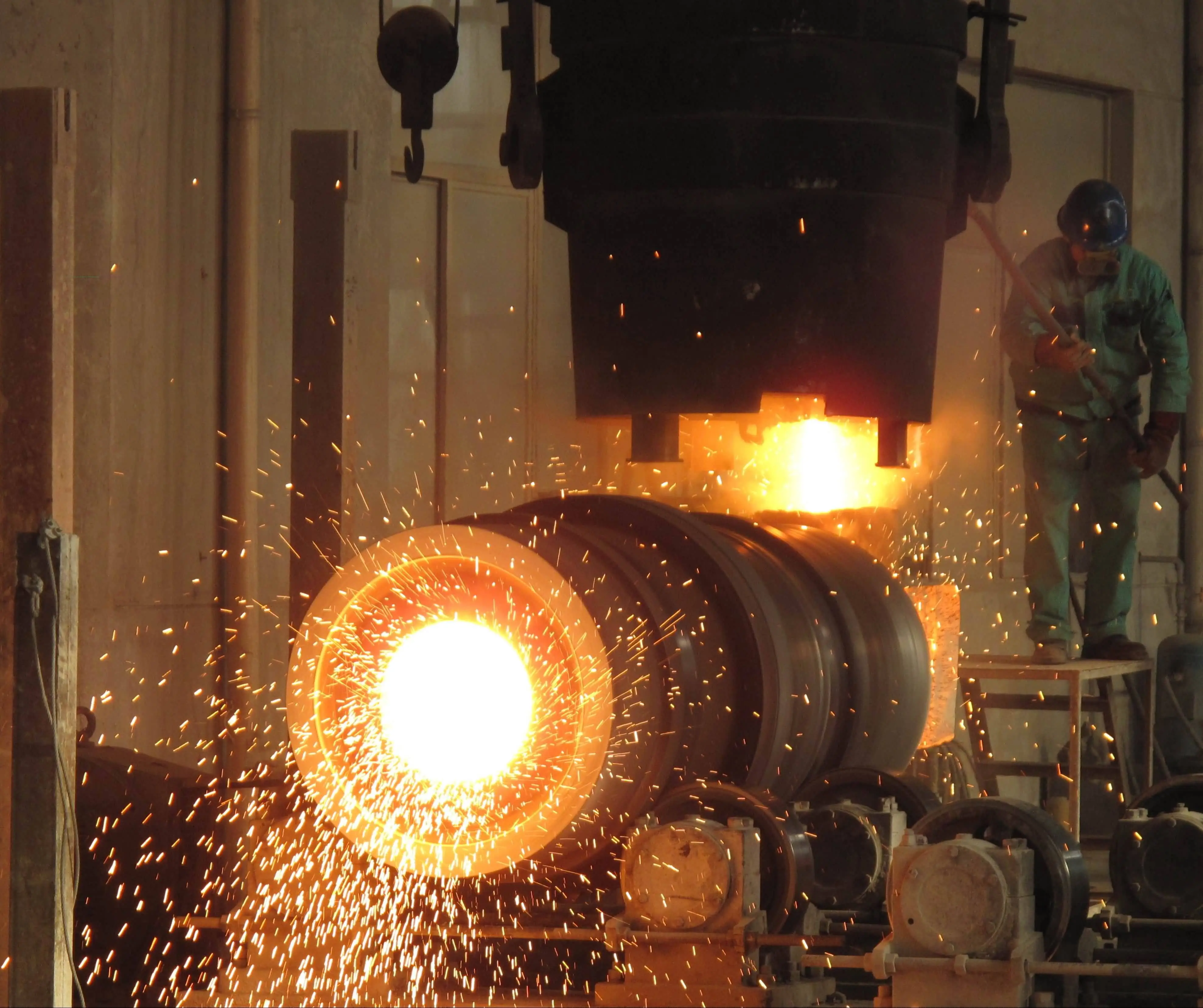
Forging is a way to work with metal that forms it by applying specific compressive forces, which are usually done by pressing or hammering. Forging improves the internal grain structure of the material, making parts with better mechanical qualities. Casting, on the other hand, puts molten metal into molds. Forging parts are designed by thinking about how the material flows, the draft angles, and the splitting lines. These all have a direct effect on how easy the part is to make and how well it works when it's finished.
Material Selection and Its Impact on Design Feasibility
Forgings made of stainless steel don't rust and stay strong in harsh chemical conditions, so they are used in the medical device and underwater drilling industries. Aluminum alloys, especially 6061 and 7075, have very high ratios of strength to weight, which are very important in aircraft use. Titanium forgings are expensive, but they are biocompatible and lightweight, which makes them useful for medical devices and jet engine parts. When forging, each material has its own flow qualities that affect the minimum section thickness, the range of tolerances that can be used, and how the material reacts to heat treatment. These are all things that makers must think about when they are planning.
Forging Versus Alternative Manufacturing Methods
When you compare forging to casting, drilling, and pressing, you can see that each has its own pros and cons. Casting lets you make parts with complicated shapes and internal holes that are hard to make with forging, but the parts are less dense and have weaker grain structures. While machining can make features and standards that are very precise, it also loses material and stops the flow of grains, which lowers fatigue strength. Stamping is good for making a lot of thin-walled parts, but it doesn't have the three-dimensional shaping and structural stability that forging does.
Critical Design Factors in the Forging PhaseMaterial Properties: Durability, Strength, and Heat Treatment Compatibility
Engineers need to think about how the temperature of the shaping changes these features. When hot forging is done above the temperature at which crystals recrystallize, complex forms and big deformations are possible, but scaling and dimensional changes may happen. Cold forging gives the metal a better finish on the outside and more accurate measurements while also stiffening it, but it can't make complicated shapes and needs stronger forces to shape. In the middle is warm forging, which lowers forces compared to cold forging but keeps better control of dimensions than hot forging. The type of metal used and the temperature at which it is forged must match the annealing, normalizing, cooling, and tempering steps that follow in order to achieve the desired mechanical qualities without affecting the stability of the dimensions.
Dimensional Accuracy and Geometric Constraints
To get exact measurements in forging parts, you need to know the limits of the process and plan your designs accordingly. Usually, draft angles between 3 and 7 degrees make it easier for parts to come out of dies and keep them from getting damaged while they're being taken out. Fillet radii keep stress from building up and material flow from getting messed up. Sharp internal corners, on the other hand, cause cracking during making and early die failure. Wall width changes should be slow and smooth. Sudden changes can cause problems with the flow of materials and damage inside the wall.
Integrating Heat Treatment and Surface Finish Requirements
Die design, forging temperature, and processes done after forging are all affected by the surface finish needs. Scale and texture on as-forged surfaces make them unsuitable for accurate mating surfaces or uses that need to be resistant to wear. By putting compressive pressures on the surface, shot peening improves wear resistance. Machining, grinding, or polishing, on the other hand, gets exact measurements and smooth finishes. Designers should be clear about the surface conditions, telling the difference between as-forged surfaces that are fine for non-critical areas and polished surfaces that are needed for bearing journals, sealing faces, or threaded connections. This clarity keeps mistakes from happening, which could cost a lot of money, and makes sure that forging providers provide full solutions that meet functional needs.
Manufacturing Process Alignment: Optimizing Design for ProductionHot Forging Versus Cold Forging: Design Implications
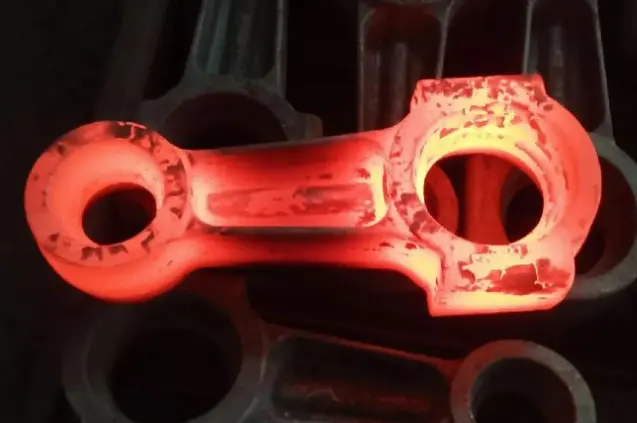
The choice between hot and cold forging processes has a big impact on the design options and part properties. When metal is heated to high temperatures, it constantly recrystallizes while it is being deformed. This stops the material from working harder and lets it change shape significantly with fewer forces. This method works well for big parts, complicated shapes, and materials that aren't very flexible at room temperature. In aircraft propulsion systems, rocket nozzles and thrust reversers are hot-forged to get complex shapes while keeping the same material qualities all over the part. This lets the part handle high temperatures and high mechanical stresses while it's in use.
Selecting Appropriate Forging Techniques
Different forging methods have unique benefits that work best with certain types of parts. Open-die forging squeezes metal between flat or simple-shaped dies. It works well for big parts like rings, discs, and shafts where the internal grain structure is more important than the outward detail. Closed-die forging, which is also known as impression-die forging, keeps the material inside carefully machined die holes. This makes net-shape or nearly net-shape forging parts with clearer edges and tighter tolerances.
Seamless rolled ring forging makes rings that are stronger and don't have any join gaps. These rings are perfect for bearing races, flanges, and pressure tank parts that need to be strong and durable. Isothermal forging keeps the dies and the material at the same high temperature. This makes it possible to make superalloy and titanium parts for medical implants and aircraft turbine disks that have very uniform properties. Each method has its own design restrictions, such as minimum section widths, draft requirements, and where the parting lines must be placed. Designers must work within these limits to make the product as cost-effective and easy to make as possible.
Balancing Cost, Lead Time, and Scalability
Design for manufacturability concepts have a direct effect on the costs and schedules of buying. Complex shapes that need multiple stages of casting, precise dies, and a lot of cutting make both unit costs and development wait times longer. On the other hand, designs that are simpler, use standard die setups, and have few secondary processes save money on tools and speed up production ramp-up.
When moving from a pilot to production numbers, scalability is especially important for parts. When designing something for low-volume production, it might not be cost-effective to make it with designs that are designed for cutting. This is because forging makes better use of materials and faster cycle times. During design reviews, procurement managers should involve forging suppliers to find ways to cut costs by making changes to the design that keep the functionality but make it easier to manufacture. This way of working together makes sure that engineering needs are balanced against budget limits and delivery times. This makes sure that the standards are reasonable and that providers can always meet them.
Ensuring Compliance with Industry Quality Standards
Following industry standards and tracking methods ensures that quality is always the same and that regulations are followed. Getting ISO 9001:2015 approval shows that a provider is dedicated to quality management systems that include controlling designs, making sure processes work, and always making things better. ASTM standards set uniform requirements for forging materials and finished parts by describing the chemical makeup, mechanical qualities, and testing methods of materials. Standards for aerospace AS9100 and medical devices ISO 13485 add extra rules for fields where broken parts could put people in danger.
Being able to track things from the heat lots of the raw materials to the final review makes sure that everyone is responsible, and lets you find the root cause of problems if they happen. Specifications for buying things should clearly list the standards that apply and demand material test reports, measurement inspection records, and certificates of compliance to prove that the products meet the standards. Welong's ISO 9001:2015-certified operations make sure that quality is strictly controlled throughout the supply chain. They do this by providing documentation that backs up their customers' legal obligations and makes it easier for international shipments to markets in Europe, North America, and the Asia-Pacific region to clear customs.
Common Applications and Their Specific Design RequirementsAutomotive and Heavy Industrial Equipment Manufacturing
Forging parts that balance speed, durability, and cost over large production numbers are needed in automotive uses. Crankshafts and connecting rods have to survive millions of stress cycles over the course of a vehicle's life. To do this, the grain flow has to be matched with the loading patterns, and the material has to be resistant to fatigue, which can only be done by forging. Control arms, steering knuckles, and axle shafts are all suspension parts that need to be able to take impact loads while staying stable in their dimensions. For this reason, forged construction is better than cast construction, which can break suddenly.
Custom-Forged Versus Standard Parts
Heavy industrial equipment used in the mining, building, and material handling industries needs parts that can handle high loads, rough conditions, and constant use. Forged gear blanks, hydraulic cylinder rods, and lifting hooks are reliable tools that workers count on to get work done and stay safe. For these uses, load-bearing capacity and service life are more important than reducing weight. Carbon or alloy steels that are easy to shape and can be treated with through-hardening heat to make them resistant to wear are often specified. When designing, it's important to think about things like large fillet circles to stop fatigue cracks from starting, sections that are thick enough to handle stress concentrations, and material choices that have been tested in similar working conditions.
Real-World Applications Across Industries
Forged drill collars, stabilizers, and kellys are needed for oil and gas drilling because they can handle twisting and compressive loads and drilling fluids that are very corrosive. These parts are put through non-destructive tests like ultrasound inspection and magnetic particle examination to find flaws inside that can't be seen with the naked eye. More and more, metal forgings are being used to make battery casings and structural parts for electric cars. Reducing weight directly increases the range of the vehicle, and forged construction makes it more durable and crash-proof. Each use is different, so designers have to be very careful when choosing materials, making sure processes work right, and following quality control rules that are right for the working setting and what will happen if something goes wrong.
Enhancing Collaboration Between Designers and Forging SuppliersEarly-Stage Communication and Design Validation
Design confirmation includes many areas, such as simulating the flow of materials, analyzing stresses, and checking whether the tooling is possible. Advanced forging makers use finite element analysis software to model how materials will behave during making operations. This lets them predict flaws like laps, cracks, or underfill before they cut the steel for the production dies. We can share modeling results with design teams so that they can make smart choices about how to change shape, materials, or processes to get the best results. This joint validation lowers the risk of development and increases trust that parts made for production will always meet requirements.
Leveraging Supplier Expertise for Design Optimization
When you work with certified forging makers as development partners instead of just production providers, your supplier relationships change into strategic partnerships that help both parties. Suppliers learn more about what customers want, which lets them solve problems before they happen, and customers get access to manufacturing knowledge, which speeds up development and improves results. When buying from foreign sellers, this relationship approach is especially helpful because of the cultural and geographical differences that can make it hard to communicate clearly. During the design process at Welong, our engineering staff works closely with customers. They use AutoCAD, Pro-Engineering, and Solidworks to share design files and give feedback that makes the product easier to make while still protecting intellectual property.
Case Studies: Successful Design-Supplier Partnerships
Looking at cases of collaboration in the real world shows that integrated processes have real benefits. A Tier 1 aircraft supplier in Europe that was making landing gear parts worked together with their forging source during the early stages of design, talking about loading conditions and performance needs before deciding on the final geometry. The supplier's modeling tools found areas of high stress in the initial designs and suggested changes to the fillet radius that cut peak loads by 18% without changing the way the parts fit together. Working together stopped problems that could have happened in the field, kept the project on track, and kept expensive design changes from happening after the tools were bought.
Conclusion
Forging design that works well needs careful planning that takes into account the features of the material, the limitations of the size, the process's abilities, and the required level of quality before production starts. Purchasing managers and engineering teams need to work closely with experienced forging providers and use their knowledge of how to make things to make designs that are the best balance of performance, cost, and ease of production. Early-stage contact, design validation, and partnerships with suppliers all lower the risks of development, speed up the process, and make sure that quality is the same across all output volumes. By learning the basics of forging and using design-for-manufacturability principles, companies can choose forging parts that are stronger, more reliable, and better value for money in challenging industries like aerospace, cars, oil and gas, and medical devices.
FAQWhat materials work best for forged components?
The material to use depends on the needs of the product, such as the temperature, power, and resistance to corrosion. Carbon steels are strong and don't cost a lot of money. They are used in machinery and cars. For aircraft and oil drilling forging parts that need to be strong, alloy steels offer better mechanical qualities. In chemical processes and marine settings, stainless steels don't rust. Aluminum alloys are strong and light, making them useful in aircraft and electric vehicles. Titanium is strong and biocompatible, making it a good material for medical devices and jet engine parts.
How does forging method selection affect design parameters?
Hot forging can make complicated shapes and big changes, but it needs large draft angles and limits. When you use cold forging, you can get tight specs and a great surface finish, but you can't use complicated shapes or a lot of different materials. Closed-die forging makes near-net forms with clear features, while open-die forging works best for big, simple parts. Each method has its own rules about the minimum width of the section, the fillet radius, and the level of accuracy that can be achieved that creators must follow.
Does design complexity significantly impact production costs and lead times?
Complex shapes that need multi-cavity dies, multiple forging steps, and a lot of machining make tools much more expensive and take a lot longer to build. Simplified designs that use standard features and cut down on extra work speed up production and lower costs. Designers should weigh the needs for functionality against the difficulty of production, choosing tight specs and complicated features only when the need for performance justifies the extra cost. Early interaction with suppliers helps find ways to improve usefulness while also lowering costs and speeding up delivery times.
Partner with Welong for Precision Forging Solutions
Welong has 20 years of experience making custom forging parts and managing supply chains. They work with companies in the aircraft, automotive, oil and gas, and medical device businesses around the world. Our ISO 9001:2015-certified operations make sure that quality is uniform and can be tracked all the way through production, from working together on the design concept to final testing and shipping around the world. During the planning phase, we work closely with procurement managers and engineering teams to provide technical help that makes the product easier to make, lowers costs, and speeds up the development process. As a reliable provider of forging parts, we use advanced CAD programs like AutoCAD, Pro-Engineering, and Solidworks to make parts from customer sketches and samples. Get in touch with our engineering team at info@welongpost.com to talk about your forging needs and find out how our combined supply chain services can give your projects the accuracy, dependability, and value they need.
References
1. Altan, T., Ngaile, G., and Shen, G. (2004). Cold and Hot Forging: Fundamentals and Applications. ASM International.
2. Byrer, T.G., ed. (1985). Forging Handbook. Forging Industry Association and American Society for Metals.
3. Sabroff, A.M., Boulger, F.W., and Henning, H.J. (1968). Forging Materials and Practices. Reinhold Publishing Corporation.
4. Semiatin, S.L., and Lahoti, G.D., eds. (1988). Forging Technology and Science, Volume 98. American Society for Metals.
5. Thomas, A. (2006). Materials and Design: The Art and Science of Material Selection in Product Design. Butterworth-Heinemann.
6. ASM International Handbook Committee (2005). ASM Handbook Volume 14A: Metalworking: Bulk Forming. ASM International.

Share your inquiry, get the quotation accordingly!
China WELONG- Your Reliable Partner in Metal Solutions