What are metal components?
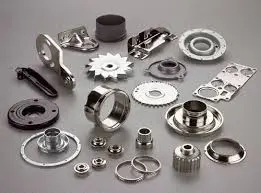
Metal components are made of metals like aluminum, brass, titanium, stainless steel, and many others. These precision-engineered parts are very strong, last a long time, and conduct heat and electricity well. You can change their properties by adding metals and surface treatments. These are crucial parts that are used to create high-tech medical devices, cars, oil and gas drilling equipment, and industrial goods. They have to meet strict standards for performance and stability. Procurement managers can find the best choices for their specific operations by knowing these basic traits.
Understanding Metal Components: Definitions and Types
A lot of different businesses need heavy-duty metal parts that can handle tough conditions. We've seen that picking the right material base can change how long something lasts, how safe it is to use, and how much it costs in total.
Core Characteristics That Define Quality
Strength is still the most important thing to think about when looking at metal parts for work. The tensile strength of something tells you how much weight it can hold before it breaks. The yield strength, on the other hand, tells you the stress level at which something changes shape forever. The hardness of a metal tells you how well it stands up to wear and surface dents. In other words, some metals work great in places where there is a lot of friction.
Common Material Categories in B2B Manufacturing
In business, steel metals are very useful because they are cheap and easy to work with. Carbon steel is a cheap material that can be used to build things that don't need to be resistant to rust. When the chromium content of stainless steel is more than 10.5%, it is very resistant to rust. This is important for tools used in food processing, laboratories, and the ocean. Engineers who want strong materials that are also light like to use aluminum.
Industry-Specific Applications That Drive Specifications
An important part used in the car business is stamped steel panels. Other important parts are cast metal engine blocks, forged crankshafts, and polished transmission parts. These parts have to be able to handle shaking, changes in temperature, and mechanical stress over hundreds of thousands of miles. Materials used in space must meet strict requirements, such as AMS specs.
The Metal Components Manufacturing Process Explained
The ways that things are made turn raw materials into exact parts that have to meet very strict standards. The pros and cons of each process depend on how hard it is, how much is needed, and how the material is made. Metal components are manufactured through various methodologies, including casting, machining, and forging.
Casting Processes for Complex Geometries
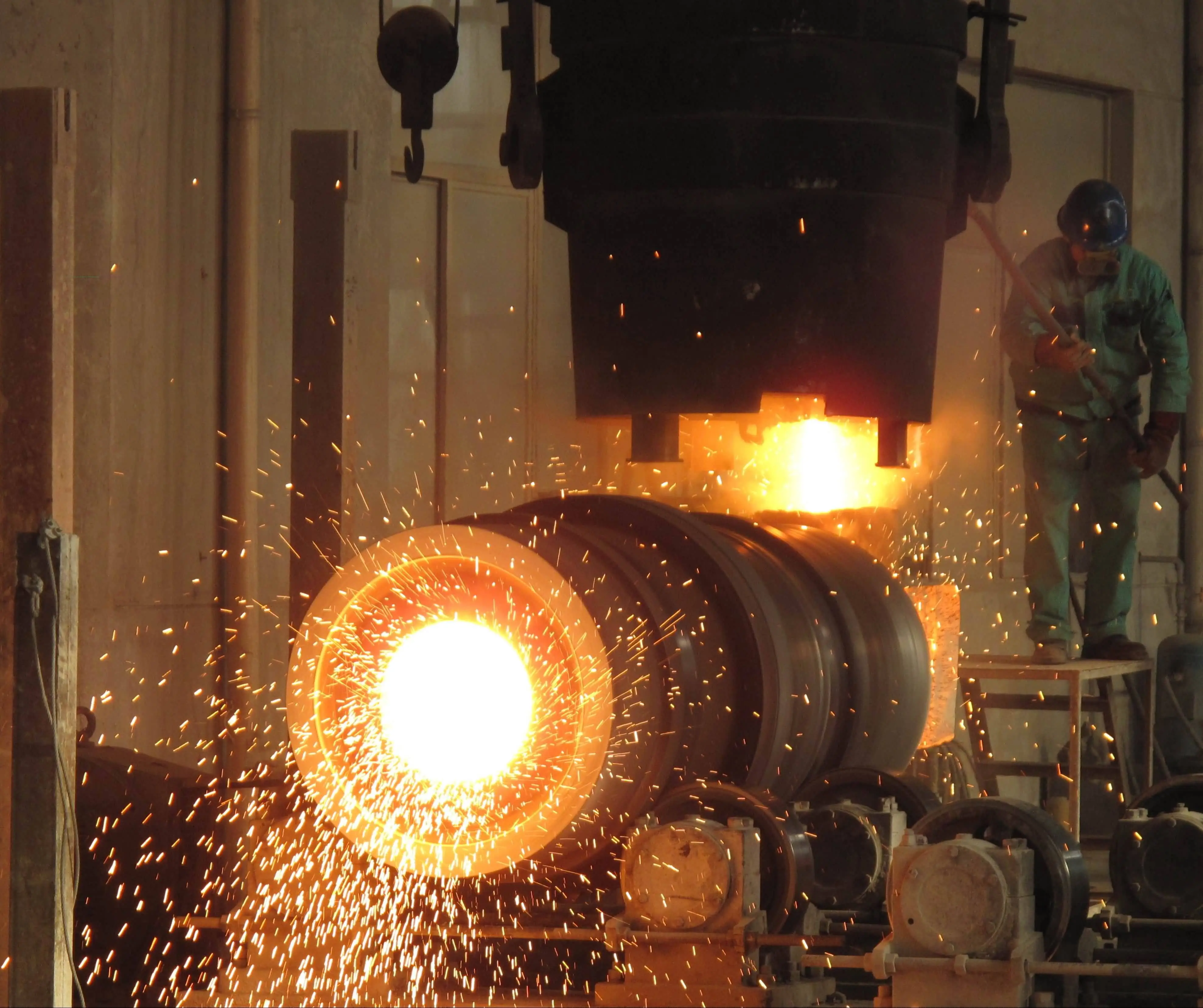
Sand casting is still one of the most adaptable and inexpensive ways to make large, complicated parts out of metals that aren't iron. To do this, good silica sand is mixed with bentonite clay to make a mold, water to keep the mix smooth, and carbonaceous ingredients to improve the finish on the outside. When you put melted metal into these molds, it hardens into the shape you want. It is possible to do this even though the inside passages and outside shapes are difficult and hard to machine.
Machining Operations for Precision Requirements
In CNC machining, material is removed through controlled cutting methods that allow for only a few microns of mistakes to be used for important tasks. Spinning cuts are used in milling to give pieces of work complicated forms, pockets, and profiles. You spin something against cutting tools that stay in one place when you turn it. This makes things that are round, like rods, holes, and threads. When you drill, you make precise holes for screws and pipes. It is important for bearing surfaces and close faces that surfaces are very smooth and accurate. Grinding makes these things possible.
Forming and Forging for Enhanced Strength
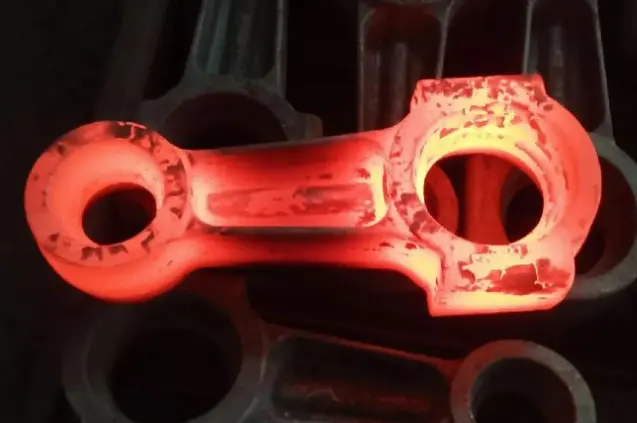
Metal is under a lot of pressure when it is forged. This smooths out the grain structure and makes the mechanical properties better than they would be in a cast or made part. Closed-die forging holds hot metal between very accurate dies. This makes parts like hand tools, connecting rods, and gears that last longer and are less likely to break. Because it hits or pushes metal between flat or simple-shaped dies, open-die forging is good for making big rings and shafts.
Quality Standards and Certifications
When a provider gets ISO 9001:2015 approval, it means they are committed to quality management systems that ensure stable product quality and ongoing growth. People all over the world know this standard, which has rules for things like paperwork, process control, review methods, and steps when something goes wrong. Certifications that are specific to a field, like AS9100 for airplanes, IATF 16949 for cars, and ISO 13485 for medical equipment, add to ISO 9001:2015 by adding rules that are important for that field's risks and rules.
Emerging Manufacturing Technologies
Laser or electron beam energy is used in additive manufacturing, which is also known as 3D printing, to build things from metal powders one layer at a time. With this technology, you can make forms that were too difficult to do before. It also speeds up the testing process and produces less trash. Titanium and aluminum parts that are used in medicine and the military can be made in two ways: direct metal laser sintering and selective laser melting.
Metal Components vs Alternatives: Making the Right Material Choice
How well something works, how much it costs, and how long it takes to make are all affected by the materials that are used. When you evaluate choices in a planned way, you can be sure that they meet your useful wants and your budget.
Metals Versus Polymers in Industrial Applications
Metals are the best choice when you need something to be strong, hard, and resistant to heat. They don't change shape when the temperature changes, they're good at moving energy and heat, and they can handle repeated loads that would break plastics. With metals, on the other hand, you may need to cover them or choose a combination to keep them from rusting. While engineering plastics are cheaper to make, lighter, and don't rust, they tend to creep under long-term loads and can't handle high temperatures. They also don't have as good mechanical properties as metals.
Stainless Steel Versus Aluminum Trade-offs
It's very strong and lasts a long time in tough places because stainless steel doesn't rust or dull. About three times as dense as metal. This can be a good thing when weight makes something stable, and a bad thing when weight makes something use more fuel. Because machines and tools break down more quickly, the cost of making things goes up. Aluminum is very strong for how light it is, which makes it perfect for situations where lowering the mass of something makes it work better or more quickly. Because it moves heat around well, it works well in heat exchanges and electricity covers.
Surface Treatments for Performance Enhancement
Coats that protect parts from rust, reduce friction, or add a decorative finish make them last longer. Base metals get thin layers of chromium, nickel, or zinc added to them during electroplating. This keeps them from rusting and makes them look better. Electrostatics are used to spread dry polymer particles, and then the particles cure into even, long-lasting finishes that won't chip or fade. Anodizing aluminum makes thick oxide layers that make it more resistant to rust and give it different colors by letting dyes soak in. For a short time, phosphate and chromate conversion coats keep surfaces from rusting and get them ready to be painted.
Custom Versus Standard Components Strategy
Off-the-shelf (SOP) parts are ready to use right away, have been tested and shown to work, and have lower unit costs thanks to economies of scale. The catalogs of well-known manufacturers have a lot of fasteners, bearings, seals, and other gear that are used every day. Custom parts are made to fit specific physical needs, do more than one thing, make the best use of materials, and make products stand out from others on the market. It costs more up front for engineering and tools, and the wait time is longer, but custom design gives you exact performance traits that you can't get with standard parts. Product to work or have a competitive edge.
Key Considerations When Procuring Metal Components
Choose the right providers and buy things in the right way to keep your supply chain stable, keep costs low, and make sure quality. Systematic ways of evaluating things lower risks and help businesses build relationships that help them reach their long-term goals.
Supplier Qualification and Verification
When providers' certifications are checked, they show that they have quality control methods that meet foreign standards. Some suppliers will ask for up-to-date ISO 9001:2015 certificates and certificates that are specific to your business. This shows that they are serious about quality control. A site audit, which can be done by internal teams or by outside auditors, checks how much can be produced, how accurate the inspection tools are, how well the document control systems work, and how skilled the staff is. If you ask past customers for examples, they can tell you how well you meet deadlines, how quickly you fix quality issues, and how helpful your expert support is.
Lead Time and Minimum Order Quantity Considerations
How long it takes to make a product depends on how hard it is to make, how easy it is to get the supplies, and how busy the sellers are. For casting methods, it usually takes a few weeks to prepare the plan or mold, make the casting, and finish it. When tools are ready, how hard the code is, and how many checks need to be done all affect the lead times. Setting realistic dates keeps schedules from meeting and helps you make good plans for how to handle your goods. Minimum order quantities are based on how many units can be made in an economical way so that the setup costs are spread out over a larger number of units.
Strategic Sourcing Across Geographic Regions
You can get better deals, specialty skills, and the freedom to change your capacity as needed with global buying methods. Asian providers, especially those in China, have good prices and a big industry system that includes casting, forging, machining, and finishing. This makes them good for large-scale production. European makers are close to the markets they serve, which helps them serve those markets by cutting down on travel costs and wait times and making it easier to get in touch with people in different time zones. Buyers in the U.S. and Canada can get the same benefits from North American sources, like knowing how to protect intellectual property and follow the rules.
Effective RFQ Processes for Accurate Quotes
When you ask for quotes in great detail, suppliers can give you accurate prices, and shipping promises that you can keep. When technical sketches show full measurements, geometric limits, surface finish standards, and material callouts, there is no room for misunderstanding. The material certificates, heat treatment standards, and testing rules should all be easy to understand. Volume predictions for each year help sellers choose what tools to buy and how to plan their production. I
Future Trends and Innovations in Metal Components for B2B Buyers
New finds in materials science, more accurate technology, and digital transformation projects that change how suppliers do business and how they buy things are all things that are always changing the way things are made.
Advanced Materials for Performance Optimization
Metals that are both strong and light let you reduce the structure's mass without lowering its strength. It is still strong, but aluminum-lithium alloys are about 10% lighter than normal aluminum. This is useful in flight, where every kilogram saved means less fuel used. With advanced high-strength steels (AHSS), engineers can make smaller parts but still meet crash safety standards. This makes cars lighter. It is possible to make next-generation engine parts that work better because titanium aluminides can handle temperatures above 800°C.
Precision Manufacturing Capabilities
The limits of what can be made keep shrinking as companies demand greater accuracy. Five-axis machining centers can work with difficult forms at the same time and keep the coordinates of many parts within five microns of each other. Two types of measurement technology are coordinate measuring machines (CMM) and visual comparators. They check measurements without hurting the object and keep track of whether they meet standards. Statistical process control checks new changes in the way things are made before they cause parts to not meet standards.
Sustainability and Circular Economy Principles
Businesses that promise to be sustainable change the things they buy to be more environmentally friendly. Scrap metal is used instead of new metal, which reduces the need for raw materials and the carbon pollution they cause. It takes 5% as much energy to recycle aluminum as it does to make aluminum from bauxite rock. The same is true for reusing steel: it saves resources and keeps its properties by going through many passes. When providers use tools that use less energy, power sources that don't harm the environment, and programs to reduce trash, they meet the environmental goals of their customers.
Digital Technologies Transforming Supply Chains
In real time, Internet of Things monitors built into production tools record how the machines are being used, how long runs take, and quality standards. This lets you do planned maintenance, which stops downtime from happening out of the blue and always keeps an eye on process security. Blockchain technology keeps lasting records of where things came from, what licenses they have, and what checks they passed. It's now easy to find parts, and fakes are less likely to happen. Cloud-based collaboration tools make it easy for customers and providers to share design files, a history of changes, and progress on output.
Conclusion
Metal components are the foundation of modern industrial manufacturing because they offer the strength, durability, and accuracy required for many important applications. Managers who buy things can make smart decisions that balance performance goals with cost and delivery times if they know about the values of materials, how they are made, and quality standards. When you build relationships with providers based on clear communication, verified certifications, and proven skills, you lower your risks, spark new ideas, and keep growing. New technologies and practices that are better for the environment are always changing things and giving businesses that are ready to change new opportunities.
FAQWhich metals are most commonly used in component manufacturing?
More than half of the market is made up of steel alloys, which are useful and cheap in many structural, industrial, and car settings. Businesses that need tools that won't rust, like those that work with food, drugs, and military gear, use stainless steel. Aluminum comes in second, mostly because lighter materials work better in technology, cars, and airplanes. Copper, bronze, and brass are metals that are used when they need to be resistant to rust, good at conducting electricity, or simple to make. In medicine.
How can people who want to buy make sure that new sellers are good?
Qualifying companies in a thorough way makes sure they have the right licensing, tools, and quality systems in place. You can get a sense of how skilled someone is by asking for ISO 9001:2015 certificates and other business-related qualifications. Small production runs with more thorough checking and material testing are used to test the ability before full-scale orders come in. Test services that are not part of the process check the surface's sizes, qualities, and conditions.
What factors most significantly affect cost and lead time for custom components?
Picking the right material changes how much the raw materials cost and how hard it is to machine. Rare metals, for instance, are very expensive and need special tools to work with. Geometric complexity affects how things are made and how long they take to make, which in turn affects the cost of labor. Tolerance standards change the number of possible rejects and the amount of screening that is done.
Partner with Welong for Reliable Metal Components Manufacturing
Welong is ready to help you buy what you want. We've worked with top companies in aerospace, oil drilling, industrial manufacturing, and high-end medical care for more than 20 years. Our methods are approved by ISO 9001:2015, which means that the quality is always the same, from the first look at the plan to the last check and delivery. You can send us ideas or samples, and we'll make exact parts from them. Our engineering team can also help you improve your designs using AutoCAD, Pro-Engineering, and SolidWorks. We've sent Metal components to people in the USA, Canada, the UK, Germany, France, Italy, Poland, Australia, New Zealand, Singapore, and India, and they've all been happy with them. Our combined supply chain services make it easier to talk to each other, lower the risks of buying, and make sure that things are delivered on time. This is what makes relationships last. Talk to us about your needs at metal@welongpost.com, and we'll show you how our technical know-how and respect for global standards can help you improve the way you buy things in China while still meeting your company's needs for quality and stability.
References
1. Davis, J.R. (2018). Metals Handbook: Properties and Selection of Metals. ASM International Publishing.
2. Kalpakjian, S. & Schmid, S.R. (2020). Manufacturing Engineering and Technology. Pearson Education Limited.
3. Campbell, J. (2015). Complete Casting Handbook: Metal Casting Processes, Techniques, and Design. Butterworth-Heinemann.
4. Budinski, K.G. & Budinski, M.K. (2016). Engineering Materials: Properties and Selection. Pearson Prentice Hall.
5. Groover, M.P. (2019). Fundamentals of Modern Manufacturing: Materials, Processes, and Systems. John Wiley & Sons.
6. International Organization for Standardization (2015). ISO 9001:2015 Quality Management Systems — Requirements. ISO Central Secretariat.

Share your inquiry, get the quotation accordingly!
China WELONG- Your Reliable Partner in Metal Solutions