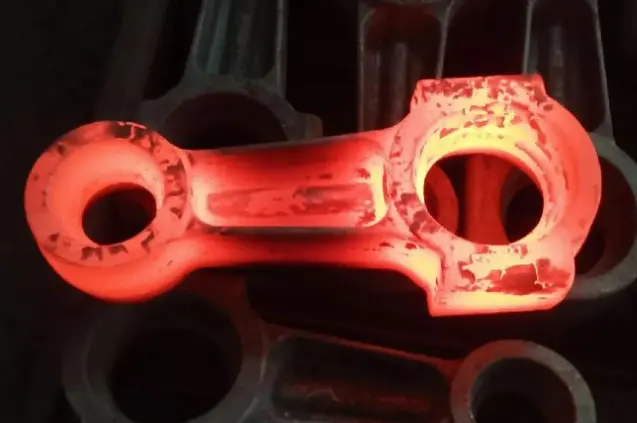
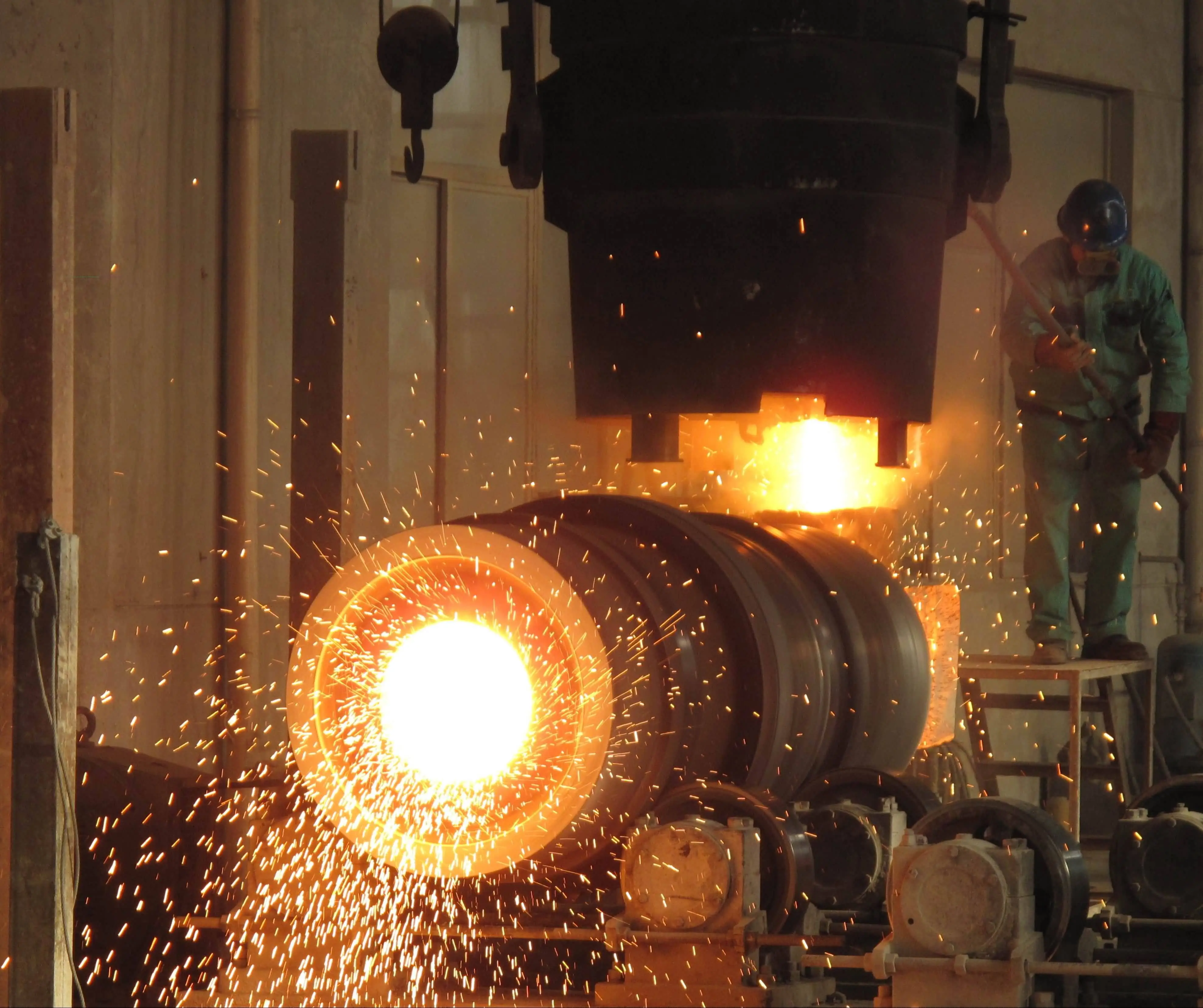
Cold Forming vs Hot Forging: Impact on Metal Grain Structure
When choosing between cold forming and hot forging for industrial metal components, understanding their impact on grain structure becomes critical for performance outcomes. Hot forging operates at elevated temperatures (typically 950°C-1250°C), allowing metal grains to recrystallize and flow naturally, creating refined microstructures with enhanced mechanical properties. Cold forming, conversely, deforms metal at room temperature, work-hardening the material while maintaining original grain boundaries. This fundamental difference directly influences strength, ductility, and fatigue resistance in your finished components.
Understanding Metal Grain Structure Fundamentals
Metal grain structure represents the crystalline arrangement within materials, determining their mechanical behavior under stress. The grain boundaries act as barriers to dislocation movement, directly affecting strength and ductility characteristics.
During hot forging processes, elevated temperatures enable dynamic recrystallization. Metal atoms gain sufficient energy to reorganize into new, strain-free grains. This process eliminates defects while creating uniform microstructures throughout the component.
Cold forming operations preserve existing grain structures while introducing controlled deformation. The process increases dislocation density within grains, resulting in work hardening effects. These dislocations become trapped at grain boundaries, increasing material strength.
Research data from metallurgical studies shows hot forging typically produces grain sizes between 20 and 50 micrometers, while cold-formed parts maintain original grain dimensions. The uniformity coefficient in hot-forged components reaches 0.85-0.95, compared to 0.60-0.75 in cold-formed materials.
If you need components with superior impact resistance and uniform properties throughout complex geometries, then hot forging proves more suitable for your application requirements.
How does Hot Forging Temperature Affect Grain Refinement?
Hot forging temperature directly controls recrystallization kinetics and final grain characteristics. Operating within optimal temperature ranges ensures proper grain flow and refinement throughout the forging process.
The recrystallization temperature varies by material composition. Carbon steels typically require 900°C-1100°C, while alloy steels need 1050°C-1250°C for effective grain refinement. Maintaining precise hot forging temperature control prevents grain coarsening while ensuring complete recrystallization.
Temperature uniformity across the workpiece affects grain structure consistency. Advanced hot forging equipment maintains temperature variations within ±10°C, producing homogeneous microstructures. Uneven heating creates mixed grain sizes, compromising mechanical properties.
Cooling rates following hot forging influence final grain characteristics. Controlled cooling at 50°C-200°C per hour allows proper grain boundary formation. Rapid cooling can trap stresses and create unfavorable microstructures.
Testing data demonstrates that components processed at optimal hot forging temperatures exhibit 25-40% improved impact toughness compared to those forged outside recommended ranges. Grain refinement achieved through proper temperature control increases fatigue life by 30-60%.
If you need parts with exceptional toughness and fatigue resistance for aerospace or automotive applications, then precise hot forging temperature control becomes essential for meeting performance specifications.
Cold Forming's Work Hardening Effects on Grain Structure
Cold forming operations deliberately exploit work hardening mechanisms to increase material strength without thermal processing. This approach preserves original grain structures while introducing beneficial strain patterns.
The deformation process increases dislocation density from 10^6 to 10^12 dislocations per square centimeter. These dislocations interact with grain boundaries, creating strengthening effects that can double yield strength in suitable materials.
Strain distribution during cold forming follows the deformation pattern. Areas experiencing maximum deformation show the highest strength increases. This characteristic allows engineers to design components with strength gradients matching stress requirements.
Work hardening rates depend on material composition and deformation speed. Austenitic stainless steels demonstrate exceptional work hardening capacity, achieving strength increases of 200-300%. Carbon steels typically show 50-100% strength improvements.
Laboratory measurements indicate cold-formed components maintain grain aspect ratios between 2:1 and 5:1, depending on deformation severity. The elongated grain structure provides directional strength advantages aligned with primary stress directions.
If you need components with maximum strength-to-weight ratios and can accommodate directional property variations, then cold forming delivers superior performance for structural applications.
Mechanical Property Comparison: Strength and Ductility
Understanding how processing methods affect mechanical properties guides optimal manufacturing selection for specific applications. The relationship between grain structure and mechanical behavior varies significantly between hot forging and cold forming approaches.
Strength Characteristics:
Hot forging typically produces yield strengths ranging from 300-800 MPa, depending on material and cooling conditions. The refined grain structure provides balanced strength with excellent toughness. Ultimate tensile strength reaches 500-1200 MPa with uniform properties throughout cross-sections.
Cold forming achieves higher yield strengths, often exceeding 1000 MPa through work hardening effects. However, this strength comes with reduced ductility. The deformed grain structure creates anisotropic properties with varying strength directions.
Ductility Performance:
Hot-forged components maintain elongation values between 15-35%, enabling excellent formability for complex shapes. The recrystallized grain structure accommodates plastic deformation without premature failure.
Cold-formed parts show reduced elongation, typically 5-20%, due to accumulated strain energy. The work-hardened structure limits additional plastic deformation capacity.
Fatigue Behavior:
Testing reveals that hot-forged components demonstrate superior fatigue life under cyclic loading. The uniform grain structure resists crack initiation and propagation. Fatigue limits reach 40-60% of ultimate tensile strength.
Cold-formed parts may show reduced fatigue performance due to residual stresses and strain concentrations. Fatigue limits typically range from 30-45% of ultimate strength.
If you need components subjected to dynamic loading or requiring extensive post-processing, then hot forging provides superior mechanical property combinations for demanding industrial applications.
Surface Quality and Dimensional Precision Analysis
Surface characteristics and dimensional accuracy requirements often determine optimal processing selection. Both hot forging and cold forming offer distinct advantages depending on application priorities.
Surface Finish Comparison:
Hot forging operations typically produce surface roughness values between Ra 3.2-12.5 micrometers. Scale formation during heating requires descaling operations, but the recrystallized surface layer eliminates cold work stresses.
Cold forming achieves superior surface finishes, often reaching Ra 0.8-3.2 micrometers directly from the forming operation. The absence of thermal effects prevents scale formation and oxidation issues.
Dimensional Tolerance Capabilities:
Modern cold forming equipment maintains tolerances within ±0.05-0.1mm for most dimensions. The absence of thermal expansion and contraction effects enables precise dimensional control throughout production.
Hot forging tolerances typically range from ±0.1-0.3mm due to thermal effects and die wear considerations. Advanced hot forging technology with controlled cooling can achieve tighter tolerances approaching cold forming capabilities.
Production Efficiency Factors:
Cold forming often operates in single-stroke operations, eliminating reheating time and energy consumption. Cycle times range from 10 to 60 seconds, depending on component complexity.
Hot forging requires heating time (15-45 minutes) but can form complex shapes in fewer operations. The improved material flow at elevated temperatures enables intricate geometries impossible through cold forming.
If you need components with exceptional surface quality and tight dimensional control for precision assemblies, then cold forming provides optimal results for high-volume production requirements.
Industry Applications: Aerospace, Automotive, and Medical
Different industries prioritize specific material characteristics, influencing optimal processing method selection. Understanding application requirements guides appropriate manufacturing decisions.
Aerospace Applications:
Aerospace components demand exceptional strength-to-weight ratios with reliable fatigue performance. Hot forging dominates critical applications like landing gear, engine mounts, and structural brackets. The refined grain structure provides the necessary toughness for safety-critical components.
Boeing and Airbus specifications often require hot forging for aluminum and titanium alloy components operating under extreme conditions. The process ensures grain flow alignment with stress patterns, maximizing component life.
Automotive Industry Requirements:
Automotive applications balance performance with cost-effectiveness. Cold forming suits high-volume production of brackets, fasteners, and structural elements. The process enables rapid production with minimal energy consumption.
Hot forging serves critical powertrain components like crankshafts, connecting rods, and gear blanks. These applications require superior fatigue resistance and impact toughness unavailable through cold forming.
Medical Device Manufacturing:
Medical devices require biocompatible materials with exceptional reliability. Hot forging of stainless steel and titanium alloys ensures grain refinement and stress elimination critical for implantable devices.
Surgical instruments benefit from cold forming's surface quality and dimensional precision. The work-hardened structure provides necessary stiffness for cutting tools and manipulation devices.
Testing data shows hot-forged medical implants demonstrate 40-50% longer fatigue life compared to cold-formed alternatives. The refined microstructure resists crack propagation under physiological loading conditions.
If you need components meeting stringent aerospace quality standards or medical device regulations, then hot forging provides the microstructural integrity required for critical applications.
Cost Analysis and Production Efficiency Considerations
Manufacturing cost evaluation requires a comprehensive analysis beyond initial processing expenses. Equipment investment, energy consumption, and secondary operations significantly impact total production costs.
Initial Equipment Investment:
Cold forming presses range from $100,000-$2,000,000 depending on tonnage capacity. The equipment operates at room temperature, eliminating heating system requirements and reducing facility infrastructure needs.
Hot forging facilities require furnaces, handling equipment, and environmental controls, with initial investments of $500,000-$5,000,000. However, the capability to process larger components and complex geometries can justify higher capital requirements.
Operating Cost Breakdown:
Energy consumption differs substantially between processes. Cold forming consumes 0.5-2 kWh per kilogram of processed material. Hot forging requires 15-25 kWh per kilogram, including heating and auxiliary equipment.
Labor requirements vary with production volume and automation levels. Cold forming enables higher automation potential, reducing direct labor costs. Hot forging often requires skilled operators for quality control and process optimization.
Secondary Processing Requirements:
Cold-formed components may require stress relief annealing for dimensional stability, adding $50-200 per component, depending on size. Hot-forged parts typically need minimal secondary heat treatment.
Machining allowances differ between processes. Hot forging provides near-net shapes, reducing machining time by 30-50%. Cold forming may require additional material removal for final dimensions.
Production Volume Economics:
High-volume production (>10,000 pieces annually) favors cold forming for suitable applications. The rapid cycle times and automation potential reduce per-piece costs significantly.
Medium-volume production with complex geometries benefits from hot forging flexibility. The ability to form intricate shapes in single operations compensates for higher individual processing costs.
If you need cost-effective production for high-volume applications with relatively simple geometries, then cold forming provides optimal economic advantages for competitive manufacturing.
Conclusion
The choice between cold forming and hot forging significantly impacts metal grain structure and the resulting component performance. Hot forging creates refined, uniform microstructures with superior toughness and fatigue resistance, ideal for critical applications requiring reliability under dynamic loading. Cold forming delivers higher strength through work hardening while maintaining excellent dimensional precision for high-volume production. Understanding these grain structure differences enables informed manufacturing decisions aligned with specific application requirements, ensuring optimal performance and cost-effectiveness for your industrial components.
Partner with Welong for Expert Hot Forging Manufacturing Solutions
Welong delivers comprehensive hot forging services backed by two decades of international manufacturing experience and ISO 9001:2015 certification. Our engineering team optimizes grain structure development through precise temperature control and advanced metallurgical expertise, ensuring your components meet stringent quality requirements. As a trusted hot forging manufacturer serving aerospace, automotive, and medical device industries across Europe, North America, and Asia-Pacific, we transform your drawings into superior-performing metal components. Contact our specialists at metal@welongpost.com to discuss your project requirements.
References
1. Dieter, G.E. & Bacon, D.J. (2018). Mechanical Metallurgy: Principles and Applications in Materials Engineering. McGraw-Hill Education.
2. Altan, T. & Tekkaya, A.E. (2020). Cold and Hot Forging: Fundamentals and Applications. ASM International.
3. Semiatin, S.L. (2019). Metalworking: Sheet Forming, Bulk Forming, and Forging Processing. Materials Park: ASM International.
4. Hosford, W.F. & Caddell, R.M. (2021). Metal Forming: Mechanics and Metallurgy. Cambridge University Press.
5. Kumar, S. & Singh, R. (2022). "Microstructural Evolution in Hot and Cold Metal Forming Processes: A Comparative Analysis." Journal of Materials Processing Technology, 287, 116-128.
6. Zhang, L. & Wang, H. (2023). "Grain Structure Development in Industrial Forging Applications: Process Parameter Optimization." International Journal of Advanced Manufacturing Technology, 124, 445-462.

Share your inquiry, get the quotation accordingly!
China WELONG- Your Reliable Partner in Metal Solutions