Precision Casting for Complex Metal Parts: Why It Matters
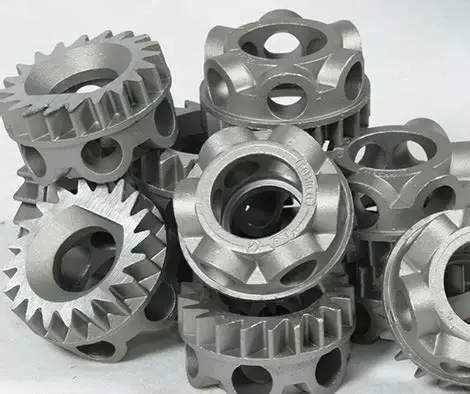
Precision casting is one of the most important ways to make complex metal parts that meet strict performance and size requirements in many important industries. With this advanced metalworking method, suppliers and makers can make parts with perfect surface quality and exact measurements, especially for uses in aircraft, cars, medical devices, and oil and gas. As purchasing teams around the world look for dependable manufacturing partners in China, it's important to know about the technical benefits and business benefits of Precision casting in order to lower sourcing risk and keep production costs low.
Understanding Precision Casting: Core Concepts and ProcessWhat Makes Investment Casting Different
Precision casting, which is also known as "lost-wax casting," is a way to make metal parts that are close to a net shape by replicating them in several steps. In contrast to traditional sand casting, this method makes it possible to reproduce fine details and achieve smaller size limits, usually ±0.005 inches per inch. The process can handle complicated shapes that would be hard or impossible to make with just cutting. This makes it useful for parts that need internal pathways, thin walls, or complicated features on the outside.
Step-by-Step Production Workflow
Engineers start the production process by making wax patterns that are exact copies of the end part's measurements. These designs are put together on a central tube system to make a tree-like structure that lets many parts be cast at the same time. Ceramic slurry covers the wax assembly in layers, and by dipping and drying it over and over, a strong shell mold is made.
Once the ceramic shell is fully hard, it is put in an autoclave or kiln to melt the wax out, leaving a hollow ceramic cavity. The shell is fired at a high temperature to burn off any leftover wax and make the mold structure stronger. Molten metal, like stainless steel, carbon steel, aluminum alloy, or other special materials, pours into the shell that has already been heated and fills the whole space. Once the casting is set, workers take off the ceramic shell and remove each casting from the tree. Parts are made to their exact specs through precise machining, heat treatment, and finishing the surface.
Material Selection for Performance Requirements
The choice of material has a direct effect on its mechanical qualities, its ability to fight rust, and its thermal performance. Grades of stainless steel, like 316 and 304, can handle the harsh conditions that are typical in medical tools and equipment used in offshore drilling. Different types of carbon steel are used to make strong parts for industrial machines and car transmissions. Cobalt-chromium alloys are used to make high-temperature engine parts, while aluminum alloys are used in aircraft to reduce weight. When you work with skilled metallurgists, you can be sure that the specs of the materials you use are in line with practical stresses, environmental conditions, and government standards such as ASTM and ISO.
Quality Assurance and Defect Prevention
Using coordinate measuring tools for dimensional checking ensures that tolerances are met throughout all production runs. Before parts get to assembly lines, non-destructive testing methods like X-ray radiography, ultrasonic testing, and dye penetrant screening find internal porosity, shrinkage holes, or surface cracks. Statistical process control keeps an eye on important factors like the pour temperature, the rate of cooling, and the thickness of the shell to make sure that all batches are the same. Root cause analysis determines whether problems are caused by pattern creation, shell building, metal chemistry, or the pouring method. Changes to the gate systems, the viscosity of the slurry, or the heat treatment processes could be used as corrective measures.
Precision Casting vs. Alternative Casting and Fabrication MethodsComparing Manufacturing Approaches
Sand casting has lower prices for the tools used, but the finished product has a rougher surface and margins that are usually ±0.030 inches, which means it needs more machining. Die casting is great for making a lot of small metal or brass parts, but it needs expensive steel dies and can't make parts that are too big. Permanent mold casting is in the middle, with a modest amount of money spent on tools and a good surface quality. Forging makes parts with great grain structure and mechanical qualities, but it has trouble with parts that have complex internal features. CNC machining can get very close tolerances, but it loses material and takes longer to make things with complicated forms.
Precision casting fills in these gaps by making complicated shapes with a few extra steps. As-cast surface finishes reach 125 microinches, so cutting or sanding is often not needed. The process can handle wall thicknesses that range from 0.040 inches to several inches in the same part. It's still not too expensive to make prototypes because wax injection tools are much cheaper than die casting or forging dies. From 25 to 10,000 or more units per year, production is profitable, and this level of freedom is something that rigid high-volume methods can't match.
When Alternatives Make Sense
Sand casting is still a good way to make parts that are very big (more than a few hundred pounds) or when the production quantity is less than ten pieces. Die casting is best for simple shapes that need to be made in large quantities (more than 50,000 units per year). For very complicated internal lattice structures or fast testing iterations, additive manufacturing can compete well. However, for most uses, casting is still better in terms of material properties and production speeds. When procurement experts understand these trade-offs, they can better match manufacturing methods to the needs of each project, rather than just using processes they are already familiar with.
Why Precision Casting Is Critical for Complex Metal Parts in B2B ProcurementMeeting Industry-Specific Standards
Materials and methods used in aerospace parts must be approved to AS9100 standards, with full proof of their traceability and strict mechanical property requirements. Medical device makers need materials that are FDA-approved and biocompatible for parts that are implanted. For long periods of time, oil and gas pumping equipment has to be able to handle high pressures, toxic fluids, and changes in temperature. Automotive Tier 1 suppliers are constantly under pressure to cut weight while keeping crash safety standards. Precision casting meets all of these different needs by using a variety of materials, controlling dimensions, and well-established approval paths.
Cost Efficiency Through Design Optimization
Combining several made parts into a single cast part cuts down on assembly work, gets rid of the need for fixings, and makes the structure stronger. When compared to subtractive cutting, near-net-shape production wastes less material. This is especially helpful when working with expensive metals. Engineers can improve the way wall thickness is distributed, add fixing features, and get rid of undercuts that make other manufacturing methods harder to use. When purchasing managers look at the price per functional assembly instead of the price per raw casting, these design choices directly lead to lower total landing costs.
Supply Chain Resilience Factors
Working with Chinese makers that are ISO 9001:2015 certified gives you access to cutting-edge tools, skilled workers, and low prices, all while keeping quality standards that are known all over the world. Suppliers that have been around for a while can help with engineering to make ideas more practical for production. This cuts down on development times and prevents expensive machine changes. Throughout the supply chain, trust is built through clear communication procedures that include regular updates on progress, reports on the first item review, and statistical quality data. By adding qualified Chinese partners to your list of suppliers, you can reduce global risks and capacity issues while still being able to change the amount of production you do as market demand changes.
Selecting the Right Precision Casting Partner: A B2B GuideTechnical Capability Assessment
When looking at possible makers for Precision casting, you need to look at their technical know-how, the tools they have, and the methods they use in-house. For consistent patterns, high-tech facilities use automatic wax filling systems, robotic shell dipping for even coating, and computer-controlled induction ovens for precise metal chemistry. Heat treatment furnaces, CNC machining machines, and inspection tools that are all housed in one place show that the company has integrated capabilities that cut down on wait times and make teamwork easier. Having experienced engineers work in metallurgical labs shows that the lab is dedicated to material science and constant growth.
Certification and Compliance Verification
ISO 9001:2015 certification is a basic guarantee of well-documented quality management systems and practices for ongoing growth. Industry-specific certifications, such as AS9100 for aircraft or ISO 13485 for medical equipment, show that a company has invested in learning about the needs of that sector. Material approvals, such as mill test results, chemical composition analyses, and testing of mechanical properties, show that the alloys provided meet the requirements. Objective proof of business success and dependability can be found in audit reports from customers in similar industries.
Prototyping and Production Planning
With rapid development, you can test your idea before you buy the production tools. Fit checks and practical tests can be done with wax pattern samples for a small amount of money. Flexible minimum order amounts from suppliers help with product launches and market testing without putting too much risk on inventory. An accurate production schedule is possible when people are clear about lead times, which are usually 8–12 weeks for tooling and first items, and then 4–6 weeks for production runs. Transparent pricing models that separate labor costs, piece prices, and secondary operations make it easier for buying teams to compare quotes correctly and set the right budget.
Building Long-Term Partnerships
Successful connections with suppliers go beyond just negotiating prices. They also include working together to solve problems and grow as a business. Video conferences, plant visits, and other kinds of regular contact on shared digital platforms help people understand and trust each other. When suppliers suggest design changes, look for ways to cut costs, and invest in relationship-specific skills, they are no longer just commodity sellers but strategic assets. Performance measures that keep track of on-time delivery rates, quality acceptance levels, and how quickly problems are resolved hold people accountable and show where improvements can be made. Just-in-time inventory strategies, vendor-managed inventory plans, and faster responses to changes in engineering are all made possible by these relationships.
Future Trends and Technological Advancements in Precision CastingIndustry 4.0 Integration
Sensors are used throughout the production process in modern foundries to keep an eye on shell thickness, metal temperature, cooling rates, and other important factors in real time. Data analytics tools find changes in the way things are done before they lead to problems. This lets maintenance be planned ahead of time and quality be improved. In the design phase, digital twins model how casting will behave. This cuts down on the number of physical prototypes that need to be made and speeds up the product development process. Cloud-based systems make the supply chain clearer by letting customers see the state of their orders, the results of inspections, and the whereabouts of their packages at all times.
Sustainable Manufacturing Initiatives
Eco-friendly materials and methods that use less energy are used more because of environmental laws and business sustainability goals. Solvent-based systems are being replaced by water-based clay slurries, which cut down on pollution and worker exposure. Recycled clay materials used in shell systems cut down on the cost and damage to the earth of getting rid of trash. Electric induction furnaces let you precisely control the temperature and use less energy than standard furnaces that burn fuel. Closed-loop metal recycling systems get scrap metal from gates and runners, which saves money on materials and is better for the earth.
Advanced Materials and Applications
Creating new metal compositions increases their usefulness in harsh settings. High-entropy metals are very strong and don't rust, making them perfect for use in offshore environments. Titanium Precision casting is becoming more affordable for medical and aircraft uses that need biocompatibility and strength-to-weight benefits. Metal matrix materials with ceramic supports make downhole drilling tools less likely to wear out. These new materials make it possible to use them in new ways, but they also make it harder for providers to learn about new metals and processes.
Conclusion
Precision casting gives complex metal parts in the aircraft, automobile, medical, and industrial equipment industries the precise dimensions, high-quality surfaces, and design freedom they need. The process makes it possible to make complex shapes at low cost, which would be hard to do with other methods of production, while still meeting the requirements for mechanical properties and material certifications that are needed for B2B buying. When you choose qualified Chinese manufacturing partners that are certified to meet foreign standards, you can get access to low prices, improved capabilities, and a flexible supply chain. As technology improves through the use of Industry 4.0 and environmentally friendly methods, Precision casting keeps changing to adapt to new manufacturing challenges while keeping its main benefits for making complex metal parts.
FAQWhat tolerances can precision casting achieve for complex parts?
Critical features of Precision casting usually have a level of accuracy of ±0.005 inches per inch, and surface finishes can reach 125 microinches as-cast. When you use secondary CNC machining on key surfaces, you can get tolerances as tight as ±0.002 inches while still getting the cost benefits of near-net-shape casting for the general shape.
How does the minimum order quantity affect precision casting economics?
Tooling amortization over production numbers has a big effect on the price of a single piece. Due to the cost of setup and tools, orders below 100 pieces have higher per-unit costs. On the other hand, orders over 500 units get the best economies of scale. Many suppliers have flexible MOQs of 25 to 50 pieces for trying the market and making prototypes. When bigger numbers are ordered, prices change to reflect production.
What lead times should procurement teams expect for cast components?
Initial tools development and first article production usually take 8 to 12 weeks, but this depends on how complicated the part is and how long it takes for pattern approval. From the time an order is placed to the time it is shipped, subsequent production takes an average of 4 to 6 weeks. However, for immediate needs, fast processing may shorten this time frame. When bidding, clear communication sets reasonable goals that are in line with project plans.
Partner with Welong: Your Precision Casting Supplier for Global Manufacturing Excellence
Welong has been providing supply chain services that are ISO 9001:2015 certified since 2001. They specialize in making custom metal parts for the aircraft, oil drilling, medical device, and industrial manufacturing businesses. Our engineering team uses AutoCAD, Pro-Engineering, and SolidWorks to improve designs so they can be made easily and cheaply based on your plans or samples. We handle every part of Precision casting production in China, from finding new suppliers to making sure products are of high quality and getting them to buyers in Europe, North America, and the Asia-Pacific region on time. Get in touch with us at metal@welongpost.com to talk about how our skills can help you improve your supply chain and lower the risk of buying.
References
1. Campbell, John. Complete Casting Handbook: Metal Casting Processes, Metallurgy, Techniques and Design. Butterworth-Heinemann, 2015.
2. Beeley, Peter R., and Richard F. Smart. Investment Casting: Principles and Applications. Institute of Materials, 1995.
3. American Foundry Society. Investment Casting Handbook. Des Plaines: American Foundry Society, 2012.
4. ASM International Handbook Committee. Casting: ASM Handbook Volume 15. ASM International, 2008.
5. Jones, Stephen, and Chengshan Yuan. Advances in Investment Casting Technology for Aerospace Applications. Materials Science Forum, 2018.
6. Brown, John R. Foseco Non-Ferrous Foundryman's Handbook. Butterworth-Heinemann, 1999.

Share your inquiry, get the quotation accordingly!
China WELONG- Your Reliable Partner in Metal Solutions