Understanding Forging Draft Angles: A Design Professional’s Guide
Draft angles represent one of the most critical yet often overlooked elements in forging design, directly impacting the manufacturability and cost-effectiveness of forged components. These carefully calculated angular surfaces enable smooth removal of parts from forging dies while maintaining dimensional accuracy and material integrity. Understanding how draft angles influence everything from tool wear to final part quality becomes essential for engineering professionals working with metal forging processes across aerospace, automotive, and industrial applications.
What Are Draft Angles in Forging?
Draft angles are intentional tapers built into forged parts that facilitate easy extraction from forging dies during the manufacturing process. Think of them as the subtle slopes that allow a part to release cleanly from its mold, much like removing a cake from a baking pan.
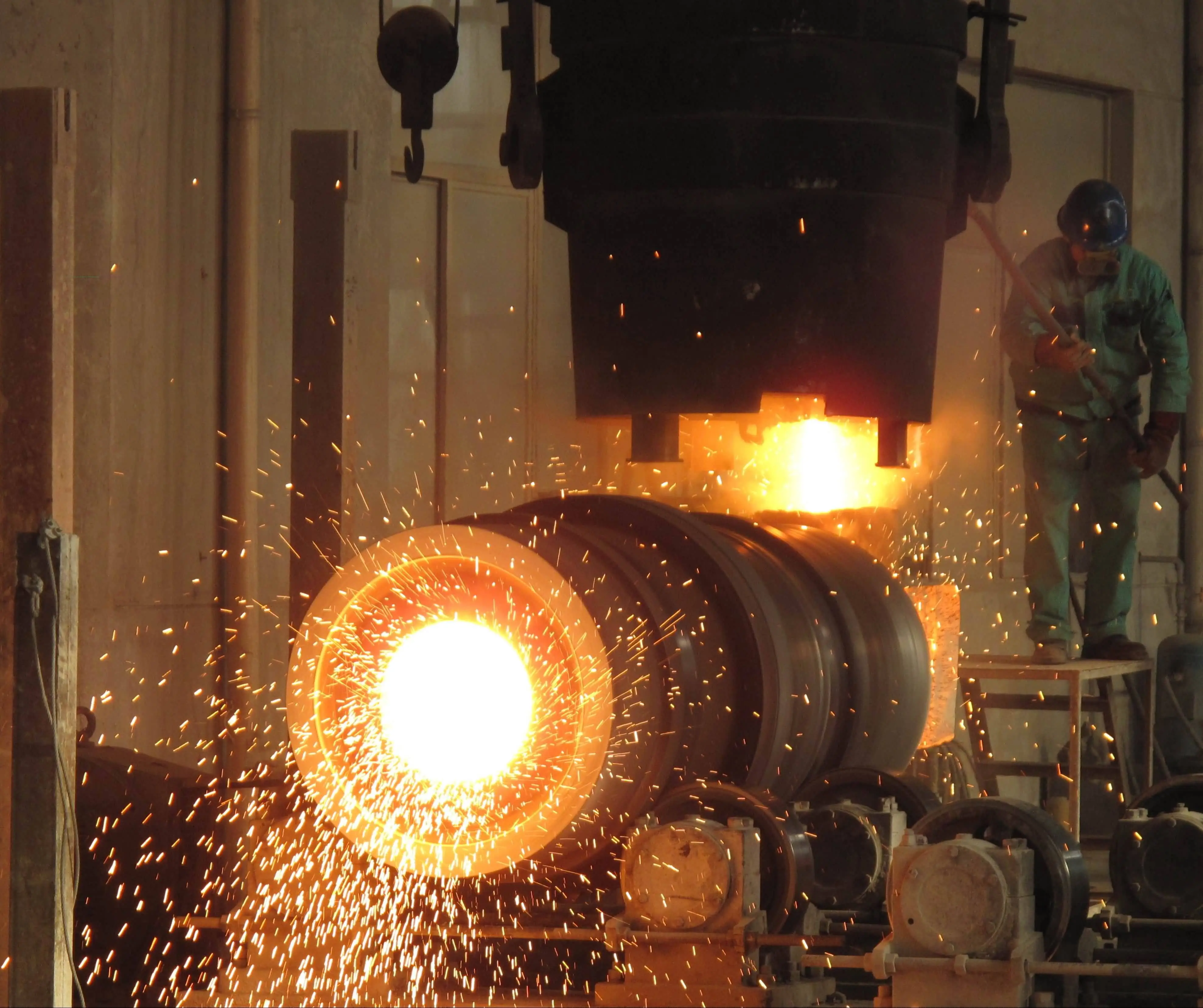
In the forging process, these angles typically range from 0.5° to 7°, depending on the complexity of the forged components and the specific forging method employed. Hot forging operations generally require smaller draft angles due to material shrinkage during cooling, while cold forging may need more generous angles to overcome higher forming forces.
The geometry of draft angles affects multiple aspects of production. Parts with inadequate draft often experience galling, where metal surfaces stick to the die, leading to surface defects and premature tool failure. Conversely, excessive draft angles can result in material waste and dimensional challenges in subsequent machining operations.
The Science Behind Optimal Draft Angle Selection
Selecting appropriate draft angles involves balancing multiple engineering factors that directly impact production efficiency and part quality. Material properties play a fundamental role in this decision-making process. Forged steel components typically require different draft considerations compared to forged alloys, as each material exhibits unique flow characteristics and thermal expansion properties.
The geometry complexity significantly influences draft angle requirements. Deep cavities or intricate features demand larger angles to prevent binding during ejection. Surface finish requirements also factor into the equation – precision forging applications may tolerate minimal draft to maintain tight dimensional control, while structural components can accommodate more generous angles.
Temperature considerations during hot forging create additional variables. As forged metal components cool, thermal contraction can actually assist in part removal, allowing for reduced draft angles compared to room-temperature forming operations. This thermal behavior becomes particularly important in forged automotive parts where dimensional precision directly affects assembly tolerances.
Impact on Manufacturing Costs and Quality
Draft angles significantly influence both manufacturing economics and final part quality in ways that extend beyond simple die release considerations. Properly designed angles reduce cycle times by enabling faster part extraction, directly impacting production throughput and manufacturing costs.
Tool life represents another critical economic factor. Forged components with optimized draft angles experience reduced friction during ejection, minimizing die wear and extending tool life. This becomes especially important in high-volume production scenarios where tooling costs can substantially impact overall project economics.
Quality implications extend throughout the manufacturing chain. An inadequate draft often results in surface defects that require additional machining or finishing operations. These secondary processes not only increase costs but can also compromise material properties in critical applications like forged machinery parts or aerospace components.
The relationship between draft angles and material utilization deserves careful consideration. While larger angles may simplify manufacturing, they can also increase raw material requirements and subsequent machining time. Engineering teams must evaluate these trade-offs within the context of overall project objectives and cost targets.
Design Guidelines for Different Industries
Industry-specific requirements significantly influence draft angle specifications, reflecting the unique performance demands and manufacturing constraints of each sector. Aerospace applications typically demand minimal draft angles to maximize material efficiency and maintain strict dimensional tolerances required for safety-critical forged structural parts.
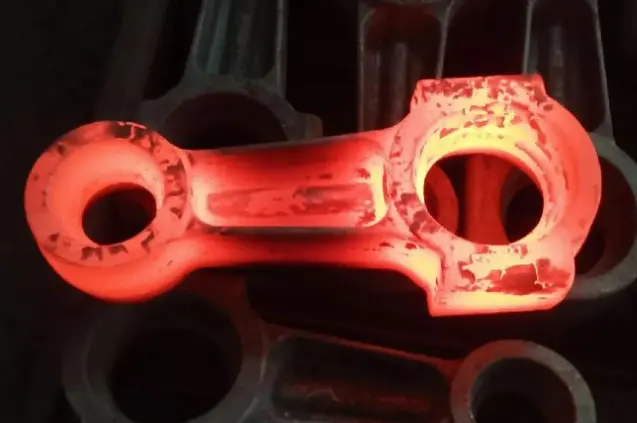
Automotive forging presents different challenges, where high-volume production favors generous draft angles that enable rapid cycle times. Forged connecting rods and crankshafts often incorporate industry-standard draft specifications that balance manufacturing efficiency with performance requirements.
Oil and gas applications introduce environmental considerations that affect draft angle selection. Forged valve components and flanges operating in harsh conditions require surface finishes that may conflict with aggressive draft angles, necessitating careful engineering analysis.
Industrial forging applications often provide more flexibility in draft angle selection, allowing optimization for manufacturing efficiency. Forged gear components and fasteners can typically accommodate larger angles without compromising functional performance, enabling cost-effective production strategies.
The medical device industry presents unique constraints where biocompatibility and precision requirements may limit draft angle options. Forged metal components used in surgical instruments require a careful balance between manufacturing practicality and stringent quality standards.
Common Challenges and Solutions
Manufacturing teams frequently encounter specific challenges when implementing draft angles in forged parts design. Insufficient draft represents the most common issue, often resulting from inadequate communication between design and manufacturing teams regarding process limitations.
Dimensional tolerance conflicts arise when draft angles interfere with critical part features or assembly requirements. These situations require collaborative problem-solving between engineering disciplines to develop solutions that satisfy both manufacturing and functional requirements.
Complex geometries can create scenarios where different part features require conflicting draft angle approaches. Advanced forging techniques and multi-stage processes may provide solutions, though they typically involve increased tooling complexity and manufacturing costs.
Material flow issues during forging can exacerbate draft angle problems, particularly in precision forging applications where dimensional accuracy remains paramount. Finite element analysis and flow simulation tools help predict and resolve these challenges before expensive tooling commitments.
Surface finish requirements sometimes conflict with optimal draft angles, creating engineering compromises that affect both manufacturing efficiency and final part quality. Understanding these trade-offs enables informed decision-making throughout the design process.
Advanced Considerations for Complex Forged Components
Modern forged components often incorporate features that challenge traditional draft angle approaches. Multi-level surfaces, undercuts, and varying wall thicknesses require sophisticated design strategies that may involve split-die designs or sequential forming operations.
Hybrid manufacturing approaches combining forging with other metalworking processes can provide solutions for parts with challenging draft requirements. These strategies might involve near-net-shape forging followed by precision machining to achieve final dimensions without compromising manufacturing efficiency.
Simulation technology now enables detailed analysis of material flow and die filling behavior, allowing engineers to optimize draft angles before physical tooling construction. These computational tools provide insights into stress distribution, material utilization, and potential defect formation.
Advanced materials present unique draft angle considerations as new alloy compositions and processing techniques continue evolving. Superalloys used in aerospace applications may require specialized approaches that differ significantly from conventional steel forging practices.
Conclusion
Mastering draft angles in forged components design requires understanding the intricate relationships between material properties, manufacturing processes, and functional requirements. These seemingly simple geometric features profoundly impact production efficiency, part quality, and overall project economics. Successful implementation demands collaboration between design and manufacturing teams, supported by comprehensive knowledge of forging principles and industry-specific requirements. As manufacturing technology continues advancing, draft angle optimization remains a fundamental skill for engineering professionals seeking to maximize the benefits of metal forging in their applications.
Partner with Welong for Expert Forged Components Manufacturing
Welong combines over two decades of forging expertise with comprehensive engineering support to deliver optimized forged components that meet your exact specifications. Our ISO 9001:2015 certified manufacturing processes and experienced engineering team ensure proper draft angle implementation while maintaining strict quality standards. Contact our specialists at metal@welongpost.com to discuss your custom forged components requirements and discover how our proven supply chain solutions can enhance your manufacturing success.
References
1. Altan, T., & Tekkaya, A.E. (2012). Sheet Metal Forming: Fundamentals. ASM International Press.
2. Groover, M.P. (2020). Fundamentals of Modern Manufacturing: Materials, Processes, and Systems. John Wiley & Sons.
3. Hosford, W.F., & Caddell, R.M. (2011). Metal Forming: Mechanics and Metallurgy. Cambridge University Press.
4. Lange, K. (2018). Handbook of Metal Forming. Society of Manufacturing Engineers.
5. Semiatin, S.L. (2005). Metalworking: Bulk Forming. ASM International Handbook Committee.
6. Dieter, G.E., & Bacon, D.J. (2013). Mechanical Metallurgy. McGraw-Hill Education.

Share your inquiry, get the quotation accordingly!

China WELONG- Your Reliable Partner in Metal Solutions