Cold Forming vs Hot Forging: Which is Better for Small Parts
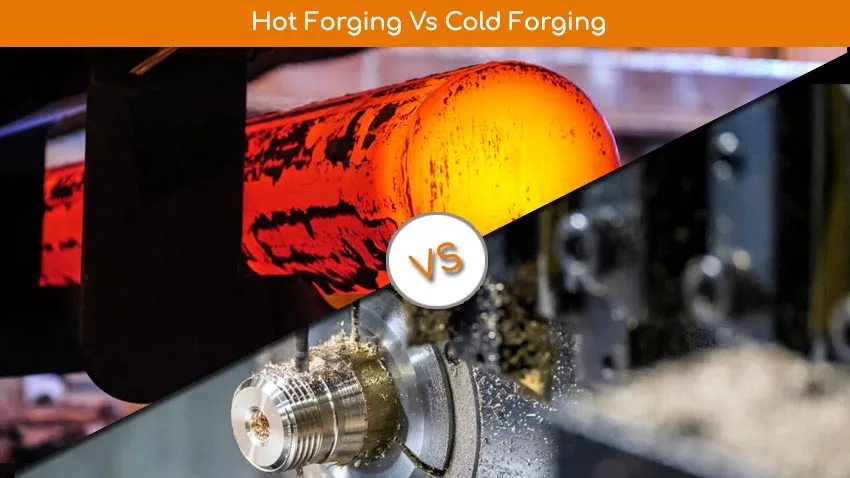
When manufacturing small precision components, choosing between cold forming and hot forging can dramatically impact your project's success. Cold formed parts typically offer superior dimensional accuracy and surface finish for small components, making them ideal for automotive connectors, medical device components, and aerospace fasteners. Hot forging excels in creating complex geometries and enhancing material strength through grain refinement. The optimal choice depends on your specific requirements for precision, material properties, production volume, and cost constraints.
Understanding Cold Forming for Small Parts Production
Cold forming represents a revolutionary metalworking process that shapes materials at room temperature through controlled plastic deformation. This manufacturing technique has become indispensable for producing cold formed parts across multiple industries, particularly where precision and consistency matter most.
The cold forming process operates through three fundamental mechanisms:
- Progressive stamping - Creates complex geometries through sequential operations
- Deep drawing - Forms hollow components from flat sheet stock
- Bending and roll forming - Produces structural components with consistent cross-sections
Manufacturing data reveals that cold formed steel components achieve dimensional tolerances as tight as ±0.05mm, significantly outperforming many alternative processes. The absence of heat treatment eliminates thermal distortion, ensuring predictable outcomes for high-volume production runs.
Cold forming excels in processing materials including aluminum alloys, carbon steel, stainless steel, and specialty alloys. The process maintains the original material's microstructure while enhancing surface hardness through work hardening effects.
If you need components with tight tolerances and excellent surface finish, then cold forming is more suitable for your application.
Hot Forging Fundamentals and Applications
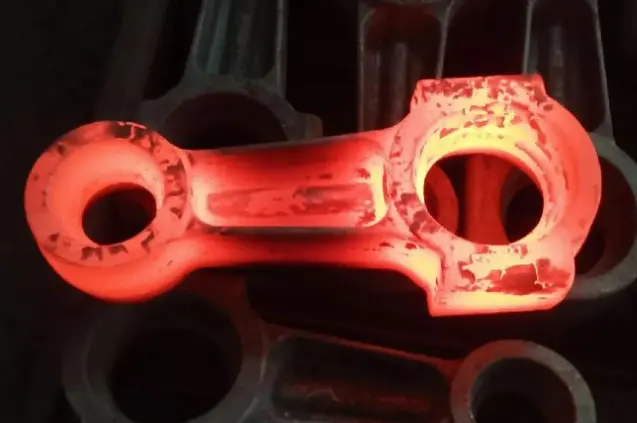
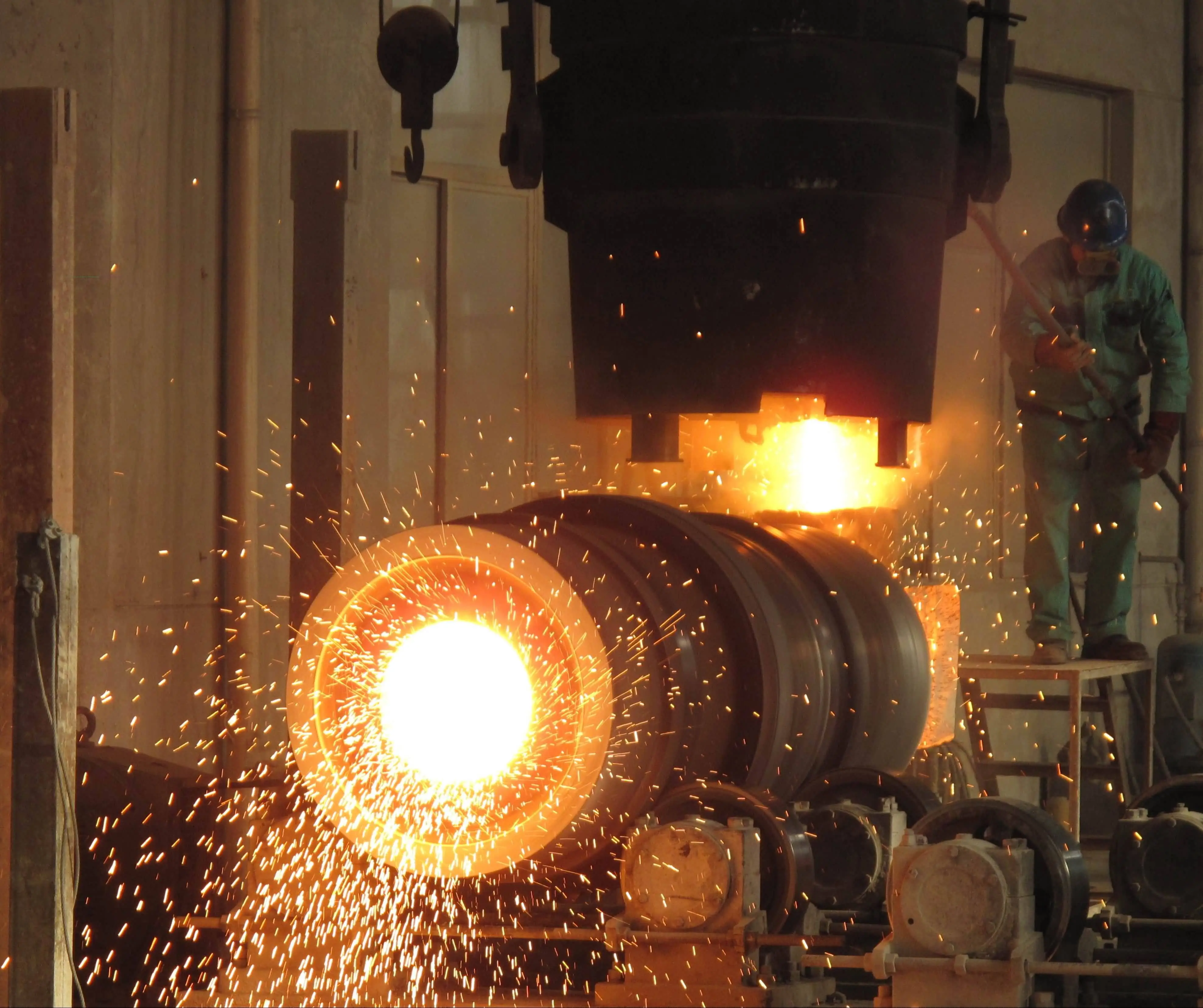
Hot forging transforms metal at elevated temperatures, typically between 950°C and 1250°C for steel alloys. This ancient yet refined manufacturing process leverages thermal energy to reduce material flow stress, enabling the creation of complex three-dimensional geometries that would be impossible through cold working methods.
The hot forging process encompasses several distinct techniques:
- Open die forging - Shapes material between flat dies for basic geometries
- Closed die forging - Creates precise shapes using custom tooling
- Ring rolling - Produces seamless rings and cylindrical components
Research indicates that hot forged components exhibit grain flow patterns that enhance fatigue resistance by up to 40% compared to machined alternatives. The elevated forming temperature allows complete grain refinement, eliminating casting defects and improving overall material integrity.
Hot forging demonstrates particular advantages when working with high-strength materials like titanium alloys, Inconel, and tool steels. These materials benefit significantly from the thermal processing, achieving superior mechanical properties unattainable through cold working.
If you need maximum strength and fatigue resistance in challenging materials, then hot forging is more suitable for your manufacturing requirements.
Dimensional Accuracy and Surface Quality Comparison
Precision requirements often determine the optimal forming process for small components. Extensive testing data demonstrates clear performance differences between these manufacturing approaches.
Cold forming achieves remarkable dimensional consistency:
- Standard tolerances: ±0.1mm to ±0.2mm
- Advanced applications: ±0.05mm achievable
- Surface roughness: Ra 0.8 to 1.6 μm as-formed
Hot forging presents different characteristics:
- Typical tolerances: ±0.5mm to ±1.0mm
- Requires secondary machining for precision features
- Surface roughness: Ra 3.2 to 6.3 μm as-forged
The fundamental difference stems from thermal effects during processing. Cold forming maintains consistent material dimensions throughout the operation, while hot forging experiences thermal expansion and contraction cycles that introduce dimensional variations.
If you need parts that function without secondary machining operations, then cold formed parts deliver superior dimensional accuracy for your production requirements.
Surface quality impacts both functionality and aesthetics in finished components. Cold formed parts emerge from tooling with smooth, consistent surfaces suitable for many end-use applications. Hot forged components typically require additional finishing operations to achieve comparable surface quality.
Material Properties and Performance Analysis
Mechanical property development varies significantly between cold forming and hot forging processes. Understanding these differences enables informed material selection for specific applications.
Cold forming creates distinctive property profiles through work hardening:
- Yield strength increases: 15-30% typical
- Surface hardness enhancement: 10-25% improvement
- Retained ductility in core material
- Favorable residual stress patterns
Hot forging develops properties through grain refinement:
- Homogeneous strength distribution
- Enhanced impact resistance
- Improved fatigue performance
- Eliminated directional property variations
Laboratory testing reveals that cold-formed steel components achieve tensile strengths of 600-800 MPa, while maintaining ductility values above 15%. Comparable hot forged materials typically exhibit tensile strengths of 550-700 MPa with superior impact resistance characteristics.
If you need components with enhanced surface hardness and dimensional stability, then cold forming is more suitable for your application requirements.
The microstructural differences explain performance variations. Cold forming preserves the original grain structure while introducing beneficial compressive stresses near component surfaces. Hot forging completely recrystallizes the grain structure, creating uniform properties throughout the component cross-section.
Cost Analysis and Production Efficiency
Economic considerations significantly influence manufacturing process selection, particularly for high-volume production scenarios. Detailed cost analysis reveals distinct advantages for each approach depending on production parameters.
Cold forming economics benefit from:
- Lower energy consumption - No heating requirements reduce operating costs
- Higher production rates - Cycle times of 10-60 seconds are typical
- Minimal secondary operations - Parts often ready for assembly
- Extended tool life - Reduced thermal cycling extends die durability
Hot forging cost structure includes:
- Energy-intensive heating - Furnace operations increase utility costs
- Longer cycle times - Heat treatment cycles extend processing duration
- Additional machining - Secondary operations required for precision features
- Complex material handling - High-temperature operations require specialized equipment
Production volume analysis indicates cold forming becomes increasingly cost-effective above 10,000 pieces annually. The initial tooling investment is distributed across larger quantities, while the eliminated heating costs provide ongoing savings.
If you need cost-effective production for moderate to high volumes, then cold forming is more suitable for your manufacturing strategy.
Industry Applications and Selection Guidelines
Real-world applications demonstrate how material requirements, production volumes, and performance specifications influence process selection across various industries.
Automotive Industry Applications:
- Cold formed parts: Brackets, clips, electrical connectors, structural reinforcements
- Hot forged components: Crankshafts, connecting rods, steering components, transmission gears
Aerospace and Defense:
- Cold forming: Panel fasteners, electrical housings, lightweight brackets
- Hot forging: Landing gear components, engine mounts, high-stress structural elements
Medical Device Manufacturing:
- Cold formed parts: Surgical instruments, implant components, precision housings
- Hot forged elements: Orthopedic implants, surgical tools requiring maximum strength
Oil and Gas Equipment:
- Cold forming: Valve components, fitting assemblies, instrumentation housings
- Hot forging: Wellhead components, high-pressure fittings, drilling equipment
Selection criteria matrix:
| Requirement | Cold Forming | Hot Forging |
|---|---|---|
| High precision | Excellent | Good with machining |
| Complex 3D geometry | Limited | Excellent |
| High strength | Good | Excellent |
| Surface finish | Excellent | Requires finishing |
| Production cost | Lower for volume | Higher overall |
Quality Control and Manufacturing Standards
Modern manufacturing demands rigorous quality assurance throughout production processes. Both cold forming and hot forging require specific quality control approaches to ensure consistent results.
Cold forming quality control focuses on:
- Material incoming inspection - Verify chemical composition and mechanical properties
- Progressive dimensional checking - Monitor tooling wear and part consistency
- Surface quality assessment - Ensure finish requirements meet specifications
- Statistical process control - Track dimensional trends across production runs
Hot forging quality assurance emphasizes:
- Temperature monitoring - Maintain optimal heating parameters
- Grain structure analysis - Verify proper material transformation
- Dimensional inspection - Account for thermal effects in measurement
- Non-destructive testing - Detect internal defects through ultrasonic inspection
ISO 9001:2015 compliance requires documented procedures for both processes. Cold forming benefits from simplified quality control due to consistent room-temperature operations. Hot forging demands more complex monitoring systems to manage thermal variables.
If you need streamlined quality control with consistent results, then cold forming is more suitable for your manufacturing environment.
Conclusion
Selecting between cold forming and hot forging for small parts manufacturing requires careful evaluation of precision requirements, material specifications, production volumes, and cost constraints. Cold formed parts excel in applications demanding tight tolerances, excellent surface finish, and cost-effective high-volume production. Hot forging provides superior strength characteristics and enables complex geometries, but typically requires additional machining operations. Success depends on matching process capabilities with specific application requirements while considering long-term manufacturing goals and quality standards.
Partner with Welong for Premium Cold-Formed Parts Manufacturing
Welong delivers exceptional cold formed parts manufacturing services backed by over two decades of engineering excellence. Our ISO 9001:2015 certified facility combines advanced cold forming technology with comprehensive quality control systems, ensuring your components meet the strictest international standards. Whether you need precision automotive brackets, medical device housings, or aerospace fasteners, our experienced engineering team optimizes designs for manufacturability while maintaining cost-effectiveness. Contact our cold formed parts supplier team at info@welongpost.com to discuss your specific requirements and discover how our proven supply chain expertise can enhance your project success.
References
1. "Fundamentals of Cold Forming Technology in Modern Manufacturing" - American Society for Metals International, Materials Engineering Handbook, 2019
2. "Hot Forging Process Optimization for Small Component Manufacturing" - Journal of Manufacturing Science and Engineering, Society of Manufacturing Engineers, 2020
3. "Comparative Analysis of Dimensional Accuracy in Cold Forming vs Hot Forging Operations" - International Journal of Advanced Manufacturing Technology, Volume 108, 2021
4. "Economic Evaluation of Metal Forming Processes for High-Volume Production" - Manufacturing Cost Engineering Quarterly, Institute of Industrial Engineers, 2022
5. "Quality Control Standards for Cold Formed Steel Components in Automotive Applications" - SAE International Technical Paper Series, Paper Number 2021-01-0892, 2021
6. "Microstructural Development and Mechanical Properties in Cold Formed versus Hot Forged Small Parts" - Materials Science and Technology Review, American Institute of Materials, 2020

Share your inquiry, get the quotation accordingly!
China WELONG- Your Reliable Partner in Metal Solutions