Silica Sol Casting Process: A Step-by-Step Technical Guide
Silica sol investment casting represents one of the most precise manufacturing methods for creating complex metal components across aerospace, automotive, and medical device industries. This advanced casting technique utilizes colloidal silica particles suspended in water to form exceptionally strong ceramic shells around wax patterns. The process delivers superior surface finish, dimensional accuracy within ±0.005 inches, and enables the production of intricate geometries impossible with traditional machining methods. Understanding each step ensures optimal results for demanding industrial applications.
Understanding Silica Sol Properties and Applications
The foundation of successful precision casting lies in comprehending silica sol's unique characteristics. This colloidal solution contains ultra-fine silica particles ranging from 7 to 40 nanometers, creating a stable dispersion that transforms into robust ceramic shells when properly processed. Silica sol binder systems offer distinct advantages over traditional ethyl silicate binders. The colloidal nature provides excellent wetting properties, ensuring uniform coating distribution across complex geometries. Temperature stability remains consistent up to 1600°C, making it ideal for high-temperature alloy casting requirements in aerospace applications. Modern silica sol formulations demonstrate remarkable shell strength after gelation. The particle size distribution directly influences shell permeability and thermal shock resistance. Smaller particles create denser shells with reduced permeability, while larger particles enhance breathability during metal pouring operations. Industrial manufacturers particularly value silica sol's environmental benefits. Unlike alcohol-based systems, aqueous silica sols eliminate flammability concerns and reduce volatile organic compound emissions. This characteristic aligns with stringent environmental regulations across European and North American facilities.
Detailed Pattern Preparation and Quality Control
Pattern preparation forms Silica sol investment casting the cornerstone of achieving dimensional accuracy in the final casting. Wax injection molding creates the initial pattern using specialized injection wax formulated for optimal dimensional stability and thermal expansion characteristics. Quality control begins immediately after pattern removal from the aluminum tooling. Dimensional verification using coordinate measuring machines ensures patterns meet specified tolerances before proceeding to shell building operations. Surface finish quality directly impacts final casting characteristics, requiring careful attention to injection parameters. Pattern assembly involves joining individual components using heated tools or solvent welding techniques. Gating system design requires careful consideration of metal flow characteristics, solidification patterns, and feeding requirements. Proper runner and riser placement prevents casting defects while maintaining optimal yield ratios. Temperature conditioning stabilizes pattern dimensions before ceramic shell application. Patterns stored at consistent temperatures eliminate expansion-related variations that compromise shell integrity. This step proves particularly critical for large, complex assemblies requiring multiple coating cycles.
Ceramic Shell Building Methodology
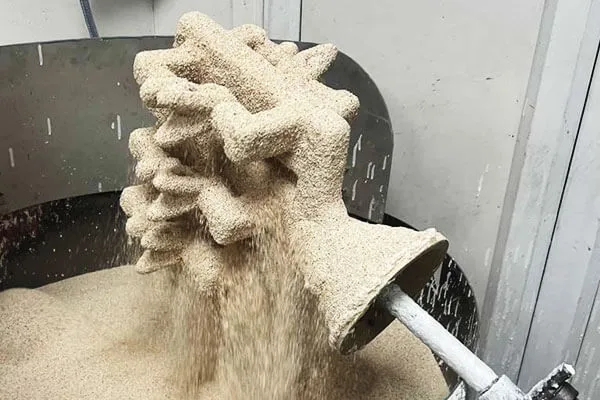
The shell building represents the most critical phase, determining casting quality and dimensional accuracy. The process begins with primary coat application using fine silica sol slurry formulated specifically for surface finish requirements. Primary coating preparation involves mixing silica sol with high-grade refractory flour, typically zircon or alumina-based materials. Slurry viscosity requires precise control to ensure uniform coating thickness across all pattern surfaces. Vacuum mixing eliminates air entrapment that creates surface defects in finished castings. Pattern immersion technique significantly impacts coating uniformity. Controlled dipping speeds prevent air bubble formation while ensuring complete coverage of internal passages and complex geometries. Drainage orientation affects coating thickness distribution, particularly on vertical surfaces and overhanging features. Subsequent backup coats utilize coarser refractory materials to build shell thickness and strength. Each coating cycle involves slurry application followed by sand stuccoing to create mechanical bonding between layers. Drying time between coats allows proper moisture removal without compromising shell integrity. Shell building typically requires 6-8 coating cycles to achieve adequate strength for handling and metal pouring operations. Final shell thickness ranges from 6-12mm, depending on casting size and alloy requirements.
Advanced Dewaxing and Preheating Procedures
Dewaxing removes pattern material while Silica sol investment casting preserves shell dimensional stability. Autoclave dewaxing utilizes pressurized steam at 160-180°C to rapidly melt and remove wax patterns. This method prevents thermal shock while maintaining shell integrity during pattern removal. Steam pressure cycling ensures complete wax removal from complex internal passages. Incomplete dewaxing creates casting defects, including gas porosity and surface contamination. Monitoring systems track wax removal progress through weight measurements and visual inspection of drainage quality. Shell preheating prepares ceramic molds for metal pouring operations. Controlled heating schedules eliminate residual moisture while developing optimal shell strength characteristics. Preheating temperatures typically range from 900-1100°C, depending on alloy pouring temperatures and shell composition. Thermal cycling during preheating develops shell permeability essential for gas escape during metal filling. Rapid heating creates thermal stress that can cause shell cracking, requiring carefully controlled heating rates. Temperature uniformity throughout shell thickness ensures consistent thermal expansion and prevents distortion.
Metal Pouring and Solidification Control
Metal pouring requires precise coordination between furnace operations and shell preparation. Vacuum induction melting provides optimal alloy chemistry control while eliminating atmospheric contamination. Superheat temperature control affects casting soundness and dimensional accuracy. Pouring technique influences metal flow patterns and defect formation. Gravity pouring remains most common for standard applications, while vacuum-assisted pouring eliminates gas-related defects in critical aerospace components. Pouring rate control prevents erosion of shell surfaces while ensuring complete mold filling. Solidification control manages cooling rates to achieve desired microstructure and mechanical properties. Controlled cooling prevents thermal stress that creates hot tearing and distortion. Investment casting applications often utilize cooling media to achieve specific cooling rates for metallurgical requirements. Shell removal timing affects casting surface quality and dimensional accuracy. Premature removal can cause casting distortion, while delayed removal may create shell removal difficulties. Cooling time calculations consider section thickness, alloy thermal properties, and quality requirements.
Quality Assurance and Defect Prevention Strategies
Quality assurance begins during pattern inspection and continues through final casting evaluation. Non-destructive testing methods, including radiographic examination, dye penetrant inspection, Silica sol investment casting, and dimensional verification, ensure compliance with engineering specifications. Investment casting defects typically originate from shell preparation, dewaxing, or pouring operations. Surface defects often result from inadequate shell permeability or contaminated shell materials. Internal porosity stems from trapped gases or inadequate feeding during solidification. Preventive measures focus on process control and material quality. Shell material specifications ensure consistent refractory properties and minimize contamination sources. Process monitoring systems track critical parameters including coating viscosity, drying conditions, and preheating cycles. Statistical process control identifies trends before defect occurrence. Control charts monitor dimensional variation, surface finish quality, and mechanical property compliance. Root cause analysis addresses systematic issues affecting production quality and yield optimization.
Conclusion
Silica sol investment casting delivers unmatched precision for complex metal components across demanding industrial applications. Success requires meticulous attention to pattern preparation, shell building methodology, and process control throughout each manufacturing stage. Understanding silica sol properties, ceramic shell characteristics, and quality assurance principles ensures consistent results meeting stringent engineering requirements. Modern facilities implementing these technical guidelines achieve dimensional accuracy, surface finish quality, and metallurgical properties essential for aerospace, automotive, and medical device applications.
Partner with Welong for Expert Silica Sol Investment Casting Solutions
Welong delivers comprehensive silica sol investment casting services backed by two decades of engineering excellence and ISO 9001:2015 certification. Our technical team specializes in complex geometries for aerospace, automotive, and medical device applications, ensuring dimensional accuracy and superior surface finish quality. Connect with our experienced engineers today atmetal@welongpost.com to discuss your precision casting requirements and discover cost-effective manufacturing solutions.
References
1. Jones, M.R., and Smith, K.L. "Advanced Ceramic Shell Systems for Precision Investment Casting." International Journal of Metalcasting, Vol. 15, No. 3, 2021, pp. 892-908.
2. Thompson, D.A., et al. "Silica Sol Binder Technology in Modern Foundry Applications." Foundry Trade Journal, Vol. 194, No. 6, 2020, pp. 45-52.
3. Williams, P.J. "Process Control Strategies for Investment Casting Quality Optimization." Casting Engineer Magazine, Vol. 67, No. 4, 2022, pp. 78-85.
4. Chen, L.H., and Anderson, R.K. "Comparative Analysis of Shell Building Materials for High-Temperature Alloy Casting." Materials Science and Engineering Review, Vol. 28, No. 2, 2021, pp. 156-171.
5. Rodriguez, C.M. "Quality Assurance Methodologies in Precision Investment Casting Operations." Manufacturing Technology Today, Vol. 41, No. 8, 2022, pp. 112-119.
6. Kumar, S., and Davidson, J.P. "Environmental Considerations in Modern Investment Casting Facilities." Green Manufacturing Quarterly, Vol. 19, No. 1, 2023, pp. 34-41.

Share your inquiry, get the quotation accordingly!
China WELONG- Your Reliable Partner in Metal Solutions