How to Prevent Common Aluminium Casting Defects in Production?
Common flaws in aluminum casting production need a thorough plan that includes choosing the right materials, keeping an eye on the process, and making sure the quality is high. Precision and dependability are very important for modern aluminum casting parts, especially in fields like aircraft, automotive, and medical devices where performance cannot be sacrificed. Knowing the basic rules of defect prevention helps makers make regular, high-quality castings that meet strict industry standards and customer requirements while keeping costs low and production running smoothly.
Understanding Common Aluminium Casting Defects
Defects in aluminum casting can seriously lower the quality and dependability of the product, which makes things very hard for companies that make things and handle the supply chain. These flaws show up in different ways, and each one has its own features that affect the performance and integrity of the end result.
Types of Primary Casting Defects
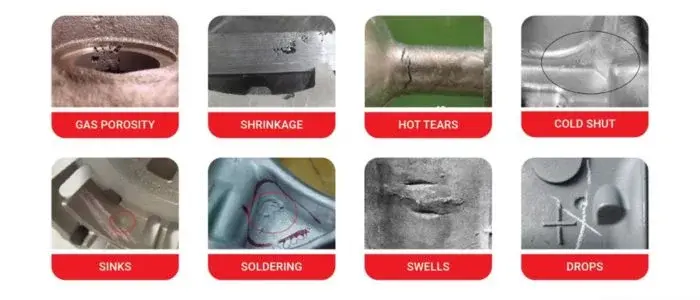
As small holes or gas bubbles get stuck inside the metal structure, porosity is one of the most common flaws in aluminum casting parts. These tiny holes weaken the material's mechanical qualities and can cause it to break under stress before it should. When two streams of molten metal don't join properly, cold shuts happen. This leaves obvious seam lines that weaken the structure. When foreign materials like oxides, sand particles, or slag get lodged in the casting, they cause stress buildup and lower material performance.
Impact on Industrial Applications
Purchasing managers and engineers need to understand these flaws because they affect the material qualities and performance of products in important ways. When aircraft parts are used in harsh circumstances, porosity can cause them to fail catastrophically. For engine blocks and transmission housings to be safe and reliable, automotive uses need casts that don't have any flaws. When making medical devices, accuracy is very important because even small mistakes can affect biocompatibility and the device's ability to work.
Cost and Operational Consequences
In addition to having technical effects, errors cause costs to rise, shipments to be late, and customers to lose trust, all of which hurt the relationship between the provider and the client. When faulty parts need to be fixed or replaced completely, manufacturing companies lose a lot of money. Supply chain disruptions happen when problems with the quality of a product cause orders to be late, which affects whole production plans and the level of customer happiness.
Root Causes of Aluminium Casting Defects
Finding out why aluminum casting flaws happen is important for reducing their frequency and making sure that production processes are reliable. Defects are caused by many things, so they need to be carefully studied and controlled to make sure that the quality of the result is always the same.
Material-Related Factors
Problems usually start with the materials themselves, like alloys that aren't mixed right or impurities that make the casting less stable. To get the right mechanical properties and keep solidification problems from happening, aluminum alloys need careful control over their chemical makeup. Unwanted elements that cause defects to form are introduced by scrap metal, weak degassing processes, and bad material handling practices. If the raw materials are wet, they can give off hydrogen gas when they melt, which can cause problems with pores in the end casting.
Process Parameter Control
Controlling the temperature, designing the mold, and pouring methods are all process factors that directly affect the quality and integrity of the casting. When you don't control the temperature properly during the melting and filling steps, thermal gradients form that cause flaws in the shrinkage and uneven solidification patterns. Mold design flaws like not enough gating systems, wrongly placed risers, and not enough vents let gas get trapped and metal move in a rough way. The method and speed of pouring have a big impact on the metal filling and oxide growth during the casting process.
Environmental and Equipment Factors
During the production cycle, external factors like humidity and contamination, as well as the state of the equipment, can make the risk of defects higher. Maintenance problems with the furnace, worn-out ladles, and broken shaping tools all make the process conditions less constant and raise the risk of contamination. The amount of humidity in the air affects how much water is in the mold and how much gas is produced during casting. Airborne toxins can get into the molten metal stream when the building doesn't have enough ventilation.
Understanding these factors makes working with suppliers easier and more effective. It also helps set reasonable quality standards, lower production risks, and make sure that output standards are always the same and meet international manufacturing standards.
Core Principles and Best Practices to Prevent Defects
Following best practices in the casting process is the only way to effectively stop defects. This ensures regular quality and reliable production results. These basic ideas are the basis for successful aluminum casting processes that meet the needs of tough industry uses.
Material Selection and Preparation
To make high-quality aluminum casting parts, the best alloys must be chosen and the materials must be carefully prepared. The type of aluminum metal chosen must meet the needs of the product, taking into account things like strength, resistance to corrosion, ease of machining, and thermal qualities. To prepare a material, the raw materials must be carefully inspected, stored in the right way to keep them from getting contaminated, and degassed in a planned way to get rid of dissolved hydrogen and other gases that help form pores.
Preparing high-quality materials means using the right heating methods under controlled atmosphere conditions and the right flux to get rid of flaws. Using titanium-boron master alloys for grain refinement makes the structure and functional features of the casting better. Monitoring the temperature during the melting process makes sure that the flow is at its best and stops the metal from getting too hot, which can cause gas to pick up and oxide to form.
Mold Design and Process Control
Precision mold design that is suited to the qualities of aluminum ensures proper fluid flow and solidification, which greatly reduces flaws. For mold design to work, it needs to have the right closing systems in place to keep the metal flowing smoothly and keep air from getting stuck. The shape and placement of the risers make sure that they get enough feed during solidification to avoid problems with shrinking. Venting systems let gases that are trapped escape while mold is being filled, which lowers the risk of porosity.
Casting problems can be kept to a minimum by using strict process controls for things like temperature, pouring speed, and controlled cooling. It is important to find the best pouring temperature so that the mold fills completely without getting too hot, which can cause gas to pick up. Controlling the rate of cooling keeps thermal shock from happening and lowers the forces inside the material that can cause it to crack. Process tracking systems keep an eye on important factors in real time, so when they start to deviate, they can be fixed right away.
Environmental and Equipment Management
Keeping the production area clean and repairing equipment on a regular basis also helps cut down on defects and improve quality overall. Furnaces, ladles, and shaping systems work consistently when they get regular repair. Cleaning the facility keeps it free of dust and moisture in the air that could affect the quality of the casting. Training programs for employees make sure that the right way to handle things is done and that set methods are followed.
These proactive steps give business-to-business clients clear instructions on how to find and work with makers that can consistently make aluminum castings that are free of flaws and meet strict quality standards and performance needs.
Case Studies: Successful Defect Prevention in Aluminium Casting Production
Real-life case studies show how major companies have fixed casting flaws by focusing on process changes and coming up with new ways to make things. These examples show how defect prevention techniques can be used in the real world in a number of different businesses.
Automotive Industry Achievements
The car industry's attempts to lower porosity in engine parts have led to measured quality improvements and cost saves by making process improvements in a planned way. A big automaker used advanced degassing systems and real-time process tracking to cut the number of rejections caused by porosity by 75%. The company bought automatic filling systems that keep the temperature and flow rates constant. This gets rid of the human error that used to cause defects. Statistical process control methods let you keep an eye on important factors all the time, so you could make changes right away when the process went off track.
Aerospace Manufacturing Excellence
The aluminum casting parts that aerospace makers are so focused on castings that don't have any flaws shows how important it is to find the right mix between strength and accuracy for flight-critical parts. To get almost no holes in turbine housing parts, an aircraft supplier came up with special melting methods that use vacuum degassing and ceramic foam filtering. By using computed tomography inspection devices, casts could be inspected in their entirety, ensuring that all internal flaws were found before they were machined.
OEM Custom Solutions
OEMs that make custom parts have used new process innovations to deal with specific flaw problems. This way, they can meet the particular needs of each client while keeping production efficient. A company that makes medical devices came up with special low-pressure casting methods to make thin-walled metal parts with perfect surface quality and precise measurements. The process used controlled atmosphere melting and precise temperature control to get rid of oxide inclusions and make sure the tensile qualities were always the same.
These examples give purchasing managers and engineers useful information and common points of comparison that help them choose suppliers and make decisions for important aluminum casting tasks.
Conclusion
To keep aluminum casting parts from having problems, you need to know a lot about material science, process control, and quality management. To successfully stop defects, you need to choose the right alloy, make sure the process factors are optimized, build the mold with great care, and take strict quality control measures. Systematic methods to controlling temperature, degassing processes, and environmental management make it much less likely that defects will happen and improve the quality of the casting as a whole. It is important for suppliers and procurement professionals to work together to set reasonable quality standards and make sure that production results are consistent enough to meet the needs of difficult industry uses in the medical device, aircraft, and automobile sectors.
FAQ
What are the most common types of defects in aluminum casting parts?
The most common flaws are porosity from trapped gases, cold shuts from partial metal fusion, inclusions from foreign materials, shrinkage flaws from not feeding enough during solidification, and surface flaws like misruns or cold laps. To stop each type of flaw from happening, you need a different set of process rules and ways to stop it from happening.
How does proper degassing prevent porosity in aluminum castings?
Using rotating degassing, tablet degassing, or inert gas purging to get rid of hydrogen and other gases that are dissolved in liquid aluminum is called degassing. During solidification, hydrogen solubility drops greatly, which can lead to gas bubbles if they are not properly cleared. Effective degassing lowers the hydrogen content below critical levels, which stops pores from forming and keeps the structure of the casting sound.
What role does mold design play in defect prevention?
The right mold design lets the metal flow smoothly, lets enough air flow, and controls the solidification process to avoid different types of defects. Gating devices reduce turbulence and air trapping, and lifters feed the material to keep it from shrinking. Venting lets held gases escape while the mold is being filled, and good thermal design controls the rate of cooling to keep interior stresses and cracking to a minimum.
Partner with Welong for Premium Aluminum Casting Parts Manufacturing
Welong makes high-quality aluminum casting parts with production methods that are ISO 9001:2015 approved and a lot of experience managing the whole supply chain. Our engineering team uses advanced design tools like AutoCAD, Pro-Engineering, and SolidWorks to make sure that your casting plans are perfect and that they won't have any problems. We've been working with the automobile, aerospace, and medical device industries in Europe, North America, and the Asia-Pacific region for more than 20 years, so we know how important it is for your uses that the castings are free of flaws. Get in touch with us at metal@welongpost.com to talk about your needs for an aluminum casting parts source and find out how our tried-and-true quality control systems can help you get regular, high-quality results for even the most difficult projects.
References
1. Campbell, John. "Complete Casting Handbook: Metal Casting Processes, Metallurgy, Techniques and Design." Butterworth-Heinemann, 2015.
2. Dispinar, Derya, and John Campbell. "Critical Assessment of Reduced Pressure Test. Part 1: Porosity Phenomena." International Journal of Cast Metals Research, 2004.
3. Kaufman, J. Gilbert, and Elwin L. Rooy. "Aluminum Alloy Castings: Properties, Processes, and Applications." ASM International, 2004.
4. Shabestari, S.G. "The Effect of Iron and Manganese on the Formation of Intermetallic Compounds in Aluminum-Silicon Alloys." Materials Science and Engineering, 2004.
5. Tiryakioğlu, Murat. "Statistical Distributions for the Size of Fatigue-Initiating Defects in Al-7%Si-0.3%Mg Alloy Castings." Materials Science and Engineering, 2008.
6. Zhang, Liang, and Hu Zhang. "Quality Control and Defect Analysis in Aluminum Casting Production." Journal of Manufacturing Processes, 2019.

Share your inquiry, get the quotation accordingly!
China WELONG- Your Reliable Partner in Metal Solutions