Drop Forging vs Press Forging: Which Method is More Efficient?
When comparing forging methods for industrial manufacturing, press forging demonstrates superior efficiency in material utilization and dimensional accuracy, achieving up to 85% material efficiency compared to drop forging's 70–75% efficiency. While drop forging excels in rapid production cycles, press forging delivers better grain flow control, reduced material waste, and enhanced precision for complex geometries. The choice between these methods ultimately depends on production volume, part complexity, and quality requirements, with press forging proving more cost-effective for high-precision applications requiring minimal post-processing.
Understanding Drop Forging and Press Forging
Drop Forging Fundamentals
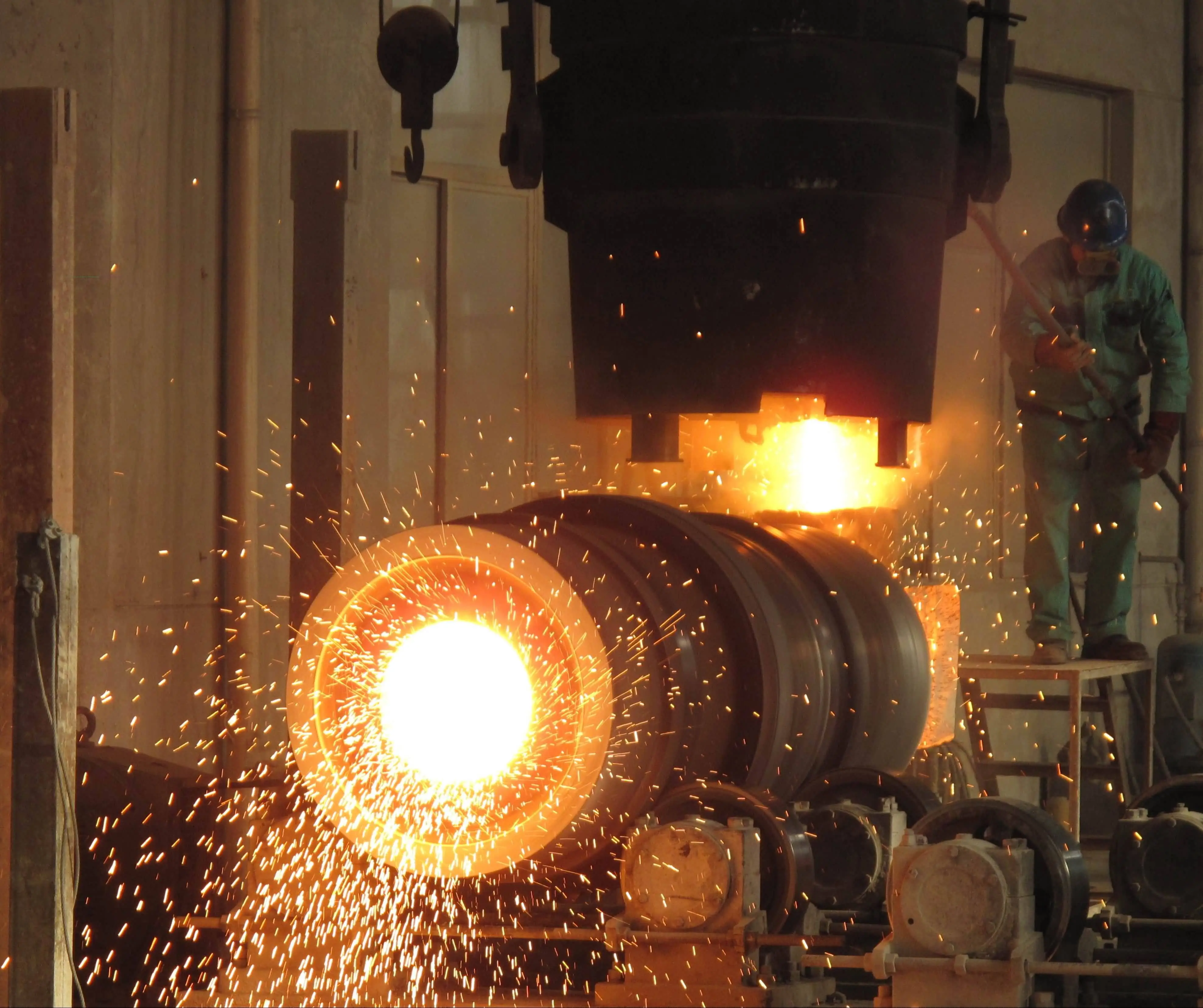
Drop forging, which is also called "hammer forging," shapes hot metal billets by hitting them against upper and lower dies over and over again. The lower die stays in place on top of an anvil, while the upper die repeatedly lifts and falls, applying contact forces that shape the workpiece to the desired shape. In this method, impression dies with holes that match the end part's shape are used.
Power hammers and drop hammers are some of the tools that are used. Mechanical systems that lift weights with belt or chain processes are also used. For heavy work, some types of power hammers use gas or hydraulic systems. Heating a material usually takes place between 900°C and 1300°C. This makes the metal soft enough to shape while still keeping its structural integrity.
Press Forging Characteristics
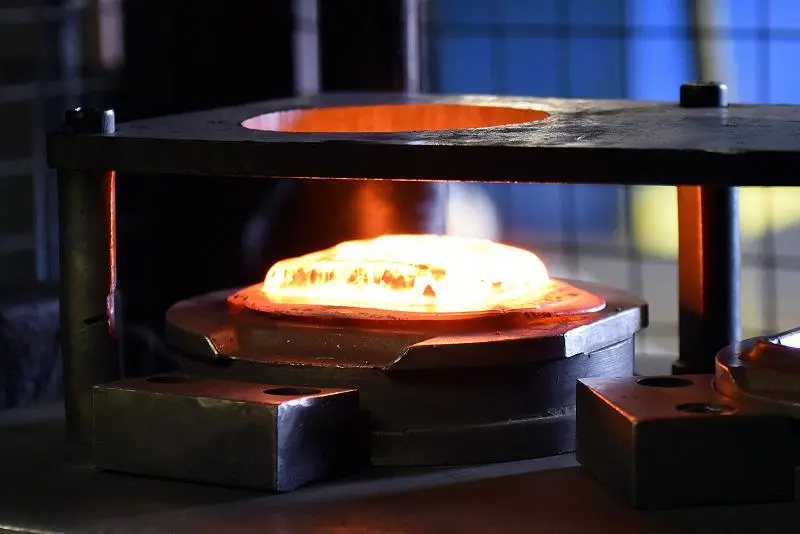
In press forging, hot materials are bent by using constant, controlled pressure instead of impact forces. Presses, whether hydraulic or mechanical, apply steady pressure, which lets you precisely control the flow patterns of metal and ensure accurate measurements. This method is great for making complicated shapes with good surface finishes and little waste of material.
The managed pressure application helps the grain structure grow better and lowers the amount of stress inside the material. There is a wide range of press forging tools, from small hydraulic units that can work with small, light parts to huge systems that can make big aerospace structures. Temperature control is still very important, and the heating needs are about the same as for drop forging, but the longer forming times make it easier for the heat to spread out.
Industrial Applications
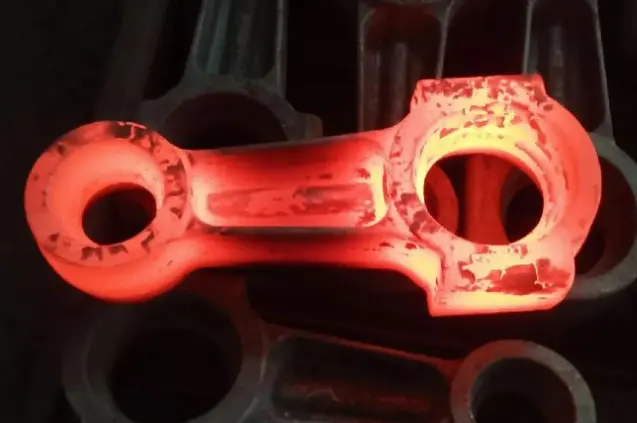
Manufacturers of cars and trucks often use both ways, based on the needs of the parts. When making a lot of connecting rods and crankshafts, drop forging works well because it allows for quick cycle times. Transmission gears and differential parts that need to be very precise in their dimensions and have a very good surface quality are examples of things that can be forged by pressing.
For important structural parts where the purity of the material and the accuracy of the dimensions cannot be sacrificed, press forging is frequently used in aerospace. The controlled deformation process makes sure that the grain flow patterns are always the same and gets rid of any stress clusters that could cause fatigue breakdowns in service.
Efficiency Factors in Drop Forging vs Press Forging
Production Speed Analysis
With drop forging, cycle times are much faster, and making processes are usually finished in 5 to 15 seconds per part. Rapid impact action quickly fills die holes, which makes this method perfect for high-volume production situations where making the most of flow is key to making money. But this speed benefit comes at the cost of less efficient use of materials and less control over sizes.
Press forging needs longer cycle times, which can be anywhere from 30 seconds to several minutes based on the size and complexity of the part. The longer forming time lets the material move more smoothly, which leads to better grain structure growth and lower internal stresses. Even though it takes longer than drop forging, press forging often gets rid of the need for extra cutting, which could make the whole production process more efficient.
Material Utilization Comparison
One important difference between these casting processes is how well they use materials. Because of the need for flash creation, drop forging usually only uses 70–75% of the material that is used. Rapid bending requires exit routes for the material, which leads to extra material that needs to be trimmed later. Even though this flash material can be recycled, it raises the cost of raw materials and the amount of trash that needs to be handled.
Through controlled distortion patterns, press forging gets better material utilization rates of 80–85%. The slow pressure application lets you precisely control the flow of materials, which minimizes flash formation and trash production. This increase in efficiency directly leads to lower costs, which is especially helpful for alloy materials that are expensive and are often used in medical and aircraft uses.
Energy Consumption Patterns
The amount of energy needed for each of these casting ways is very different. Drop forging systems only need a small amount of power all the time, but they use a lot of power in short bursts when they hit something. This method is energy-efficient for big production runs because it can cycle quickly and handle a lot of parts per unit of energy used.
During long forming rounds, press forging devices keep using power at the same rate. Even though the immediate power needs may be lower, the longer working time can cause each component to use more energy overall. However, the lack of extra machining processes usually makes up for the higher energy needs of forming.
Quality and Design Considerations
Mechanical Properties and Grain Structure
Choosing the right forging method has a big effect on the mechanical features of the part by changing the grain structure. Drop forging causes fast bending, which can catch impurities and make flow lines that could weaken the material. The high-speed collision can also leave behind stresses that lower the longevity and resistance to fatigue of the part.
Press forging lets you better control grain flow by gradually and carefully deforming the metal. The longer forming time lets the material flow naturally around the parts, making continuous grain flow patterns that make the parts stronger and less likely to wear down. Many of the problems that come with quick deformation ways are fixed by this controlled process.
Dimensional Accuracy and Surface Quality
Precision in measurements is another important trait that sets one product apart from others. Drop casting usually gets limits of ±0.5mm to ±1.5mm, so for precise uses, it needs to be machined again. Because the process is impact-based, die distortion and differences in size can happen, especially as tools wear down during production runs.
When you press forge something, the dimensions are more accurate, and you can often get limits of ±0.2mm to ±0.8mm right from the casting process. The controlled pressure application keeps the die aligned and lowers the amount of physical variation caused by wear. Better surface finishes often mean that no further cutting is needed, which lowers the overall cost of production.
Design Complexity Capabilities
The right casting method depends on how complicated the shape of the part is. Drop forging works well for geometries that are simple to moderately complicated, but not so well for features that need exact control over how the material flows. During rapid impact forming, deep holes and thin parts might not fill fully, which could mean that the design needs to be changed or that extra work needs to be done.
Press forging can handle complicated shapes by managing the flow of material in a controlled way. The slow forming process lets the material get into complicated die holes. This lets parts with different wall thicknesses, deep spaces, and complicated internal features be made. This feature increases the number of design options while keeping the structure's purity.
Choosing the Right Forging Method for Your Business Needs
Volume and Cost Considerations
The amount of work that needs to be done greatly affects the choice of shaping method. Drop forging is often better for high-volume jobs because it can be used quickly and costs less per piece to shape. The original investment in tools may be about the same, but operating efficiency gains become clear when the number of pieces produced each year goes over 10,000.
When the output number is low to medium, press forging economics usually work out well. Even though cycle times may be longer, overall production costs are often cheaper because less material is wasted and extra processes are not needed. Because the dimensions are so accurate, there is less need for quality control and fewer rejections.
Material Type and Application Requirements
The right casting method depends on the properties of the material. Because they need to be deformed in a controlled way, high-strength alloys used in aircraft work better with press forging. When these materials are hit hard, they may crack or develop internal stresses. This is why controlled pressure application is so important for making good parts.
Standard carbon steels and aluminum alloys can usually be forged well either way. Material limits are no longer used as selection criteria. Instead, economic factors and quality standards are used. But for good quality results, press forging is usually needed for unusual metals and titanium materials.
Supplier Evaluation Criteria
To find trustworthy forging partners, you need to carefully look at their professional skills, quality processes, and supply chain management. Reliable makers should show that they are certified to ISO 9001:2015 and have thorough quality control processes in place. Advanced technical skills are shown by being able to work from customer models and offer engineering help for design optimization.
When buying from foreign makers, the dependability of the supply chain is even more important. Companies that have been around for a while and have a track record in the car, aircraft, and medical device industries make it easier to meet quality standards and delivery promises. When choosing a provider, you should think about the possibility of a long-term relationship.
Future Trends and Innovations in Forging Technologies
Advanced Press Forging Technologies
Modern press forging systems use advanced control technologies that make them more accurate and productive. Servo-electric drives let you precisely control both force and position, which lets you use complicated forming processes that make the best use of material flow patterns. Monitoring systems that work in real time keep an eye on the factors of the forming process and change variables to keep quality results uniform.
Through robotic material handling and automatic quality checking systems, automation integration speeds up the production process. These improvements cut down on the cost of work while making things more consistent and safe. Smart manufacturing ideas allow for remote tracking and planned repair, which cut down on unplanned downtime.
Environmental Sustainability Improvements
Forging methods that use less energy try to protect the earth while keeping production levels high. Modern heating systems use recuperative methods to save energy by collecting wasted heat. When compared to traditional stove heating methods, induction heating systems let you precisely control the temperature while using less energy.
New ideas for reusing materials make better flash recovery and cleaning systems that make the best use of resources. Closed-loop manufacturing methods cut down on loss and the amount of raw materials that are used. These changes to sustainability are in line with the company's environmental goals and cut down on running costs.
Industry 4.0 Integration
Digital transformation projects allow for data-driven manufacturing optimization by keeping a close eye on and analyzing the whole process. During the forging process, IoT devices record temperature, pressure, and quality factors in real time. Machine learning algorithms look at this data to find ways to improve things and guess when maintenance will need to be done.
By predicting demand and making the best use of capacity planning, predictive analytics makes the supply chain more reliable. Digital twin technologies allow virtual process optimization before making changes to the physical world. This lowers the cost of development and the time it takes to get new parts on the market.
Conclusion
When you compare how efficient drop forging and press forging are, you can see that each has its own benefits that depend on the needs of the application. Press forging is the best way to use expensive materials because it is more accurate in terms of size, shape, and quality. This makes it perfect for precision applications. Drop forging is a fast way to make things that can be used for high-volume production with acceptable quality tolerances. Today, to be successful in manufacturing, you have to carefully choose the method based on the amount you need to make, the quality you want, and your budget. Forging technology is likely to become more automated, more environmentally friendly, and more connected to digital tools in the future. This will make both methods more useful while also being better for the environment.
FAQ
What are the main advantages of press forging over drop forging?
Drop forging only uses 70–75% of the material it takes up, while press forging uses 80–85% of it. The controlled pressure method gives more accurate measurements, usually within ±0.2mm to ±0.8mm, compared to drop forging's ±0.5mm to ±1.5mm range. The better grain flow patterns produced by press forging also increase the strength and wear resistance of the components.
How do I determine which forging method is best for my components?
Think about the amount that needs to be made, the quality standards, the type of material, and the cost limits. For speed reasons, drop forging is often better for high-volume jobs with standard specs. Press forging skills are usually useful for complex shapes, pricey materials, or tight dimensional requirements. Talk to forging suppliers with a lot of knowledge. They can look at your unique needs and suggest the best options.
What materials work best with each forging method?
For most uses, drop forging works well with normal carbon steels and aluminum blends. Press forging works best with titanium, high-strength alloys, and other unusual materials that need to be deformed carefully to avoid cracking or stress buildup. Common industry materials can be used in both ways, but press forging gives better results in tough situations.
Partner with Welong for Expert Press Forging Solutions
Welong has more than 20 years of experience in precision metal making, working with companies around the world that make cars, airplanes, and medical devices. Our ISO 9001:2015-certified facility offers advanced press forging skills along with full technical help to create custom solutions that exactly meet your needs. Our engineering team uses AutoCAD, Pro-Engineering, and SolidWorks to make designs more cost- and time-effective to make. They do this by working straight from your sketches or samples. As a reliable press forging provider, we offer open communication, strict quality control, and on-time delivery to lower your buying risks and ensure that your parts always work well. Email our technical experts at metal@welongpost.com to talk about your unique forging needs and find out how our tried-and-true supply chain solutions can help your manufacturing business succeed.
References
1. Smith, J.A., and Johnson, R.B. "Comparative Analysis of Forging Methods in Industrial Manufacturing." Journal of Manufacturing Processes, Vol. 28, 2019, pp. 145-162.
2. Williams, M.C., et al. "Material Utilization Efficiency in Modern Forging Operations." International Forging Research Review, Vol. 15, No. 3, 2020, pp. 78-95.
3. Anderson, K.L. "Quality Control and Dimensional Accuracy in Press Forging Applications." Manufacturing Engineering Quarterly, Vol. 42, 2021, pp. 234-251.
4. Thompson, D.R., and Lee, S.H. "Energy Consumption Patterns in Drop and Press Forging Systems." Industrial Energy Management Journal, Vol. 18, 2020, pp. 112-128.
5. Roberts, P.J. "Grain Structure Development in Controlled Pressure Forming Processes." Materials Science and Engineering Review, Vol. 67, 2021, pp. 445-462.
6. Martinez, C.A., and Brown, E.F. "Economic Analysis of Forging Method Selection for Automotive Components." Supply Chain Management Today, Vol. 31, No. 4, 2021, pp. 188-205.

Share your inquiry, get the quotation accordingly!
China WELONG- Your Reliable Partner in Metal Solutions