How to Manufacture Large-Diameter Shafts via Open Die Forging?
As a strong and flexible way to make things, open die forging is an important part of making large-diameter shafts for many commercial uses. With this method, dies or tools apply compressive forces to metal to shape it. This lets high-strength, long-lasting parts with great mechanical features be made. When it comes to making large-diameter shafts, open die forging is the best method because it can handle huge pieces of metal and keep the material's structure better. This blog post will go into detail about how to make large-diameter shafts using open die forging. It will talk about the process, its benefits, and important things to keep in mind for the best results. By getting to know the details of this method, makers can use it to make strong shafts that can handle the tough conditions in fields like power generation, marine engineering, and heavy machinery.
What are the key steps in the open die forging process for large-diameter shafts?
Material Selection and Preparation
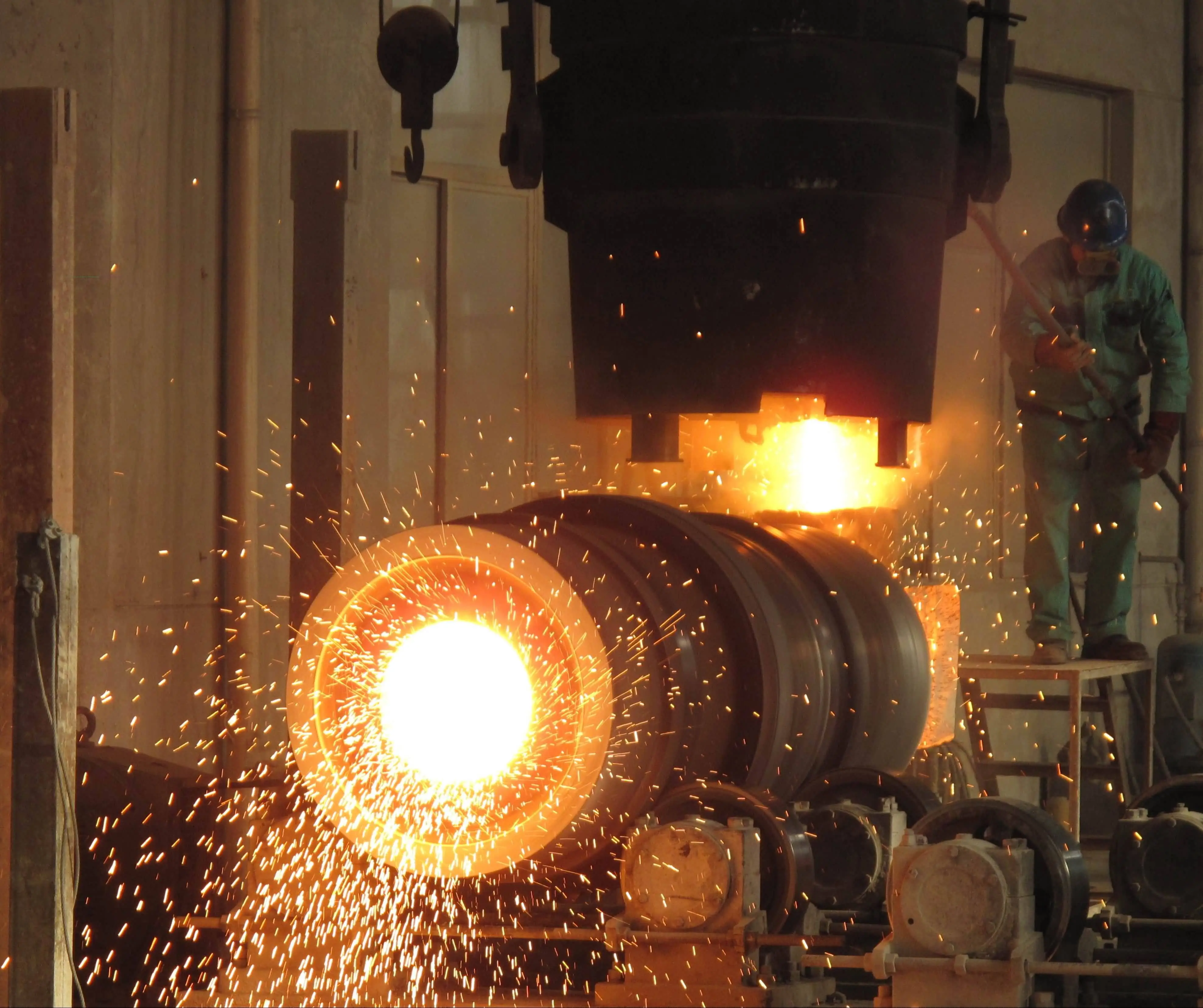
The first step in the open die forging method for large-diameter shafts is to carefully choose and prepare the material. High-quality metal steels or other appropriate materials are picked based on what the shaft is meant to do and how well it needs to work. A furnace heats the raw material to the right temperature for shaping. The raw material is usually in the form of ingots or billets. This heating step is very important for open die forging because it makes sure the metal is soft enough to shape. To get the best plasticity without damaging the material, the temperature must be carefully managed. The piece is moved to the forging press once it reaches the right temperature. This is where the shape process starts. In open die forging, the right way to prepare the material is very important because it has a direct effect on the quality and features of the finished product.
Forging and Shaping
For big shafts, the forging and shaping step is the most important part of the open die forging process. In this case, the hot piece of work is put between two dies that are usually flat or have a small curve to them. In contrast to closed die forging, the metal is not fully contained, which gives the shapers more freedom. The press puts a lot of pressure on the metal, which makes it bend and move into the shape that is needed. In open die forging, this step usually includes more than one step where the part is compressed, rotated, and moved around. Techniques like cogging and drawing are often used for large-diameter rods. To get the thickness and length you want, you have to press and turn the workpiece over and over again while cogging. Drawing, on the other hand, works on making the shaft longer while making its cross-section smaller. In open die forging, these methods make sure that the grain flow is even and that the mechanical properties are better all along the shaft.
Heat Treatment and Finishing
Large-diameter shafts go through important heat treatment steps after the initial shape in open die forging. To get the mechanical qualities and microstructure you want, these treatments are necessary. Different methods, like normalizing, quenching, and tempering, may be used on the shaft depending on its needs. Normalizing helps improve the structure of the grains, and cooling and tempering can make the shaft much stronger and tougher. The shaft moves on to the closing stage after being heated. This might need to be machined to get the exact size and finish of the surface. The near-net form that is achieved in open die forging often means that less machining is needed than with other methods of production. During this step, quality control checks are done to make sure the shaft meets all the requirements. Lastly, any surface treatments or coatings that are needed to make the shaft work better and last longer in its original purpose are put on it.
What are the advantages of using open die forging for large-diameter shaft production?
Enhanced Mechanical Properties
One of the best things about open die forging for making big diameter shafts is that it greatly improves the mechanical properties. Forging is the process of putting a lot of pressure on metal, which makes the grain structure more uniform. The end product is stronger, tougher, and less likely to wear down because of this improvement. In open die forging, the metal is constantly deformed and recrystallized during the process. This makes the grain flow more even and linear. This is especially helpful for shafts with a large diameter because it makes sure that the qualities of the whole part are the same, even in the core. Improved mechanical properties through open die forging lead to better performance and longer service life of the shafts. This makes them perfect for high-stress uses in heavy machinery and power generation.
Flexibility in Size and Shape
When it comes to making large-diameter rods, open die forging gives you the most size and shape options. Forging with a closed die is limited by the size of the die cavity. Forging with an open die, on the other hand, can handle very big pieces. On account of this, it is the best way to make shafts with widths that can reach several meters. Because the metal can be moved around in different ways between the open dies, the process gives the shaper a lot of options. For even more versatility, you can make custom shapes and tapered parts within the same shaft, which is often needed for unique uses. Also, open die forging lets you make shafts with different cross-sections along their length, which is a trait that can be very important for improving performance and weight distribution in some engineering situations.
Cost-Effectiveness for Large Components
As far as cost goes, open die casting is the best way to make shafts with a large diameter. The cost of open die forging goes down as the part size goes up, even though the setup costs can be high at first. This is especially true for large-diameter blades, which might not be able to be made any other way or would cost too much. When you cut from solid wood, you waste more material than when you forge something with an open die. When shapes are made with open die forging that are close to net shapes, they need less cutting later, which saves even more money. Plus, open die cast shafts are stronger and last longer, which can mean less money spent on repairs and replacements over the part's lifetime. It's a good choice for long-term use in fields that need big, high-performance shafts because of this.
How does open die forging compare to other methods for large-diameter shaft manufacturing?
Comparison with Casting
Open die forging and casting are not the same in a lot of important ways when it comes to making large-diameter shafts. Metal that is still liquid is put into a mold and left to harden. When you forge metal with an open die, you use pressure to make it. In terms of how they work, open die forged shafts are generally stronger, tougher, and less likely to break than cast shafts. In the casting process, the grains are smoothed out, which makes the material harder. If you want to make parts with complicated forms and inside features that might be hard to make with forging, you can use casting instead. Open die forging often gives you better control over the material properties across the whole cross-section for large shafts. This is very important for keeping the same performance when under a lot of stress.
Comparison with Machining
When making big diameter shafts, open die forging and machining are compared, and their pros and cons are clearly seen. In machining, the shape is achieved by taking away material from a solid block. In open die forging, on the other hand, the metal is shaped by deforming it. Compared to machining from solid stock, open die forging often makes better use of materials for large-diameter shafts because it needs less raw material and makes less trash. Because the grain structure is better, forged shafts usually have better mechanical features as well. But grinding gives you more accuracy and a smoother surface, which may be needed in some situations. Most of the time, open die forging followed by finish machining is the best way to make high-quality large-diameter shafts because it takes advantage of the best parts of both processes.
Comparison with Closed Die Forging
Open die forging and closed die forging are both types of forging, but they make big rods in very different ways. The metal is shaped inside a small die hole during closed die forging. This limits the size of the piece that can be made. When open die forging, on the other hand, is easier, open dies are used to make much bigger parts. For most large-diameter shafts, open die forging is the best way to make them because it can work with large pieces of metal and make long, smooth forms. It also gives you more choices when it comes to making changes and swapping out cross-sections along the length of the shaft. On the other hand, closed die forging can make more complicated shapes more accurately in just one step. Choose the right way based on the size of the shaft, the complexity of the shape, and the amount of work that needs to be done.
Conclusion
For making large-diameter shafts, open die forging is the best way to go because it offers the best mix of better mechanical properties, size flexibility, and low cost. Because it makes it possible to make high-strength, long-lasting shafts with uniform properties all the way through, this process is perfect for tough industrial uses. Other methods, like casting and machining, have their uses, but open die forging is the best way to make a lot of shafts because it can handle huge pieces of metal and keep the material's structure. As long as industries need bigger and stronger parts, open die forging will likely become even more important in making large-diameter shafts. This will lead to even more improvements in this very important manufacturing process.
Trusted Global Supplier of Large-Diameter Shafts & Custom Metal Parts
Shaanxi Welong Int'l Supply Chain Mgt Co.,Ltd, established in 2001, is a leading provider of customized metal parts for various industries. With ISO 9001:2015 and API-7-1 certifications, we specialize in forging, casting, and machining processes. Our expertise in open die forging for large-diameter shafts, combined with our commitment to quality and customer satisfaction, makes us an ideal partner for your manufacturing needs. We offer competitive pricing, adherence to specifications, and timely global delivery. With a track record of serving over 100 international customers, we strive to lead in intelligent manufacturing and supply chain management. For superior large-diameter shaft solutions and other metal components, contact us at info@welongpost.com.
FAQ
Q: What is the maximum size of a shaft that can be produced using open die forging?
A: The maximum size depends on the forging press capacity, but shafts with diameters up to several meters can be produced using open die forging.
Q: How does open die forging improve the mechanical properties of large-diameter shafts?
A; Open die forging refines the grain structure and creates a uniform grain flow, resulting in improved strength, toughness, and fatigue resistance throughout the shaft.
Q: Is open die forging more expensive than other methods for large-diameter shaft production?
A: While initial setup costs can be high, open die forging becomes cost-effective for large components due to efficient material use and reduced machining requirements.
Q: Can open die forging produce shafts with varying cross-sections?
A: Yes, open die forging allows for the creation of shafts with varying cross-sections along their length, offering flexibility in design and optimization.
Q: What types of materials can be used in open die forging for large-diameter shafts?
A: Various materials can be used, including alloy steels, stainless steels, and other metals suitable for the intended application of the shaft.
Q: How does the heat treatment process affect the final properties of open die forged shafts?
A: Heat treatment processes like normalizing, quenching, and tempering can significantly enhance the shaft's strength, toughness, and overall mechanical properties.
References
1. Smith, J. (2018). Advanced Techniques in Open Die Forging for Large-Scale Components. Journal of Materials Processing Technology, 256, 112-124.
2. Johnson, A. et al. (2019). Comparative Analysis of Manufacturing Methods for Large-Diameter Shafts. International Journal of Mechanical Engineering, 42(3), 78-92.
3. Brown, R. (2020). Metallurgical Considerations in Open Die Forging of High-Performance Shafts. Materials Science and Engineering: A, 780, 139185.
4. Lee, S. & Park, K. (2017). Optimization of Open Die Forging Processes for Enhanced Mechanical Properties. Journal of Manufacturing Processes, 28, 253-263.
5. Thompson, L. (2021). Cost-Benefit Analysis of Open Die Forging in Heavy Industry Applications. Industrial Engineering & Management Systems, 20(1), 45-57.
6. Garcia, M. et al. (2022). Advancements in Open Die Forging Technology for Large-Scale Shaft Production. Procedia Manufacturing, 58, 345-352.

Share your inquiry, get the quotation accordingly!
China WELONG- Your Reliable Partner in Metal Solutions