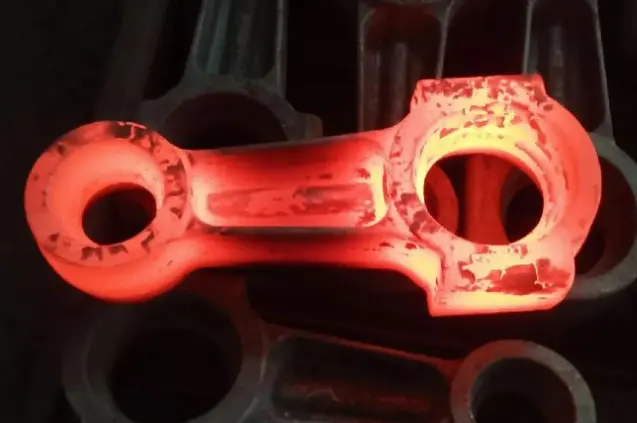
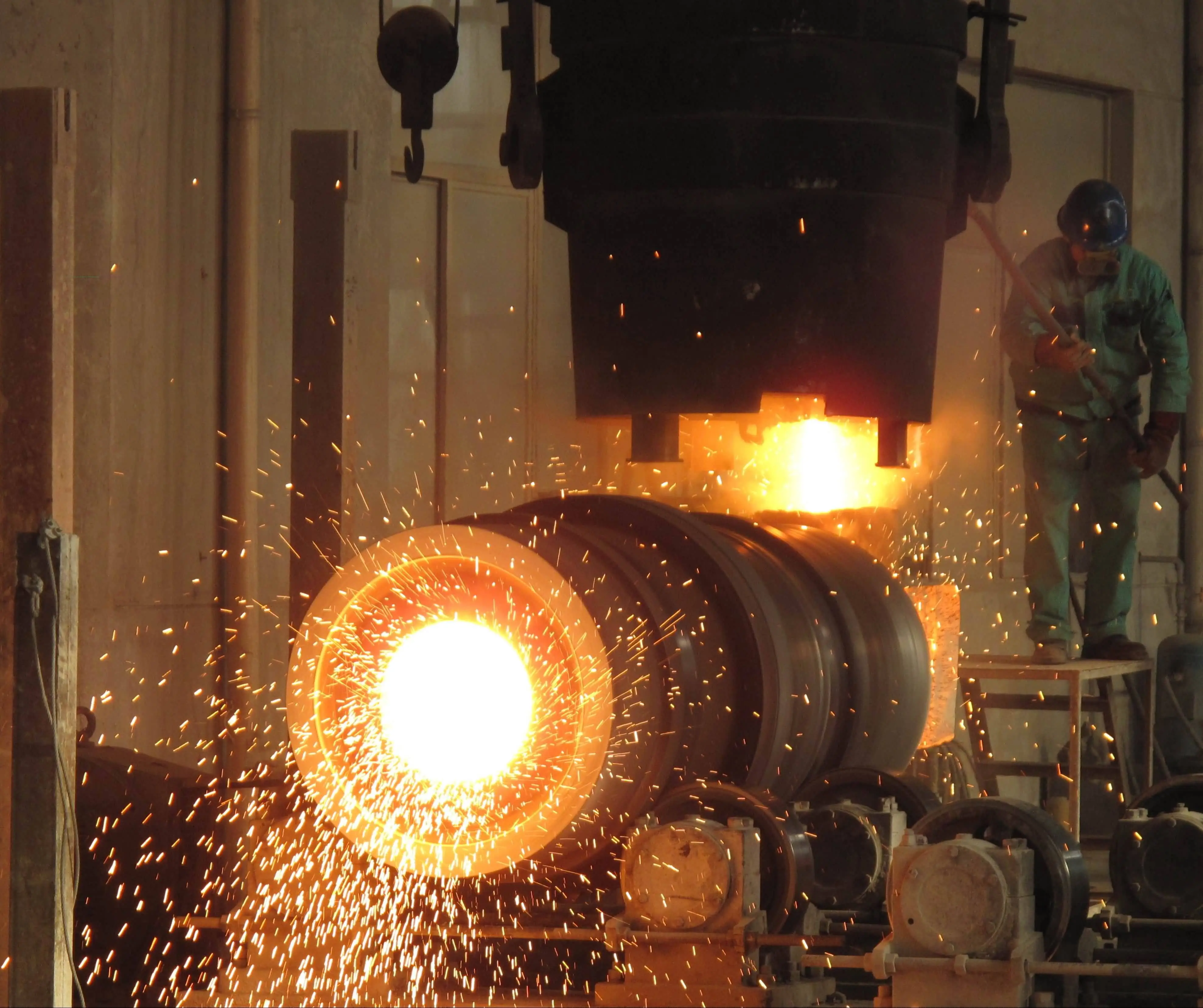
How do hot forging parts differ from precision forging parts?
Hot forging and precision forging are two different ways to work with metal that are used to make parts for businesses like machinery, aerospace, and cars. Even though both methods shape metal under pressure, they are very different in terms of temperature, tools, and the end product. Parts that are hot forged are made at high temperatures, usually above the metal's recrystallisation point. This makes the metal more malleable and makes it easier to shape. Precision casting parts, on the other hand, are made with more advanced methods that focus on surface finish and accurate measurements. Engineers and producers need to know the differences between these two processes in order to choose the best one for their needs, taking into account things like the properties of the material, the amount of production needed, and the qualities of the product that is wanted. This blog post will go into detail about the main differences between precise forging parts and hot forging parts, including their pros, cons, and best uses.
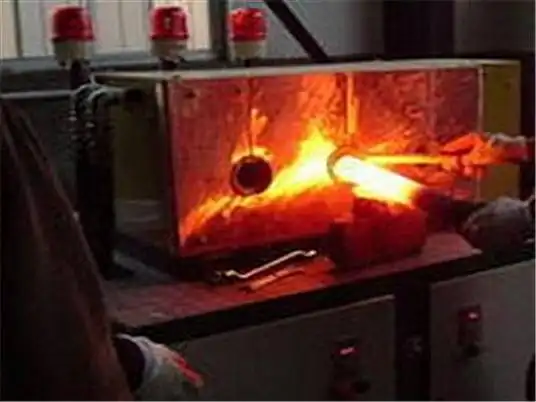
What are the main advantages of hot forging parts?
Improved Material Flow and Formability
Parts that were hot-forged are very helpful because they show how metal can be made and moved. When you do hot forging, the metal is heated above the point where it re-crystallises. The fabric becomes less stiff and more flexible when it gets this hot. You can make more complicated shapes with less force than when you cold forge because it's easy to shape. If you make something hot, the high temperatures help the grains break apart again and become smaller. This makes the texture of the grains better. This evens out and fine-grains the matrix, which improves its mechanical qualities, like how tough and strong it is. The parts that are hot-forged are also easy to shape, so they can be made to be almost perfectly shaped. This means that later on, there will be less need for cutting and less waste of material.
Cost-Effective Production for Large Components
Using hot forging to make parts is especially helpful when making big parts or parts with complicated shapes. The process makes it possible to shape large pieces of metal quickly and easily, which would be hard or impossible to do any other way. Because the material has less yield strength at high temperatures, less force is needed in hot forging. This means that equipment costs and energy use are cheaper for parts of the same size when compared to cold forging. And because of this, hot forging parts are a cheap way to make a lot of big parts for businesses like heavy machinery, construction, and cars. Being able to get near-net forms through hot forging also cuts down on material waste and the need for a lot of post-forging machining, which saves even more money in the manufacturing process as a whole.
Enhanced Mechanical Properties
When it comes to mechanics, parts made by hot forging are better than parts made in other ways. Many tons of force and heat are used in hot forging to smooth out the grains and make the metal heavier. It's now harder, tougher, and less likely to break down over time. Forging something hot can also get rid of holes and gaps inside it, making the structure more even. This helps a lot for parts that are stressed out a lot or that are loaded and emptied a lot. Parts that are hot forged often have better impact strength and ductility than parts that are cast or machined. Because of this, they are great for tasks that need to be stable and work well. Parts that are hot-forged have better mechanical properties, so they last longer and can handle rough working conditions better. Because of this, they are often used for important parts in many fields.
How does the precision forging process differ from traditional hot forging?
Temperature Control and Die Design
Controlling the temperature and making the die are two big ways that precision forging is different from standard hot forging. Precision forging often uses lower temperatures, sometimes even getting close to warm forging conditions. Hot forging usually happens at temperatures well above the material's recrystallisation point. Precision casting parts can be made with better surface finish and more accurate measurements thanks to this more precise temperature control. It's also more complicated and difficult to make a die for precision forging than for hot forging. Precision forging dies are made with tighter tolerances and may have features like undercuts, complex cavities, and exact draft angles. These cutting-edge die designs make it possible to make nearly net-shaped parts with little flash and fewer secondary processes. Hot forging dies, on the other hand, are usually simpler and stronger to handle the higher temperatures and forces needed for the process.
Dimensional Accuracy and Surface Finish
One big difference between precision forging and hot forging is the level of accuracy and smoothness that can be achieved in the dimensions and surface finish. The name of the process says that precision forging can make parts with better surface quality and tighter tolerances than regular hot forging. Precision forging uses a controlled temperature and an advanced die design to make sure that the material doesn't flow or change shape too much during the forging process. This makes the part geometries more predictable and uniform. After forging, precision parts often don't need much or any cutting because the process can make near-net-shape parts with great accuracy in their dimensions. Precision forging parts usually have a better and more even surface finish than hot forging parts, which may have more surface flaws because they are heated up and oxidise more. This better surface quality can be especially helpful in situations where looks or precisely matching surfaces are important.
Production Volume and Cost Considerations
Precision forging is not the same as hot forging when it comes to time and money. For precision forging, the tools, equipment, and process controls are often more complicated than for hot forging. This can mean that the initial setup costs are higher. Precision forging, on the other hand, can make forms that are very close to net shapes. This can save a lot of money because it wastes less material and doesn't need as many extra steps. When making a lot of parts, precision forging works best. This is because the higher costs of the tools can be balanced out by the lower costs per part and better levels of efficiency. If you only need a few tools for hot forging, it may be cheaper for large parts or short runs of production. This is because it can handle a wider range of part sizes. Both precision forging and hot forging can be used to make parts. Which one to use depends on the number of parts, how difficult they are, the material, and the tolerances that need to be met. There are times when each method is better than the others.
What are the key applications and industries for hot forging parts?
Automotive and Transportation
In the transportation and car industries, where strength, durability, and dependability are very important, hot forging parts are very important. Forging parts for engines, like crankshafts, connecting rods, and camshafts, is often done in a hot state because it produces better mechanical qualities and grain structure. Hot-forged parts are better at resisting wear and tear, which is good for suspension parts like control arms and steering knuckles. In the heavy-duty car industry, hot forging is used to make big, strong parts like axle beams, gear blanks, and drive shafts. Hot forging is also used in the aerospace business to make important parts for aeroplane engines, landing gear, and structural elements. For these tough jobs, where a broken part could have terrible results, hot forging is the best method because it can make complex shapes out of materials that have great qualities.
Industrial Machinery and Equipment
Tools and equipment for the business world are another important place where hot-forged parts are used. Heavy machinery often needs parts that are strong and last a long time, like big gears, shafts, and hubs. These can be made by hot forging. For mine tools, hot-forged parts are good because they don't break easily when hit or worn down. This is shown by drill bits and digger teeth. In the oil and gas business, hot forging is used to make parts for valves, fittings, and pressure vessels. These parts need to be able to work in harsh conditions and high forces. In the power generation business, hot forging is used to make turbine discs, rotor shafts, and other important parts for both old and new energy systems. To make a lot of different types of industrial tools and equipment, hot forging is an important step. This is because it can make big, difficult parts with great mechanical properties.
Construction and Infrastructure
In the building and infrastructure industries, where strength and durability are very important, hot forging parts are used a lot. For big building parts like bridge bearings, anchor bolts, and connection plates, hot forging is often used to ensure they can handle the huge loads and natural stresses they will face in their use. Hot forging is used in the train industry to make track parts, wheel centres, and coupling systems that need to last a long time and withstand a lot of impact. For parts like propeller shafts, rudder stocks, and anchors that need to be resistant to corrosion and have good mechanical qualities, the shipbuilding industry also uses hot forging. Hot forging is also used to make heavy-duty fasteners and connectors that are used in many building and infrastructure projects. Hot forging parts are essential in these fields because they are flexible and reliable. If a part fails, it could have major safety and economic effects.
Conclusion
In conclusion, hot forging parts and precision forging parts each offer unique advantages and are suited for different applications. Hot forging excels in producing large, complex components with excellent mechanical properties, making it ideal for automotive, industrial machinery, and construction sectors. Precision forging, on the other hand, provides superior dimensional accuracy and surface finish, catering to industries requiring tight tolerances and near-net-shape components. The choice between these processes depends on factors such as part size, complexity, production volume, and required tolerances. As manufacturing technologies continue to evolve, both hot forging and precision forging will remain essential in producing high-quality, reliable components for various industries.
Your Trusted Partner for Custom Metal Parts – Global Quality & Service
Shaanxi Welong Int'l Supply Chain Mgt Co.,Ltd. It is a leading provider of customised metal parts for various industries. Established in 2001 and certified by ISO 9001:2015 and API-7-1 quality systems, we specialise in forging, casting, and machining processes. Our experienced team offers expertise in product improvement, quality control, and timely delivery worldwide. With a track record of serving over 100 customers across Europe, North America, and Asia, we strive to be a leader in international supply chain management and intelligent manufacturing. Our comprehensive range of products includes sand casting, investment casting, centrifugal casting, die casting, and both closed and open die forging in various materials. For more information or inquiries, please contact us at metal@welongpost.com.
FAQ
Q: What is the main difference between hot forging and precision forging?
A: Hot forging is performed at high temperatures for improved material flow, while precision forging focuses on tighter tolerances and better surface finish.
Q: Which industries commonly use hot forging parts?
A: Automotive, aerospace, industrial machinery, and construction industries frequently use hot forging parts.
Q: What are the advantages of hot forging over other manufacturing methods?
A: Hot forging offers improved material properties, cost-effective production for large components, and enhanced mechanical strength.
Q: Can precision forging achieve better dimensional accuracy than hot forging?
A: Yes, precision forging generally produces parts with tighter tolerances and better dimensional accuracy compared to hot forging.
Q: What factors should be considered when choosing between hot forging and precision forging?
A: Factors include part size, complexity, production volume, required tolerances, and cost considerations.
Q: Are hot forging parts more durable than components made through other processes?
A:Hot forging parts often exhibit superior strength, toughness, and fatigue resistance compared to cast or machined components.
References
1. Smith, J. R. (2018). Advanced Forging Techniques: Hot and Precision Forging Compared. Journal of Materials Processing Technology, 256, 112-124.
2. Johnson, A. L., & Brown, T. E. (2019). Hot Forging: Principles and Applications in Modern Manufacturing. International Journal of Metalcasting, 13(2), 287-302.
3. Zhang, Y., & Liu, X. (2020). Precision Forging: Advancements in Die Design and Process Control. Journal of Manufacturing Science and Engineering, 142(8), 081001.
4. Thompson, R. C. (2017). Comparative Analysis of Hot Forging and Precision Forging for Automotive Components. SAE Technical Paper, 2017-01-1350.
5. Williams, S. D., & Davis, M. K. (2021). Hot Forging vs. Precision Forging: A Comprehensive Review of Process Capabilities and Applications. Materials Today: Proceedings, 45, 3256-3265.
6. Chen, H., & Wang, L. (2019). Microstructure and Mechanical Properties of Hot-Forged vs. Precision-Forged Alloy Steel Components. Metallurgical and Materials Transactions A, 50(4), 1842-1856.

Share your inquiry, get the quotation accordingly!
China WELONG- Your Reliable Partner in Metal Solutions