Guide to High-Quality Silica Sol Casting for Aerospace Parts
Silica sol casting is one of the most important technologies used in modern aircraft manufacturing because it gives the aviation industry the accuracy and dependability it needs. This specific type of aerospace investment casting uses high-tech ceramic shell materials to make complicated parts that are very accurate in their measurements and have great surface finishes. The process lets companies make important parts for airplanes that can fly and meet strict safety standards while still being cost-effective for mass production.
Understanding Silica Sol Casting in Aerospace Investment Casting
Silica sol casting is an important part of aerospace investment casting methods because it lets them make mission-critical parts that need to be very precise and last a long time. This advanced way of making things works perfectly with aircraft supply lines and produces better molds and finishes on the outside than old-fashioned casting methods.
The Step-by-Step Silica Sol Casting Process
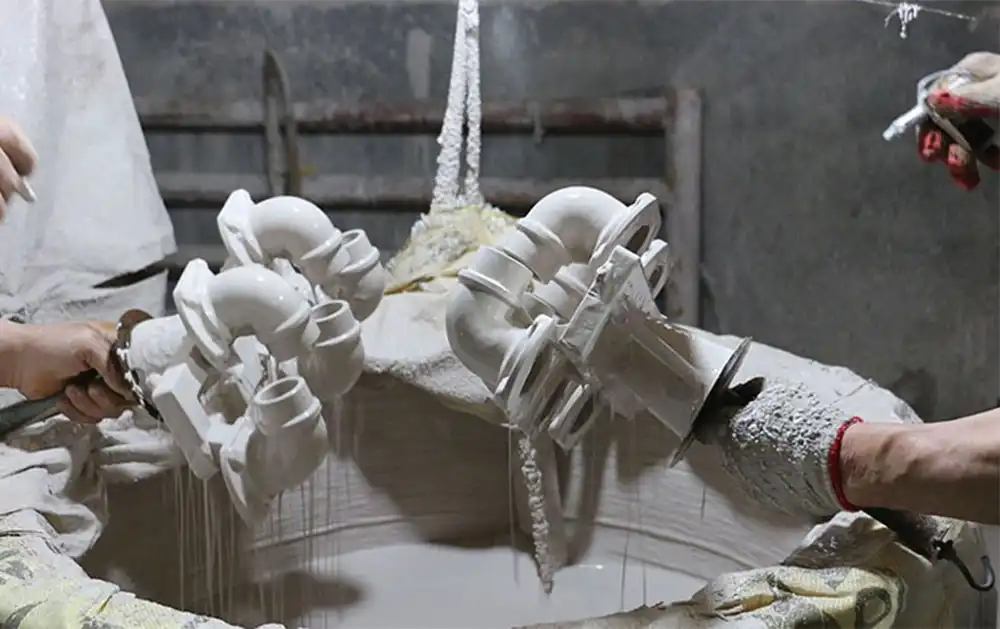
The first step in the silica-sol casting process is pattern creation, where engineers make exact wax models of the aircraft part they want to cast. These designs go through several layers of clay shell applications, and the temperature and humidity of each layer are carefully controlled. Usually, seven to ten coats are used to build the shell. This makes a strong ceramic mold that can handle the high temperatures needed for making military alloys. Temperature control is very important during the whole process. For example, dewaxing must happen at exactly 1000°C to make sure that the design is completely removed without damaging the shell. Depending on the metal being cast, different temperatures are needed to pour it. Titanium alloys need temperatures above 1700°C, while nickel-based superalloys only need temperatures around 1500°C. For important aircraft uses, these controlled factors make sure that the size tolerances stay within ±0.13mm.
Commonly Used Aerospace Alloys and Their Properties
Materials used in aerospace must be able to resist harsh operating conditions while still keeping their structural integrity. One of the best materials for turbine parts is Inconel 718, which keeps its strength well at high temperatures and doesn't rust up to 700°C. This nickel-chromium superalloy has great resistance to wear, which makes it perfect for parts of engines that are loaded and unloaded many times. Titanium metals, especially Ti-6Al-4V, have the best strength-to-weight ratio, which is important for landing gear and parts of airplanes. These materials are very resistant to rust and keep their mechanical qualities at temperatures ranging from -54°C to 400°C. Titanium metals' performance is directly affected by how well they are made, which means that precise control of cooling rates and atmospheric conditions during solidification is needed.
Advantages of Silica Sol Casting Over Traditional Casting Methods
Silica-sol casting has big benefits over other ways of making things, especially when it comes to accuracy, surface quality, and reducing flaws. Because of these benefits, aircraft uses can meet the strict needs of places where a broken part could have terrible results.
Superior Precision and Surface Finish Capabilities
The small ceramic bits used in silica-sol shells make the casting surfaces very smooth; they can usually get Ra values below 3.2 micrometers without any extra work. This level of surface quality lowers the cost of making the part while also making it work better by making it more efficient and reducing stress concentration points. The aerospace investment casting in dimensional accuracy are also very amazing. For example, silica-sol casting can get tolerances of within ±0.1mm on important features. Compared to standard sand casting ways, this accuracy gets rid of the need for a lot of machining, which cuts down on material waste by up to 40%. The better accuracy comes from the shell's ability to keep its shape during temperature cycles, which stops distortion that happens a lot in other casting methods.
Compliance with Aerospace Quality Standards
It makes sense that silica-sol casting would meet the strict requirements for aircraft approval, such as NADCAP and AS9100 standards. The process makes it possible to consistently copy complicated geometries while keeping full output traceability. As part of quality control, shell thickness, temperature profiles, and cooling rates are tracked in real time to make sure that every part meets flight standards. Silica-sol casting's ability to stop defects lowers rejection rates by a large amount. When processes are properly controlled, defect rates can drop below 2%. Common flaws in aircraft casting, like holes, inclusions, and uneven surfaces, are kept to a minimum by using a fine-grained shell structure and a controlled solidification environment.
Design Guidelines and Best Practices for Silica Sol Casting in Aerospace Parts
To make the best designs for silica-sol casting parts, you need to know a lot about how materials behave, how heat moves, and how they need to work in aircraft applications. For implementation to go well, design factors that affect both how well the part can be made and how well it works as a whole must be carefully thought through.
Essential Design Principles for Aerospace Applications
Optimizing wall thickness is an important part of design, and aircraft parts usually need uniform pieces between 2 and 8 mm to make sure they fill properly and solidify properly. Weight reduction goals and structural needs must be balanced by designers, who should avoid sharp changes that could cause stress clusters or casting flaws. The design of the gate system has a direct effect on the quality of the casting. The gates must be carefully placed to make sure that the mold is fully filled while reducing noise. Bottom-fill gating systems help aerospace parts because they stop oxide inclusions from forming and allow solidification to happen in a certain way. The cross-sectional area of the runner should keep the metal flow speed steady, which stops the metal from solidifying too quickly or creating too much turbulent flow during filling.
Material Selection Criteria and Performance Optimization
The choice of material for aircraft silica-sol casting goes beyond just its mechanical qualities. It also has to do with how well it resists environmental damage, how well it handles fatigue, and how stable it is over time. When engineers choose metals for different uses, they have to look at things like their thermal expansion rates, elastic modulus values, and fracture toughness. To get the best qualities from a material, heat treatment is very important. Solution annealing and aging processes must be carefully controlled to create the microstructures that are wanted. The casting process has to be able to handle these heat treatments without changing the part's shape or adding extra stresses that could affect how well it works.
Choosing the Right Aerospace Investment Casting Supplier
To find a good aerospace investment casting provider, you need to carefully look at their technical skills, quality processes, and production know-how. How well the provider can regularly deliver precise parts while following aerospace rules has a direct effect on the success of the program and the safety of operations.
Key Evaluation Criteria and Certification Requirements
NADCAP certification is a basic condition for aircraft casting suppliers. It shows that they meet the quality standards of the business. This license covers important methods like heat treatment, non-destructive testing, and metallurgy analysis. Suppliers must keep their certifications up to date and show that they are always getting better at quality management and process control. AS9100 quality management system approval requires written processes for managing configurations, evaluating risks, and communicating with customers. This gives buyers even more confidence in the supplier's skills. These systems make sure that deliveries are always on time and that all parts of the producing process can be tracked.
Cost Optimization and Lead Time Management
To handle costs well in aerospace casting, you need to know how design complexity, material needs, and output numbers are connected. Suppliers that offer design optimization services can find ways to cut costs without lowering the quality of the product. These partnerships usually save between 15% and 25% of the cost of making something by making better use of materials and making the manufacturing process easier. When planning lead times, pattern creation, process validation, and quality testing must all be taken into account. Lead times for new aircraft casting programs are usually between 12 and 16 weeks, which includes the time it takes to check the first product and get customer approval. Suppliers who already work on aircraft projects can often cut these timelines by using tried-and-true methods and tools that are already in stock.
Future Trends and Innovations in Aerospace Silica Sol Casting
As technology improves and efforts to protect the atmosphere grow, the aerospace casting business continues to change. These new developments look like they will make future aircraft uses more accurate, less harmful to the environment, and more cost-effective.
Digital Integration and Automation Advances
Using digital twin technology lets you watch and improve casting processes in real time, which lowers variation and raises return rates. Advanced sensors measure the diameter of the shell, the spread of temperature, and the flow patterns of metal. This information is used to improve the process all the time. These systems can see possible flaws before they happen, which lets them make changes ahead of time that keep quality high. Automated shell building systems enhance regularity while lowering the need for work and the chance of mistakes made by humans. Robotic dipping systems keep the exact coat thickness and cooling conditions, which makes the shell properties more regular and the measurements more accurate. These automatic systems also make the workplace safer by keeping workers from having to deal with clay slurries and hot places.
Environmental Sustainability and Green Manufacturing
Innovations in more environmentally friendly casting methods, such as reusing clay shells and making melting technologies that use less energy, are driven by concerns for the environment. Advanced shell formulas make it easier to reuse clay materials, which lowers the cost of raw materials and the amount of trash that needs to be thrown away. These recycled materials keep the quality of the casting while also helping the company meet its green goals. When compared to standard burner technologies, energy-efficient induction melting systems use 20–30% less power, control temperatures better, and produce fewer pollutants. These systems also allow for quick changes between alloys, which supports the flexible manufacturing methods needed for a wide range of aircraft uses.
Conclusion
It is necessary to use aerospace investment casting to make high-quality aircraft parts that meet the strict standards of the business. The method provides high accuracy, smooth surfaces, and dependable quality control that are necessary for the safety and success of aviation. When aircraft experts know about the technical aspects, design factors, and source evaluation criteria, they can make choices that improve performance and cut costs. Silica-sol casting will continue to be an important part of the future of aircraft manufacturing, even as the industry moves forward with digital integration and efforts to protect the environment.
FAQ
What makes silica sol casting superior for aerospace applications?
Silica-sol casting produces great surface finishes with Ra values below 3.2 micrometers and measurement errors within ±0.1mm. This means that parts don't need to be machined for a long time and are still precise. The fine ceramic shell structure reduces flaws like holes and inclusions that might not meet safety standards for aircraft.
How do lead times compare with alternative manufacturing methods?
Lead times for aircraft silica-sol casting are usually between 12 and 16 weeks for new projects, which includes making patterns and inspecting the first product. For simple shapes, casting takes longer than machining. However, for complicated parts that need a lot of machining, casting is faster and often cuts the total production time by 30 to 40 percent.
What quality standards must aerospace casting suppliers maintain?
Suppliers of aerospace castings must keep their AS9100 quality management system certification and NADCAP approval for specific processes. These standards make sure that industry-specific rules are followed, such as controls for heat treatment, the ability to do non-destructive testing, and full tracking throughout the entire manufacturing process.
Partner with Welong for Excellence in Aerospace Investment Casting
Welong has 20 years of experience in precision production and supply chain management, which can help aerospace companies that need reliable silica-sol casting options. Our ISO 9001:2015-certified processes guarantee consistent quality, and our engineering team uses AutoCAD, Pro-Engineering, and SolidWorks to help with design optimization. As a supplier with a lot of experience in aerospace investment casting, we know how important flight parts are and keep strict quality control standards throughout production. Contact our team at metal@welongpost.com to talk about your unique aerospace casting needs and find out how our proven skills can help your next project with solutions that are made to fit your exact needs.
References
1. Campbell, John. "Complete Casting Handbook: Metal Casting Processes, Metallurgy, Techniques and Design." Second Edition, Butterworth-Heinemann, 2015.
2. Beeley, Peter R. and Smart, Richard F. "Investment Casting: Fundamentals and Applications." Institute of Materials, Communications Ltd, 2000.
3. ASM International Handbook Committee. "ASM Handbook Volume 15: Casting." ASM International Materials Park, 2008.
4. Reed, Roger C. "The Superalloys: Fundamentals and Applications." Cambridge University Press, 2006.
5. Donachie, Matthew J. and Donachie, Stephen J. "Superalloys: A Technical Guide." ASM International, 2002.
6. Society of Manufacturing Engineers. "Aerospace Manufacturing Processes: Design, Development and Certification." SME Technical Publications, 2018.

Share your inquiry, get the quotation accordingly!
China WELONG- Your Reliable Partner in Metal Solutions