Different Types of Forging Processes: From Drop to Roll Forging
Forging represents one of the most critical manufacturing processes in modern industry, transforming raw materials into high-strength, durable components that form the backbone of countless applications. Among the various forging methods available, drop forging stands out as a premier technique for producing components with superior mechanical properties and exceptional reliability. This comprehensive guide explores the diverse landscape of forging processes, from traditional drop forging to advanced roll forging techniques, providing procurement managers, engineers, and OEM clients worldwide with essential insights for selecting robust forging solutions and establishing partnerships with trustworthy manufacturing partners across automotive, aerospace, heavy machinery, and other industrial sectors.
Understanding Forging Processes: An Overview of Core Types
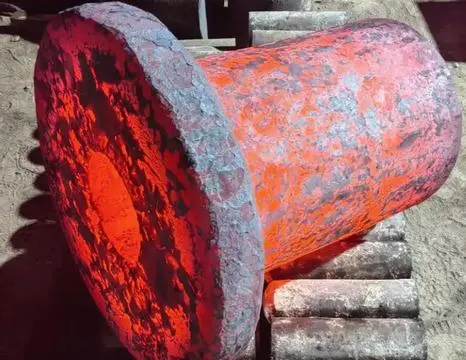
Forging basically involves using pressure forces to shape metal in a controlled way. This makes parts that are stronger, tougher, and more precise than those made with other methods. The process uses the way heated metals can bend and stretch plastically. This makes the grain structures smoother and the metal's mechanical qualities better, which are important for tough industrial uses.
Primary Forging Categories and Their Distinctions
The world of forging includes several important methods, and each has its own advantages and ways of working. Open-die forging lets material move freely between simple dies, which makes it perfect for big parts that need to be shaped precisely. Closed-die forging, which includes impression-die methods, keeps material inside precisely cut holes so that complex shapes can be made with great accuracy.
Forging with a hammer uses repeated, fast strikes to reshape materials, while forging with a press uses steady, controlled pressure to shape materials over time. When you do roll forging, you move hot metal between spinning dies to shape it little by little. This method works especially well for long parts and early shaping steps.
Advantages Over Alternative Manufacturing Methods
Forging makes better use of materials and maintains structural stability better than casting, machining, and welding. Casting can work for complicated internal shapes, but it can't match the grain flow efficiency and mechanical qualities of forging. Machining processes are very accurate, but they remove material instead of rearranging it. This wastes material and could weaken the material.
The right choice of forging techniques relies on the properties of the material, the complexity of the part, the amount of output, and the performance needs of the end use. By understanding these connections, procurement professionals can improve the performance of their products and the efficiency of their buying while keeping their supply lines cost-effective.
Deep Dive into Drop Forging: Process, Materials & Advantages
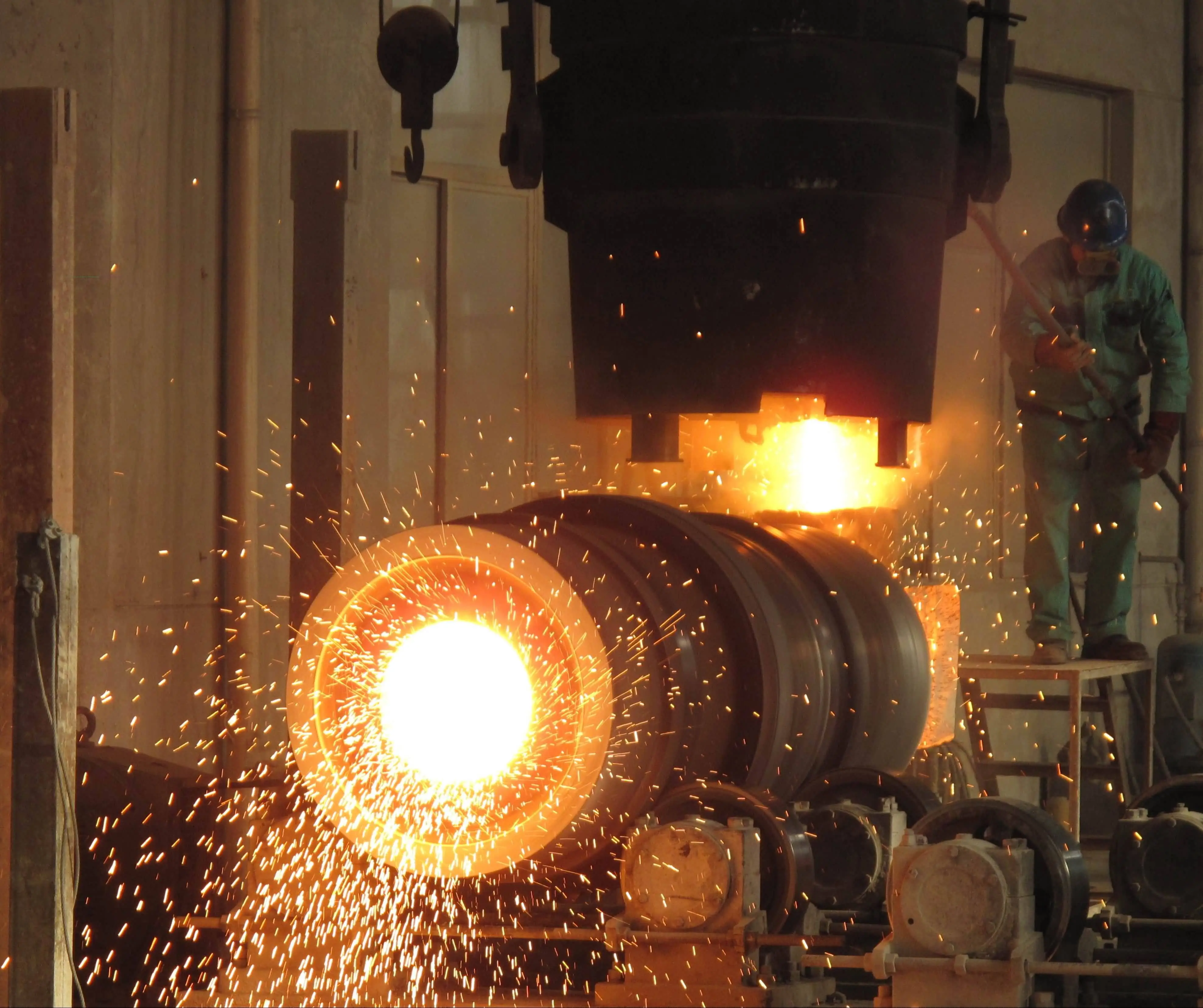
Forging with a hammer, also known as drop forging, is a tried-and-true method that involves regularly impacting material between carefully designed upper and lower dies. The lower die stays in place on top of an anvil, and the upper die hits the material in controlled ways, forming it into complex shapes with great mechanical qualities.
Sequential Process Stages and Equipment Requirements
To start the drop forging process, the material is carefully prepared by cutting it into billets and heating them to temperatures between 900°C and 1300°C, based on the type of metal. Specialized ovens make sure that the whole item is heated evenly, which lowers flow stress and makes it easier to shape.
Choosing the right equipment is a key part of optimizing a process. When it comes to heavy-duty work, power hammers use gas or hydraulic systems, while drop hammers use both gravity and mechanical help. Computerized controls in modern systems make sure that the time and amount of force of impacts are always the same, so the same results are achieved across production runs.
Another important part is the form of the die, which includes impression cavities that are exactly the same shape as the end part. These dies have draft angles and flash allowances that make it easier to release the part after it has been formed. The dies are made of high-strength tool steels that can survive being loaded and unloaded many times with great impact.
Material Selection and Performance Characteristics
Because they are easy to shape and respond well to heat treatment, carbon steels and alloy steels work very well with drop forging methodologies. Aluminum metals and titanium materials also work well in controlled environments, but they need to be handled in a certain way and their temperatures must be kept under control.
Compared to cast or machined options, the parts that are made this way have better grain flow alignment, higher resistance to fatigue, and higher impact hardness. Because of these qualities, drop-forged parts are very useful in heavy machinery, transmission systems for cars, and aircraft landing gear sections, where dependability is very important.
Quality Control and Defect Prevention
Full quality control plans cover possible problems like not filling the die all the way, surface flaws, and breaks inside the part. Non-destructive testing methods, like ultrasonic inspection and magnetic particle examination, make sure that the structure is solid, and measurement checks make sure that the structure meets engineering standards.
Comparative Analysis: Drop Forging vs Other Forging and Manufacturing Methods
Procurement workers who want to find the best cost-performance relationships can make smart decisions when they know the pros and cons of different manufacturing methods. Drop forging regularly produces better mechanical properties than casting, but it may require more money to buy the original tools.
Performance Comparison with Alternative Processes
Compared to drop forging, press forging gives you more control over the dimensions and less waste of material, but it needs bigger investments in capital equipment and takes longer to turn. While drop forging shines with traditional steel alloys needing active forming operations, press forging is best for materials that are sensitive to rapid strain rates because of its gradual deformation feature.
Casting methods are great for designing parts with complicated internal shapes, but they can't match the improvements in mechanical properties that can be made by refining the grain structure in a forge. Machining processes are very accurate in terms of dimensions, but they waste a lot of material and don't make parts as strong as forging parts do.
To get stock material ready for later drop forging processes, roll forging is a great first step. This is especially true for parts that need to have their length-to-diameter ratio optimized. This method blends the benefits of roll forming for spreading out materials with the exact shaping abilities of impression-die forging.
Economic Considerations and Application Suitability
When figuring out costs, you have to look at both the original investments in tools and the long-term economics of production. Drop forging is a very cost-effective way to make medium to large amounts of something, especially when the performance and dependability of the part support the higher working costs. The method works especially well in safety-critical situations where improving the material's properties is more important than saving money.
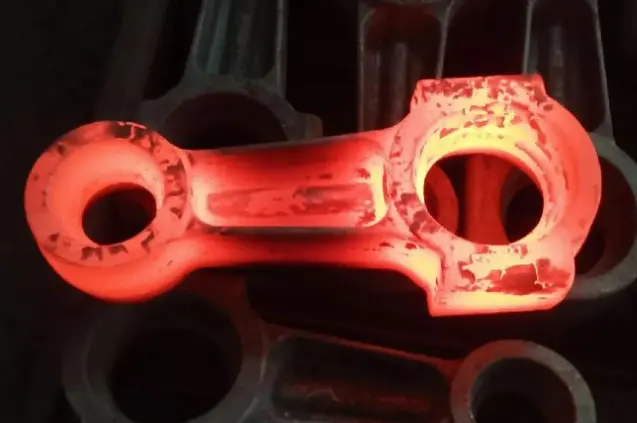
The strength-to-weight efficiency of drop forging is very helpful for automotive parts like steering knuckles, connecting rods, and suspension parts. The process is used in aerospace for landing gear parts, engine mounts, and structural pieces where both weight reduction and dependability are important.
Procuring Drop Forged Parts and Services: A B2B Guide
To successfully buy drop-forged parts, you need to carefully look at the skills, quality processes, and output capacity of the suppliers that match the needs of the project. To build long-lasting supply ties, the selection process needs to strike a mix between technical skill and business needs.
Supplier Evaluation Criteria and Certification Requirements
Quality licenses are an important need for suppliers to meet, and ISO 9001:2015 sets the standards for a quality management system. Certifications that are specific to an industry, like AS9100 for aerospace uses or ISO/TS 16949 for the car sector, show that you are an expert in a very important market.
To figure out a production capacity, you have to look at the equipment's abilities, the methods for moving materials, and the limits on output. Suppliers must show that they have enough forging press tons, heat treatment facilities, and finishing skills to meet the needs of the project and meet delivery standards.
Technical skills go beyond basic forging tasks and include engineering support, help with design optimization, and services for making prototypes. Leading suppliers offer joint review processes for designs, help with choosing materials, and cost-cutting programs that raise the total value of the project.
Sourcing Strategy Development and Risk Management
Diversification tactics based on geography help lower the risks in the supply chain while keeping quality standards high and costs low. When handled properly through skilled middlemen, international sourcing possibilities, especially in established manufacturing areas, can save a lot of money.
China-based production has changed a lot, and now many factories can meet world-class quality standards while still keeping costs low. Selecting the right suppliers, doing regular checks, and following clear communication rules are all important for relationships to work well and make sure results are consistent and deliveries are made on time.
Price structures and suppliers' desire to spend on specialized tools are affected by volume. Long-term contracts that include volume promises can often get better prices and give you priority care when capacity is limited.
Future Trends and Innovations in Forging Technology
The forging industry is always changing as new technologies, green efforts, and digitalization trends are added. These changes improve accuracy, speed, and care for the environment. These changes affect the way things are usually made and make it easier to create parts and make production run more smoothly.
Technology Integration and Industry 4.0 Implementation
Computerized process control systems let you watch and change important factors like temperature, pressure, and timing in real time. These methods make things more consistent, make operators less needed, and let you plan repairs ahead of time.
As new materials are made, drop forging can be used in more areas and meet higher performance standards. High-strength, low-weight metals, corrosion-resistant mixtures, and special steels make it possible to make a wider range of parts that can be made and meet the changing needs of the industry.
Real-time quality tracking systems that use machine vision, 3D scanning, and automatic testing cut down on the time needed for inspections and make it more likely that defects will be found. These technologies help with efforts to keep getting better and give customers more faith in the abilities of suppliers.
Sustainability and Environmental Considerations
Improving energy economy by using better heating systems, recovering heat from waste, and automating processes lowers the damage to the environment and keeps costs down. Recycling plans for all types of material waste are used in modern forging plants, which also use green energy sources.
Digitalizing the supply chain makes it easier to communicate, record, and track items throughout the buying process. Customers and sellers can work together in real time on cloud-based systems, which also keep detailed records for quality control and legal compliance.
These technological improvements help procurement teams plan for changes in the market and make sure that their buying strategies are in line with how the industry is changing and what customers want.
Conclusion
From basic drop forging to more advanced roll forging, the wide range of forging methods gives procurement workers many choices for getting the best performance from parts and the most efficient supply chain. Drop forging keeps showing its great worth in the automobile, aircraft, and industrial fields that need high-quality mechanical properties, structural integrity, and long-term dependability. Knowing the pros and cons of various forging methods, along with smart strategies for evaluating and managing relationships with suppliers, helps people make smart choices that balance performance needs with cost concerns. As Industry 4.0 and sustainability efforts continue to make technology better, forging methods will stay important for high-performance industrial uses all over the world.
FAQ
What factors determine whether drop forging is suitable for my application?
Whether drop forging is right for the job relies on the shape of the part, the type of material needed, the amount that needs to be made, and the performance standards. Drop forging methods generally work best for parts that need to have good mechanical properties, are moderately complicated, and are produced in large quantities.
How can I ensure supplier quality when sourcing forged components internationally?
Quality assurance needs a full review of the seller, which includes checking the certification, inspecting the facility, approving samples, and keeping an eye on things all the time. For basic needs, ISO 9001:2015 approval is enough. For more specific uses, industry-specific standards provide extra security.
What are typical lead times and minimum order quantities for drop forged parts?
Lead times are very different depending on how complicated the parts are, what tools are needed, and how much ability the seller has. For initial production, gear development usually takes 8–12 weeks. Shipments for repeat orders usually happen within 4–6 weeks. Depending on the size and complexity of the part, the minimum order quantity is usually between 100 and 1000 pieces.
Partner with Welong for Superior Drop Forging Solutions
Welong has been a trusted drop forging source for more than 20 years, making precision-engineered parts that meet the strict needs of automotive, aircraft, and industrial uses all over the world. Our ISO 9001:2015-certified facilities have both advanced production tools and thorough quality control systems. This makes sure that your important projects get consistent results and are delivered on time. We make unique metal goods from your drawings and samples, and we offer full engineering support, including compatibility with AutoCAD, Pro-Engineering, and SolidWorks. Email our skilled staff at info@welongpost.com to talk about your particular needs and find out how our proven supply chain expertise can help you save time and money while still keeping the highest quality standards.
References
1. Altan, T., Ngaile, G., & Shen, G. "Cold and Hot Forging: Fundamentals and Applications." ASM International, 2005.
2. Samal, S. K. "Forging Technology: Science and Practice." Manufacturing Science and Engineering, 2018.
3. Davis, J. R. "ASM Specialty Handbook: Tool Materials." ASM International Materials Park, 1995.
4. Dieter, G. E., & Bacon, D. "Mechanical Metallurgy: SI Metric Edition." McGraw-Hill Education, 2013.
5. Groover, M. P. "Fundamentals of Modern Manufacturing: Materials, Processes, and Systems." John Wiley & Sons, 2020.
6. Blazynski, T. Z. "Metal Forming: Tool Profiles and Flow." Ellis Horwood Limited Publishers, 1976.

Share your inquiry, get the quotation accordingly!
China WELONG- Your Reliable Partner in Metal Solutions