Difference Between Open Die and Closed Die Forging Processes
Understanding the fundamental differences between open die and closed die forging processes is crucial for procurement managers seeking optimal manufacturing solutions. Open die forging shapes metal between flat or simple contoured dies without completely enclosing the workpiece, allowing material to flow freely. Conversely, closed die forging utilizes precision-machined dies that completely contain the metal, producing parts with exact dimensions and superior surface finishes. The closed die forging method delivers enhanced material properties, tighter tolerances, and reduced machining requirements, making it the preferred choice for high-precision industrial applications across aerospace, automotive, and medical device sectors.
What Is Open Die Forging and How Does It Work?
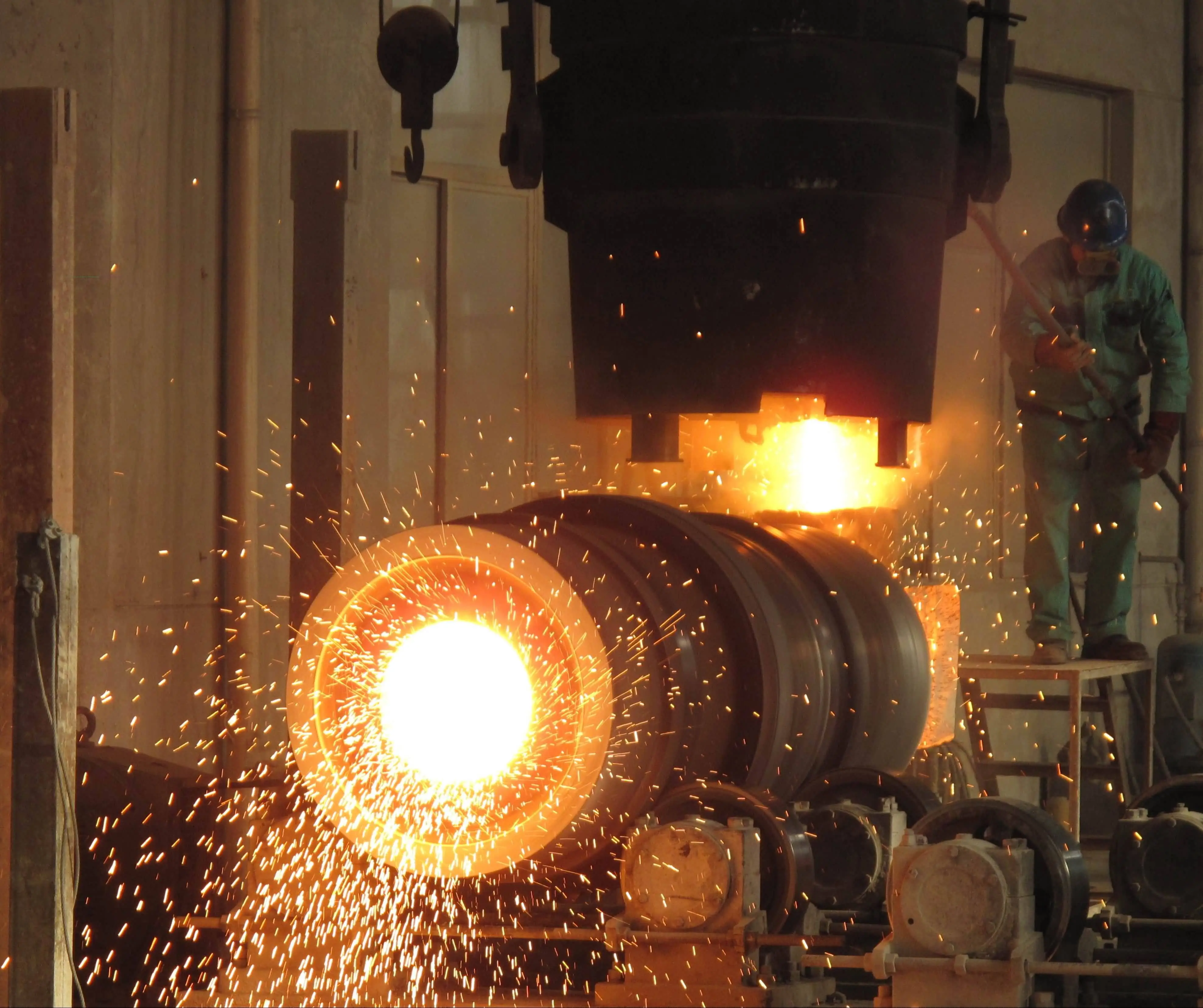
Open die forging represents one of the oldest metalworking techniques, where heated metal billets are shaped between flat or simple-contoured dies. The process allows unrestricted material flow in directions perpendicular to the applied force. Manufacturers typically employ this method for creating large, simple-geometry components such as shafts, rings, and blocks.
The process begins with heating raw material to forging temperature, typically between 1,800°F and 2,300°F for steel alloys. Skilled operators position the workpiece between the hammer and anvil, applying successive blows while rotating and repositioning the material. This technique requires extensive operator expertise to achievethe desired dimensions and mechanical properties.
Three key characteristics define open die forging:
- Material flow freedom - Metal deforms in multiple directions simultaneously
- Operator skill dependency - Process control relies heavily on craftsman experience
- Size flexibility - Accommodates extremely large components up to 100+ tons
Testing data from industrial forging operations shows open die processes achieve grain refinement levels of 65-75%, compared to 85-95% in closed die applications. Surface finish typically ranges from 125-500 microinches Ra, requiring substantial secondary machining.
If you need large, simple-geometry components with moderate precision requirements, then open die forging offers cost-effective solutions for low-volume production runs.
Understanding Closed Die Forging Technology
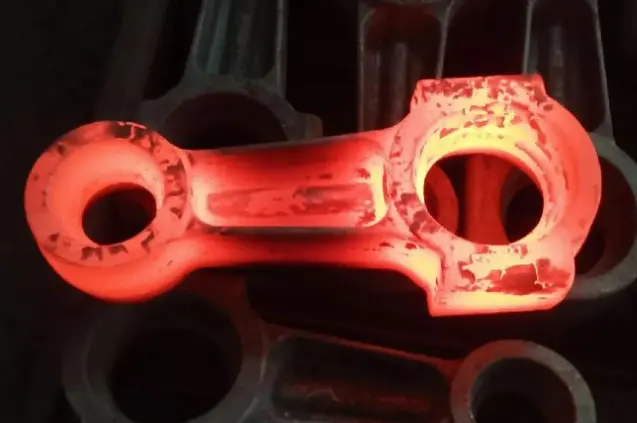
Closed die forging, also known as impression die forging, utilizes precision-machined dies that completely enclose the workpiece during deformation. This advanced manufacturing process produces near-net-shape components with exceptional dimensional accuracy and superior mechanical properties.
The closed die forging process involves placing heated material into a carefully designed die cavity. Hydraulic presses or mechanical hammers apply tremendous force, typically 500-50,000 tons, forcing the metal to conform precisely to the die geometry. Excess material forms a thin flash around the part perimeter, which is subsequently trimmed.
Modern closed-die operations incorporate sophisticated process controls:
- Temperature monitoring - Pyrometric systems maintain ±25°F accuracy
- Force measurement - Load cells ensure consistent energy application
- Die preheating - Maintains optimal forming temperatures throughout production cycles
Performance data from ISO 9001:2015 certified facilities demonstrates that closed die forging achieves dimensional tolerances of ±0.005-0.015 inches on critical features. Surface finishes typically range from 32-125 microinches Ra, often eliminating secondary machining operations.
Material utilization efficiency reaches 85-95% in closed die processes, compared to 60-75% in open die applications. This efficiency translates directly to reduced raw material costs and improved sustainability metrics.
If you need precision components with tight tolerances and superior surface quality, then closed die forging provides the optimal manufacturing solution for medium to high-volume production requirements.
Key Technical Differences Between Open and Closed Die Methods
The fundamental distinctions between open and closed die forging extend beyond basic tooling differences, encompassing critical performance parameters that directly impact component quality and manufacturing economics.
Dimensional Accuracy and Tolerance Control
Closed die forging delivers superior dimensional control through precise cavity geometry. Typical tolerance achievements include:
- Linear dimensions: ±0.005-0.015 inches
- Angular tolerances: ±1-2 degrees
- Wall thickness variation: ±0.003-0.008 inches
Open die forging tolerance ranges significantly exceed closed die capabilities:
- Linear dimensions: ±0.030-0.125 inches
- Angular tolerances: ±3-5 degrees
- Wall thickness variation: ±0.015-0.050 inches
Material Flow and Grain Structure
Controlled material flow in closed die forging creates optimized grain structures aligned with component stress patterns. Metallurgical analysis reveals:
- Grain refinement: 85-95% improvement over cast structures
- Directional strength increase: 15-25% above open die equivalents
- Fatigue resistance: 40-60% improvement in critical stress areas
Open die forging achieves moderate grain refinement (65-75%) but lacks the directional optimization possible with precision die cavities.
Surface Quality and Finishing Requirements
Surface finish quality directly impacts downstream processing costs:
| Process | Surface Finish (Ra) | Machining Allowance | Secondary Operations |
|---|---|---|---|
| Closed Die | 32-125 microinches | 0.010-0.030 inches | Minimal finishing |
| Open Die | 125-500 microinches | 0.125-0.500 inches | Extensive machining |
If you need components requiring minimal post-forging machining, then closed die forging reduces overall manufacturing costs despite higher initial tooling investment.
Production Volume and Cost Analysis
Understanding the economic implications of each forging method enables informed sourcing decisions based on production volume requirements and total cost optimization.
Tooling Investment and Amortization
Closed die forging requires substantial upfront tooling investment, typically ranging from $15,000-$150,000 depending on component complexity and size. Die life spans generally extend 10,000-100,000 pieces under proper maintenance protocols.
Open die forging utilizes simple, reusable tooling with minimal upfront investment ($2,000-$15,000), but higher per-piece labor costs due to manual positioning and shaping requirements.
Break-Even Analysis Considerations
Three critical factors determine economic viability:
- Production volume thresholds - Closed die becomes cost-effective above 500-2,000 pieces annually
- Material utilization efficiency - 85-95% utilization in closed die versus 60-75% in open die
- Secondary operations elimination - Reduced machining costs offset higher forging prices
Labor and Automation Factors
Closed die forging enables higher automation levels, reducing direct labor content by 40-60% compared to open die operations. Cycle times demonstrate significant advantages:
- Closed die: 30-120 seconds per piece
- Open die: 300-1,800 seconds per piece (depending on complexity)
Quality consistency improvements in closed die forging reduce inspection requirements and scrap rates by 60-80% compared to manual open die operations.
If you need predictable costs and consistent quality for medium to high-volume production, then closed die forging provides superior economic advantages over the product lifecycle.
Applications and Material Suitability
Different forging methods excel in specific applications based on component requirements, material properties, and performance specifications across various industrial sectors.
Aerospace and High-Performance Applications
Closed die forging dominates aerospace applications due to stringent quality requirements and critical safety factors. Common applications include:
- Turbine blades and discs require precise airfoil geometry
- Landing gear components demanding high fatigue resistance
- Structural fittings needing complex geometries with minimal machining
Material grades such as Inconel 718, Ti-6Al-4V, and 4340 steel achieve superior properties through controlled deformation in precision die cavities.
Automotive Industry Requirements
The automotive sector utilizes both methods depending on specific component characteristics:
Closed die forging applications:
- Connecting rods require precise bearing surfaces
- Crankshafts needing complex counterweight geometries
- Steering knuckles demanding high strength-to-weight ratios
Open die forging applications:
- Large axle shafts for heavy-duty vehicles
- Simple gear blanks for subsequent machining
- Prototype components for development programs
Medical Device and Oil & Gas Sectors
Medical device manufacturing demands exceptional surface quality and biocompatibility. Closed die forging of titanium and stainless steel alloys produces implant components with superior fatigue resistance and minimal surface contamination.
Oil and gas drilling operations require both methods:
- Closed die: High-pressure valve bodies, drill bit components, precision fittings
- Open die: Large shaft components, heavy-duty flanges, pressure vessel components
If you need components for critical applications requiring traceability and consistent properties, then closed die forging ensures compliance with stringent industry standards, including AS9100 and ISO 13485.
Quality Control and Precision Standards
Rigorous quality control protocols distinguish professional forging operations from basic manufacturing facilities, particularly in closed die forging, where dimensional accuracy and material properties must meet exacting specifications.
Dimensional Inspection and Measurement
Modern closed die forging facilities employ advanced metrology equipment, ensuring comprehensive quality verification:
- Coordinate Measuring Machines (CMM) - Verify complex geometries within ±0.0002 inches
- Optical scanning systems - Capture complete surface profiles for 100% inspection
- Statistical process control - Monitor dimensional trends and prevent quality drift
Open die forging requires more extensive inspection due to process variability. Manual measurement techniques combined with selective CMM verification ensure dimensional compliance within broader tolerance ranges.
Metallurgical Testing and Certification
Material property verification follows established industry standards:
- Tensile testing per ASTM E8/E8M specifications
- Hardness surveys using Rockwell or Brinell methods
- Ultrasonic testing for internal defect detection
- Magnetic particle inspection for surface crack identification
Test data from ISO 9001:2015 certified facilities show that closed die forging achieves:
- Strength consistency: ±5% variation across production lots
- Hardness uniformity: ±3 HRC variation within individual components
- Defect rates: <0.1% for critical applications
Traceability and Documentation
Supply chain risk mitigation requires comprehensive documentation throughout the forging process. Leading manufacturers maintain:
- Material certifications from steel mill sources
- Process parameter records for each production lot
- Inspection reports with full dimensional verification
- Heat treatment certifications ensure proper thermal processing
If you need guaranteed traceability and consistent quality for critical applications, then partnering with ISO 9001:2015 certified closed die forging suppliers ensures compliance with international quality standards.
Conclusion
The choice between open and closed die forging depends on specific application requirements, production volumes, and quality specifications. Closed die forging offers superior dimensional accuracy, enhanced material properties, and reduced secondary operations, making it ideal for precision components in critical applications. Open die forging provides cost-effective solutions for large, simple geometries with moderate precision requirements. Understanding these fundamental differences enables informed sourcing decisions that optimize manufacturing costs while meeting stringent quality standards. Partnering with experienced forging suppliers ensures access to advanced capabilities and comprehensive supply chain management essential for global manufacturing success.
Partner with Welong for Premium Closed Die Forging Solutions
Welong stands as your trusted closed die forging manufacturer, delivering precision-engineered components that meet the stringent requirements of global industrial leaders. Our ISO 9001:2015 certified facilities combine advanced manufacturing technology with rigorous quality control, ensuring consistent performance across aerospace, automotive, oil and gas, and medical device applications. Contact our engineering team at metal@welongpost.com to discuss your specific closed die forging requirements and discover how our 20+ years of supply chain expertise can optimize your manufacturing costs while guaranteeing on-time delivery and exceptional quality standards.
References
1. Altan, T., Ngaile, G., and Shen, G. "Cold and Hot Forging: Fundamentals and Applications." ASM International Materials Park, Ohio, 2005.
2. Beddoes, J. and Bibby, M.J. "Principles of Metal Manufacturing Processes." Arnold Publishers, London, 1999.
3. Dieter, George E. "Mechanical Metallurgy: Materials Science and Engineering Series." McGraw-Hill Science Engineering, New York, 1986.
4. Hosford, William F. and Caddell, Robert M. "Metal Forming: Mechanics and Metallurgy." Cambridge University Press, Cambridge, 2011.
5. Lange, Kurt. "Handbook of Metal Forming." Society of Manufacturing Engineers, Dearborn, Michigan, 1985.
6. Schey, John A. "Introduction to Manufacturing Processes." McGraw-Hill Higher Education, New York, 2000.

Share your inquiry, get the quotation accordingly!
China WELONG- Your Reliable Partner in Metal Solutions