Centrifugal Casting vs Static Casting: Which One to Choose
When deciding between centrifugal casting and static casting, your choice depends on specific manufacturing requirements. Centrifugal casting excels in producing dense, high-strength cylindrical parts like pipes and bushings through rotational force, while static casting offers greater design flexibility for complex geometries. For automotive components requiring superior mechanical properties, centrifugal casting delivers enhanced material density and reduced porosity. However, if your project involves intricate shapes with thin walls, static casting provides better dimensional control and cost-effectiveness for medium production volumes.
Understanding Centrifugal Casting Fundamentals
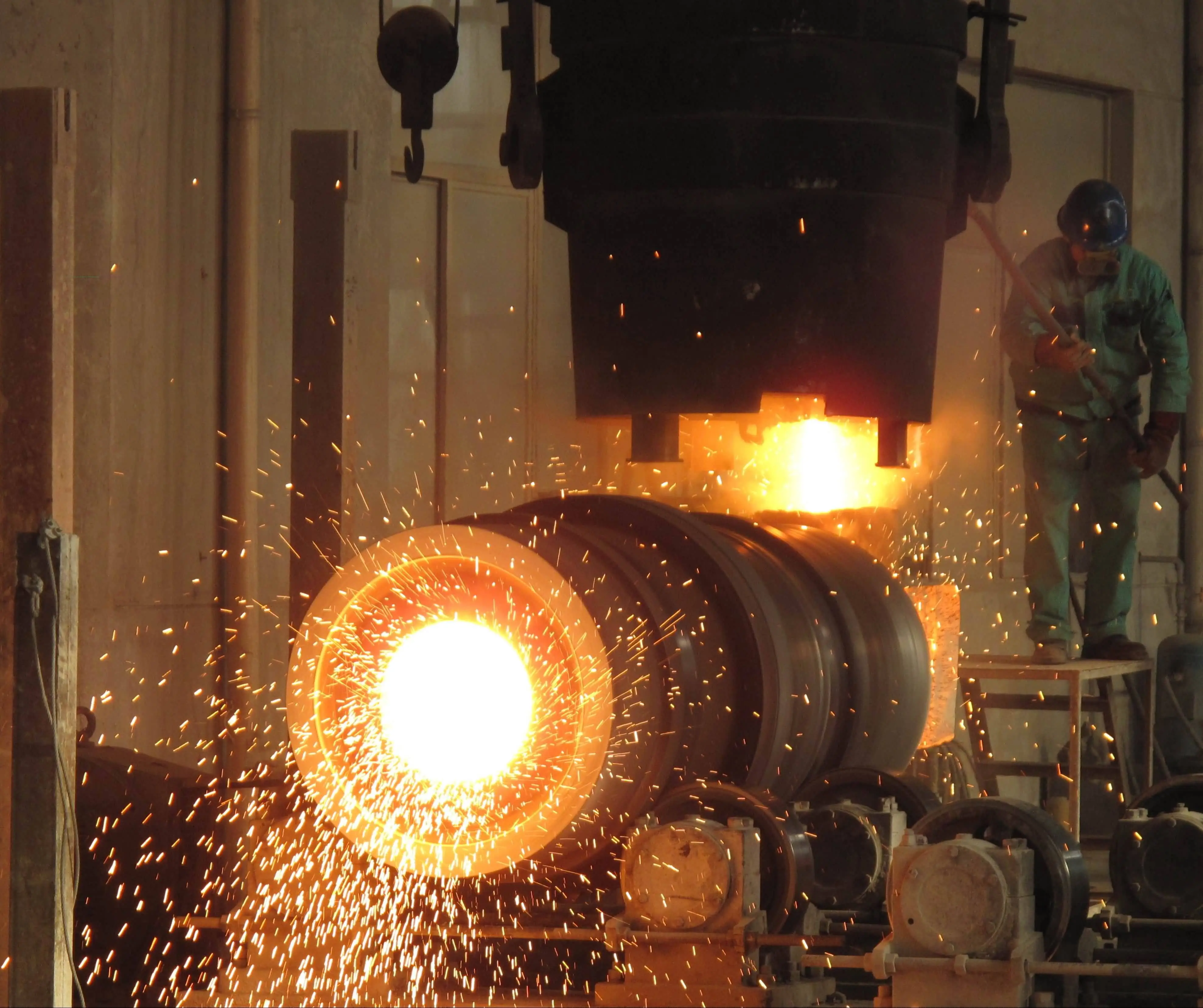
The centrifugal casting process utilizes rotational force to distribute molten metal within a spinning mold. This technique creates centrifugal force that pushes denser metal toward the outer surfaces while forcing impurities inward. Modern centrifugal casting machines operate at speeds ranging from 300 to 3000 RPM, depending on part diameter and material properties.
Three primary types dominate industrial applications:
- True centrifugal casting - Creates hollow cylindrical parts without cores
- Semi-centrifugal casting - Produces solid or semi-hollow parts using central gating
- Centrifuge casting - Manufactures multiple small parts simultaneously
The centrifugal casting speed directly influences material distribution and final part quality. Higher rotational velocities generate greater centrifugal force, resulting in improved density gradients. However, excessive speeds can cause casting defects, including hot tearing or dimensional distortion.
If you need seamless pipes or bushings with exceptional wear resistance, centrifugal casting delivers superior performance compared to alternative manufacturing methods.
Static Casting: Traditional Precision Manufacturing
Static casting encompasses gravity pouring, sand casting, and investment casting techniques, where molten metal fills stationary molds. This approach relies on gravitational force and controlled cooling rates rather than mechanical rotation. The process accommodates complex geometries through sophisticated mold designs and core arrangements.
Key advantages include design versatility and established quality control protocols. Static casting accommodates intricate internal passages, varying wall thicknesses, and complex external features. Material selection spans broader ranges, from aluminum alloys to specialized superalloys used in aerospace applications.
Production setup requires a lower initial investment compared to centrifugal casting equipment. Tooling flexibility allows rapid prototyping and design modifications without extensive machinery reconfiguration. Quality control measures include dimensional inspection, material testing, and non-destructive evaluation techniques.
If you need complex automotive components with multiple features and varying cross-sections, static casting provides optimal manufacturing flexibility.
Key Performance Differences: Data-Driven Analysis
Material density represents the most significant performance differential between these casting methods. Test data from industrial applications reveal centrifugal casting achieves 15-20% higher density compared to static casting in equivalent materials. This density improvement translates to enhanced mechanical properties and extended service life.
Surface finish quality favors centrifugal casting applications. Rotational force creates smoother outer surfaces with roughness values typically ranging from 1.6 to 3.2 Ra. Static casting surfaces often require additional machining to achieve comparable finish standards.
Porosity levels demonstrate marked differences:
- Centrifugal casting: 0.5-2% porosity in outer regions
- Static casting: 3-8% average porosity distribution
- Critical zones: The centrifugal method concentrates defects in the removable inner areas
Cooling rates vary significantly between methods. Centrifugal casting promotes directional solidification, reducing shrinkage defects. Static casting relies on uniform cooling, which may create internal stress concentrations in thick sections.
Dimensional accuracy depends on specific applications. Static casting achieves tighter tolerances for complex features, while centrifugal casting excels in cylindrical dimension control.
Cost Analysis: Investment and Production Economics
Initial equipment investment differs substantially between casting approaches. Centrifugal casting machines require specialized rotating fixtures, variable speed controls, and safety systems. Capital costs range from $150,000 to $500,000 for industrial-grade equipment. Static casting utilizes conventional foundry equipment with lower upfront investment requirements.
Production economics favor centrifugal casting for high-volume cylindrical parts. Reduced machining requirements and improved material properties offset higher equipment costs. Static casting maintains advantages for complex, low-volume applications where tooling flexibility outweighs production efficiency.
Material utilization rates impact overall manufacturing costs:
- Centrifugal casting: 85-95% material efficiency
- Static casting: 70-85% efficiency, including runner systems
- Scrap reduction: The centrifugal method minimizes internal defects
Labor requirements vary based on automation levels. Modern centrifugal casting systems integrate automated pouring and part handling. Static casting often demands more manual intervention for mold preparation and finishing operations.
If you need cost-effective production of high-strength pipes or sleeves, centrifugal casting delivers superior economics for volumes exceeding 1000 pieces annually.
Application Suitability: Industry-Specific Requirements
Aerospace applications demanding exceptional material integrity favor centrifugal casting for engine components and landing gear bushings. The process eliminates centerline porosity common in static casting, meeting stringent quality standards. Centrifugal casting materials include titanium alloys, nickel-based superalloys, and specialized steel grades.
Oil and gas drilling operations utilize centrifugal cast drill pipe components and valve bodies. Enhanced fatigue resistance and corrosion properties justify premium costs. Static casting serves auxiliary components where complex geometries outweigh material optimization requirements.
Automotive industries leverage both methods strategically. Centrifugal casting produces brake drums, cylinder liners, and bearing races. Static casting handles engine blocks, transmission cases, and suspension components requiring intricate internal passages.
Medical device manufacturing demands precision and biocompatibility. Static casting accommodates complex implant geometries with controlled surface characteristics. Centrifugal casting applications include surgical instrument components requiring superior wear resistance.
If you need medical device components with complex internal channels, static casting provides the necessary design flexibility while maintaining regulatory compliance.
Quality Control and Standards Compliance
ISO 9001:2015 requirements encompass both casting methods with specific control points. Centrifugal casting quality parameters include rotational speed verification, temperature monitoring, and centrifugal force calculations. Documentation requirements cover process variables and material traceability throughout production cycles.
Static casting quality systems emphasize mold integrity, pouring procedures, and cooling cycle management. Inspection protocols include dimensional verification, material testing, and defect evaluation using established industry standards.
Common centrifugal casting defects include:
- Speed variations: Inconsistent rotation causing density gradients
- Temperature fluctuations: Premature solidification or overheating
- Mold alignment: Geometric distortion from improper setup
Preventive measures involve automated monitoring systems and statistical process control implementation. Real-time data collection enables immediate corrective actions when parameters deviate from specifications.
Testing procedures validate mechanical properties, dimensional accuracy, and surface quality. Centrifugal casting samples undergo tensile testing, hardness measurement, and metallurgical analysis. Results demonstrate property improvements compared to static casting baselines.
If you need consistent quality with documented traceability, both methods accommodate rigorous quality control when properly implemented.
Conclusion
Selecting between centrifugal casting and static casting requires careful evaluation of part geometry, performance requirements, and production volumes. Centrifugal casting delivers superior material properties for cylindrical components, while static casting accommodates complex shapes with design flexibility. Both methods offer distinct advantages when properly matched to application requirements. Consider material specifications, quality standards, and economic factors when making casting decisions. Professional consultation ensures optimal method selection for your specific manufacturing needs.
Partner with Welong for Expert Centrifugal Casting Solutions
Welong brings over two decades of specialized experience in centrifugal casting manufacturing and supply chain management across automotive, aerospace, and industrial applications. Our ISO 9001:2015 certified facilities deliver precision parts meeting international quality standards while providing comprehensive engineering support for design optimization. As a trusted centrifugal casting supplier, we offer complete project management from initial drawings through final delivery, ensuring reliable quality control and on-time performance for your critical components. Contact metal@welongpost.com to discuss your specific casting requirements.
References
1. Campbell, J. (2015). Complete Casting Handbook: Metal Casting Processes, Metallurgy, Techniques and Design. Butterworth-Heinemann.
2. Beeley, P.R. (2001). Foundry Technology. Butterworth-Heinemann, 2nd Edition.
3. Stefanescu, D.M. (2018). Science and Engineering of Casting Solidification. Springer International Publishing.
4. ASM International Handbook Committee. (2008). ASM Handbook Volume 15: Casting. ASM International.
5. Brown, J.R. (2000). Foseco Non-Ferrous Foundryman's Handbook. Butterworth-Heinemann.
6. Ravi, B. (2005). Casting Simulation and Optimization: Benefits, Bottlenecks, and Best Practices. Indian Foundry Journal.

Share your inquiry, get the quotation accordingly!
China WELONG- Your Reliable Partner in Metal Solutions