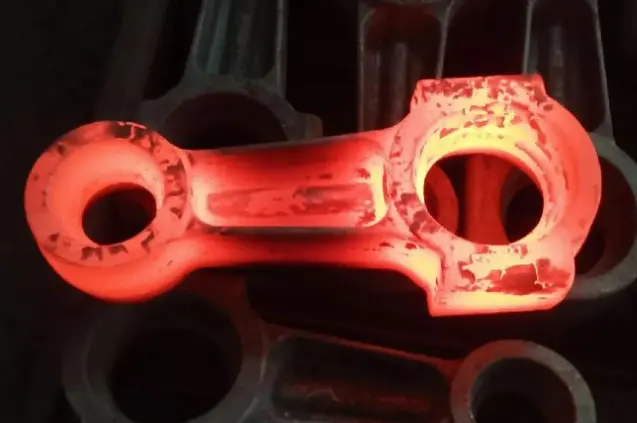
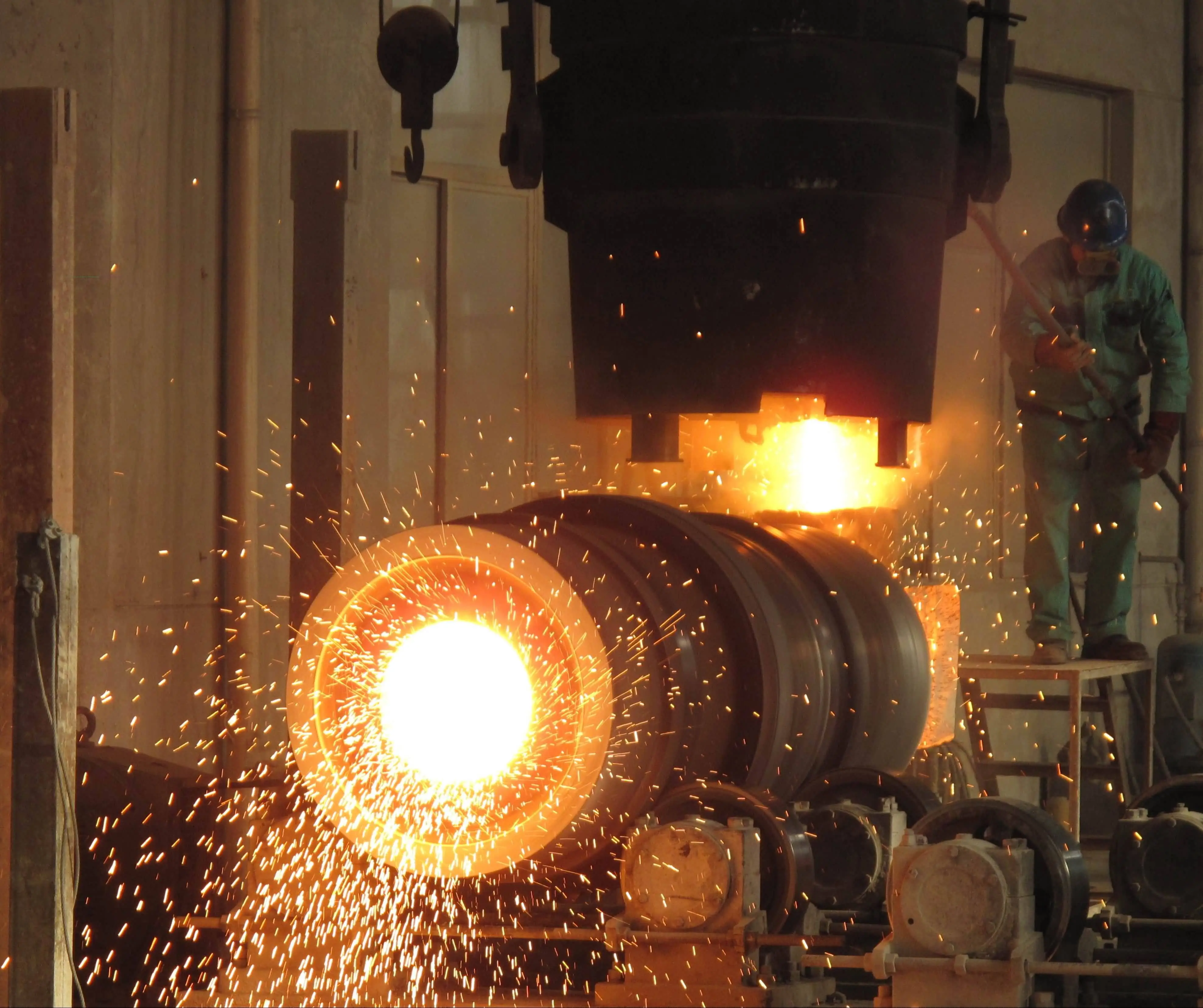
Investment Casting vs Die Casting: Which is Right for Your Project
Choosing between investment casting and die casting depends on your project's specific requirements for precision, volume, and material properties. Investment casting excels in producing complex geometries with superior surface finishes for low-to-medium volumes, while die casting offers excellent dimensional accuracy and cost-effectiveness for high-volume production runs. Your decision should align with factors including part complexity, production quantity, budget constraints, and quality specifications.
Understanding the Manufacturing Process Differences
Investment casting, also known as lost wax casting, creates metal parts through a precise multi-step process that begins with creating a wax pattern. The pattern gets coated with ceramic shell material, then heated to remove the wax, leaving a hollow cavity for molten metal injection. This precision casting method allows for intricate details and smooth surface finishes that often require minimal post-processing.
Die casting involves forcing molten metal under high pressure into steel molds called dies. The process delivers rapid production cycles and consistent dimensional accuracy. The metal solidifies quickly due to the cooled die surfaces, creating parts with excellent mechanical properties and tight tolerances.
Three core differences emerge:
- Pattern Creation: Investment casting uses expendable wax patterns, while die casting employs permanent steel dies
- Pressure Application: Die casting utilizes high-pressure injection, and investment casting relies on gravity or low pressure
- Tooling Costs: Investment casting requires lower initial tooling investment compared to die casting's expensive steel dies
If you need complex internal geometries or thin-walled sections, then investment casting proves more suitable for your manufacturing requirements.
Material Compatibility and Alloy Selection
Investment casting accommodates an extensive range of materials, including stainless steel, carbon steel, aluminum alloys, titanium, and superalloys. The process handles materials with melting points up to 1700°C, making it ideal for aerospace and medical device applications requiring specialized alloys.
Die casting primarily works with non-ferrous metals such as aluminum, zinc, and magnesium alloys. These casting materials offer excellent strength-to-weight ratios and corrosion resistance. Aluminum die casting achieves tensile strengths of 300-400 MPa, while zinc alloys can reach 280-320 MPa.
Material performance comparison:
- Investment casting: Broader alloy selection, superior material properties
- Die casting: Limited to specific alloys, optimized for high-volume production
- Heat treatment compatibility: Both processes support various heat treatment options
- Casting defects: Investment casting shows lower porosity levels (typically <2%)
If you need specialized alloys or superior material properties, then investment casting offers greater flexibility in material selection.
Precision and Surface Quality Analysis
Investment casting delivers exceptional dimensional accuracy with tolerances ranging from ±0.13mm to ±0.25mm for most applications. The process achieves surface roughness values between Ra 1.6-6.3 μm without additional machining. Complex features like undercuts, internal channels, and intricate patterns emerge directly from the mold.
Die casting provides consistent dimensional control with tolerances of ±0.05mm to ±0.15mm on critical dimensions. Surface finish quality ranges from Ra 0.8-3.2 μm, though some areas may require secondary operations. The process excels at producing parts with uniform wall thickness and sharp detail definition.
Quality metrics comparison:
- Dimensional stability: Die casting shows superior consistency across production runs
- Surface integrity: Investment casting eliminates parting lines and draft angles
- Casting tolerance: Die casting achieves tighter tolerances on critical dimensions
- Post-processing requirements: Investment casting often requires minimal finishing operations
If you need parts with complex internal features and superior surface quality, then investment casting technology provides optimal results for your specifications.
Production Volume and Cost Considerations
Investment casting suits low-to-medium production volumes ranging from prototypes to 10,000 units annually. The lower tooling costs make it economically viable for smaller quantities, with break-even points typically occurring around 500-1,000 pieces depending on part complexity.
Die casting becomes cost-effective for medium-to-high volumes starting around 5,000 pieces annually. The substantial initial die costs require larger production runs to achieve favorable per-piece pricing. However, cycle times of 30-300 seconds enable rapid production rates exceeding 1,000 parts per day.
Economic analysis factors:
- Tooling investment: Investment casting requires 60-80% lower initial costs
- Per-piece pricing: Die casting offers 20-40% lower unit costs at high volumes
- Lead times: Investment casting provides shorter tooling development periods
- Production capacity: Die casting delivers significantly higher throughput rates
If you need cost-effective production for volumes below 5,000 units, then investment casting offers better economic value for your project budget.
Quality Control and Certification Standards
Both casting processes support rigorous quality control protocols essential for aerospace, medical, and automotive applications. Investment casting facilities typically maintain tighter process controls due to the complexity of shell building and metal pouring operations.
Die casting operations benefit from automated process monitoring systems that track injection pressures, temperatures, and cycle times. Real-time data collection enables immediate adjustments to maintain consistent quality levels throughout production runs.
Quality assurance capabilities:
- ISO 9001:2015 certification compatibility: Both processes support comprehensive quality systems
- Statistical process control: Die casting offers superior data collection capabilities
- Inspection accessibility: Investment casting provides better access for internal feature verification
- Traceability requirements: Both processes accommodate full material and process documentation
If you need comprehensive quality documentation and traceability, then both processes can meet stringent certification requirements when properly implemented.
Application-Specific Recommendations
Investment casting excels in aerospace components requiring complex cooling passages, medical implants with intricate surfaces, and industrial equipment with integrated features. The process suits applications where design flexibility outweighs production volume considerations.
Die casting dominates automotive components, consumer electronics housings, and industrial hardware requiring high production rates. The process works best when part designs can accommodate die casting constraints like uniform wall thickness and appropriate draft angles.
Industry-specific advantages:
- Aerospace: Investment casting handles high-temperature superalloys and complex geometries
- Automotive: Die casting provides cost-effective solutions for high-volume components
- Medical devices: Investment casting offers biocompatible materials and smooth surfaces
- Industrial equipment: Both processes serve different volume and complexity requirements
If you need components for critical applications requiring specialized materials, then investment casting provides superior design freedom and material compatibility.
Welong Investment Casting Advantages
Our comprehensive investment casting capabilities deliver exceptional value for demanding industrial applications:
- Advanced Materials Expertise: Process over 200 different alloys, including stainless steel grades 316L, 17-4PH, duplex steels, and exotic superalloys like Inconel 718 and Hastelloy C-276
- Precision Manufacturing: Achieve dimensional tolerances of ±0.1mm with surface roughness consistently below Ra 3.2 μm using advanced ceramic shell systems
- Quality Assurance: ISO 9001:2015 certified facility with 100% dimensional inspection, X-ray testing, and mechanical property verification for critical components
- Design Optimization: The engineering team provides DFM analysis using SolidWorks and Pro-Engineer to optimize casting design for manufacturability and cost reduction
- Rapid Prototyping: Deliver first articles within 3-4 weeks using rapid tooling methods for accelerated product development cycles
- Global Compliance: Meet ASTM, DIN, and JIS standards with full material traceability and certification documentation for aerospace and medical applications
Conclusion
Selecting between investment casting and die casting requires careful evaluation of your project's specific requirements, including production volume, part complexity, material specifications, and budget constraints. Investment casting provides superior design flexibility and material options for complex, low-to-medium volume applications, while die casting excels in high-volume production scenarios requiring consistent dimensional accuracy. Understanding these fundamental differences enables informed decisions that optimize both manufacturing costs and part performance for your specific industrial applications.
Partner with Welong for Superior Investment Casting Solutions
Welong stands as your trusted investment casting manufacturer with over 20 years of experience serving leading enterprises across aerospace, oil drilling, and high-end medical industries. Our engineering-driven approach combines advanced casting technology with comprehensive quality systems to deliver customized metal products that exceed international standards. Contact our team at metal@welongpost.com to discuss your precision casting requirements and discover how our investment casting expertise can optimize your supply chain performance.
References
1. Campbell, John. "Complete Casting Handbook: Metal Casting Processes, Metallurgy, Techniques and Design." Butterworth-Heinemann, 2015.
2. Beeley, Peter R. "Foundry Technology." Butterworth-Heinemann, 2001.
3. American Foundry Society. "Investment Casting Process Guidelines and Quality Standards." AFS Technical Publication, 2019.
4. Society of Manufacturing Engineers. "Die Casting Engineering: A Hydraulic, Thermal, and Mechanical Process." SME Technical Paper, 2018.
5. Materials Science and Engineering Institute. "Comparative Analysis of Precision Casting Methods for Industrial Applications." International Journal of Manufacturing Technology, 2020.
6. International Association of Die Casting. "Modern Die Casting Processes and Quality Control Methods." IADC Industry Report, 2021.

Share your inquiry, get the quotation accordingly!
China WELONG- Your Reliable Partner in Metal Solutions