Difference Between Green Sand and Dry Sand Moulding Processes
When selecting the optimal casting process for precision metal components, understanding the fundamental differences between green sand and dry sand moulding becomes crucial for procurement managers and engineering teams. Green sand moulding utilizes moisture-bonded sand that remains wet throughout the casting process, offering rapid production cycles and cost-effective solutions for medium-volume applications. Conversely, dry sand moulding involves pre-baked or chemically-bonded sand systems that eliminate moisture, delivering superior dimensional accuracy and enhanced surface finishes essential for aerospace, automotive, and medical device manufacturing requirements.
Understanding Green Sand Moulding Technology
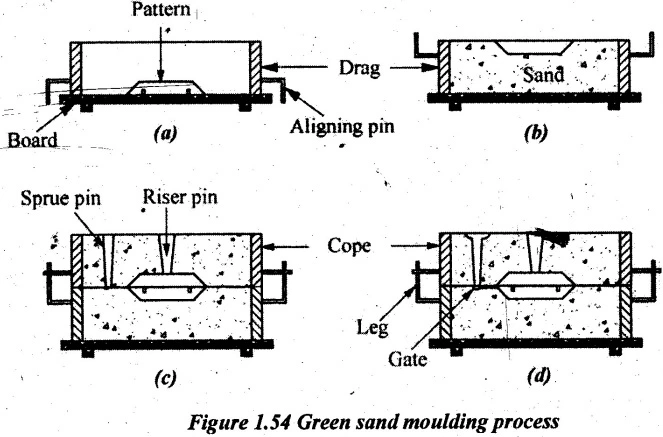
Green sand casting represents one of the most widely adopted foundry processes in industrial manufacturing. This technique employs a mixture of silica sand, clay binders, water, and organic additives to create moldable compounds. The term "green" refers to the uncured state of the molding sand, not its color.
The process begins with pattern creation, followed by sand compaction within flask assemblies. Molten metal fills the mold cavity while the sand maintains its moisture content throughout cooling. This approach enables rapid mold production and immediate reuse of sand materials after shakeout operations.
Key characteristics of green sand systems include:
- Moisture content ranging from 6-8% by weight
- Clay binder concentrations between 8-12%
- Permeability values are typically 80 to 150 AFS units
- Compressive strength reaching 8-15 psi
If you need high-volume production with moderate precision requirements, green sand moulding delivers excellent cost-effectiveness for your manufacturing operations.
Exploring Dry Sand Moulding Applications
Dry sand moulding encompasses several advanced foundry techniques where moisture removal occurs before metal pouring. This category includes shell molding, no-bake processes, and pre-baked sand systems. Each variant offers distinct advantages for specific industrial applications.
Shell molding utilizes thermosetting resin-coated sand that cures when heated against heated metal patterns. The resulting thin shells provide exceptional dimensional control and smooth surface finishes. No-bake systems employ chemical binders that cure at ambient temperatures, eliminating oven requirements.
Core advantages of dry sand processes:
- Dimensional tolerances achieving ±0.005 inches
- Surface roughness values below 125 microinches
- Enhanced gas permeability prevents casting defects
- Superior core strength for complex geometries
If you need precision castings for aerospace or medical applications, dry sand moulding technologies provide the accuracy and surface quality your specifications demand.
Critical Performance Comparison Analysis
The selection between green sand and dry sand moulding depends on specific performance requirements and production objectives. Each process offers distinct advantages across multiple evaluation criteria.
Dimensional Accuracy Metrics:
- Green sand: ±0.030 inches typical tolerance
- Dry sand: ±0.005 inches achievable precision
Surface Finish Quality:
- Green sand: 250-500 microinches Ra typical
- Dry sand: 63-125 microinches Ra achievable
Production Speed Considerations:
- Green sand: 200-400 molds per hour potential
- Dry sand: 50-150 molds per hour, typical
Material Utilization Efficiency:
- Green sand: 95-98% sand reclamation rates
- Dry sand: 70-85% material reusability
Testing data from automotive component manufacturing shows green sand processes achieve cycle times 40% faster than comparable dry sand operations. However, dry sand methods reduce machining allowances by 60%, offsetting longer molding cycles through reduced finishing operations.
If you need rapid prototyping or medium-volume production, green sand offers superior throughput. For high-precision components requiring minimal finishing, dry sand moulding provides better overall economics.
Cost Structure and Economic Considerations
Understanding the comprehensive cost implications helps procurement teams make informed sourcing decisions. Both processes present distinct economic profiles affecting total project costs.
Green Sand Cost Components:
- Raw material expenses: $15-25 per ton of sand mixture
- Energy consumption: 0.8-1.2 kWh per kilogram of casting
- Labor requirements: 2-3 operators per production line
- Equipment investment: $200,000-500,000 initial setup
Dry Sand Cost Elements:
- Binder material costs: $800-1,200 per ton of sand
- Energy requirements: 1.5-2.5 kWh per kilogram of casting
- Specialized equipment: $500,000-1,500,000 investment
- Technical expertise: Higher-skilled workforce requirements
Pattern tooling represents a significant consideration. Green sand patterns cost 30-50% less than dry sand equivalents due to simpler construction requirements. However, dry sand patterns last 3-5 times longer, reducing long-term replacement costs.
If you need cost-effective solutions for moderate precision requirements, green sand delivers a superior value proposition. For applications where precision justifies higher costs, dry sand moulding provides better return on investment.
Quality Control and Defect Prevention
Quality management differs significantly between green sand and dry sand moulding processes. Each technique presents unique challenges requiring specific control strategies.
Green Sand Quality Factors:
- Moisture control within ±0.5% tolerance bands
- Sand temperature management, preventing premature drying
- Compaction density achieving 1.6-1.8 g/cm³
- Permeability maintenance for gas escape
Common green sand defects include sand holes, veining, and rough surfaces caused by moisture variations or inadequate compaction. Real-time moisture monitoring systems reduce these issues by 60-70%.
Dry Sand Quality Parameters:
- Binder ratio precision within ±2% specifications
- Curing temperature control ±10°C accuracy
- Core strength verification before assembly
- Gas evolution monitoring during curing
Dry sand processes eliminate moisture-related defects but introduce binder-related challenges. Incomplete curing creates weak spots, while excessive binder generates gas defects. Advanced process control reduces these issues significantly.
If you need consistent quality with standard tolerances, green sand offers reliable results with proper controls. For critical applications requiring zero-defect performance, dry sand moulding provides superior quality assurance capabilities.
Material Properties and Technical Specifications
The fundamental differences in sand preparation create distinct material property profiles affecting casting outcomes. Understanding these characteristics helps optimize process selection.
Green Sand Properties:
- Clay content: 8-12% bentonite or similar binders
- Permeability: 80-150 AFS permeability number
- Green compression strength: 8-15 psi
- Flowability index: 45-55% typical values
Sand grain size distribution affects surface finish quality. AFS grain fineness numbers between 50-70 provide an optimal balance between surface quality and permeability. Finer sands improve finish but reduce gas escape capability.
Dry Sand Characteristics:
- Resin content: 1-3% by weight for shell systems
- Cured strength: 200-800 psi compressive
- Thermal stability: Maintains strength to 1000°C
- Gas generation: Controlled through binder selection
Silica sand quality becomes more critical in dry sand processes. Low clay content base sands ensure consistent binder distribution and curing characteristics. Angular grain shapes provide better mechanical interlocking.
If you need standard casting properties with proven reliability, green sand delivers consistent performance. For extreme operating conditions or complex geometries, dry sand materials provide superior capability.
Key Advantages of Welong's Dry Sand Moulding Capabilities
Welong delivers exceptional value through our comprehensive dry sand moulding services, combining cutting-edge technology with proven manufacturing expertise:
- Advanced Shell Molding Systems: State-of-the-art equipment producing dimensional tolerances within ±0.005 inches for aerospace and medical components
- No-Bake Process Expertise: Chemical binder systems eliminate thermal distortion while maintaining superior core strength for complex geometries
- Comprehensive Quality Control: Real-time monitoring systems tracking binder ratios, curing parameters, and dimensional accuracy throughout production cycles
- Multi-Material Capabilities: Processing aluminum, steel, iron, and specialty alloys with optimized sand formulations for each application
- Engineering Design Support: In-house CAD capabilities using AutoCAD, Pro-Engineering, and SolidWorks for pattern optimization and casting simulation
Conclusion
The choice between green sand and dry sand moulding ultimately depends on your specific application requirements, quality standards, and production objectives. Green sand excels in high-volume scenarios where moderate precision suffices, offering cost-effective solutions with rapid cycle times. Dry sand moulding provides superior dimensional control and surface quality essential for aerospace, medical, and precision automotive applications. Understanding these fundamental differences enables informed procurement decisions that optimize both quality outcomes and project economics for your manufacturing operations.
Partner with Welong for Advanced Dry Sand Moulding Solutions
Welong stands as your trusted dry sand moulding manufacturer with over two decades of expertise serving the aerospace, automotive, and medical device industries worldwide. Our ISO 9001:2015 certified facility combines advanced foundry technologies with rigorous quality control systems, ensuring your precision casting requirements meet the most demanding specifications. Whether you need shell molding for complex geometries or no-bake processes for high-volume production, our experienced engineering team provides comprehensive support from design optimization to final delivery, making us your preferred dry sand moulding supplier for mission-critical components.
Contact us at info@welongpost.com to discuss your specific requirements.
References
1. Campbell, J. (2015). Complete Casting Handbook: Metal Casting Processes, Metallurgy, Techniques and Design. 2nd Edition. Butterworth-Heinemann.
2. Brown, J.R. (2019). Foseco Foundryman's Handbook: Facts, Figures and Formulae. 11th Edition. Butterworth-Heinemann.
3. Beeley, P.R. & Smart, R.F. (2017). Investment Casting: Ellis Horwood Series in Materials Science and Technology. 3rd Edition. Woodhead Publishing.
4. Heine, R.W., Loper, C.R. & Rosenthal, P.C. (2018). Principles of Metal Casting. 4th Edition. McGraw-Hill Education.
5. ASM International Handbook Committee. (2020). ASM Handbook Volume 15: Casting. 2nd Edition. ASM International.
6. Stefanescu, D.M. (2021). Science and Engineering of Casting Solidification. 3rd Edition. Springer International Publishing.

Share your inquiry, get the quotation accordingly!
China WELONG- Your Reliable Partner in Metal Solutions