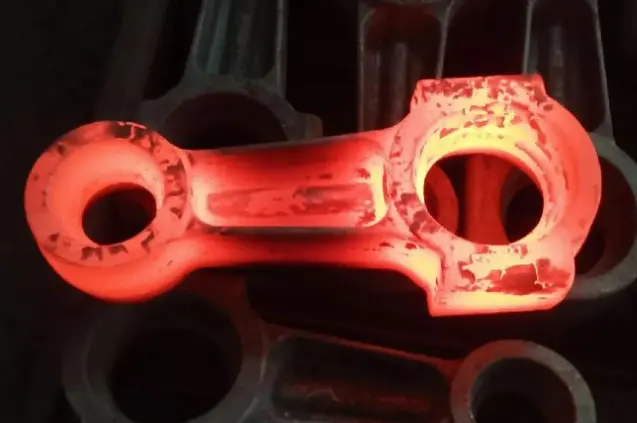
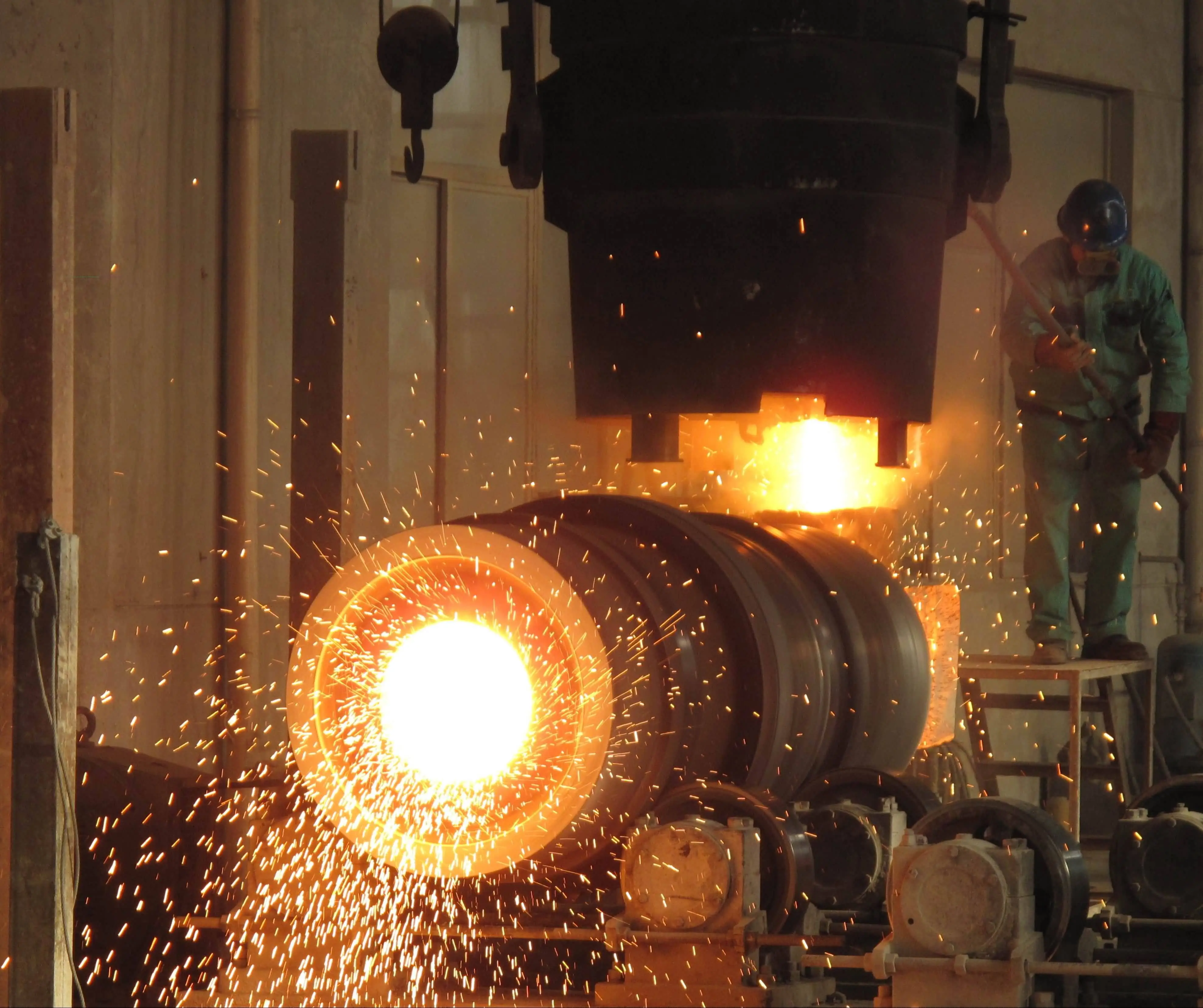
Die casting versus investment casting comparison.
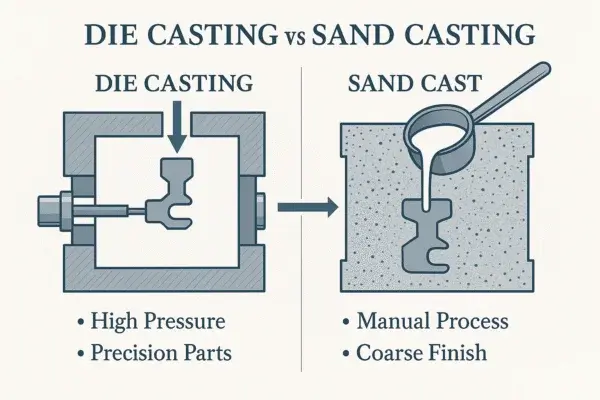

When procurement managers have to choose between die casting and investment casting, they should look at the production rate and the difficulty of the part as the most important factors. Die casting is a very cost-effective way to make a lot of aluminum, zinc, or magnesium parts. Cycle times are less than 20 minutes, and the dimensions are always the same. Even though it takes longer, investment casting is the only way to make complex shapes out of a wide range of materials, such as stainless steel and superalloys. This makes it ideal for use in aircraft and medical devices where tolerances and material qualities must be maintained.
Understanding Die Casting and Investment Casting
Metal casting technologies are very important to modern industry, but picking between them takes more than just comparing them on the surface. Die casting and investment casting are both very important parts of corporate supply chains, but they work in very different ways.
The Die Casting Process Explained
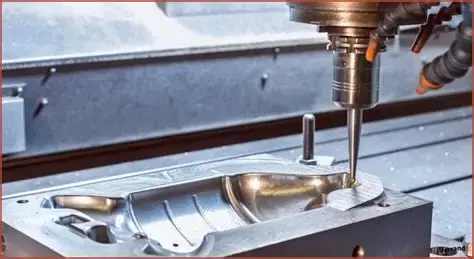
High pressure, between 10 and 175 megapascals, is used in die casting to press liquid metal into dies, which are made of sharpened steel. Either a hot-chamber or a cold-chamber device is used for this process. Hot-chamber machines have an internal heater that is linked to the die hole by a gooseneck feeding system. Cycle times are about 20 minutes. This arrangement works well with metals that melt at lower temperatures, like zinc alloys (which melt between 380°C and 420°C), magnesium alloys (which melt at 360°C), and some lead-based materials.
Investment Casting Fundamentals
Investment casting, which used to be called "lost-wax casting," makes clay molds from wax designs that can be thrown away. Engineers make exact wax models of the part they want to make, then put together several patterns on a central tube system and dip this whole thing over and over again in ceramic slurry. When the ceramic shell sets, the wax is melted out, leaving an empty ceramic mold that is ready to be filled with metal. This method can be used with almost any castable alloy, from carbon steels and stainless steels to nickel-based superalloys like Inconel 718 that can work at temperatures above 700°C in turbines.
Key Differences Between Die Casting and Investment Casting
Understanding the differences in how these methods work helps buying teams match the production skills to the needs of the product. There are a number of things that make their performance patterns and business viability different.
Production Volume and Economic Breakpoints
Die casting needs a big investment in steel dies. Simple geometries can cost as little as $10,000, but complicated multi-cavity molds can cost over $100,000. This upfront cost is only financially reasonable when producing more than 1,000 units, since the cost per piece drops by a large amount. When making more than 10,000 pieces, die casting usually has the lowest unit cost of all the casting methods that can be used with the right shapes and materials.
Investment casting keeps the cost per piece more stable across a wider range of volumes. When making 50 or 500 parts, the cost of a ceramic mold stays pretty much the same. This makes it a good choice for medium-batch production where die casting's equipment investment can't be amortized. We've seen that buying teams that are in charge of product lines with unclear demand forecasts often choose investment casting to avoid the financial risk that comes with having old tools.
Material Compatibility and Mechanical Properties
Die casting only lets you use non-ferrous metals as a material. Grades of aluminum like A380 and ADC12 are the most popular because they can melt at 660°C, are very fluid, and have good strength-to-weight ratios that make them perfect for use in car and aircraft structural parts. Zinc alloys, like Zamak 3, are better at keeping their shape and having good bearing surface qualities for mechanical systems. At 1.8g/cm³, magnesium metals have the lowest density. This means they can be used in weight-critical situations even though they cost more to make.
Investment casting can be used for both metal and non-ferrous materials. Grades 304, 316, and 17-4PH of stainless steel work well in harsh settings like oil drilling and medical tools. Carbon steels are strong and cost-effective for making parts for industrial tools. Nickel-based superalloys can handle very high temperatures in the hot parts of gas turbines. Because this material is flexible, engineers can choose the best metal based on how it will be used instead of how it can be made.
Surface Quality and Finishing Requirements
Die castings come out of molds with surface roughness values between 1.6 and 3.2 micrometers Ra, which results in smooth finishes that typically only need minor post-processing. The finished surface of the steel die goes straight onto the casting, so there is no need for extra steps like grinding or cleaning. In many car and consumer electronics uses, die castings are used just the way they were cast; no coatings or anodizing are added for aesthetic reasons.
The surface quality of investment molds is about the same, but it's achieved in different ways. Because the clay plate has fine grains, the roughness levels are between 3.2 and 6.3 micrometers Ra. This finish is fine for most industrial uses, even though it is a little rougher than die-cast. It is possible to cast near-net-shape complex shapes that would need multiple setups for machining. This cuts down on overall production time even though the casting cycle is longer.
Dimensional Accuracy and Tolerance Capabilities
According to ISO 286 standards, die casting usually keeps margins between IT13 and IT15 for important features. Premium operations can achieve IT10 to IT11 grades. Using the same steel die over and over again provides great stability from part to part, which is very important when parts need to be able to be swapped out without selective assembly. Aluminum shrinks about 0.6% during solidification, so shrinkage rates can be predicted. This lets die makers make the right adjustments.
The base margins for investment casting are usually ±0.003 inches per inch of measurement, which is tighter. The clay mold has low temperature expansion and no parting lines, so there is no flash and fewer additional trimming processes are needed. Complex internal features, such as cooling channels in turbine blades, can be cast completely, which saves money and avoids the problems that can happen with brazed or welded parts.Need custom die casting parts? Contact us for a quick quote.
Criteria for Choosing Between Die Casting and Investment Casting
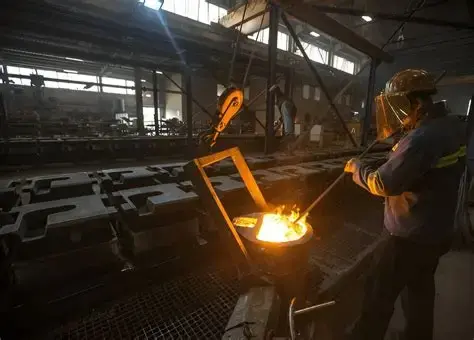
Systematic review systems are needed to help procurement professionals balance technical needs with budget limits. Several decision factors make it clear which method fits the needs of each job.
Evaluation of Production Volume
The amount of production each year has a direct effect on the costs of process selection. We suggest Die casting when the expected number of parts per year is more than 2,000 and weigh less than 5 kg. This way, the equipment can be paid for in 18 to 24 months. The high-pressure die casting method can make more than 100 small parts per hour, which supports lean production by lowering the amount of work-in-process inventory.
Investment casting can still be used for a wider range of volume levels, from small prototypes to larger production runs. The lower cost of the tools—usually between $2,000 and $15,000 for pattern equipment and fixtures—makes it a good choice for stages of product development where design changes are common. Many aerospace suppliers keep investment casting ties for spare parts projects, where 20 to 500 units of each part number may be needed every year.
Geometric Complexity Considerations
Die making is limited by the shape of the parts. For mold release, parts need draft angles, which are usually between 1 and 3 degrees. Cores must retract before parts can be ejected because of internal holes. This limits the number of cutaway features that can be used. Changes in wall width should be slow and steady to keep metal flowing properly and reduce the risk of holes. Because of these limitations, die casting is perfect for making housings, frames, and structural parts with cross-sections that are pretty simple.
Designers are no longer limited by draft and undercut when they use investment casting. The disposable ceramic mold comes off during shakeout, which makes it possible for reverse tapers, re-entrant angles, and interior galleries that would not be possible with a permanent cast. Turbine blades with built-in cooling channels, pump impellers with complicated gear designs, and medical implants with porous surfaces that allow bone integration are all examples of the geometric shapes that can be made with investment casting.
Material Requirements and Operating Environment
Service conditions often determine the choice of material, which in turn defines the casting methods that can be used. Because Zamak metals lose their mechanical strength at high temperatures, aluminum die casting is needed for parts that will be exposed to temperatures above 200°C for a long time. Parts that will be used in salt water or chemical handling may need grades of stainless steel that can only be made by investment casting.
We see that more and more car engine parts are using aluminum die castings instead of iron castings and steel fabrications. This makes the parts 30–40% lighter while still meeting the needed strength standards. On the other hand, aircraft structural parts usually use investment-cast stainless or titanium metals because they are resistant to corrosion, have a high strength-to-weight ratio, and can be traced back to the raw materials.
Lead Time and Flexibility in the Supply Chain
Die casting tooling takes 8 to 16 weeks to create, machine, and validate, but once the tools are up and running, production processes speed up significantly. Cold-chamber tools can make thousands of pieces every day because they cycle every 30 to 90 seconds, based on the size of the part. This fast production works well for just-in-time delivery plans that need to keep store costs as low as possible.
The steps in the investment casting process take longer than expected: making the pattern (2-4 weeks), building the shell (3-5 days), casting (1-2 days per heat), and finishing (1-2 weeks). Total lead times of 6 to 10 weeks are common, even for patterns that have been around for a while. But being able to make small batches without having to change the tools gives you more options when handling various part numbers through shared capacity.
Enhancing Procurement Decisions: How to Select the Right Supplier
Evaluation of suppliers has a direct effect on the quality of the product, the dependability of shipping, and the total landed cost. Instead of choosing based on price, procurement managers should use formal review methods.
Quality Certification and Process Control
ISO 9001:2015 approval sets basic standards for quality management systems, but standards specific to the business offer even more security. Aerospace providers should keep their AS9100D approval by showing tracking, rules for nonconforming materials, and first article inspection procedures. Automotive tiers need to be certified by IATF 16949, which focuses on statistical process control and the approval of production parts.
Technical Capability and Engineering Support
Suppliers who give design-for-manufacturability consultations add value beyond just carrying out production. Die casting experts look at draft angles, changes in wall thickness, and the placement of ribs to make sure that metal flows smoothly and mistakes are kept to a minimum. We work with clients using AutoCAD, Pro-Engineering, and Solidworks. We can accept a variety of file types and suggest changes that lower the cost of tools or increase the yield of castings.
Capacity Validation and Sample Evaluation
By asking for sample parts or trial runs, you can check whether what providers say they can do matches what they actually can do. Coordinate measuring tools should be used to assess the size accuracy of die casting samples by comparing important features to the drawing limits. Cross-sectioning and detailed study show the structure of the grains and internal porosity, which predicts the material's long-term mechanical reliability.
Communication and Supply Chain Transparency
Clear communication about output schedules, quality problems, and capacity limits sets apart relationships that work from those that don't. Suppliers should give you information on the state of production without being asked, letting you know about possible delays while you still have time to fix the problem. We keep technical and marketing teams that speak English so that foreign clients and production facilities can talk to each other. This makes sure that specs are understood clearly and that any problems are dealt with right away.
Future Trends and Innovations in Die Casting and Investment Casting
As technology improves, it changes the economy and abilities of metal casting. To stay ahead of the competition, procurement tactics should plan for these changes.
Automation and Smart Manufacturing Integration
Investment casting foundries use additive manufacturing to make patterns instead of the old way of using pattern tools. 3D-printed wax or polymer models allow for quick changes to the design and make it possible for low-volume custom parts to be made economically. This technology is especially useful in the medical device and aircraft industries, where customization and fast prototyping shorten the time it takes to make a product.
Environmental Sustainability Initiatives
Improvements to the casting process are driven by government rules and companies' promises to being environmentally friendly. Die casting's material utilization—typically, 60–75 percent of input metal becomes a final part—creates possibilities for recycling sprues, runners, and broken casts. Closed-loop aluminum recycling uses 95% less energy than making aluminum from scratch, which is in line with goals to lower carbon emissions.
Advanced Materials and Process Variants
Specialized types of die casting, such as vacuum-assisted and squeeze casting, lower porosity in important uses. Before metal is injected, vacuum die casting removes air from the die hole. This keeps gas from getting trapped inside and creating internal gaps. Squeeze casting keeps the pressure on during solidification, which reduces shrinkage porosity and lets aluminum casts be heated, which isn't usually possible because the gas inside expands during solution annealing.
Conclusion
To decide between Die casting and investment casting, you have to weigh a lot of things, such as the amount of parts you need to make, how complicated the shapes are, the materials you can use, the tolerances you need, and your budget. Die casting is best suited for high-volume production of non-ferrous parts where physical uniformity and surface finish can be achieved with little additional work. Investment casting can work with complicated shapes and a wide range of materials, especially iron metals and superalloys that are needed for tough jobs. To be successful at procurement, you need to match the skills of the process to the needs of the product, put suppliers through a thorough review process, and keep the lines of communication open throughout the supply relationship. As automation and environmentally friendly methods help casting technologies improve, keeping up with new powers is important to make sure your manufacturing strategy stays competitive in global markets that are always changing.Need custom die casting parts? Contact us for a quick quote.
FAQ
What are the main advantages of die casting over investment casting?
Die casting has shorter production cycles—often less than 60 seconds per part—which makes it more cost-effective for making more than 2,000 units per year. The method makes parts with a great surface finish right from the mold, which cuts down on extra steps. Dimensional stability across production runs makes sure that parts can be swapped out without having to be put together in a certain way, which is important for technology and cars.
When should I choose investment casting instead of die casting?
When a part has undercuts, internal passages, or complex shapes that can't be made in permanent dies, investment casting is the best way to make it. This method can work with high-temperature metals, stainless steel, and carbon steel that can't be used in die casting. Investment casting is often a better option for uses that need fewer than 1,000 units per year because the cost of the tools is cheaper.
How do lead times compare between these processes?
Die casting can produce thousands of parts per week once the equipment is finished. But designing and making dies takes 8 to 16 weeks. Total wait times for investment casting are 6 to 10 weeks because the shell is built and cast one after the other. Pattern changes happen more quickly than die changes, which allows for engineering changes.
Partner with Welong for Your Precision Casting Requirements
It takes more than just comparing prices to find a reliable metal casting provider. You need to work with a partner who has proven technical skills and a commitment to quality. Welong is a supply chain service company that has been ISO 9001:2015 certified since 2001. They offer custom die casting solutions for the aircraft, automobile, medical device, and industrial manufacturing sectors. Our engineering team uses AutoCAD, Pro-Engineering, and Solidworks to make precision parts that meet foreign standards. They can work from your plans or samples. We've been serving customers in North America, Europe, and the Asia-Pacific region for 20 years, so we know how important it is to find the right mix between low cost, high quality, and on-time delivery. Get in touch with our expert team at info@welongpost.com to talk about your unique needs and find out how our die casting manufacturer services can help your supply chain work better.
References
1. Campbell, J. (2015). Complete Casting Handbook: Metal Casting Processes, Metallurgy, Techniques and Design. Butterworth-Heinemann.
2. Beeley, P.R. & Smart, R.F. (2017). Investment Casting. Institute of Materials, Minerals and Mining.
3. Kaufman, J.G. & Rooy, E.L. (2004). Aluminum Alloy Castings: Properties, Processes, and Applications. ASM International.
4. Andresen, W. (2005). Die Casting Engineering: A Hydraulic, Thermal, and Mechanical Process. Marcel Dekker.
5. Clegg, A.J. (2019). Precision Casting Processes. Pergamon Press Materials Engineering Practice Series.
6. Dantzig, J.A. & Rappaz, M. (2016). Solidification: Revised & Expanded. EPFL Press, distributed by CRC Press.

Share your inquiry, get the quotation accordingly!
China WELONG- Your Reliable Partner in Metal Solutions