CNC Machined Parts for Critical Applications
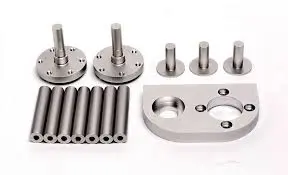
When your processes depend on Machined parts that can't break, Machined parts are the most reliable way to get things done. CNC-machined parts are the result of combining cutting-edge production technology with strict quality standards. They provide parts that meet high standards in fields where failure is not an option. These computer-controlled Machined parts have the right size, stability of material, and repeatability that are needed every day in aircraft, medical devices, oil drills, and car manufacturing.
Understanding CNC Machined Parts and Their Role in Critical Applications
Parts that are CNC Machined parts are different from other types of production because they use computer numerical control technology to get levels of accuracy that humans can't always achieve. Cutting tools led by programmed directions remove material from solid workpieces using this automatic method, making parts with tolerances measured in microns instead of millimeters.
What Makes CNC Machining Essential for Mission-Critical Components
CNC machining doesn't have the problems of variation that come with human processes because it is managed by a computer. Every part that is made uses the same tool lines, cuts at the same speed, and feeds at the same rate. This repeatability is very important when making parts for hydraulic systems in airplanes, medical tools, or downhole drilling equipment, where differences in size can affect safety or performance.
Material Versatility Meets Application Requirements
Critical uses happen in a wide range of working conditions, from the harsh conditions of offshore oil platforms to the biocompatibility needs of medical devices that are implanted. CNC cutting can work with a wide range of materials, such as aluminum alloys, different types of stainless steel, titanium, Inconel, brass, industrial plastics, and composite materials. The choice of material has a direct effect on how well a part works, changing things like its strength-to-weight ratio, ability to conduct heat, resistance to chemicals, and wear life.
Custom Solutions for Specialized Performance Demands
Standard off-the-shelf parts don't always meet the exact needs of important uses. Custom CNC cutting lets engineers make things that work best in the specific situation they're used in. A custom valve body for underwater diving tools might need a unique shape, a specific alloy, and surface treatments that can't be found in a catalog. With this customizing feature, design ideas can be turned into production-ready parts that meet exact functional needs.
Key Considerations When Selecting CNC-Machined Parts for Critical Applications
To choose the right machine parts, you need to carefully look at the technical specs, quality standards, and provider capabilities. The process for making decisions combines the need for success with the ability to keep costs low while still allowing for a certain amount of risk.
Understanding Tolerance Requirements and Quality Standards
Machining limits say how much difference in size is okay in the final parts. Tolerances must be very tight, usually within ±0.001 inches or less, for critical uses. Standardized tolerance classes are given by ISO 2768, and IT grades give even more detailed information. A lot of the time, medical device parts need IT6 or IT7 grades to make sure that the dimensions stay the same, which affects how well the parts fit together and how well they work.
Inspection Methods That Validate Component Integrity
Coordinate measuring tools are the best way to check the sizes of things. They use optical or tactile sensors to measure complicated shapes with an accuracy of less than a micron. A CMM inspection makes thorough reports that show any differences between the real dimensions and the nominal specs that could affect how the product works.
Material Selection and Performance Characteristics
It's impossible to say enough about how material characteristics affect how they are used. Aerospace parts that work at high temperatures might choose Inconel 718 because it stays strong at 650°C, even though it costs more and is harder to machine than aluminum. Parts of oil drilling equipment that come into contact with hydrogen sulfide need to be made of materials that don't crack when stressed by sulfide. This limits the types of materials that can be used to certain steel grades with limited hardness ranges.
CNC Machining Compared with Alternative Manufacturing Methods
Manufacturing executives often look at a number of different production methods to find the best ones for each part. Each way has its own pros and cons that make it better or worse for different kinds of applications.
Precision and Surface Quality Advantages
When compared to casting or pressing, CNC machining always gives better consistency in measurements. Cast parts have holes, different amounts of shrinkage, and rough surfaces that need a lot of extra machining to get them to the exact specs. Stamped metal parts work well for thin, flat shapes but not so well for complex three-dimensional shapes or tight standards.
Because cutting is subtractive, it is possible to make final surface finishes directly without any other steps. As-machined surfaces usually have Ra values of 1.6 to 3.2 micrometers, and finish machining processes can get them to less than 0.4 micrometers. These surface qualities come straight from the machine tool, so there is no need for extra steps like grinding or finishing that cost more and take longer.
Mechanical Properties and Material Integrity
Additive manufacturing has changed prototyping and small-scale production, but materials made using selective laser melting or fused deposition modeling have qualities that aren't the same everywhere. For example, the strength of a material changes depending on the direction of the build. A layered structure can cause delamination when loads are applied and removed over and over again. Because they are made from wrought, forged, or rolled stock materials with stable microstructures, Machined parts always have the same material qualities.
This material's consistency is very important in uses that need to be safe. Machined parts have known mechanical qualities that make them useful for things like medical implants, high-pressure valve bodies, and structural parts of airplanes. Material approvals come from mill test reports that list the chemical makeup and mechanical test results. These reports provide a quality guarantee that additive processes can't match up with yet.
Production Economics and Volume Considerations
A study of the economy shows that machining has benefits across a wider range of output volumes than most people think. CNC cutting is a good way to make prototypes and small runs of products because it doesn't require expensive tools. It only takes days to machine a single sample from solid stock, but it takes weeks and a lot of money to make an injection casting tool.
The economics change when the number of units made reaches thousands or tens of thousands. When production costs are spread out over enough unit amounts, high-volume plastic parts often switch to injection molding. However, even when only a few are made, complex metal parts are often still machined because other ways can't get the necessary shapes or tolerances.
Streamlining Procurement of CNC-Machined Parts for Critical Applications
Good buying strategies lower the risks in the supply chain and make sure the quality of the Machined parts and the dependability of delivery. The buying process includes more than just comparing prices; it also includes qualifying suppliers, being clear about the process, and making sure quality is maintained.
Supplier Selection and Qualification Criteria
To find skilled sellers, you need to look at things from a lot of different angles. Technical skills show if providers have the right technical knowledge, machine tools, and inspection tools. Five-axis machining centers can make complicated shapes that three-axis tools can't. Having in-house CMM testing skills shows a dedication to quality control rather than relying on outside measurement services.
Certifications are an objective way to show that a management system is mature. ISO 9001:2015 certification shows that quality processes have been written down, but procurement professionals should make sure that the scope of the certification fits the purchases that are being made. A supplier that is qualified for general machining might not have the special skills needed to make medical devices or aerospace parts, which need different certifications.
Geographic factors weigh the benefits of lower costs against the difficulties of the supply line. When it comes to fine cutting, Chinese factories offer very low prices—usually 30 to 50 percent less than North American or European factories—that make the same parts. But distance makes it harder to plan tasks, communicate across time zones, and make sure quality standards are met.
Transparent Ordering and Project Management
Clear communication is essential for buying relationships to work well throughout the lifecycle of a project. In the RFQ process, there should be detailed technical drawings with GD&T callouts, material specs with grade names, needs for surface finish, and any special processes like coating or heat treatment. Specifications that aren't clear cause quotes from suppliers to vary and make it more likely that parts won't meet requirements.
Setting reasonable goals for machine parts is the first step in managing your time well. It usually takes two to four weeks from the time an order is confirmed until the part is delivered, which includes getting the materials, making them, inspecting them, and sending them internationally. The time frame is extended to 6 to 8 weeks for complex parts that need specialized materials or a lot of inspections. Many sellers give faster services for those who need them right away, but they charge more.
Cost Structure and Value Optimization
Understanding what causes costs helps people make smart decisions about what to buy. Material prices make up 20–40% of the total cost of most made parts, though this can change depending on the type of material used and the state of the market. Tight standards, hard materials, and complex shapes all make production more expensive because they make machining more complicated. Setup time is spread out over a bigger order, which means that larger orders are cheaper per unit.
Discounts for buying in bulk usually start at about 100 pieces, and there are more price cuts at 500 and 1,000 units. Prototyping services let you test your idea before committing to large-scale production. Before making a production order, we suggest getting three to five prototype samples to test for fit, form, and function. This is especially important for new designs or critical uses where failures in the field could have major effects.
Optimizing Performance and Reliability of CNC-Machined Parts
Not only does the quality of the making affect how well a component works, but so do the design, process controls, and regular quality checks that happen during production.
Design for Manufacturability Principles
When engineering teams and machining providers work together on designs, they can find ways to make them easier to make without sacrificing usefulness. For metals, the minimum suggested thickness is 0.8 mm, and for plastics, it is 1.5 mm. Wall thickness consistency stops warping during machining. Large corner radii get rid of stress clusters and fit standard cutting tool radii, which lowers the cost of production and the chance of a mechanical failure.
Hole depth-to-diameter ratios have a big effect on how hard and accurately something can be machined. Standard twist drills are accurate up to 4:1 depth-to-diameter ratios. For deeper holes, you need special deep-hole drilling tools. Thread requirements should list standard sizes so that standard taps can be used instead of special threading tools.
Quality Control Throughout the Supply Chain
Comprehensive quality programs include more than just the final review. They also check the arriving materials, do checks while the work is being done, and do the final validation. Before machining starts, material approvals make sure that the chemical make-up and mechanical qualities of the material match the requirements. In-process checking finds changes in dimensions before whole production lots are finished, which keeps scrap and repair to a minimum.
The first item review makes sure that the first production samples are exactly what was drawn on the drawings. This thorough check usually includes full CMM measurements, checking the surface finish, and testing the material. Production doesn't start until the first item is approved. This is done to make sure the process can work before committing resources to full production amounts.
Non-destructive testing methods check the soundness of the inside of something without breaking it. Ultrasonic testing finds holes or other irregularities inside important building parts. Magnetic particle analysis shows cracks on the surface or very close to the surface of ferromagnetic materials. Liquid penetrant screening finds flaws in non-magnetic materials that break the surface. For safety-critical uses, these NDT methods give you trust in the integrity of the part.
Real-World Performance in Critical Industries
Aerospace uses show how accurate cutting directly improves safety and effectiveness. Landing gear parts made from high-strength aluminum alloys have to be able to handle multiple high-load cycles over the life of an airplane. Precise specs make sure that the parts fit together correctly, and controlled surface finishes keep stress levels low so that wear cracks don't form.
Biocompatibility and dimensional accuracy are very important to medical device makers because they use Machined parts in surgical tools and implantable devices. Orthopedic implants made from titanium metal have complicated surface patterns that help the bone grow around them. Controlling the tolerances makes sure that the parts fit correctly with the body's structures, and the surface finish requirements keep moving joints from wearing out too quickly.
In oil and gas drilling, parts that are deep underground are exposed to high temperatures, high pressures, and conditions that are very corrosive. Parts of drill bits made from tungsten carbide keep their cutting edges in rough rock forms. High-pressure flows are safely controlled by valve bodies made of metals that don't rust. There is no room for failure in the demanding working setting, so industrial precision is very important.
Conclusion
Machined parts are the basis of dependability in situations where failure would have unacceptable results. Procurement teams can find parts that meet exact specs while keeping costs and delivery times under control by using advanced CNC technology, strict quality controls, and smart partnerships with suppliers. To be successful in important applications, you need to pay close attention to tolerance standards, material choice, source qualifications, and full quality proof. When companies spend money on these basics, they build supply lines that can confidently support their most demanding apps.
FAQWhat tolerances can CNC machining realistically achieve for critical components?
Tolerances of ±0.005 inches (±0.127mm) are always reached with standard CNC cutting on most shapes and materials. With careful measurement, improved methods, and environmental controls, precision machining can get as close as ±0.001 inches (±0.025mm). Specific tolerances rely on the shape of the part, the qualities of the material, and how easy it is to reach features. Most of the time, linear measurements are more accurate than complicated contours. We suggest setting tight standards only when they are functionally necessary. Tough specs that aren't needed raise the cost of production and inspections without adding any value.
How do I verify a supplier's capability for my specific application requirements?
Ask for proof of certifications like ISO 9001, standards specific to the business, and lists of equipment that show what the machine tools can do and what testing equipment they have. Ask for example parts that are similar to what you need, along with inspection results. You can do source checks in person or online to look at quality systems, processes, and the state of equipment. Ask for material certifications and first item inspection records that show how measurements can be made and how they are recorded. We keep our processes open and honest, and we encourage clients to do checks of our work to build trust in our abilities.
What lead time should I expect for Machined parts from China?
Depending on the difficulty of the part, the supply of materials, and the size of the order, lead times are usually between 3 and 6 weeks. This time frame includes getting the materials, machining, inspecting for quality, and sending the goods internationally. With extra fees, rush services can cut down on the time to two to three weeks. It could take up to 8 weeks for complex parts that need special materials, a lot of work to be done on them, or a full review. When we quote, we give you a reasonable schedule promise, and we keep in touch during production to manage your expectations and address any concerns you have about the timeline.
Partner with Welong for Your Precision-Machined Parts Requirements
Welong has more than 20 years of experience helping industrial manufacturers around the world find trusted Chinese supply chain options. As a provider that is ISO 9001:2015 certified, we know that procurement managers and engineering teams need more than just low prices. They need a partner who can provide steady quality, clear communication, and technical knowledge. Our engineering team uses AutoCAD, Pro-Engineering, and SolidWorks to make plans easier to make based on your drawings or models. Machined parts have been provided to aerospace, automobile, oil drilling, and medical device companies in Europe, North America, and the Asia-Pacific region. Whether you need a small number of prototypes or a lot of them, our thorough quality control methods make sure that every part meets your needs. Get in touch with our team at metal@welongpost.com to talk about how we can meet your needs as your reliable provider of Machined parts.
References
1. Kalpakjian, S., & Schmid, S. R. (2020). Manufacturing Engineering and Technology (8th ed.). Pearson Education.
2. Stephenson, D. A., & Agapiou, J. S. (2018). Metal Cutting Theory and Practice (3rd ed.). CRC Press.
3. American Society of Mechanical Engineers. (2018). Dimensioning and Tolerancing: ASME Y14.5-2018. ASME Press.
4. Boothroyd, G., Dewhurst, P., & Knight, W. A. (2011). Product Design for Manufacture and Assembly (3rd ed.). CRC Press.
5. International Organization for Standardization. (2015). Quality Management Systems: Requirements ISO 9001:2015. ISO Publications.
6. Groover, M. P. (2020). Fundamentals of Modern Manufacturing: Materials, Processes, and Systems (7th ed.). John Wiley & Sons.

Share your inquiry, get the quotation accordingly!
China WELONG- Your Reliable Partner in Metal Solutions