14 Different Types of Casting Processes
Casting is a basic way to make things that has been used for thousands of years to make complicated metal parts and pieces. To do this, molten metal is poured into a mold and left to harden, taking on the shape of the cast. There are now a lot of different casting methods, and each one has its own purposes and qualities. We will talk about 14 different types of casting methods in this blog post, including their pros and cons and common uses. We'll talk about a lot of different techniques that are important in many fields, such as making cars, spacecraft, and consumer goods. These techniques range from traditional sand casting to modern investment casting and everything in between. Understanding these casting processes is crucial for engineers, designers, and manufacturers looking to optimize their production methods and create high-quality metal parts quickly and cost-effectively.
What are the main advantages of different casting processes?
Sand Casting
People have been making things in sand for a very long time. There are many good things about it, like being able to make big, difficult parts, having cheap tools, and being able to cast a lot of different materials. Sand, clay, and other things are put together in this way to make a mold. The form is then made by pouring molten metal into it. The sand cast is broken off to show the finished part after the metal has set. Casting in sand is a great way to make parts with difficult inside shapes, like engine blocks and pump housings. A lot of people choose it because it's cheap and can be used for both small and large amounts of work. Sand casting, on the other hand, might leave a rougher finish on the surface than other Casting Processes, so it might need more steps of cutting or finishing.
Die Casting
For die casting, a high-pressure way of casting, liquid metal is poured into a die, which is a metal mold that can be used over and over. You can use this method to make a lot of small to medium-sized parts that are all the same size and have a smooth surface. There are many good things about die casting, like being able to make complex shapes with thin walls and high output rates. Also, not much machining needs to be done after casting. To make parts for cars, like engine blocks, gearbox cases, and structural parts, it is often used. Die casting also lets you add threads, holes, and rough surfaces right to the part that was cast, so you don't have to do any extra work. Tool prices for die casting, on the other hand, can be high at first. In other words, it works best for large production runs where the cost can be spread out over many parts.
Investment Casting
When you invest cast metal, also known as "lost-wax casting," you get very exact results. The parts you get are almost net-shaped, have a smooth surface, and are the right size. Using wax to make a model of the part, clay is then used to cover it to make a shell. The wax is then melted away to make room for the molten metal. There are many good things about investment casting, like being able to make complicated forms with fine details, tight tolerances, and smooth surfaces. Make parts with complicated patterns with this tool. It's great for making jewelry, medical implants, and rotor blades. You can also cast a lot of different metals and materials with this method, even ones that are hard to work with. Investment casting is sometimes more expensive than other ways to cast, but the parts it makes don't need to be cut down much after they're made, which could lower the overall cost of production.
How do different casting processes impact product quality and cost?
Permanent Mold Casting
Permanent mold casting uses metal molds that can be used again and again to make things with a smooth surface and accurate measurements. Molds are usually made of steel or cast iron, and they can be used thousands of times before they need to be replaced. This method has a lot of benefits for both the quality and cost of the product. To begin, using metal molds speeds up the solidification process. This makes the grains smaller and improves the mechanical features of the cast parts. Also, fixed mold casting gives you more control over the casting process, which means you can make parts with better quality and fewer flaws. Cost-wise, the starting cost of the mold can be high, but this method is cost-effective for medium to high-volume production runs because it can make a lot of parts with little mold maintenance. But compared to other Casting Processes, fixed mold casting might not be able to make parts that are as complicated or as big.
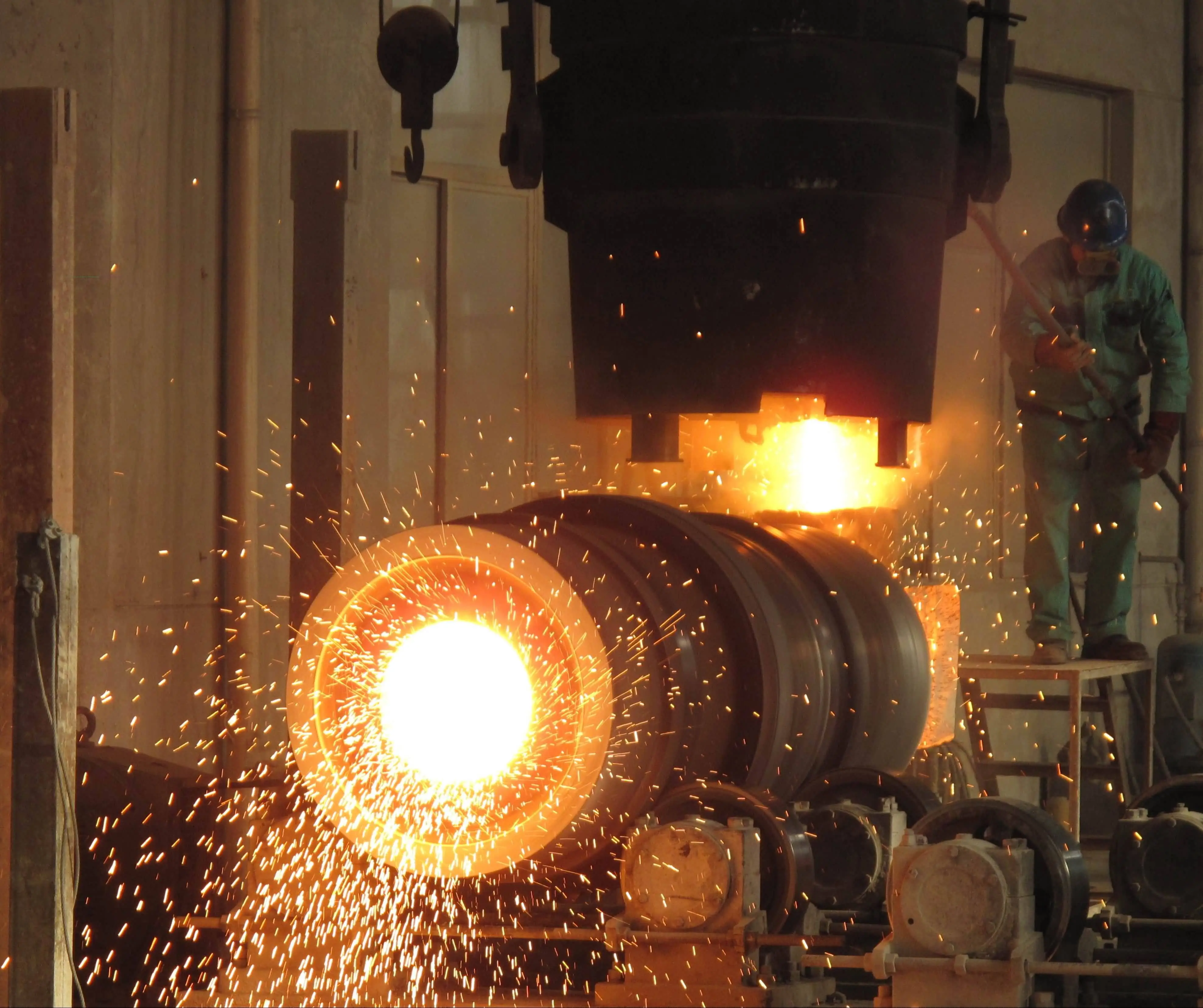
Centrifugal Casting
A special method called centrifugal casting spreads molten metal out into a spinning mold with the help of centrifugal force. This method works especially well for making parts that are cylinder- or tube-shaped and have a regular wall thickness. Centrifugal casting has a lot of benefits when it comes to the quality of the result. The rotational force helps get rid of holes and other imperfections, making parts that are dense and have better mechanical properties. The process also makes it possible to make parts with precise inside sizes and smooth surfaces. For some types of parts, especially those that are symmetrical when rotated, centrifugal casting can be a cheaper way to make them than other methods. Centrifugal casting can have high machine costs, but it makes good use of materials and can often make parts that don't need much machining, which could lower the overall cost of production.
Shell Mold Casting
Shell mold casting is a method that makes parts with a smooth surface and accurate measurements by combining parts of sand casting and investment casting. Making thin, resin-bonded sand shells that are used as models for casting is part of the process. Shell mold casting has a lot of benefits when it comes to the quality of the result. Because the walls of the mold are thin and even, heat can move through them more quickly during solidification. This makes the parts stronger and less likely to have flaws. Compared to traditional sand casting, this method also makes it possible to make parts with smoother surfaces and more accurate measurements. For medium-sized production runs, shell mold casting can be cheaper than investment casting. It also gives better surface finish and control over dimensions than sand casting. But compared to some other casting methods, this one might not be able to make parts that are as big or complicated.
What are the latest innovations in casting processes and their applications?
3D Printed Sand Molds
Making sand models with 3D printers is one of the newest ways to cast things. This technology takes the adaptability of 3D printing and the old-fashioned method of sand casting and uses them to make complex molds without the need for making patterns. Specialized 3D printers are used to make sand molds directly, one layer at a time. A binder is used to keep the sand particles together. One of the great things about this new technology is that it makes it possible to make very complicated geometries that would be hard or impossible to make with standard pattern-making methods. It also lets you make quick prototypes and small batches of cast parts without having to buy expensive tools. Three-dimensional printed sand molds are used in many fields, such as art foundries, aerospace, and the car industry. This technology could completely change the casting industry by cutting down on lead times, making small production runs cheaper, and letting parts be made with efficient internal structures that make them lighter and better at their job.
Semi-Solid Metal Casting
Semi-solid metal casting, which is also called thixocasting or rheocasting, is a new way to cast metals that are only partly formed. The thixotropic behavior of some metals when heated to a temperature between their solidus and liquidus points is used in this method. This makes a semi-solid slurry with a special microstructure that lets it move like a liquid when pressure is applied but keep its shape when it's not moving. Some of the benefits of semi-solid metal casting over standard casting methods are lower porosity, better mechanical properties, and the ability to make parts with thinner walls and more complex geometries. Compared to traditional die casting, this method also works at lower temperatures, which can make the die last longer and use less energy. There are uses for semi-solid metal casting in the aerospace and car industries for making high-performance parts like engine parts and structural parts. This new method keeps getting better. Researchers are always looking for ways to use more materials and make the process more precise so that the parts are even better.
Vacuum Assisted Casting
Vacuum assisted casting is a new method that blends traditional Casting Processes with the use of vacuum to make parts of higher quality and to cast more materials. In this method, a vacuum is created inside the mold before and while the molten metal is poured. This helps get rid of air spots and makes the final part less porous. There are many benefits to vacuum assisted casting, such as the ability to make parts with higher densities, better mechanical qualities, and smoother surfaces. For making thin-walled parts and complicated shapes that could be flawed in regular casting methods, this method works especially well. It is also possible to cast reactive metals and alloys in a vacuum environment, which would be hard to do otherwise because of worries about oxidation. There are uses for vacuum-assisted casting in many fields, such as engineering, medicine, and jewelry making. New developments in this area are mainly aimed at making vacuum control systems better, creating new mold materials that can work in vacuum settings, and adding more alloys that can be processed in this way.
Conclusion
In conclusion, the world of casting processes is diverse and constantly evolving, offering a wide range of options for manufacturers to create high-quality metal parts efficiently and cost-effectively. From traditional methods like sand casting to innovative techniques such as 3D printed sand molds and semi-solid metal casting, each process has its own unique advantages and applications. The choice of casting process depends on various factors, including part complexity, production volume, material requirements, and desired surface finish. As technology continues to advance, we can expect further innovations in casting processes that will push the boundaries of what's possible in metal part production, leading to improved quality, reduced costs, and new design possibilities across various industries.
Shaanxi Welong Int'l Supply Chain Mgt Co.,Ltd. is a leading provider of customized metal parts for various industries. With over 20 years of experience and certifications including ISO 9001:2015 and API-7-1, we specialize in forging, sand casting, investment casting, centrifugal casting, and machining. Our expertise covers a wide range of materials, including iron, steel, stainless steel, aluminum, copper, zinc, and various alloys. We offer comprehensive services from engineering design to quality control and timely delivery worldwide. Our commitment to reasonable pricing, product quality, and exceptional service has earned us a global customer base spanning over 100 clients in countries such as the UK, Germany, USA, and Canada. At Welong, we strive to be a leader in international supply chain management, driving China's intelligent manufacturing to world-class standards. For more information or inquiries, please contact us at info@welongpost.com.
FAQ
Q: What is the most common casting process?
A: Sand casting is one of the most common and versatile casting processes, suitable for a wide range of materials and part sizes.
Q: Which casting process is best for high-volume production?
A: Die casting is typically the best choice for high-volume production of small to medium-sized parts due to its fast cycle times and excellent dimensional accuracy.
Q: What casting process offers the best surface finish?
A: Investment casting generally provides the best surface finish among casting processes, often requiring minimal post-casting machining.
Q: Can 3D printing be used in casting processes?
A: Yes, 3D printing can be used to create sand molds and patterns for various casting processes, offering increased design flexibility and reduced lead times.
Q: What is the main advantage of semi-solid metal casting?
A: Semi-solid metal casting offers reduced porosity, improved mechanical properties, and the ability to produce parts with thinner walls and more complex geometries compared to traditional casting methods.
Q: How does vacuum assisted casting improve part quality?
Vacuum assisted casting helps eliminate air pockets and reduce porosity in cast parts, resulting in higher density, improved mechanical properties, and better surface finish.
References
1. Campbell, J. (2015). Complete Casting Handbook: Metal Casting Processes, Techniques and Design. Butterworth-Heinemann.
2. Beeley, P. (2001). Foundry Technology. Butterworth-Heinemann.
3. Brown, J. R. (2000). Foseco Ferrous Foundryman's Handbook. Butterworth-Heinemann.
4. Stefanescu, D. M. (2015). Science and Engineering of Casting Solidification. Springer.
5. ASM International. (2008). ASM Handbook, Volume 15: Casting. ASM International.
6. Heine, R. W., Loper, C. R., & Rosenthal, P. C. (2001). Principles of Metal Casting. McGraw-Hill Education.
Share your inquiry, get the quotation accordingly!
China WELONG- Your Reliable Partner in Metal Solutions