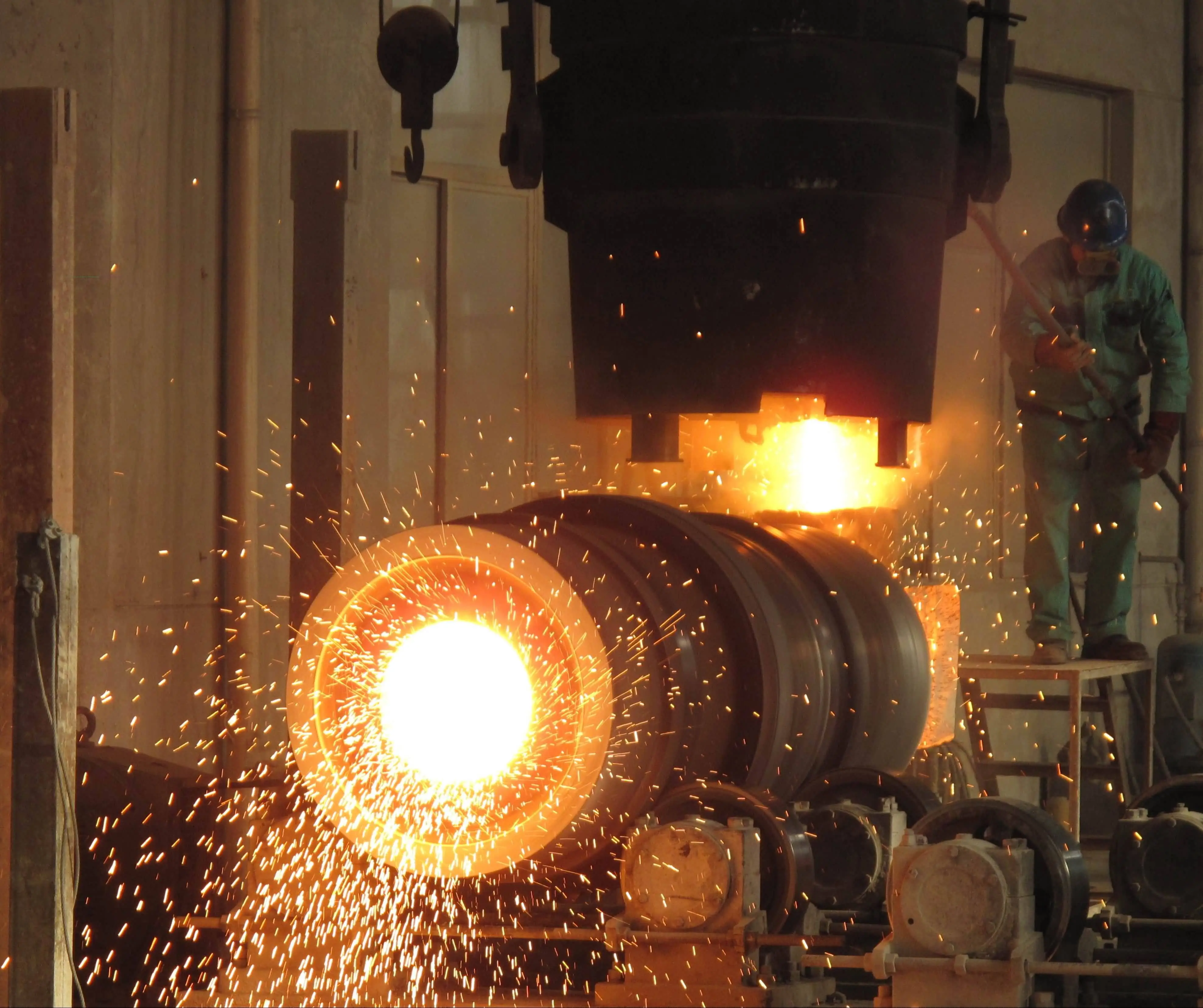
Sand casting represents one of manufacturing's most enduring and versatile metal forming processes, enabling the production of complex components across automotive, aerospace, oil & gas, and medical device industries. This foundry technique involves creating a sand mold cavity into which molten metal flows, solidifying into the desired shape. With over 70% of all metal castings produced through sand casting methods, this process delivers exceptional design flexibility, cost-effectiveness, and scalability for both prototype development and high-volume production. Understanding sand casting fundamentals empowers procurement professionals to make informed sourcing decisions, optimize supply chain strategies, and achieve superior quality outcomes for their organizations.
Understanding Sand Casting: Process and Materials
The sand casting process begins with pattern creation, typically machined from wood, metal, or plastic to replicate the final component's geometry. Engineers develop these patterns with precise allowances for metal shrinkage, machining stock, and draft angles to ensure successful mold extraction. The foundry team then positions the pattern within a flask—a rigid frame containing the molding sand.
Core Sand Types and Properties
Modern foundries utilize several sand varieties, each offering distinct characteristics for specific applications. Green sand, composed of silica sand, clay binder, and water, remains the most common choice due to its reusability and cost-effectiveness. This mixture provides excellent moldability while maintaining sufficient strength to withstand molten metal pressures. Dry sand molds undergo baking to remove moisture, resulting in a superior surface finish and dimensional accuracy ideal for precision components.
Resin-coated sand systems employ chemical binders that cure at room temperature or with minimal heat application. These advanced sand systems deliver exceptional detail reproduction and dimensional stability, making them particularly valuable for aerospace and medical device applications requiring tight tolerances.
Metal Compatibility and Selection
Sand casting accommodates virtually all metal alloys, including aluminum, steel, iron, bronze, and specialized alloys. Aluminum sand castings offer excellent strength-to-weight ratios perfect for automotive and aerospace components, while ductile iron provides outstanding durability for heavy machinery applications. Steel castings deliver superior mechanical properties for structural components, and bronze offers corrosion resistance ideal for marine and chemical processing equipment.
Types of Sand Casting and Mold Technologies
Various sand casting methodologies address specific production requirements, quality standards, and economic considerations. Understanding these distinctions enables procurement teams to select optimal processes for their component specifications.
Green Sand Casting Systems
Green sand casting utilizes moisture-containing sand mixtures that remain plastic during molding operations. This traditional method offers rapid production cycles, excellent material reusability, and minimal equipment investment. Green sand systems excel for high-volume production runs where moderate surface finish requirements allow cost optimization without compromising functionality.
Shell Molding Technology
Shell molding creates thin-walled molds using resin-coated sand heated against metal patterns. This process produces superior surface finishes, tighter dimensional tolerances, and reduced machining requirements compared to conventional sand casting. Shell molds particularly benefit complex geometries requiring intricate details or thin-wall sections.
No-Bake Sand Systems
No-bake sand casting employs chemical binders that cure at ambient temperature, eliminating energy-intensive drying operations. This method enables large casting production while maintaining excellent dimensional accuracy and surface quality. No-bake systems prove especially valuable for prototype development and medium-volume production where tooling flexibility remains paramount.
Advantages and Benefits of Sand Casting
Sand casting delivers compelling advantages that position it as a preferred manufacturing solution across diverse industrial applications. These benefits directly address common procurement challenges including cost management, design flexibility, and production scalability.
Economic Benefits and Cost Structure
Low tooling costs represent sand casting's primary economic advantage, particularly for complex geometries that would require expensive machining or multiple manufacturing operations. Pattern costs typically range from hundreds to thousands of dollars compared to tens of thousands required for die casting tooling. This cost structure makes sand casting extremely attractive for prototyping, low-to-medium volume production, and large component manufacturing.
The process accommodates design modifications through pattern alterations without significant capital investment, enabling iterative development cycles that support continuous improvement initiatives. Raw material costs remain competitive due to sand reusability and readily available molding materials.
Design Flexibility and Complexity Capabilities
Sand casting enables intricate internal geometries, undercuts, and complex shapes impossible with other manufacturing methods. Engineers can incorporate cooling passages, lightening features, and consolidate multiple components into single castings, reducing assembly operations and potential failure points. Weight ranges span from ounces to several tons, accommodating applications from precision medical instruments to heavy industrial machinery.
The process supports wall thickness variations within single components, allowing optimization for stress distribution and material efficiency. Core systems enable hollow sections and internal features that eliminate secondary operations while maintaining structural integrity.
Applications and Procurement Insights for B2B Clients
Sand casting serves critical roles across major industrial sectors, with each application presenting unique procurement considerations and supplier selection criteria.
Industry-Specific Applications
Automotive manufacturers rely on sand casting for engine blocks, transmission housings, suspension components, and structural elements. These applications demand consistent quality, precise dimensional control, and high-volume capability. Aerospace applications include turbine housings, structural brackets, and landing gear components requiring stringent material certifications and traceability.
Oil and gas drilling equipment utilizes sand-cast valve bodies, pump housings, and drilling tool components that must withstand extreme pressures and corrosive environments. Medical device manufacturers employ sand casting for surgical instrument housings, imaging equipment components, and specialized alloy applications requiring biocompatibility certifications.
Supplier Selection and Procurement Strategies
Successful sand casting procurement requires evaluating foundry capabilities beyond basic production capacity. Key assessment criteria include quality certifications, metallurgical expertise, testing capabilities, and supply chain management systems. ISO 9001:2015 certification indicates systematic quality management, while industry-specific certifications like AS9100 for aerospace or ISO 13485 for medical devices demonstrate specialized competency.
Geographic considerations balance cost advantages with logistics complexity and quality consistency. International sourcing often provides cost benefits while requiring enhanced quality assurance protocols and extended lead time management. Domestic suppliers may offer superior communication, faster response times, and reduced supply chain risks.
Welong: Your Trusted Sand Casting Manufacturing Partner
China Welong, established in 2001, stands as a premier international supply chain service provider specializing in customized metal components for industrial manufacturing, oil drilling, aerospace, and medical device applications. Our comprehensive sand casting capabilities support everything from prototype development through full-scale production, backed by ISO 9001:2015 certification and over two decades of manufacturing excellence.
Advanced Engineering and Design Support
Our experienced engineering team collaborates with clients using AutoCAD, Pro-Engineering, and SolidWorks software platforms to optimize designs for manufacturability while maintaining performance requirements. We work from customer drawings and samples, providing design refinements that enhance casting quality while reducing production costs. This engineering support proves invaluable during product development phases and supply chain optimization initiatives.
Welong's quality control systems ensure consistent results through comprehensive testing protocols, dimensional verification, and material certification. Our production capabilities span various sand casting methods, accommodating diverse material requirements and volume demands while maintaining competitive pricing and reliable delivery schedules.
Global Reach and Customer Success
Over the past twenty years, Welong has successfully shipped precision sand castings to customers across the UK, Germany, France, Italy, Poland, USA, Canada, Holland, Sweden, Australia, New Zealand, Singapore, and India. Our automotive industry client base exceeds 100 companies, demonstrating our capability to meet demanding quality standards and delivery requirements across international markets.
Conclusion
Sand casting remains an indispensable manufacturing process offering unmatched design flexibility, cost-effectiveness, and material compatibility for industrial applications. Its ability to produce complex geometries across diverse metal alloys makes it ideal for automotive, aerospace, oil & gas, and medical device components. Understanding sand casting fundamentals, process variations, and supplier capabilities enables procurement professionals to optimize sourcing strategies while achieving superior quality outcomes. The combination of traditional foundry expertise with modern quality systems provides reliable solutions for today's demanding industrial requirements, supporting both prototype development and high-volume production needs.
FAQ
Q1: What metals work best for sand casting applications?
A: Sand casting accommodates virtually all metal alloys, including aluminum, steel, ductile iron, gray iron, bronze, and specialized alloys. Aluminum offers excellent strength-to-weight ratios for automotive and aerospace applications, while ductile iron provides superior durability for heavy machinery. Steel delivers outstanding mechanical properties for structural components, and bronze offers corrosion resistance for marine applications.
Q2: How do lead times compare between sand casting and other manufacturing methods?
A: Sand casting typically requires 2-4 weeks for pattern creation plus 1-3 weeks for production, depending on complexity and quantity. This timeframe often proves faster than die casting for low-volume orders due to lower tooling requirements. Prototype sand castings can be produced within days using rapid pattern methods, making it ideal for development cycles.
Q3: What quality standards should I expect from sand casting suppliers?
A: Reputable sand casting suppliers maintain ISO 9001:2015 certification as a minimum standard, with industry-specific certifications like AS9100 for aerospace or ISO 13485 for medical devices. Quality measures include dimensional verification, mechanical property testing, chemical analysis, and non-destructive testing capabilities. Expect documented quality procedures, material certifications, and statistical process control implementation.
Partner with Welong for Superior Sand Casting Solutions
Leverage Welong's expertise as your trusted sand casting manufacturer to transform your component requirements into high-quality, cost-effective solutions. Our ISO 9001:2015 certified processes, advanced engineering support, and proven track record across automotive, aerospace, and industrial applications ensure your project success from prototype through production. Whether you need design optimization, material selection guidance, or reliable supply chain management, our team delivers the technical expertise and manufacturing excellence your organization demands. Contact us at metal@welongpost.com to discuss your sand casting requirements and discover how our comprehensive capabilities can enhance your sourcing strategy. For detailed technical resources and case studies, visit our knowledge center at https://knowledge.welongcasting.com/.
References
1. Brown, J.R. (2019). "Foundry Technology: A Source Book." American Foundrymen's Society, Des Plaines, Illinois.
2. Campbell, J. (2015). "Complete Casting Handbook: Metal Casting Processes, Metallurgy, Techniques and Design." Butterworth-Heinemann, Oxford, UK.
3. Stefanescu, D.M. (2017). "Science and Engineering of Casting Solidification, Third Edition." Springer International Publishing, Switzerland.
4. American Foundry Society (2020). "Sand Casting Process Guidelines and Quality Standards." AFS Technical Publication, Schaumburg, Illinois.
5. Ravi, B. (2018). "Metal Casting: Computer-Aided Design and Analysis." Prentice Hall of India, New Delhi.
6. International Organization for Standardization (2021). "ISO 8062-3: Geometrical Product Specifications - Dimensional and Geometrical Tolerances for Moulded Parts." ISO Publications, Geneva, Switzerland.