Forging represents a cornerstone metalworking process that transforms raw metal materials into high-strength components through controlled deformation. This manufacturing technique encompasses various methods including hot forging, cold forging, and precision forging, each offering distinct advantages for specific industrial applications. Modern forging operations serve critical sectors such as automotive, aerospace, oil drilling, and medical device manufacturing, where component reliability directly impacts safety and performance. Understanding the diverse types and applications of forging enables procurement professionals to make informed decisions about supplier selection, cost optimization, and quality assurance for their customized metal parts requirements.
Understanding the Forging Process and Its Types
The forging process fundamentally reshapes metal through compressive forces, creating components with enhanced mechanical properties compared to cast or machined alternatives. Temperature control during forging determines the final characteristics of the component, with each temperature range offering specific benefits for different applications. Material selection plays a crucial role in forging success, with steel, aluminum, titanium, and specialized alloys each requiring tailored approaches to achieve optimal results.
What Is Forging? Definition and Basic Principles
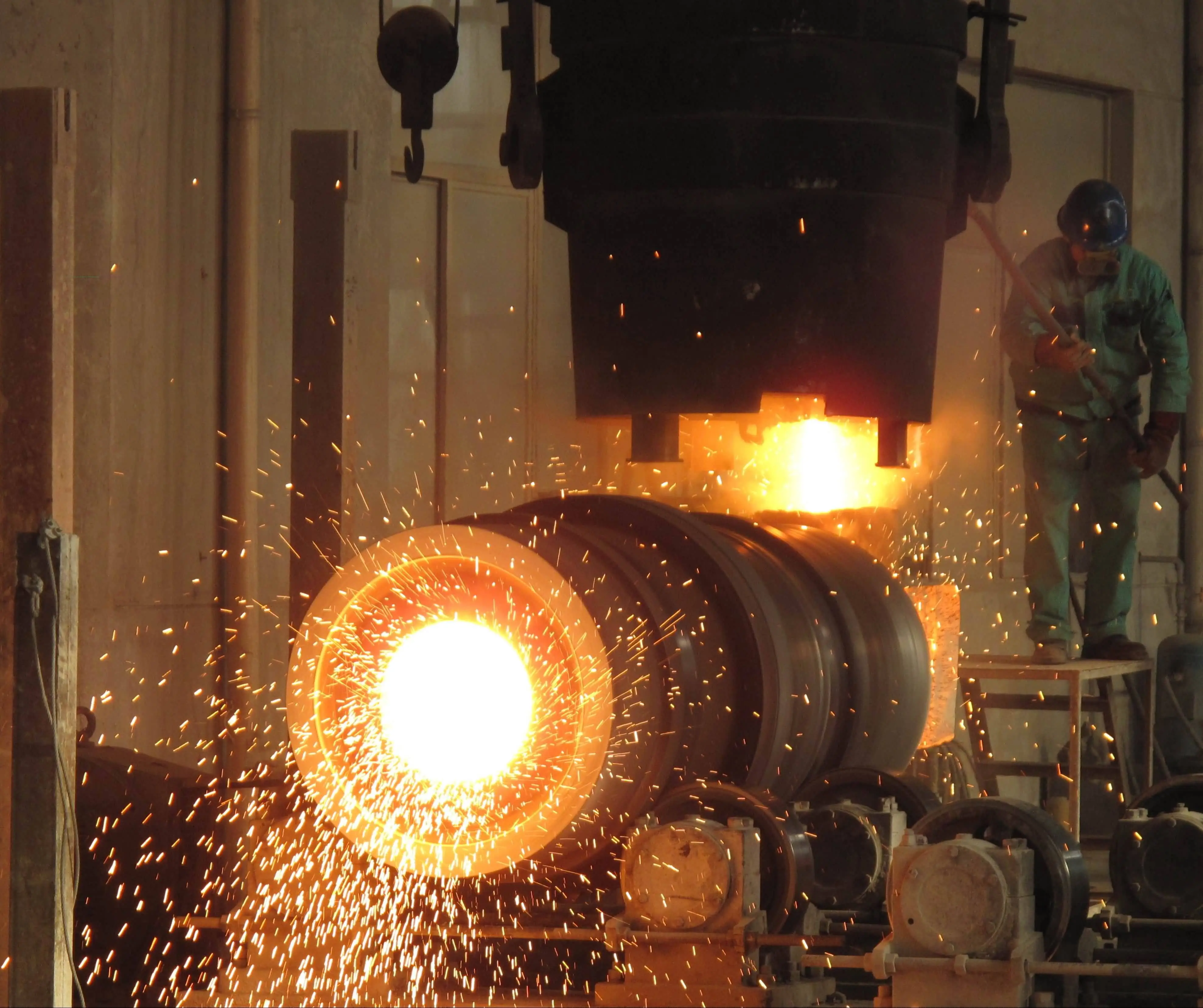
Metal forging involves applying controlled pressure to heated or cold metal blanks, causing plastic deformation that shapes the material into desired configurations. The process works by breaking down the original grain structure of the metal and reforming it along the flow lines of the new shape. This reconstruction creates superior strength characteristics, particularly along stress-bearing directions within the component. Unlike casting processes that pour molten metal into molds, forging maintains a solid-state transformation throughout the operation.
The fundamental principle behind successful forging relies on understanding material behavior under compression. Different metals exhibit varying responses to forging pressures and temperatures, requiring specialized knowledge to optimize process parameters. Modern forging operations incorporate computer-controlled systems that monitor temperature, pressure, and timing to ensure consistent quality across production runs.
Major Types of Forging Methods
Industrial forging encompasses several distinct methodologies, each suited to specific component requirements and production volumes. Open die forging works particularly well for large components where the metal flows freely between flat or simple curved dies. This method allows for custom shapes and sizes while maintaining excellent grain flow characteristics throughout the part.
Closed die forging, also known as impression die forging, confines the metal within precisely machined die cavities. This approach delivers exceptional dimensional accuracy and surface finish, making it ideal for high-volume production of complex components. The method requires significant initial tooling investment but offers excellent repeatability and material utilization efficiency.
Precision forging represents an advanced technique that produces near-net-shape components requiring minimal post-forging machining. This method combines the strength benefits of traditional forging with the dimensional accuracy of precision manufacturing, reducing material waste and production time while maintaining superior mechanical properties.
Advantages and Disadvantages of Forging Types
Each forging method presents distinct benefits and limitations that procurement professionals must consider when selecting suppliers and processes. Hot forging operations excel in forming complex shapes from difficult-to-work materials, as elevated temperatures reduce flow stress and increase material ductility. However, hot forging requires significant energy input and may introduce surface scaling that necessitates additional finishing operations.
Cold forging delivers superior surface finish and dimensional accuracy while work-hardening the material for increased strength. The process eliminates heating costs and provides excellent material utilization, but limits the complexity of shapes that can be formed due to increased flow stress at room temperature. Cold forging works best for smaller components with relatively simple geometries.
Applications of Different Forging Types in Industry
Manufacturing industries rely heavily on forged components to meet demanding performance requirements where failure could result in catastrophic consequences. The aerospace sector particularly benefits from forging's ability to create lightweight yet incredibly strong components that withstand extreme operational stresses. Similarly, automotive applications leverage forging to produce safety-critical parts that must perform reliably throughout the vehicle's operational life.
Automotive and Aerospace Components
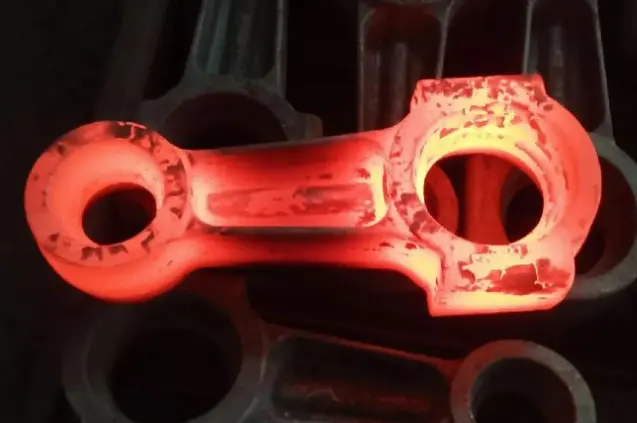
Automotive forging applications span from engine components like crankshafts and connecting rods to chassis elements, including steering knuckles and suspension arms. These components must withstand millions of stress cycles while maintaining dimensional stability under varying temperature and load conditions. Precision forging techniques enable automotive manufacturers to produce components with optimized weight-to-strength ratios, supporting fuel efficiency goals without compromising safety.
Aerospace forging demands even more stringent quality requirements, with components often requiring traceability documentation and specialized material certifications. Turbine blades, landing gear components, and structural elements benefit from forging's ability to eliminate internal voids and create favorable grain flow patterns. The process enables aerospace manufacturers to achieve the exceptional reliability standards required for flight-critical applications.
Heavy Machinery and Industrial Equipment
Industrial equipment manufacturers depend on forged components to handle extreme operating conditions in mining, construction, and energy production applications. Large open die forgings create robust shafts, gears, and structural elements that must operate reliably in harsh environments. The superior fatigue resistance of forged components makes them ideal for applications involving repetitive loading cycles.
Oil and gas drilling operations particularly benefit from forged components' ability to withstand corrosive environments and high-pressure conditions. Drill string components, valve bodies, and pressure vessel elements require the enhanced mechanical properties that only forging can provide. These applications often demand custom forging solutions tailored to specific operational requirements and material specifications.
Tool Manufacturing and Custom Forgings
Tool manufacturing leverages forging to create dies, punches, and specialized tooling with exceptional wear resistance and dimensional stability. Custom forging services enable tool manufacturers to optimize material properties for specific applications, creating tools that maintain accuracy through extended production runs. The process allows for complex internal features that would be difficult or impossible to achieve through other manufacturing methods.
Medical device manufacturing increasingly relies on precision forging for creating surgical instruments and implantable components. The biocompatibility requirements of medical applications, combined with demanding dimensional tolerances, make forging an ideal choice for producing reliable medical hardware. Custom forging capabilities enable medical device manufacturers to optimize component designs for both performance and manufacturability.
Forging vs Other Manufacturing Processes: Making the Right Choice
Manufacturing decision-makers must carefully evaluate the trade-offs between forging and alternative processes to optimize both performance and cost-effectiveness. The superior mechanical properties of forged components often justify higher initial costs when considering total lifecycle performance and reliability. Understanding these distinctions enables procurement professionals to make informed choices that balance immediate budget constraints with long-term operational requirements.
Forging vs Machining and Stamping: Strengths and Limitations
Machining excels in producing complex geometries with tight tolerances but removes material rather than enhancing its properties through deformation. While machined components can achieve excellent dimensional accuracy, they lack the enhanced grain flow and mechanical properties that forging provides. Machining works well for low-volume applications requiring complex features, but becomes cost-prohibitive for high-volume production of simple shapes.
Stamping offers rapid production rates for sheet metal components, but cannot achieve the three-dimensional complexity or mechanical properties available through forging. The process works well for relatively thin components with simple geometries, but struggles with thick sections or parts requiring significant material flow. Stamped components may also exhibit directional weakness due to the sheet metal's original rolling direction.
Forged Steel vs Cast Steel: Performance and Application Scenarios
Cast steel components offer design flexibility and can incorporate complex internal passages that would be difficult to forge. However, casting processes often introduce porosity and shrinkage defects that compromise mechanical properties and reliability. Forged steel eliminates these internal defects while creating favorable grain flow patterns that enhance strength and fatigue resistance.
The choice between forged and cast steel often depends on component size, complexity, and performance requirements. Large, complex components with intricate internal features may require casting, while critical load-bearing elements benefit from forging's superior mechanical properties. Cost considerations also play a role, as casting may offer lower piece prices for complex shapes despite potentially higher lifecycle costs due to reduced reliability.
Hot Forging vs Cold Forging: Selecting the Appropriate Process
Hot forging enables the formation of large, complex components from difficult-to-work materials by reducing flow stress through elevated temperatures. The process accommodates significant shape changes and can work with high-strength alloys that would be impossible to cold forge. However, hot forging requires energy for heating and may introduce surface scaling that necessitates additional finishing operations.
Cold forging delivers superior surface finish and dimensional accuracy while work-hardening the material for increased strength. The process eliminates scaling issues and provides excellent material utilization, making it cost-effective for high-volume production of smaller components. Cold forging limitations include reduced formability and increased tooling stresses that may limit die life.
Procurement Guide: Sourcing Forged Metal Components and Services
Successful procurement of forged components requires careful evaluation of supplier capabilities, quality systems, and manufacturing processes. Global sourcing opportunities, particularly from established manufacturing centers, can provide significant cost advantages while maintaining quality standards through proper supplier development and management. Modern supply chain practices emphasize long-term partnerships with suppliers who demonstrate consistent quality and delivery performance.
Finding Qualified Forging Suppliers and Manufacturers
Identifying reliable forging suppliers begins with evaluating their technical capabilities, quality certifications, and industry experience. ISO 9001:2015 certification provides baseline assurance of quality management systems, while industry-specific certifications like AS9100 for aerospace or ISO 13485 for medical devices indicate specialized capabilities. Supplier assessment should include facility audits, capability reviews, and evaluation of their engineering support services.
Geographic considerations play an important role in supplier selection, balancing cost advantages with supply chain risk management. Established manufacturing centers offer mature supply chains and experienced workforces, while proximity to end-use markets may provide logistical advantages. Effective supplier development programs can help bridge cultural and communication gaps while ensuring consistent quality and delivery performance.
Evaluating Forged Parts Quality and Pricing
Quality evaluation for forged components encompasses dimensional accuracy, material properties, and surface finish requirements. Incoming inspection protocols should verify compliance with engineering specifications, while statistical process control data from suppliers provides insight into process capability and consistency. Material test certificates and traceability documentation become crucial for applications with regulatory requirements.
Pricing evaluation must consider the total cost of ownership rather than just the piece price. While custom forging services may command premium pricing, the enhanced performance and reliability of forged components can justify higher initial costs through reduced maintenance and replacement expenses. Volume commitments and long-term agreements often provide opportunities for cost optimization while securing supply capacity.
Trends in Forging Supply Chain and Innovative Solutions
Modern forging operations increasingly incorporate digital technologies to improve process control and quality assurance. Advanced simulation software enables suppliers to optimize die designs and process parameters before production begins, reducing development time and improving component quality. Real-time monitoring systems provide unprecedented visibility into process variables, enabling immediate corrections when deviations occur.
Supply chain digitization facilitates better communication and collaboration between buyers and suppliers, enabling more responsive decision-making and problem-solving. Cloud-based platforms allow real-time sharing of quality data, delivery schedules, and engineering changes, improving overall supply chain efficiency and transparency.
Company Introduction and Product Overview
China Welong has established itself as a leading international supply chain service provider since 2001, specializing in customized metal products for demanding industrial applications. Our comprehensive approach encompasses supplier development and management, purchasing supervision, and quality control services designed to support global manufacturing requirements. With ISO 9001:2015 certification and extensive experience across automotive, oil drilling, aerospace, and medical device sectors, we deliver reliable forging solutions that meet the most stringent quality standards.
Our engineering capabilities support the complete product development cycle, from initial concept through production implementation. We work with incoming drawings and samples to create precisely manufactured components, while our design team can develop new drawings using AutoCAD, Pro-Engineering, and SolidWorks software platforms. This comprehensive approach ensures that clients receive optimal solutions tailored to their specific application requirements and performance objectives.
Over two decades of operation, we have successfully delivered products to more than 100 customers across the United Kingdom, Germany, France, Italy, Poland, the United States, Canada, the Netherlands, Sweden, Australia, New Zealand, Singapore, and India. Our focus on automotive industrial applications has generated deep expertise in the quality systems and performance requirements that define success in these demanding markets. We continue advancing our capabilities to lead international supply chain innovation while promoting intelligent manufacturing excellence.
Conclusion
The diverse types and applications of forging provide manufacturers with powerful tools for creating high-performance components across critical industries. Understanding the distinctions between hot and cold forging, open die and closed die processes, and precision forging techniques enables procurement professionals to optimize supplier selection and cost management strategies. The superior mechanical properties, reliability, and design flexibility of forged components continue driving adoption across automotive, aerospace, industrial equipment, and medical device applications where performance cannot be compromised.
FAQ
Q1: What factors should I consider when choosing a forging method?
A: Consider component size and complexity, required mechanical properties, production volume, dimensional tolerances, and material type. Hot forging suits large, complex parts from difficult materials, while cold forging excels for smaller components requiring a superior surface finish. Precision forging works best when minimal post-processing is desired.
Q2: How does forging improve the mechanical properties of metals compared to casting or machining?
A: Forging eliminates internal voids and porosity while creating favorable grain flow patterns that follow component contours. This results in superior tensile strength, fatigue resistance, and impact toughness compared to cast parts. Machined components, while dimensionally accurate, lack the enhanced grain structure that forging provides.
Q3: Can custom forging services handle small batch orders with precision requirements?
A: Yes, many forging suppliers accommodate small batch orders, particularly for precision forging applications. While tooling costs may increase per-piece pricing for small volumes, the enhanced mechanical properties and design flexibility often justify the investment for critical applications requiring superior performance and reliability.
Partner with Welong for Superior Forging Solutions
Welong stands ready to support your forging supplier requirements with comprehensive supply chain services and quality assurance programs. Our experienced team understands the critical importance of reliable, high-performance components in your applications and works diligently to ensure consistent delivery of parts that meet your specifications. Whether you need custom forging services for prototype development or high-volume production support, our global network and engineering expertise provide the foundation for successful long-term partnerships. Contact us at metal@welongpost.com to discuss your specific requirements and discover how our forging manufacturer network can enhance your supply chain efficiency and product performance.
References
1. Altan, T., Ngaile, G., and Shen, G. "Cold and Hot Forging: Fundamentals and Applications." ASM International, Materials Park, Ohio, 2005.
2. Samal, P.K. and Newkirk, J.W. "Powder Metallurgy and Advanced Forging Techniques." ASM Handbook Volume 14A: Metalworking: Bulk Forming, ASM International, 2005.
3. Blazynski, T.Z. "Metal Forming: Tool Profiles and Flow." Ellis Horwood Series in Mechanical Engineering, John Wiley & Sons, 1976.
4. Dean, T.A. "Forging Technology and Science." Professional Engineering Publishing, London, 2000.
5. Kobayashi, S., Oh, S.I., and Altan, T. "Metal Forming and the Finite-Element Method." Oxford University Press, New York, 1989.
6. Dieter, G.E. "Mechanical Metallurgy." McGraw-Hill Science, Engineering Math, Third Edition, 1986.