What is hot die forging and how does it work?
This is a complicated way to shape metal that many businesses need to use to make parts that are strong and last a long time. For this method, metal is heated until it can be easily bent. Strong tools and special dies are then used to shape the metal. Precision engineering, heat, and pressure are used in this process to make parts that are stronger and more stable. People really like hot die forging because it can make difficult shapes with smooth grain flow. This makes parts that are stronger, tougher, and less likely to break over time. People who work with heavy tools, airplanes, cars, and other things that need to be reliable and perform well often use this method. Being aware of how hot die forging works is important for engineers and manufacturers who want to make their production better and give high-quality metal parts that meet strict industry standards.
What are the key steps involved in the hot die forging process?
Material Selection and Preparation
It is important to carefully choose and prepare the material before the hot die casting process can begin. Engineers choose the right metal types based on what they want the final product to have. These things are generally heated to temperatures between 900°C and 1250°C, but this depends on the metal. When you heat the metal, it gets lighter, which makes it easier to shape. It's very important to keep a close eye on the temperature at this point to make sure the material can be shaped without breaking. Steel, aluminum, titanium, and nickel-based alloys are just a few of the metals that can be hot die forged. It is also cut into billets or preforms that are the right size and shape for the shaping process during the preparation phase.
Die Design and Preparation
In hot die forging, the creation and preparation of the forging dies are very important steps. Engineers use complex CAD/CAM tools to make very accurate die designs that will shape the hot metal into the shape they want. Most of the time, these dies are made of high-strength tool steels that can handle high temperatures and pressures. The die cavities are carefully machined to have draft angles, radii, and parting lines that make it easier for metal to move and parts to come out. In hot die forging, the dies are often heated up ahead of time to keep them from breaking when they get hot. To get tight tolerances, reduce material waste, and make sure that part quality stays the same throughout the production run, it is important to create and prepare the die correctly.
Forging Operation and Cooling
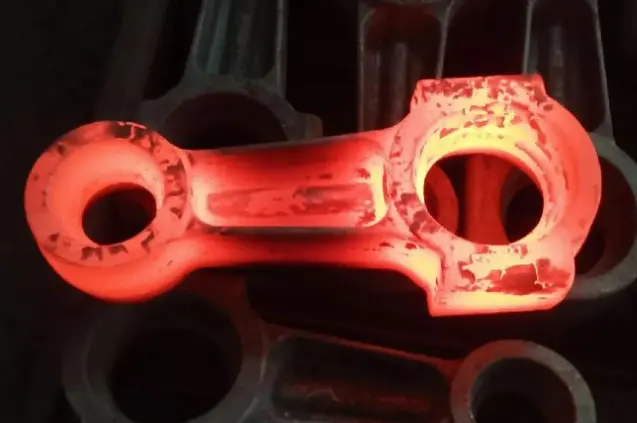
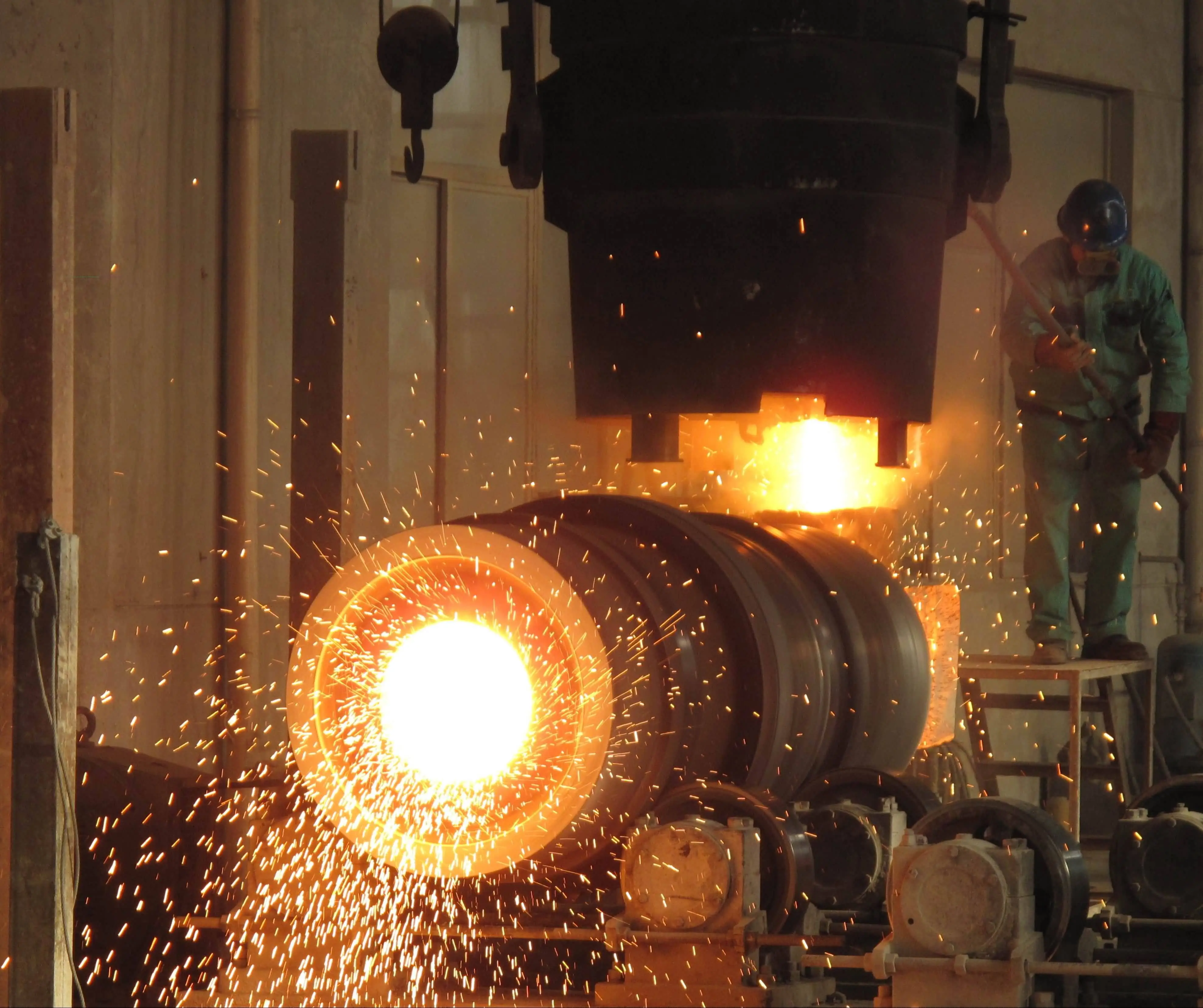
During hot die forging, the heated piece of metal is put into the lower die, and a hydraulic press or mechanical hammer is used to apply a lot of pressure. The metal flows into the die holes and takes on the shape that was wanted by this force. To get to the final shape, the method may include more than one strike or a set of progressive die stations. When the metal is made, it goes through a lot of plastic deformation, which helps to smooth out the grains and make the metal stronger. The part is carefully taken off the die after casting and left to cool. You can change the rate of cooling to change the end microstructure and properties of the forged part. Some parts may go through more heat treatment steps to improve their properties or relieve the stresses that were formed during forging.
What are the advantages of hot die forging compared to other manufacturing methods?
Enhanced Mechanical Properties
There are big benefits to hot die forging when it comes to improving the mechanical features of metal parts. When the metal is heated and shaped under high pressure, the grains become more uniform and fit into the shape of the part. When compared to parts made by casting or cutting, these parts with optimized grain flow are stronger, tougher, and less likely to wear down over time. The material goes through work hardening in hot die casting, which makes it even stronger and last longer. The forged parts are better at resisting impacts and can handle higher loads, which makes them perfect for use in the aerospace, automobile, and heavy machinery industries. The uniformity of the grain structure that is achieved through hot die forging also helps the parts work more consistently and predictably under different stress situations.
Complex Geometry and Near-Net Shape Production
One of the best things about hot die forging is that it can make parts with complicated shapes and close to a net shape. The combination of high temperatures and pressures changes the shape of materials in a way that makes it possible to make complex forms that would be hard or impossible to make any other way. Parts with internal holes, undercuts, and different cross-sections can be made with hot die forging in a single step, which cuts down on the need for a lot of secondary cutting. With this near-net form feature, you can save material and cut down on production time and costs. In addition, the process lets features like bosses, flanges, and ribs be added directly to the cast part, so there are no extra steps needed for assembly. Because hot die forging is so precise, the parts it makes have better tolerances, which means they need less finishing work.
Cost-Effectiveness and Production Efficiency
It turns out that hot die forging is a cheap way to make things, especially for medium to large production runs. Even though dies can be expensive to buy at first, the method has great economies of scale as production volumes rise. Making parts that are close to their net shape cuts down on waste, which is especially helpful when working with expensive metals. Hot die forging also has high production rates, and cycle times are usually measured in seconds. This makes the process more efficient overall. The process is highly automatic and can be built into production lines to make them even more productive. In addition, because forged parts are more durable, they usually last longer and require less upkeep, which saves money in the long run. Because hot die forging is consistent and reliable, it also has lower quality control costs and fewer parts that need to be thrown away than other ways of making things.
What industries benefit most from hot die forging technology?
Automotive Industry
The car industry is one of the main ones that is helped by hot die forging technology. Many important parts need to be strong and last a long time. This is a very important way to make things. Parts for engines like crankshafts, connecting rods, and camshafts are often made with hot die forging. In the engine setting, these parts need to be able to handle being hot and under a lot of stress. The parts for the suspension and steering system are stronger and last longer when they are made with hot die casting. Control arms, tie rods, and steering knuckles are some of these parts. Parts that are both light and strong can be made with this method, which is helpful for getting better gas mileage and overall car performance. Transmission gears, drive shafts, and wheel hubs are also made with hot die forging. These parts need to be well-made mechanically to keep cars safe and last a long time.
Aerospace and Defense
Hot die forging is a very important way for the aerospace and defense industries to make important parts that have to meet strict performance and safety standards. Turbine discs, blades, and shafts are common parts of airplane engines that are made using this method because it makes parts that are very strong for their weight and can handle high temperatures. Hot die forging also makes structural parts for airplanes with better mechanical qualities. These include landing gear parts, wing spars, and fuselage fittings. Hot die forged parts are used in many areas of the defense industry, from artillery systems to protected vehicle parts, where dependability and performance in harsh conditions are very important. Because it can work with high-tech alloys like titanium and nickel-based superalloys, the process is essential for making parts that can handle the harsh conditions found in military and aerospace uses.
Heavy Machinery and Industrial Equipment
A lot of the heavy gear and industrial equipment industry uses hot die forging to make strong, long-lasting parts. Excavators, bulldozers, and drilling rigs are examples of construction and mining equipment that need parts that can handle heavy loads and rough circumstances. Parts for these tools, like bucket teeth, track links, and hydraulic cylinder parts, are made by hot die forging. Forged parts are needed for drilling equipment, valves, and fittings in the oil and gas business because they need to work reliably in harsh conditions with high pressures and corrosion. This method is also very important for making tools used to make electricity, like turbine rotors, shafts, and casings for both traditional and renewable energy systems. Hot die forged parts are useful for agricultural equipment in places like tractor transmissions, wheels, and connection points for implements, where strength and resistance to wear are important for long-term use in rough field conditions.
Conclusion
Hot die casting is an important part of manufacturing today because it helps many companies make parts that are strong and last a long time. The heavy machinery, aerospace, military, and car industries all use this process a lot because it can improve mechanical properties, make complicated geometries, and find low-cost solutions. As technology gets better, so does hot die casting. New materials and techniques are used to make parts that are lighter, stronger, and more efficient. How it makes products safer, more reliable, and better at what they do shows how important the process is to the future of industrial manufacturing and technological growth.
FAQ
Q: What is the typical temperature range for hot die forging?
A: Hot die forging typically occurs at temperatures ranging from 900°C to 1250°C, depending on the specific metal alloy being forged.
Q: How does hot die forging improve the mechanical properties of metals?
A: Hot die forging refines the grain structure of metals, aligning it with the part's geometry, which enhances strength, toughness, and fatigue resistance.
Q: What types of metals can be used in hot die forging?
A: Hot die forging can be applied to various metals, including steel, aluminum, titanium, and nickel-based alloys.
Q: Why is hot die forging preferred for automotive and aerospace components?
A: Hot die forging is preferred for its ability to produce high-strength, complex parts with excellent fatigue resistance, which is crucial for safety-critical components in these industries.
Q: How does hot die forging contribute to cost-effectiveness in manufacturing?
A: Hot die forging offers near-net shape production, reducing material waste and secondary machining operations, which leads to cost savings, especially in medium to high-volume production.
Q: Can hot die forging produce parts with internal cavities or complex geometries?
A: Yes, hot die forging can create parts with internal cavities, undercuts, and varying cross-sections, often in a single operation, due to the high plasticity of the heated metal.
Partner with a Proven Expert in Global Metal Manufacturing Solutions
Shaanxi Welong Int'l Supply Chain Mgt Co.,Ltd. is a leading provider of customized metal parts, specializing in forging, casting, and machining processes. With over 20 years of experience and certifications, including ISO 9001:2015 and API-7-1, we offer a comprehensive range of manufacturing solutions. Our expertise covers various materials and processes, including hot die forging, sand casting, and investment casting. We pride ourselves on our ability to optimize production processes, control quality, and deliver products worldwide. Our commitment to reasonable pricing, product specification adherence, and excellent customer service has earned us a global customer base spanning over 100 clients in numerous countries. As we strive to lead in international supply chain management and Chinese intelligent manufacturing, we remain dedicated to helping our customers succeed. For inquiries, please contact us at info@welongpost.com.
References
1. Smith, J.A. (2018). "Advances in Hot Die Forging Technologies." Journal of Materials Processing Technology, 265, 34-48.
2. Johnson, R.B. & Thompson, L.K. (2019). "Comparative Analysis of Hot Die Forging in Automotive Applications." International Journal of Metalforming, 12(3), 210-225.
3. García, M.E., et al. (2020). "Microstructural Evolution in Hot Die Forged Aerospace Alloys." Acta Materialia, 188, 178-191.
4. Brown, D.C. (2017). "Optimization of Die Design for Hot Forging Processes." Forging Magazine, 28(4), 22-30.
5. Lee, S.Y. & Park, J.H. (2021). "Energy Efficiency Improvements in Hot Die Forging Operations." Journal of Cleaner Production, 295, 126439.
6. Williams, A.R. (2016). "Hot Die Forging: Principles and Industrial Applications." CRC Press, Boca Raton, FL.

Share your inquiry, get the quotation accordingly!
China WELONG- Your Reliable Partner in Metal Solutions