Wear Proof Industrial Parts: Casting vs Forging Solutions
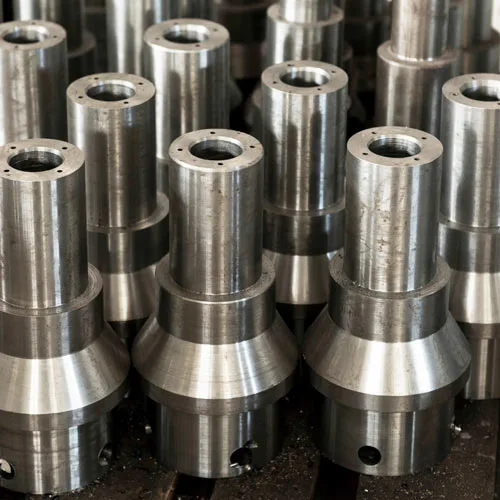
The way the parts are made has a big effect on their performance, cost, wear-resistant parts, and reliability when choosing wear-resistant parts for tough industrial uses. Different types of forging and casting are both basic ways to make high-performance parts, and each has its own benefits depending on the application. In the aerospace, automotive, oil drilling, and medical device businesses, knowing these differences helps procurement managers make decisions that balance low costs with long-term dependability.
Understanding the Manufacturing Process Differences
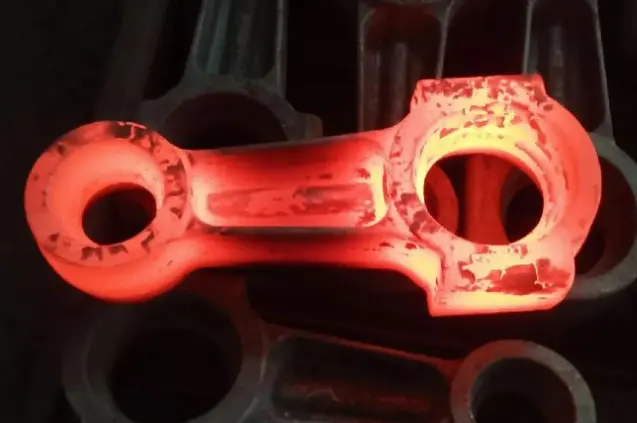
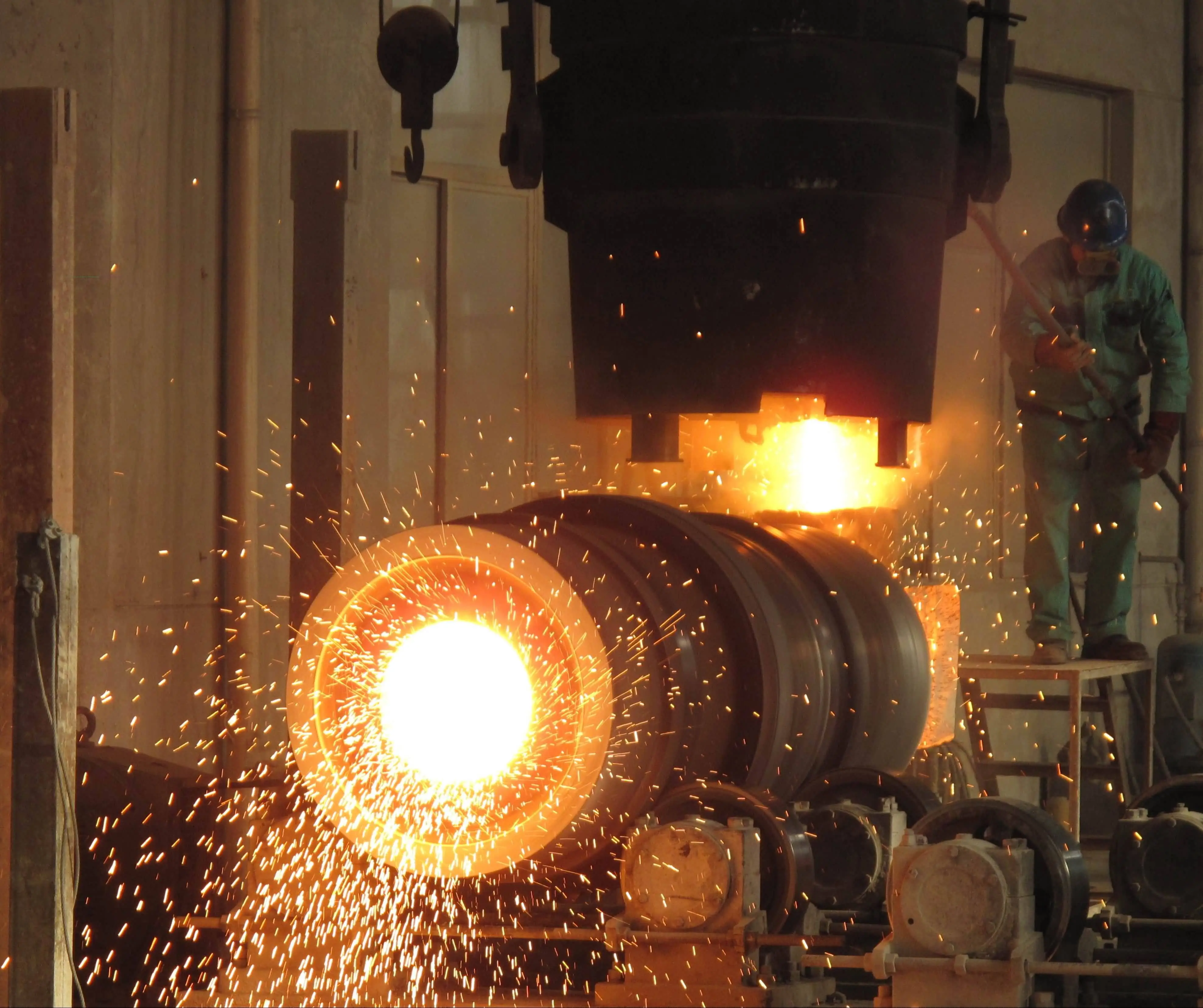
The most important difference between casting and forging is how the metal gets its finished shape. When you cast something, you pour liquid metal into moulds that have already been made. This lets you make complex shapes with little need for machining. This method is great for making complicated internal paths and external features that would be hard to make with other methods. Forging changes solid metal by deforming it in a controlled way under a lot of pressure. By aligning the grain structures, the process makes the materials stronger and more resistant to wear. Some modern ways to forge are:
- Open-die forging for large, simple shapes
- Closed-die forging for precise geometries
- Ring rolling for circular components
- Isothermal forging for aerospace applications
Each way makes microstructures that are different, which affects how long they last and how well they work. Casting is a better option if you need complicated internal cooling lines or complicated shapes. Forging is the best way to get the best results when maximum strength and impact protection are important.
Material Properties and Performance Analysis
Significant changes in performance are found between cast and forged parts in the lab. Tensile strength is usually 20–30% higher in forged steel than in cast materials of the same type. Even bigger improvements can be seen in impact resistance. Forged wear-resistant parts can handle 40–50% more shock loads. Cast materials are very flexible in how they can be designed, but they may have tiny holes in them that shorten their wear life. These worries are lessened by modern vacuum casting methods, which make parts with a near-net form and better density. Surface hardening processes, such as nitriding or carbide coatings, make both casting and forging wear better.
The grain structure differences create varying wear patterns:
- Forged parts resist abrasive wear through aligned grain boundaries
- Cast components handle corrosive environments through uniform alloy distribution
- Heat treatment optimization varies significantly between processes
Forged gearbox parts last 15 to 25 percent longer than cast ones in the same working conditions, according to testing from automotive applications. However, cast motor blocks are better at keeping their temperature stable and reducing vibrations. Forged solutions are more reliable if your product needs to handle high-impact loads or fatigue cycling. Casting is the best way to go for uses that need to keep heat under control or have complex internal features.
Cost Analysis and Production Considerations
Production economics significantly influence material selection decisions. Initial tooling costs for casting typically range 30-50% lower than forging die investments. However, material utilization rates favor forging, with waste reduction reaching 15-20% compared to casting processes.
Volume thresholds affect cost-effectiveness calculations:
- Low-volume productions (under 1,000 pieces) often favor casting
- Medium volumes (1,000-10,000 pieces) require detailed analysis
- High-volume applications typically benefit from forging efficiency
Lead times vary considerably between processes. Casting prototypes can be produced within 2-3 weeks using rapid tooling techniques. Forging requires 6-8 weeks for die preparation but offers faster production cycles once established. Secondary operations impact total costs differently. Cast components may require extensive machining to achieve final tolerances, while forged parts often need minimal finishing. Heat treatment requirements and inspection protocols also vary between manufacturing methods. If you need rapid prototyping or low-volume production, then casting provides faster market entry. For high-volume applications where material costs dominate, forging delivers better long-term economics.
Application-Specific Recommendations
Different industrial sectors demand specific performance characteristics, influencing manufacturing method selection. Aerospace applications prioritize weight reduction and fatigue resistance, making forged titanium and aluminum alloys preferred choices. The controlled grain structure and superior strength-to-weight ratios justify higher processing costs. Oil and gas drilling environments require exceptional abrasion resistance and impact toughness. Forged drilling tool components withstand extreme downhole conditions better than cast alternatives. However, complex pump housings and valve bodies benefit from casting's design flexibility and corrosion resistance.
Automotive applications span both manufacturing methods effectively:
- Forged crankshafts and connecting rods handle high-stress applications
- Cast engine blocks provide thermal stability and manufacturing efficiency
- Transmission cases utilize casting for complex internal geometries
When making medical devices, exact tolerances, wear-resistant parts, and biocompatibility are important. Forged surgical tools last longer and don't get damaged when they're sterilised. For intricate features that keep the material pure, complex implant shapes may need investment casting. Mining equipment has to deal with rough conditions that call for special parts that don't break down easily. Forged parts work great in high-impact situations, like on crusher jaws and hammer mill parts. Cast wear plates with hardfacing protect tube linings and conveyor systems in a cost-effective way.
Quality Control and Manufacturing Standards
ISO 9001:2015 compliance makes sure that the quality of both manufacturing methods is the same. Forging and casting, on the other hand, have very different inspection needs. Porosity tests, dimensional verification, and material composition analysis using spectroscopic methods are all things that need to be done on cast parts. Forged parts need to have their grain structure, mechanical properties, and surface quality checked. Protocols for non-destructive tests include:
- Ultrasonic inspection for internal defects
- Magnetic particle testing for surface cracks
- Dimensional measurement using coordinate measuring machines
- Hardness testing across component cross-sections
Statistical process control keeps an eye on important factors during production. The temperature, rate of cooling, and make-up of the alloy all have a direct effect on the end properties. Dimensional precision and surface finish are affected by the forging temperature, the rate of deformation, and the wear on the die. Traceability standards cover everything from certificates for raw materials to reports of the final inspection. Standards for documentation make sure that requirements for aircraft AS9100, automotive TS16949, and medical devices ISO13485 are met. With the right quality systems, both methods can meet strict requirements if your application needs a lot of documentation and can be tracked back to its source. The choice is based on efficiency needs rather than quality standards.
Design Optimization and Engineering Support
Effective component design requires wear-resistant parts, understanding manufacturing constraints, and opportunities. Casting enables complex internal features like cooling passages, lightning pockets, and integrated mounting points. Wall thickness variations accommodate stress concentrations while minimizing weight. Forging design focuses on grain flow optimization and stress distribution. Draft angles, fillet radii, and parting line locations influence both manufacturing feasibility and component performance. Close collaboration between design and manufacturing teams prevents costly redesigns.
Modern CAD systems facilitate design optimization through simulation capabilities:
- Casting simulation predicts filling patterns and solidification behavior
- Forging simulation analyzes material flow and stress distribution
- Finite element analysis validates performance under operating conditions
Material selection impacts design possibilities significantly. High-alloy steels can be forged successfully but may require specialized casting techniques. Aluminum alloys cast easily but present forging challenges requiring careful temperature control.
Design for manufacturing principles reduce costs while improving quality:
- Minimize machining requirements through near-net-shape processing
- Optimize wall sections for uniform cooling or deformation
- Integrate multiple components where possible
Welong's Advanced Manufacturing Solutions for Industrial Components
Welong combines decades of expertise in wear-resistant parts with ISO 9001:2015 certified processes to deliver exceptional wear-resistant parts through both casting and forging capabilities. Our engineering team collaborates with clients from initial design concepts through final production, ensuring optimal manufacturing method selection based on specific performance requirements and cost objectives.
With comprehensive supplier networks across China, we provide reliable access to specialized foundries and forging facilities equipped with advanced quality control systems. Our procurement supervision and quality management services eliminate sourcing risks while maintaining consistent delivery schedules for critical industrial components across automotive, aerospace, and oil drilling applications.
Contact our experienced team at metal@welongpost.com to discuss your wear-resistant parts manufacturing requirements and discover how our integrated supply chain solutions can optimize your component sourcing strategy.
References
1. Davis, J.R. (2005). Cast Iron: Physical and Engineering Properties. ASM International Materials Handbook Series.
2. Altan, T., & Tekkaya, A.E. (2012). Sheet Metal Forming: Fundamentals and Applications. Materials Science and Engineering Press.
3. Campbell, J. (2011). Complete Casting Handbook: Metal Casting Processes, Metallurgy, Techniques, and Design. Butterworth-Heinemann Engineering Materials.
4. Semiatin, S.L. (2005). Metalworking: Bulk Forming. ASM International Handbook of Manufacturing Processes.
5. Ravi, B. (2005). Metal Casting: Computer-Aided Design and Analysis. Prentice Hall Manufacturing Engineering Series.
6. Bhadeshia, H.K.D.H. (2001). Geometry of Crystals: Crystallography and Phase Transformations. Institute of Materials Communications.

Share your inquiry, get the quotation accordingly!
China WELONG- Your Reliable Partner in Metal Solutions