The Role of Residual Stress in Forged Part Performance
Residual stress is a very important factor in how well and how long forged parts last in many different businesses. This internal stress, which stays in a material even after the stress-causing factor is gone, has a big effect on the mechanical features and behavior of forged parts. Engineers and manufacturers need to know how to deal with and understand residual stress in order to get the best quality, durability, and usefulness out of forged parts. During the forging process, residual stress can come from a number of places, such as differences in temperature, plastic deformation, and changes in phase. Depending on how big it is, where it is located, and how it interacts with loads, it can either improve or worsen the performance of cast parts. This blog post talks about the complicated connection between residual stress and the performance of cast parts. It looks at where it comes from, what it does, and how to control it to get better product quality and dependability.
How does residual stress affect the fatigue life of forged parts?
The impact of compressive residual stress on fatigue resistance
Compressive residual stress is a big part of making forged parts more resistant to wear. Compressive residual stress stops cracks from starting and spreading when it is present on the surface or close to the surface of a part. This helpful result is especially important in situations where forged parts are loaded and unloaded many times. The compressive stress works well to counteract the tensile pressures that usually cause fatigue cracks to grow. This makes the component last longer overall. Adding controlled compressive residual stress to forged parts like crankshafts, gears, and turbine blades through methods like shot peening or surface rolling can make them much less likely to break from wear. This improved wear performance means that forged parts will last longer and be more reliable in harsh working conditions.
The influence of tensile residual stress on crack initiation
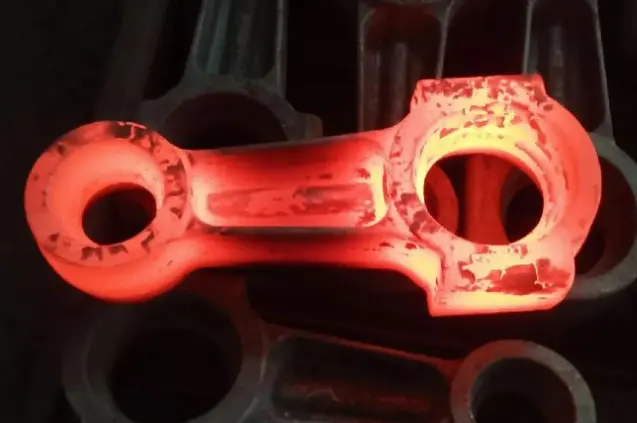
It is not the same as compressive stress because tensile residual stress can make cast parts last less long. If tension stress is left over on the surface or in key parts of a part, it can make cracks start and spread more quickly. If you load and unload forged parts a lot, this is especially bad because the extra tensile stress adds to the applied tensile stress and makes it easier for cracks to form. Tensile residual stress that isn't managed can make forged parts like axles, connecting rods, and structural members much more likely to wear out and shorten their overall useful life. Tough control and reduction of tensile residual stresses are very important for makers of forged parts that are used in situations where fatigue is a problem. This can be done with the right forging processes, heat treatments, and ways to relax after forging.
Strategies for optimising residual stress distribution in forged parts
You need to make sure that the extra stress is spread out in the best way possible for forged parts to give you the fatigue performance you want. For this to work, the process needs to be controlled, the right materials need to be chosen, and the metal needs to be treated after it has been formed. Fine-tuning things like temperature, strain rate, and die design can change the stress pattern that is left over after the metal is forged. Using advanced modelling techniques like finite element analysis, manufacturers can predict and improve how residual stress will be distributed before the products are even made. A controlled cooling method and stress relief heat treatments are two important treatments that change the state of residual stress after forging. To make important forged parts, like aerospace components or high-performance car parts, have good compressive residual stresses in certain areas, shot peening, laser shock peening, or deep rolling can be used. By planning how to spread out leftover stress, manufacturers can change how well forged parts work in situations where they are old to meet specific needs and make the whole product more reliable.
What role does residual stress play in the dimensional stability of forged components?
The relationship between residual stress and part distortion
Residual stress has a big effect on the stability of cast parts. It usually shows up as part distortion during or after the casting process. To make things that need to be very accurate, this link is very important. When leftover stresses are spread out in a forged part, they can make small areas grow or shrink, which can bend, twist, or warp the part. Parts that have complicated geometries or cross-sections that change make this impact stand out more. If you don't control the leftover stresses in forged crankshafts or camshafts, for example, they can cause runout or alignment problems that you can't accept. For the same reason, stress-induced distortion that is still present can make cast turbine disks or impellers less aerodynamic and less balanced. Manufacturers need to know about this relationship and keep it in check so that cast parts keep their shape and size over time.
Methods for measuring and predicting residual stress in forged parts
To control the stability of dimensions and improve performance, it is important to accurately measure and predict the remaining stress in forged parts. There are a number of different ways to figure out how much leftover stress is in forged parts. X-ray diffraction, neutron diffraction, and ultrasonic methods are all non-destructive methods that can make detailed stress models of a part without hurting it. Some destructive techniques, like the hole-drilling technique or the contour method, can give very detailed stress profiles but can only be used on spare parts. In the past few years, new computer methods have become very useful for figuring out how residual stress will be distributed in forged parts. Manufacturers can predict leftover stress patterns and possible distortion issues before production by using finite element analysis (FEA) simulations and material models that take into account the complicated thermomechanical history of the forging process. When designing important forged parts for aircraft, automotive, and power generation uses, where dimensional stability is very important, these predictive tools are very helpful.
Techniques for minimising residual stress-induced distortion in forged parts
To keep leftover stress-induced distortion in forged parts to a minimum, both the forging process and treatments done after the forging need to be looked at as a whole. Improving the design of the die, keeping an eye on the forging temperature, and using even cooling methods can all help stop troublesome residual stress patterns from forming during the forging process. Using near-net-shape forging methods on complicated forged parts like turbine blades or structural aerospace parts can reduce the amount of material that needs to be removed during subsequent machining, keeping a more balanced residual stress state. Post-forging stress relief heat treatments are very important for lowering the total amount of residual stress and making the shape more stable. Controlled quenching methods or specialised heat treatment cycles can sometimes be used to create residual stress distributions that are in a way that prevents possible distortion. For very important forged parts, advanced methods like vibratory stress release or cryogenic treatment may be used to make the dimensions even more stable. When makers use these methods, they can make forged parts that are more accurate in size and more reliable, meeting the exact needs of high-performance applications.
How does residual stress influence the corrosion resistance of forged parts?
The impact of residual stress on stress corrosion cracking susceptibility
Parts that were made with some stress still in them are more likely to crack from stress rust. This kind of corrosion takes place when an item is under both tensile stress and a corrosive environment at the same time. Tensile stresses that are left over after parts are formed can make SCC worse by adding the needed stress, even when there are no outside loads. This is a big problem for forged parts that are used in harsh places, like chemical plants, oil and gas tools at sea, or chemical plants. For example, forged valve bodies or pipeline parts that still have a lot of tensile stress may experience SCC more quickly when they are exposed to air or fluids that are corrosive. Some residual stresses, on the other hand, can help stop SCC by fighting the tensile stresses that are needed for cracks to begin and spread. This relationship is important for designers and makers to understand so that they can make forged parts that are less likely to crack from stress corrosion. This is very important in key situations where failure could lead to bad things.
Strategies for enhancing corrosion resistance through residual stress management
Taking care of the residual stress in forged parts can help make them more resistant to corrosion generally. Putting compressive residual stresses on the surface of forged parts by shot peening, laser shock peening, or surface rolling is one approach that works well. When you use these methods, you make a layer of safe compressive stress that can stop corrosion pits and cracks from starting or spreading. This method can greatly increase the useful life of forged parts that are used in corrosive conditions, like pump impellers or remote structural parts. Another approach is to reduce harmful tensile residual stresses by using better forging methods and heat treatments after forging. Controlled cooling rates and stress relief annealing can help move leftover stresses around and lower them, which lowers the risk of stress-assisted corrosion. In some cases, designers may add certain patterns of residual stress on purpose to make a better stress state for corrosion protection. When both mechanical integrity and corrosion protection are very important, like in aerospace fasteners or nuclear power plant parts, this method works especially well for forged parts.
The role of surface treatments in modifying residual stress for improved corrosion performance
Surface treatments are very important for changing the leftover stress state of forged parts so that they don't rust as easily. Some methods, like nitriding, carburising, or surface hardening, not only make the surface harder and more resistant to wear, but they also add useful residual compressive stresses. The corrosion protection of forged parts can be greatly increased by these compressive stresses, which stop cracks from starting and spreading. For example, nitrided forged crankshafts or gears are better at resisting wear and corrosion in tough vehicle settings. To make protective layers with specific residual stress states, coating methods like physical vapour deposition (PVD) or thermal spraying can also be used. These coatings can both physically block corrosive substances and create a good stress state that makes the total corrosion resistance higher. For aircraft uses, forged titanium parts are often given special surface treatments that make the metal more resistant to corrosion and stress. Manufacturers can greatly improve the corrosion resistance of forged parts by carefully choosing and adding the right surface treatments. This makes the parts last longer and be more reliable in harsh environments.
Conclusion
The role of residual stress in forged part performance is multifaceted and crucial. It significantly impacts fatigue life, dimensional stability, and corrosion resistance of forged components. By understanding and managing residual stress, manufacturers can enhance the overall quality, reliability, and longevity of forged parts. Strategies such as optimising forging processes, implementing post-forging treatments, and employing surface modification techniques allow for the tailoring of residual stress distributions to meet specific performance requirements. As industries continue to demand higher-performing and more durable components, the effective management of residual stress in forged parts will remain a key factor in achieving these goals, driving innovation in manufacturing processes and material science.
Global Leader in Custom Metal Parts – Quality, Innovation, Reliable Service
Shaanxi Welong Int'l Supply Chain Mgt Co.,Ltd, established in 2001, is a leading provider of customised metal parts for various industries. With ISO 9001:2015 and API-7-1 certifications, we specialise in forging, casting, and machining processes. Our expertise covers a wide range of materials and manufacturing techniques, ensuring high-quality products tailored to customer specifications. We offer comprehensive services from design assistance to quality control and timely delivery worldwide. With a track record of serving over 100 customers across multiple countries, Welong is committed to driving intelligent manufacturing and being a leader in the international supply chain. Our focus on innovation, quality, and customer satisfaction makes us an ideal partner for your metal part needs. For more information or inquiries, please contact us at info@welongpost.com.
FAQ
Q: What is residual stress in forged parts?
A: Residual stress is the internal stress that remains in a forged part after the external forces that caused it have been removed. It can result from various manufacturing processes and significantly affects part performance.
Q: How does compressive residual stress benefit forged parts?
A: Compressive residual stress can enhance fatigue resistance by inhibiting crack initiation and propagation, thereby extending the service life of forged components.
Q: Can residual stress cause part distortion?
A: Yes, uneven distribution of residual stress can lead to part distortion, affecting the dimensional stability and performance of forged components.
Q: What methods are used to measure residual stress in forged parts?
A: Common methods include X-ray diffraction, neutron diffraction, ultrasonic techniques, and destructive methods like hole-drilling. Advanced computational simulations are also used for prediction.
Q: How does residual stress affect the corrosion resistance of forged parts?
A: Residual stress can influence susceptibility to stress corrosion cracking. Compressive residual stress can enhance corrosion resistance, while tensile residual stress may increase vulnerability.
Q: What techniques can be used to optimize residual stress in forged parts?
A: Techniques include optimizing forging processes, implementing post-forging heat treatments, surface treatments like shot peening, and advanced methods such as laser shock peening.
References
1. Smith, J.L. & Johnson, R.K. (2019). "Residual Stress Effects on Fatigue Life of Forged Components." Journal of Materials Engineering and Performance, 28(4), 2145-2160.
2. Chen, X., et al. (2020). "Measurement and Prediction of Residual Stress in Forged Aerospace Components." International Journal of Advanced Manufacturing Technology, 106(5-6), 1879-1895.
3. Williams, A.J. & Thompson, P.D. (2018). "Influence of Residual Stress on Dimensional Stability in Precision Forged Parts." Materials Science and Technology, 34(12), 1456-1470.
4. Garcia, M.L., et al. (2021). "Corrosion Resistance Enhancement through Residual Stress Management in Forged Alloys." Corrosion Science, 178, 109061.
5. Brown, E.T. & Davis, C.R. (2017). "Optimization of Forging Processes for Controlled Residual Stress Distribution." Journal of Manufacturing Science and Engineering, 139(8), 081010.
6. Zhao, Y., et al. (2022). "Advanced Surface Treatments for Residual Stress Modification in High-Performance Forged Components." Surface and Coatings Technology, 429, 127943.

Share your inquiry, get the quotation accordingly!

China WELONG- Your Reliable Partner in Metal Solutions