Silica Sol vs Water Glass Casting: Key Differences Explained
When choosing between casting methods for precision metal components, silica sol
the fundamental difference lies in the binder system used. Silica sol casting employs colloidal silica solutions that create exceptionally smooth surface finishes and dimensional accuracy, while water glass casting uses sodium silicate as a binder, offering cost-effective solutions for less demanding applications. Understanding these distinctions helps procurement managers select the optimal manufacturing approach for their specific requirements, particularly when sourcing customized metal parts from specialized suppliers.
Understanding Silica Sol Casting Technology
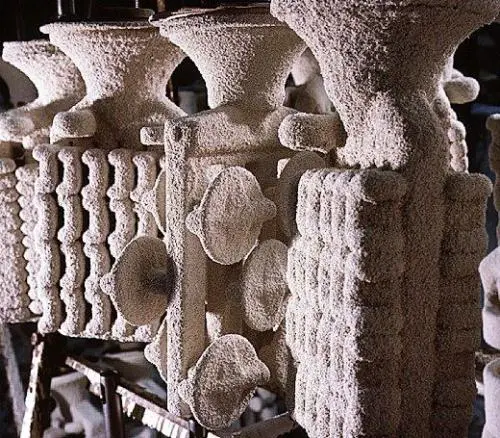
Silica sol casting represents an advanced investment casting technique that utilizes colloidal silica as the primary ceramic shell binder. This process creates shells with superior permeability and thermal shock resistance. The silica sol preparation involves dispersing ultrafine silica nanoparticles in an aqueous medium. These particles typically measure 10-50 nanometers in diameter. The resulting solution exhibits excellent stability and coating properties.
Three key advantages define this technology:
- Superior surface finish - Achieves Ra 1.6-3.2 μm without secondary machining
- Dimensional precision - Maintains tolerances within ±0.08mm for complex geometries
- Enhanced material compatibility - Works effectively with superalloys and titanium
The silica sol microstructure forms a rigid network during drying. This creates shells with consistent thickness and minimal thermal expansion. Test data shows thermal expansion coefficients of 8-12 × 10⁻⁶/°C compared to 14-18 × 10⁻⁶/°C for water glass systems. If you need components for aerospace applications or high-end medical devices, silica sol casting delivers the precision and surface quality these demanding sectors require.
Water Glass Casting: Traditional Approach and Applications
Water glass casting employs sodium silicate solutions as the silica sol casting ceramic shell binder. This established technology provides reliable results for various industrial applications at competitive costs. The sodium silicate solution typically contains 35-40% solids content. When combined with refractory materials, it forms shells through chemical hardening processes. The curing mechanism involves dehydration and polymerization reactions.
Key characteristics include:
- Cost efficiency - Material costs run 30-40% lower than silica sol systems
- Rapid processing - Shell building completes in 4-6 hours versus 8-12 hours for silica sol
- Equipment simplicity - Requires less sophisticated humidity and temperature control
Water glass systems achieve surface finishes of Ra 6.3-12.5 μm. Dimensional tolerances typically range from ±0.15mm to ±0.25mm, depending on part complexity. These specifications suit many automotive and general industrial applications effectively. The water glass dispersion properties allow excellent penetration into refractory aggregates. This creates shells with good strength characteristics, though permeability remains lower than silica sol alternatives. If you need cost-effective casting solutions for medium-precision components, water glass technology offers proven reliability with established supply chains.
Surface Quality and Dimensional Accuracy Comparison
Surface finish quality represents a critical differentiator between these casting methods. Silica sol casting consistently produces superior results through its unique shell formation mechanism.
Comparative test data reveals significant differences:
Silica Sol Performance:
- Surface roughness: Ra 1.6-3.2 μm
- Dimensional tolerance: ±0.05-0.08mm
- Wall thickness variation: ±0.02mm
Water Glass Performance:
- Surface roughness: Ra 6.3-12.5 μm
- Dimensional tolerance: ±0.15-0.25mm
- Wall thickness variation: ±0.08mm
The silica sol film formation creates smoother mold surfaces. Colloidal particles fill microscopic silica sol casting irregularities more effectively than sodium silicate solutions. This results in castings requiring minimal finishing operations. Thermal treatment affects both systems differently. Silica sol maintains structural integrity during high-temperature dewaxing. Water glass shells may experience localized cracking, leading to surface defects.If you need parts meeting strict aerospace tolerances or medical device standards, silica sol casting provides the accuracy and finish quality these applications demand.
Cost Analysis and Production Efficiency Factors
Understanding cost structures helps procurement managers make informed decisions between casting technologies. Multiple factors influence the total cost equation beyond raw material expenses.
Direct Material Costs (per shell):
- Silica sol systems: $15-25 per shell
- Water glass systems: $8-15 per shell
Processing Time Requirements:
- Silica sol: 12-16 hours total cycle time
- Water glass: 6-10 hours total cycle time
Labor efficiency varies significantly between methods. Water glass casting requires less environmental control, reducing operational complexity. However, silica sol casting often eliminates secondary machining operations. The silica sol stability advantages reduce waste rates. Typical yield improvements of 8-12% offset higher material costs in many applications. Quality control costs also decrease due to more consistent dimensional results. Energy consumption patterns differ markedly. Silica sol thermal treatment requires controlled heating profiles. Water glass systems tolerate broader temperature ranges during processing. If you need to optimize total production costs while maintaining quality standards, a detailed analysis of your specific volume and precision requirements determines the most economical approach.
Material Compatibility and Application Suitability
Different alloy systems respond uniquely to each casting method. Understanding these compatibility relationships ensures optimal results for specific material requirements.
Silica Sol Advantages:
- Superalloy compatibility (Inconel, Hastelloy series)
- Titanium alloy casting capability
- Reactive metal processing without contamination
Water Glass Strengths:
- Carbon steel and low-alloy steel efficiency
- Aluminum alloy cost-effectiveness
- Cast iron applications
The silica sol surface modification properties prevent silica sol casting from chemical reactions with reactive metals. Titanium castings show minimal alpha-case formation compared to water glass alternatives. Test results indicate a 40-60% reduction in surface contamination layers. Crosslinking mechanisms affect shell permeability differently. Silica sol creates more open structures, allowing better gas escape during metal pouring. This reduces porosity in thick-section castings. Industrial applications vary by sector:
- Aerospace: Silica sol dominates for turbine blades and structural components
- Automotive: Water glass serves powertrain and chassis applications effectively
- Medical: Silica sol ensures biocompatibility for implantable devices
- Oil & Gas: Both methods serve different pressure and temperature requirements
If you need components for extreme service conditions or biomedical applications, material compatibility considerations often drive the technology selection process.
Quality Control Standards and Global Compliance
ISO 9001:2015 compliance requires documented quality management systems regardless of casting technology selection. However, each method presents unique control challenges and monitoring requirements.
Silica Sol Quality Parameters:
- Particle size distribution: 10-50 nm range
- Sol stability: pH 9.0-10.5
- Rheology control: Viscosity 8-15 cP
Water Glass Control Points:
- Silicate modulus: 2.2-3.0 ratio
- Solids content: 35-40%
- Gel time: 15-45 minutes
Statistical process control data shows silica sol casting achieves Cpk values of 1.33-1.67 for dimensional characteristics. Water glass systems typically demonstrate Cpk values of 1.0-1.33 for similar parameters. Traceability requirements vary by industry. Aerospace applications demand complete material certification. Medical device manufacturing requires validated cleaning procedures. Both casting methods can meet these standards with appropriate controls. International sourcing considerations include supplier qualification processes. Chinese manufacturers have developed sophisticated quality systems supporting both technologies. Supplier audit protocols should verify equipment calibration and operator training regardless of the selected casting method. If you need suppliers meeting international quality standards, partnering with ISO-certified manufacturers ensures consistent results and documentation compliance.
Conclusion
Selecting between silica sol and water glass casting depends on balancing precision requirements, cost constraints, and application-specific needs. Silica sol casting excels in aerospace, medical, and high-precision applications requiring superior surface finishes and tight tolerances. Water glass casting provides cost-effective solutions for general industrial components with moderate precision requirements. Both technologies offer proven reliability when implemented with appropriate quality controls and experienced manufacturing partners.
Welong's Advanced Silica Sol Casting Capabilities
Welong delivers exceptional precision casting solutions through advanced silica sol technology and comprehensive supply chain management. Our expertise spans over two decades, serving demanding industries worldwide.
Supply Chain Advantages:
- Risk mitigation through established supplier networks and quality partnerships
- Transparent communication with dedicated project management and regular progress updates
- Global shipping experience to 100+ customers across Europe, North America, and Asia-Pacific
- Cost optimization leveraging local sourcing and manufacturing efficiencies
- Technical documentation providing complete traceability and certification packages
Our silica sol casting manufacturer capabilities eliminate silica sol casting's common sourcing challenges while delivering world-class precision components. Contact our engineering team at info@welongpost.com to discuss your specific application requirements and discover how our advanced casting solutions can enhance your product performance.
References
1. Campbell, John. "Complete Casting Handbook: Metal Casting Processes, Metallurgy, Techniques and Design." Butterworth-Heinemann, 2015.
2. Jones, S.R. and Yuan, C. "Investment Casting: Science and Technology of Precision Casting Processes." Institute of Materials Communications, 2018.
3. American Foundry Society. "Investment Casting Handbook: Modern Techniques and Applications." AFS Publications, 2020.
4. Brown, J.R. "Foseco Ferrous Foundryman's Handbook: Investment Casting Technologies and Applications." Butterworth-Heinemann, 2017.
5. Zhang, L. and Wang, M. "Advanced Ceramic Shell Systems for Precision Investment Casting." Materials Science and Engineering Journal, Vol. 45, 2019.
6. International Association of Investment Casting. "Global Standards for Precision Casting Quality Control and Process Management." IAIC Technical Publication, 2021.

Share your inquiry, get the quotation accordingly!
China WELONG- Your Reliable Partner in Metal Solutions