Sand Casting vs Investment Casting: 2026 Comparison Guide
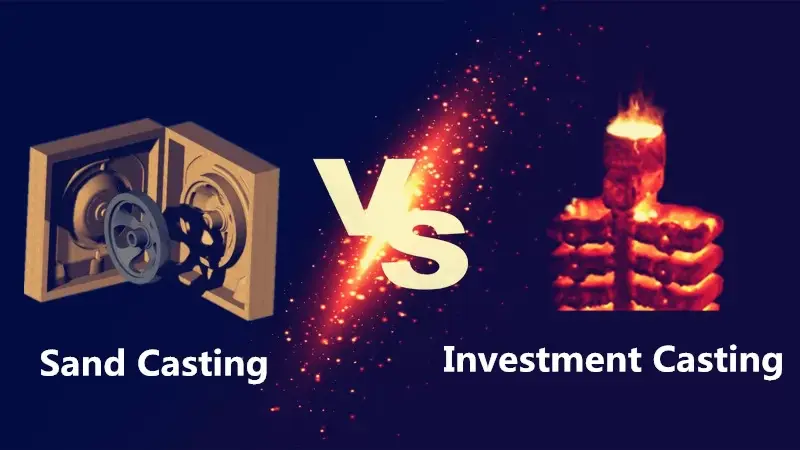
Understanding the main differences between sand casting and investment casting is important if you want to make the right choice when choosing between them for your business needs. Sand casting uses sand models to make strong metal parts, which makes it perfect for making a lot of parts at once. To get very precise shapes and smooth surfaces, investment casting uses wax models and clay shells. Both of these methods are used for different things in modern industry, and each has its own benefits based on your needs, budget, and quality standards.
Understanding Sand Casting and Investment Casting: Core Concepts
These casting methods have different ways of making things and using them, which can be seen in their basic ideas. Sand casting is a method that has been used for a long time and has changed a lot over the years, but it still has the same major benefits of being flexible and inexpensive.
Sand Casting Fundamentals
To make a model for sand casting, you need to mix high-quality silica sand with water, bentonite clay as a glue, and carbonaceous additives to make the surface smoother. The process starts with making a pattern. Next, a mold is made by packing sand tightly around the design. Then, molten metal is put into the mold and left to harden. Finally, the sand mold is broken away to show the final casting.
This method works great for making bigger parts with complicated internal shapes. It is difficult to make complicated pathways and holes with a machine, but the sand mold can do it. Green sand molds are often used for making iron. They are made up of about 85% silica sand, 10% bentonite clay, 2-5% water, and 5% sea coal to improve the surface quality.
Investment Casting Process
Investment casting, which is also called "lost-wax casting," makes very exact parts by creating a wax design, building a ceramic shell, removing the wax, and pouring metal into the mold. The parts made with this method are very accurate in terms of their dimensions; errors of ±0.003 inches per inch of casting measurement are common.
The ceramic case design makes it possible for better surface finishes, usually between 125 and 250 RMS. This means that extra machining processes are often not needed. When it comes to complicated shapes with thin walls, fine details, and many features that would need a lot of machining to make them, investment casting is the best way to go.
Technical Comparison: Performance, Precision, and Production Efficiency
Knowing what each casting method can do technically helps buying teams make sure that production processes match the needs of the product and the quality standards that are set.
Dimensional Accuracy and Surface Quality
With normal limits of ±0.005 inches for the first inch and ±0.003 inches for each extra inch, investment casting gives you better dimensional accuracy. Surface finishes can reach 125 to 250 RMS without any extra work. Tolerances for sand casting are usually ±0.030 inches, and surface finishes are between 250 and 500 RMS. For important areas, more machining is needed.
There are big effects on post-casting processes because of these differences in accuracy. Investment cast parts usually don't need much finishing, but sand cast parts might need a lot of cutting to get them to the right size. This factor affects both lead times and total manufacturing prices, especially in industries that need precision, like aircraft and medical device making.
Material Compatibility and Properties
Both processes can be used with different metal systems, but each has its own benefits for certain materials. Sand casting works well with metal materials like cast iron, carbon steel, and alloy steels, and it can handle high pouring temperatures well. For bigger parts, the process also works well with bronze, aluminum alloys, and other non-ferrous materials.
Investment casting works best with high-performance metals like superalloys, stainless steels, and other materials that are used in tough situations. The controlled setting for solidification allows for better microstructure development, which leads to better mechanical traits and uniform quality across production runs.
Production Scalability and Timeline Considerations
The efficiency of production changes a lot between these ways, based on how complicated the part is and how many are needed. Sand casting is a fast way to make prototypes and medium-sized batches of products. Lead times for new tools are usually two to four weeks, and lead times for repeat orders are one to two weeks.
Because of the steps needed to make the pattern and the shell, investment casting has longer wait times. Usually, it takes 4-6 weeks for the first production run and 2-3 weeks for repeat orders. But the accuracy often gets rid of the need for extra processes, which could shorten the overall project timeline for complicated parts that need a lot of machining.
Cost Analysis and Procurement Considerations in 2026
Cost structures change a lot depending on production volume, part complexity, and quality standards, so they play a big role in choosing a casting method.
Tooling and Setup Investment
When it comes to beginning equipment costs, sand casting is a big plus, especially for bigger parts and lower volume production. Patterns usually cost between $500 and $5,000, but this depends on how complicated they are and what materials are chosen. Patterns made of wood are good for prototypes and low-volume production, while patterns made of metal last longer and are better for high-volume production runs.
Due to the complexity of the tools needed, investment casting needs a bigger starting investment. Pattern creation, which includes master patterns and injection molding, costs between $2,000 and $15,000, but this depends on how complicated the part is. But this investment usually pays off in the form of lower machining costs and better material utilization rates.
Per-Unit Production Economics
Unit costs change a lot depending on how many are made and what the parts are made of. Due to the need for gates and risers, sand casting usually gets lower per-unit costs for bigger parts and higher numbers. Material utilization rates range from 50 to 70%. Labor costs are still pretty low because of set methods and efficient tools.
Investment casting costs more per unit, but it uses materials more efficiently (80–90%), so less raw material is wasted. Precision often gets rid of the need for cutting, which creates cost savings that get better as the complexity of the part grows. Investment casting usually uses less energy per pound of finished casting because it doesn't need as many extra processes.
Total Cost of Ownership Evaluation
Lifecycle factors, in addition to beginning production costs, must be included in a full cost study. The total cost of the job may go up if sand-cast parts need more work to be done on them, like grinding, surface treatment, and quality checks. Based on the complexity of the part and the foundry's skills, the defect rate for sand casting is usually between 2 and 5 percent.
The failure rate in investment casting is only 1% to 3% because the process is managed and the mold materials are better. Lower total costs are caused by fewer repairs and scrap, especially for high-value metals and complicated shapes. When reviewing supplier offers, procurement teams are becoming more aware of these hidden cost benefits.
Application Suitability: Matching Casting Methods to Industry Needs
The choice of casting method is based on the needs of the industry. Each process has its own benefits for different uses and working conditions.
Industrial Manufacturing Applications
Sand casting is the most common method for making big, strong parts that don't need to be very precise. The ability of sand casting to make large parts at a reasonable price is useful for pump housings, valve bodies, engine blocks, and structural parts. The process works with walls as thin as 3 mm or as thick as several inches, which makes it perfect for big industrial equipment.
When dimensional stability and strength are more important than surface finish, the car industry leans heavily on sand casting for engine parts, transmission housings, and suspension parts. Sand casting is used by companies that make construction and mining tools to make wear-resistant parts that can survive rough conditions while still being affordable.
Precision-Critical Industries
Investment casting is used in fields where precise measurements and a smooth surface are very important. For turbine blades, structural parts, and important flying gear, aerospace uses need the accuracy and material qualities that can be achieved through investment casting. The process makes it possible to make complicated cooling channels and aerodynamic surfaces that would be too expensive to build otherwise.
An increased number of medical tools, implantable devices, and diagnostic equipment parts are made using investment casting. Because investment cast stainless steels and titanium alloys are biocompatible and have a better surface finish, this process is necessary for medical uses that need FDA approval and strict quality standards.
Environmental and Durability Considerations
The operating setting has a big effect on the choice of casting method. Sand-cast parts work great in places where they need to be resistant to pressure and thermal shock, like in mining equipment and big machinery that works in harsh conditions. Because sand cast microstructures are naturally tough, they can be relied on in harsh work settings.
Due to their fine microstructures and high-quality surfaces, investment cast parts are better at resisting rust and wear. Investment casting can make parts that last longer and need less upkeep, which is useful for marine uses, chemical processing equipment, and outdoor infrastructure.
How to Choose Between Sand Casting and Investment Casting: A Decision Framework?
A systematic review of the project requirements makes sure that the best casting method is chosen, taking into account technical performance, cost, and delivery needs.
Volume and Complexity Assessment
The amount of production is the main thing that drives decisions, and break-even analysis shows the best casting methods for different situations. Depending on the size and complexity of the part, sand casting usually becomes more cost-effective when more than 100 to 500 pieces are made each year. When the prices of making sand-cast parts become too high for small orders, investment casting may be the better option.
When figuring out how complicated a part is, you have to look at its physical features, changes in wall thickness, and internal passageways. Investment casting is often needed for parts with aspect ratios greater than 10:1, walls thinner than 2 mm, or complex interior features. Sand casting works best for parts with flat, even walls and simple shapes that are easy to shape, as well as cores.
Quality and Performance Requirements
Process choice is based on tolerance requirements. Investment casting is needed for tasks that need precise assembly or little post-casting cutting. When critical measurements need limits closer than ±0.015 inches, investment casting skills are usually needed.
The type of surface finish needed also affects the choice of method. Investment casting is best for uses that need a surface finish of 250 RMS or better without any extra work. Sand casting works well when rougher as-cast surfaces can be worked with during machining, like for internal openings or exterior features that aren't very important.
Supplier Capability and Risk Assessment
When choosing casting methods, procurement teams have to look at what suppliers can do and how they handle quality. ISO 9001:2015 certification ensures basic quality, while certifications specific to a field, such as AS9100 for aircraft or ISO 13485 for medical devices, make sure of more specialized skills.
Geographic factors affect wait times and how well people can communicate. Buying things is less risky when you have established relationships with suppliers that have a history of providing quality goods and expert help. Having a supplier expert help with design optimization and choosing materials is helpful at all stages of the product creation process.
Conclusion
Choosing between sand casting and investment casting relies on how well the performance needs of the application match up with the need for accuracy, production volume, cost, and cost. For bigger parts and higher numbers where modest accuracy is enough, sand casting is a cost-effective option. On the other hand, investment casting gives you the best accuracy and surface quality for complicated, precision-critical applications. Instead of just looking at the cost of casting, procurement teams should look at the total cost of ownership, which includes quality and secondary operations. You can use either casting method successfully in your manufacturing plan if you know about the supplier's capabilities, quality systems, and engineering help.
FAQWhich casting method offers better cost-effectiveness for medium-volume production?
Sand casting is usually more cost-effective for medium-sized orders that go over 200 to 500 pieces per year, especially for bigger parts where the costs of the tools can be spread out over time. When the costs of secondary cutting for sand-cast parts are higher than the higher original per-unit casting costs, investment casting becomes the more cost-effective option. This is especially true for parts with complicated shapes that need a lot of finishing operations.
Can investment casting handle large parts effectively?
Investment casting has come a long way. These days, foundries can handle parts that weigh up to 100 pounds and have lengths greater than 24 inches. But sand casting is still easier to use and cheaper for really big parts that are bigger than these limits. Investment casting isn't the best way to make very big industrial parts because of the shell building process and handling needs.
How do defect rates compare between these casting methods?
Because the process is managed and the mold materials are better, investment casting usually has lower failure rates of 1% to 3%. 2 to 5 percent of sandcastings have flaws, but this depends on how complicated the part is and how well the foundry checks its work. When the right process rules and seller qualification steps are put in place, both ways can produce very high-quality results.
What material options are available for each casting process?
Sand casting can be used for almost all cast metals, such as bronze, aluminum, carbon steel, alloy steel, cast iron, and other non-ferrous materials. Investment casting works especially well with titanium, stainless steels, superalloys, and other high-performance materials that need exact control of the substructure and a high-quality surface for tough uses.
Partner with Welong for Your Sand Casting Manufacturing Needs
Welong has been a trusted sand casting provider for over twenty years, making custom metal parts that meet the strict requirements of the aerospace, automobile, and industrial manufacturing industries. Our facility is ISO 9001:2015 certified and blends traditional casting skills with modern quality control methods. This makes sure that we always get the same results, even for complicated shapes and tough jobs. Throughout the duration of your project, our engineering team provides full design optimization and technical help, whether you need to make a sample or a lot of them. Get in touch with us at metal@welongpost.com to talk about your unique needs and find out how our proven supply chain skills can help your manufacturing strategy while lowering the risks of buying and delivery.
References
1. Campbell, John. "Complete Casting Handbook: Metal Casting Processes, Metallurgy, Techniques and Design." 2nd Edition, Butterworth-Heinemann, 2015.
2. Stefanescu, Doru M. "Science and Engineering of Casting Solidification." 3rd Edition, Springer International Publishing, 2021.
3. Brown, John R. "Foseco Foundryman's Handbook: Facts, Figures and Formulae." 11th Edition, Butterworth-Heinemann, 2017.
4. Ravi, B. "Casting Simulation and Optimization: Benefits, Bottlenecks, and Best Practices." International Journal of Metalcasting, Volume 12, 2018.
5. Jones, Stephanie, and Horton, Chris. "Investment Casting: Process Capabilities and Economic Analysis for Modern Manufacturing." Materials Science and Technology Conference Proceedings, 2023.
6. American Foundry Society. "Sand Casting Process Guidelines and Quality Standards for Industrial Applications." Technical Report AFS-2024, American Foundry Society Publications, 2024.

Share your inquiry, get the quotation accordingly!
China WELONG- Your Reliable Partner in Metal Solutions