Is Precision Casting More Cost-Effective? A Detailed Comparison?
When looking at different ways to make complicated metal parts, Precision casting stands out as a great choice that strikes a good mix between quality and cost-effectiveness. Precision casting, which is sometimes called "investment casting," produces parts with very accurate dimensions and a smooth surface while reducing the need for wasteful additional cutting. The cost-effectiveness of this process is based on a number of factors, such as the complexity of the part, the production volume, the choice of material, and the supplier's skills. When procurement managers know about these things, they can make smart choices that balance technology needs with budget limits and long-term supply chain goals.
Understanding Precision Casting and Its Cost Drivers
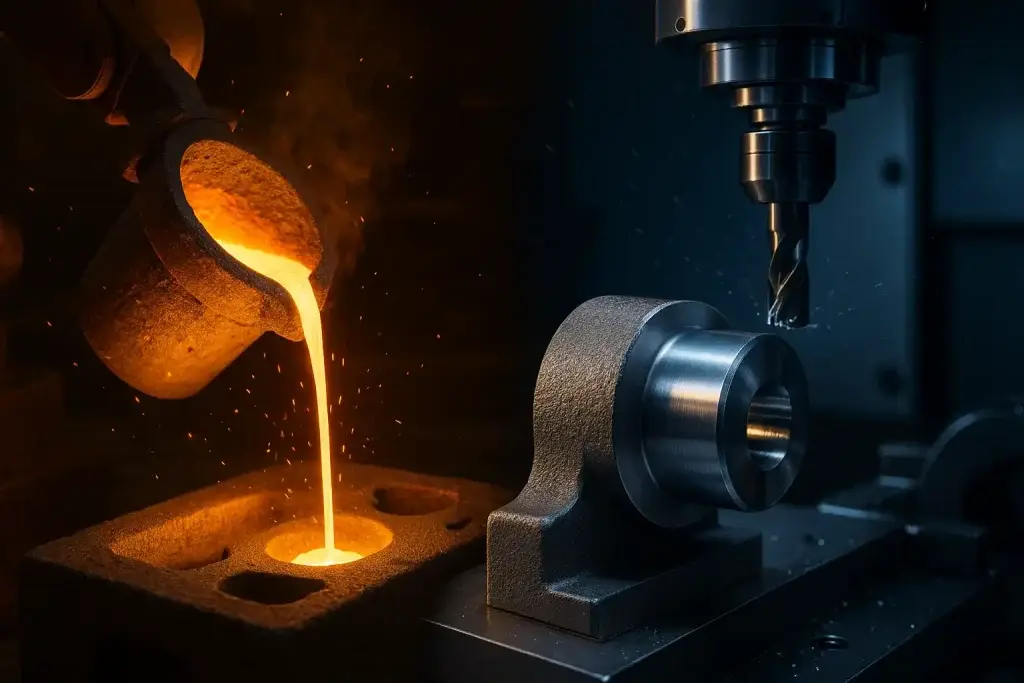
Investment casting has been around for more than 5,000 years, but it has changed a lot as technology has improved. Today's method involves making a wax pattern that exactly matches the shape of the end part, covering this pattern with ceramic material to make a hard shell, melting off the wax, and then putting molten metal into the hole. With this method, complex parts can be made with margins as small as ±0.005 inches, and most of the cutting that is normally needed is not needed.
Materials and Alloy Selection Impact on Pricing
The choice of material has a big effect on how much an investment casting job costs generally. Alloys made of stainless steel, carbon steel, aluminum, titanium, and special superalloys are priced differently and need to be processed in different ways. Aerospace-grade titanium alloys cost more than regular carbon steel, but the high strength-to-weight ratio of the material usually makes it worth the extra money. When our procurement teams work with our engineering department, they can choose the best alloys based on performance needs. This way, standards can be met for any purpose without adding extra costs.
Production Stage Cost Components
The investment casting process is made up of several separate steps, and each one affects the end price. Creation of a mold requires a big initial investment, but this cost is spread out over many production runs. When making a ceramic shell, you need trained workers and special tools. When melting and pouring, you need to be able to precisely control the temperature and know a lot about metals. Post-casting processes like removing the shell, gate cutting, heat treatment, and surface finishing raise costs, but make sure that parts meet strict quality standards.
Lead Time and Minimum Order Quantity Considerations
In B2B buying situations, the costs of a project are directly affected by the schedule for production. Usually, making a new tool takes three to five weeks. Then, the first production runs take two to eight weeks, based on how complicated they are and how many are needed. Minimum order numbers have a big effect on per-unit costs. Runs with fewer than 100 pieces have higher relative tooling costs, while volumes with more than 1,000 units spread fixed costs more evenly. Strategic procurement managers weigh the costs of keeping goods against discounts for buying in bulk.
Comparative Cost Analysis: Precision Casting vs Alternative Methods
When choosing a manufacturing technology, it's important to carefully consider several different options, as each has its own benefits that rely on the needs of the application and the production factors. The Precision casting process mostly competes with sand casting, die casting, and new additive manufacturing methods. The most cost-effective method depends on the part's features and the size of the batch.
Precision Casting Versus Sand Casting Economics
Because sand casting doesn't require as many tools and can handle bigger parts, it's a good choice for structural parts where tight standards aren't as important. Due to gating systems and the need for following cutting, 30–50% of the material used in sand casting is wasted. On the other hand, 85–95% of the material used in investment casting is utilized. Post-processing costs tell a strong story—sand-cast parts often need a lot of cutting to get a good surface finish and accurate dimensions, which adds $15 to $50 per part in extra work. Investment casting produces nearly net-shaped parts that usually only need slight finishing.
Die Casting Trade-offs for High-Volume Production
Die casting works best when a lot of parts need to be made at once, like when more than 5,000 metal or brass parts need to be made. Depending on how complicated they are, tools can cost anywhere from $15,000 to $100,000. This is a lot more than investment casting models, which cost between $2,000 and $20,000. The break-even analysis shows that die casting is better for parts with simple shapes when the number of units is more than 10,000. However, investment casting is still better for parts that need internal pathways, thin walls, or complex three-dimensional features.
Additive Manufacturing Integration
3D printed metal parts have changed the costs of standard manufacturing, especially when it comes to making prototypes and very small quantities. Direct metal laser sintering and electron beam melting get rid of the need for tools completely, which makes it possible to make just one part for $50 to $500, based on the size and material. Due to slow production speeds and high material costs, additive manufacturing can't be used for quantities greater than 50 to 100 units yet. For those quantities, investment casting becomes more cost-effective. Modern makers now use multiple technologies in a planned way.
Benefits and Limitations Impacting Procurement Decisions
When purchasing things, managers look at how much they cost altogether, how consistent the quality is, and how reliable the supply chain is. When used in certain situations, Precision casting has clear benefits, but it also has some issues that need to be carefully thought through when choosing a provider and negotiating a contract.
Dimensional Accuracy Reduces Secondary Operations
When you use investment casting, you can get surface finishes of 125 Ra or higher, and you can keep the margins within ±0.005 inches for most shapes. This level of accuracy gets rid of 60–90% of the cutting that is usually needed for sand casting, which saves money right away. If you sand cast an aircraft bracket, it might take 2.5 hours of CNC cutting to finish it. If you investment cast it, it might only take 15 minutes. Because our factories use less labor and have shorter cycle times, we can save $35 to $75 per fairly complicated part.
Common Defects and Quality Management Strategies
There are a few common flaws that can happen with investment casting that can affect return and economics. Most quality problems are caused by holes, inclusions on the surface, distortions in dimensions, and imperfect fill. Porosity usually happens because of bad degassing or rough metal flow, which can be fixed by using better filling methods and making the mold design better. Surface flaws are often caused by contamination in the ceramic shell, which can be reduced by using strict process controls and making in a clean room. X-rays, coordinate measuring tools, and metallurgical analysis are just a few of the quality checking methods we use to make sure that all of our parts meet the requirements set by the specifications.
Design Considerations That Control Costs
The shape of a part directly affects how easy it is to make and how much it costs. Different wall thicknesses, undercut features, and interior paths all pose their own problems. Keeping the wall width constant between 0.060 and 0.250 inches helps mold filling go more smoothly while using less material. Draft angles between 1 and 3 degrees make it easier to remove patterns and make molds simpler. During the planning phase, our engineering staff works with customers to find ways to cut costs before they commit to making a tool. Making changes to the shape in a planned way can often cut production costs by 15 to 30 percent without affecting how well the product works.
Lead Time Management and MOQ Flexibility
For supply chain planning to work, people need to have realistic assumptions about when things will be made and how much they will order. Standard wait times are 6 to 10 weeks from the time an order is placed until it is delivered. This time includes making the tools, getting approval for samples, and production. With extra fees, expedited programs can cut down plans to 4–5 weeks. MOQ needs to be between 50 and 500 pieces, but this depends on how complicated the part is and how much ability the seller has. Strategic buyers make outline deals that commit to yearly amounts and release orders in smaller batches that match how much is used.
Choosing the Right Precision Casting Supplier for Cost Efficiency
One of the most important choices in the buying process is choosing the supplier. It has a direct effect on quality consistency, total landing cost, and the efficiency of the supply chain. Partners who can meet the strict needs of aerospace, automotive, and medical device uses are screened through a Precision casting review process that looks at many factors.
Certification and Technical Capability Assessment
Even though ISO 9001:2015 approval is a good start for quality management systems, many users need more certifications. For military supply lines, AS9100 certification is a must, and ISO 13485 certification helps companies that make medical devices. In addition to credentials, a supplier's professional skills show whether they can handle certain problems. Expertise in alloys varies a lot. For example, a factory that mainly works with stainless steel might not know how to make titanium or superalloys. The level of complexity of the equipment is very important.
Geographic Location and Logistics Implications
Total landed costs are affected by the position of the supplier through freight costs, wait time flexibility, and the complexity of the supply chain. Even though domestic providers are closer and offer benefits like faster contact, shorter transit times, and lower logistics costs, they often charge 30–60% more than Asian producers. Our business has sent parts to more than 100 car buyers in the UK, Germany, France, Italy, Poland, the USA, Canada, the Netherlands, Sweden, Australia, New Zealand, Singapore, and India since 2001. This ability to reach people all over the world shows that foreign logistics can be managed well while high standards are kept.
Customization Capabilities and Engineering Support
OEMs often need changes to the design, the use of different materials, or the way the process is done in order to get the best performance or lowest cost. Suppliers who offer strong tech help are more valuable than those who only offer manufacturing services. We make goods based on models and samples that customers send us, but our engineering department can also come up with full specifications when customers just give us functional needs and not detailed prints. This adaptability comes in handy when a new product is being introduced, and designs change as prototypes are made.
Pricing Transparency and Payment Terms
Setting clear prices and fair payment terms makes spending and planning finances easier. Tooling costs, prices per unit across different volume breaks, additional operations, finishing charges, packing, and freight should all be broken down in detailed quotes. When you buy more than 100 pieces, you usually get a volume price of 10 to 25 percent. Due dates depend on how long the relationship has been going and how much the order is worth. For new customers, you usually need to put down a deposit, but for established accounts, you may be able to arrange longer terms.
Strategic Recommendations for Procurement Managers
To get the best deals on Precision casting, you need to do more than just compare prices. You need to think strategically about things like supply chain planning, managing relationships with suppliers, and evaluating new technologies. These suggestions help people who work in buying get the most value for their money while also handling risk in global supply networks that are very complicated.
Industry-Specific Application Opportunities
Certain industries get a lot out of investment casting because of the unique mix of complexity, material needs, and quality standards. The process can form heat-resistant superalloys into complicated shapes with little machining, which is used to make aerospace parts like turbine blades, structural fittings, and engine mounts. Investment casting can make corrosion-resistant parts that can handle harsh conditions downhole, which is useful for oil and gas drilling tools. The process is used by companies that make medical devices to make surgical tools and implantable parts that need to be biocompatible and have a smooth surface.
Collaborative Supply Chain Approaches
Compared to transactional buying methods, supplier agreements that are based on partnerships lead to better results. Joint business planning meetings make sure that reserved capacity matches expected demand, which guarantees production slots during busy times. Having quality staff in the same place during production ramp-up helps find problems early on, which avoids expensive recalls or failures in the field. When suppliers can see how customers usually buy things, they can better plan where to put their inventory and when to make things, which cuts wait times by 20 to 35 percent compared to systems that are based on purchase orders.
Inventory Optimization and Demand Forecasting
Purchasing teams have a hard time balancing the need to buy goods with the need to meet service level standards. This is especially true for parts whose demand changes over time. Statistical prediction tools look at past data on usage to make more accurate predictions about what will be needed in the future than guesses. Safety stock estimates need to take into account changes in supply wait times, changes in demand, and the amount of risk that can be tolerated for running out of stock. While making sure materials are always available, vendor-managed inventory programs shift the costs of hanging onto suppliers. However, these arrangements require suppliers and buyers to share information freely and trust each other.
Technology Trends Shaping Future Cost Dynamics
Over the next ten years, a number of new technologies are expected to change the economy of investment casting. Using additive manufacturing to make clay molds gets rid of the need for wax patterns. This could cut wait times by 30 to 40 percent and make it possible to cast shapes that weren't possible before. Process optimization based on artificial intelligence looks at sensor data in real time and changes settings automatically to keep quality high and cut down on scrap rates. Advanced modeling software can predict how a mold will fill, how it will solidify, and how the leftover stress will be distributed before the actual tooling is committed.
Conclusion
When the needs of the application match the strengths of the method, investment casting is a great way to make complicated, high-precision metal parts at a low cost. Total manufacturing costs are lower because of better precision in measurements, less material waste, and a smoother surface, even though the original investment in tools is higher than with traditional casting methods. When deciding between options, procurement managers should look at the whole picture, taking into account piece-part prices as well as savings on secondary operations, consistent quality, and the stability of the supply chain. Choosing the right supplier is important, and qualifications, technical skills, and a focus on partnerships can help you tell the difference between great makers and average providers. Throughout the lifecycle of a product, the best results come from strategic sourcing methods that focus on cooperation, demand visibility, and ongoing growth.
FAQDoes investment casting ensure lower defect rates compared to sand casting?
When proper process controls are kept, the failure rate for investment casting is usually less than 2% to 4%, while the rate for sand casting is 5 to 8%. Porosity, flaws, and dimensional variation that are common in sand cast parts are lessened by the better mold surface finish and dimensional stability.
What are typical lead times and minimum order quantities?
Standard lead times include making the tools and making the goods, which can take anywhere from 6 to 10 weeks. With extra fees, expedited programs may shorten plans to 4–5 weeks. Depending on how complicated the part is, the minimum order quantity is usually between 50 and 500 pieces. However, blanket orders with planned releases allow for bigger annual commitments.
Is investment casting a good way to save money on small runs or prototypes?
When the complexity of the part supports the process, investment casting becomes economically viable for orders of 25 to 50 pieces. For amounts below these limits, it's usually cheaper to 3D print metal parts or use CNC to cut solid stock. The best break-even point relies on the shape, the material, and the post-processing steps that need to be taken.
Partner with Welong for Cost-Effective Precision Casting Solutions
Welong's integrated supply chain services are very useful for purchasing managers who need to find a trusted precision casting provider. We have been making custom metal goods for top companies in the aircraft, oil drilling, industrial production, and high-end medical treatment sectors since 2001. Our ISO 9001:2015 certified operations combine engineering know-how with strict quality control. They make parts from your plans or samples and can help with design when needed. Please email our team at metal@welongpost.com to talk about your needs with a precision casting maker with a lot of experience. Our prices are clear, our lead times are fair, and we have the technical skills that picky buyers need for mission-critical apps.
References
1. American Foundry Society. (2022). Investment Casting Design Guidelines and Best Practices. Des Plaines: AFS Publications.
2. Campbell, J. (2021). Complete Casting Handbook: Metal Casting Processes, Metallurgy, Techniques and Design (2nd ed.). Oxford: Butterworth-Heinemann.
3. Choudhari, C.M., & Narkhede, B.E. (2023). Cost Optimization in Investment Casting: A Systematic Review. International Journal of Manufacturing Engineering, 45(3), 287-306.
4. Davis, J.R. (Ed.). (2020). ASM Specialty Handbook: Cast Irons and Steel Castings. Materials Park: ASM International.
5. Investment Casting Institute. (2023). Technical Guidelines for Procurement of Investment Castings. Dallas: ICI Standards Committee.
6. Singh, R., & Kumar, S. (2022). Comparative Analysis of Precision Casting Methods for Aerospace Applications. Journal of Manufacturing Processes, 78, 412-429.

Share your inquiry, get the quotation accordingly!
China WELONG- Your Reliable Partner in Metal Solutions