Investment Casting vs Die Casting: Key Differences for Engineers
When engineers face critical manufacturing decisions, understanding the fundamental differences between investment casting and die casting becomes essential. Investment casting excels in producing complex geometries with exceptional surface finish and dimensional accuracy, while die casting offers rapid production rates for simpler shapes. The choice depends on your specific requirements: part complexity, material selection, production volume, and tolerance specifications.
Understanding Investment Casting: The Precision Manufacturing Process
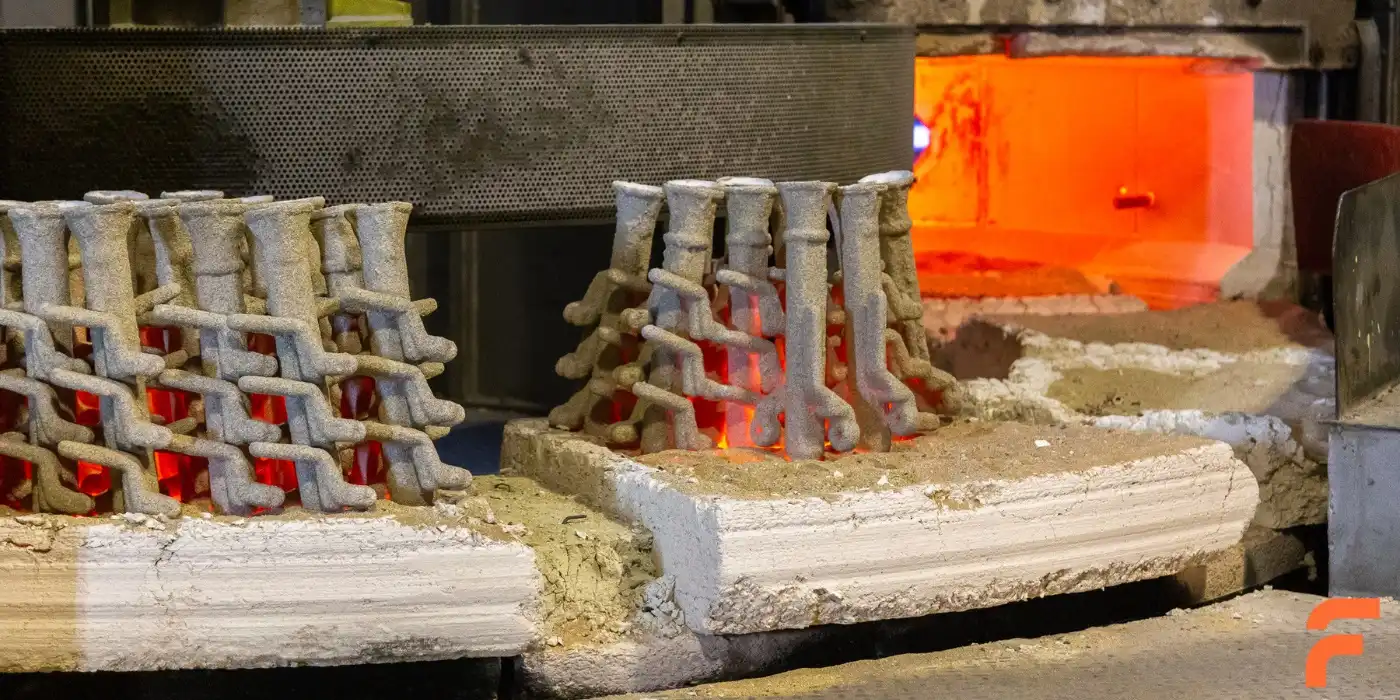
Investment casting, also historically known as the lost-wax casting process, represents one of the oldest yet most sophisticated and precise metal forming techniques available to modern manufacturing. This intricate, multi-step process enables the creation of highly complex, near-net-shape metal components by first forming a disposable wax or plastic pattern, which is then coated with multiple layers of refractory ceramic slurry to create a durable shell mold. During firing, this wax pattern is melted and drained away, leaving a precise, negative cavity within the ceramic shell that is subsequently filled with molten metal to form the final detailed part.
The process commences with meticulous pattern creation, often using injection-molded wax or specialized plastic materials that exactly replicate the desired component geometry, including any internal features. Engineers and designers particularly value this manufacturing method because it uniquely accommodates the production of parts with intricate internal passages, complex curvatures, and extremely thin wall sections—geometries that other common manufacturing processes, such as sand casting or forging, typically struggle to achieve or cannot produce at all without extensive secondary machining. The resulting rigid ceramic shell mold provides excellent high-temperature dimensional stability throughout the casting process, which, when combined with the smooth surface of the pattern, yields components with superior surface finish quality and tight dimensional tolerances. This significantly reduces, and in many cases eliminates, the need for costly and time-consuming post-casting machining operations, making investment casting an ideal solution for high-performance applications across the aerospace, medical, automotive, and industrial sectors.
Key advantages of investment casting include:
- Exceptional dimensional accuracy (±0.003-0.005 inches typical)
- Superior surface finish (63-125 microinches Ra)
- Complex geometry capability without draft angles
- Wide material compatibility, including superalloys
- Minimal machining requirements
Manufacturing tolerances in investment casting typically range from ±0.05mm to ±0.13mm, depending on part size and complexity. This precision makes it ideal for aerospace components where tight specifications are non-negotiable.
If you need intricate internal cooling channels or complex external features, then investment casting provides the optimal solution for your engineering requirements.
Die Casting Fundamentals: High-Volume Production Excellence
Die casting is a highly efficient manufacturing process that involves injecting molten metal under extremely high pressure into precision-machined steel molds, known as dies, to create components with excellent dimensional consistency, tight tolerances, and smooth surface finishes. This method excels in high-volume production scenarios where achieving a low cost per unit becomes the primary economic consideration, as the high initial tooling investment is amortized over massive production runs. The die casting technology leverages durable, reusable permanent steel molds that can reliably produce thousands, or even millions, of identical parts before requiring replacement or significant refurbishment. Production cycle times are notably rapid, typically ranging from as quick as 30 seconds for smaller components to several minutes for larger, more complex parts, making this process significantly faster than investment casting for suitable high-volume applications, thereby maximizing throughput and manufacturing efficiency.
However, while die casting offers remarkable speed and consistency, the process does have inherent limitations that must be considered during design and material selection. The available material options are somewhat restricted compared to other casting methods, primarily limited to non-ferrous metals with lower melting points, such as aluminum, zinc, and magnesium alloys. Furthermore, the process imposes certain geometric constraints; complex internal passages, undercuts, or very deep cavities can be difficult or impossible to achieve without expensive and complex die actions. Additionally, the high-pressure nature of the process can sometimes trap air, leading to porosity within the finished parts, which may affect their suitability for pressure-tight applications or subsequent heat treatment and welding operations.
Die casting characteristics include:
- Rapid production cycles enabling high volumes
- Excellent dimensional consistency across production runs
- Good surface finish requiring minimal post-processing
- Limited to non-ferrous alloys (aluminum, zinc, magnesium)
- Design restrictions, including draft angles and wall thickness
Typical dimensional tolerances for die casting range from ±0.1mm to ±0.3mm, which meet requirements for many automotive and consumer product applications. The process works best for parts with relatively simple internal structures.
If you need thousands of identical parts with moderate complexity, then die casting offers superior economics and production efficiency.
Material Selection and Compatibility Analysis
Material compatibility represents a crucial differentiator between these casting processes. Investment casting accommodates virtually any castable alloy, including steel, stainless steel, titanium, and superalloys used in extreme temperature applications.
Investment casting material options:
- Carbon and alloy steels
- Stainless steel grades (304, 316, 17-4PH)
- Titanium alloys for aerospace applications
- Inconel and Hastelloy superalloys
- Aluminum and copper-based alloys
Die casting materials are restricted to non-ferrous metals with lower melting points. This limitation stems from the permanent steel mold design, which cannot withstand the temperatures required for ferrous materials.
Die casting material options:
- Aluminum alloys (A380, A413, A360)
- Zinc alloys (Zamak 3, 5, 7)
- Magnesium alloys for lightweight applications
- Limited copper alloys
Material properties significantly impact final component performance. Investment casting enables engineers to specify high-strength materials for demanding applications, while die casting excels with lightweight aluminum alloys for automotive components.
If you need ferrous materials or superalloys for high-temperature service, then investment casting becomes the only viable option.
Geometric Complexity and Design Considerations
Design freedom varies dramatically between these processes. Investment casting enables complex internal features, undercuts, and intricate external geometries without additional tooling costs. The lost wax process eliminates traditional machining limitations.
Investment casting design capabilities:
- Internal cooling passages and complex cavities
- Thin walls down to 0.5mm thickness
- Sharp corners and fine details
- No draft angle requirements
- Integrated features reduce assembly needs
Die casting requires specific design considerations due to the permanent mold extraction process. Engineers must incorporate draft angles and avoid undercuts that prevent part removal from the steel dies.
Die casting design requirements:
- Draft angles typically 1-3 degrees minimum
- Uniform wall thickness preferred
- Rounded corners and fillets required
- Limited undercuts and internal features
- Parting line considerations
Wall thickness uniformity becomes critical in die casting to prevent defects like porosity and hot spots. Investment casting tolerates varying wall thickness much better due to the directional solidification control possible with ceramic molds.
If you need complex internal geometries or zero draft angles, then investment casting provides superior design flexibility for your engineering requirements.
Production Volume and Economic Considerations
Economic analysis reveals distinct break-even points for each process. Investment casting requires lower initial tooling costs but higher per-piece expenses due to consumable ceramic shells and longer cycle times.
Investment casting economics:
- Lower tooling investment ($5,000-$15,000 typical)
- Higher piece cost ($10-$100+, depending on size/complexity)
- Economical for low to medium volumes (1-10,000 pieces)
- Shorter lead times for prototype and small batch production
Die casting demands significant upfront investment in steel tooling but achieves much lower unit costs at high volumes. The permanent molds justify their expense through extended production runs.
Die casting economics:
- Higher initial tooling costs ($25,000-$100,000+)
- Lower piece costs ($2-$20, typical range)
- Requires high volumes for economic justification (10,000+ pieces)
- Longer tooling development timelines
Production rate differences are substantial. Die casting cycles range from 30-180 seconds per part, while investment casting requires 5-10 days for shell building, firing, and cooling processes.
If you need small quantities or quick turnaround for prototypes, then investment casting offers better economic value and flexibility.
Quality Standards and Testing Specifications
Quality control methodologies differ significantly between processes. Investment casting typically requires more extensive inspection due to aerospace and medical device applications demanding rigorous standards.
Investment casting quality measures:
- Dimensional inspection using CMM equipment
- Non-destructive testing (radiography, penetrant testing)
- Mechanical property verification through test bars
- Microstructure analysis for critical applications
- Surface roughness measurement and documentation
Die casting quality control focuses on dimensional consistency and surface defects. The permanent mold process enables excellent repeatability once parameters are established.
Die casting quality measures:
- Statistical process control for dimensional monitoring
- Visual inspection for surface defects
- Pressure testing for leak-tight requirements
- Mechanical testing on a sample basis
- Surface treatment verification
Testing data shows investment casting achieves superior mechanical properties due to finer grain structure and controlled solidification. Typical tensile strengths range 20-30% higher than equivalent die cast materials. ISO 9001:2015 compliance becomes essential for both processes when supplying the aerospace, automotive, and medical device industries. Documentation and traceability requirements must be maintained throughout production. If you need extensive quality documentation and superior mechanical properties, then investment casting provides the necessary process control and testing capabilities.
Welong's Investment Casting Manufacturing Excellence
Welong stands as your trusted investment casting manufacturer, delivering precision components to demanding industries worldwide. Our ISO 9001:2015 certified facility combines advanced technology with 20+ years of expertise serving the aerospace, automotive, and medical device sectors.
Our engineering team utilizes AutoCAD, Pro-Engineering, and SolidWorks to optimize your designs for manufacturing efficiency. We accept drawings and samples, transforming your concepts into high-quality metal components. With customers across Europe, North America, and Asia-Pacific, Welong ensures reliable supply chain management and transparent communication. Contact metal@welongpost.com to discuss your precision casting requirements today.
References
1. Campbell, John. "Complete Casting Handbook: Metal Casting Processes, Metallurgy, Techniques and Design." Second Edition, Butterworth-Heinemann, 2015.
2. Brown, John R. "Foseco Foundryman's Handbook: Facts, Figures and Formulae." Eleventh Edition, Butterworth-Heinemann, 2000.
3. Beeley, Peter R. "Foundry Technology." Second Edition, Butterworth-Heinemann, 2001.
4. ASM International Handbook Committee. "ASM Handbook Volume 15: Casting." ASM International Materials Park, 2008.
5. Piwonka, Thomas S. "Casting Design and Performance." ASM International, 2009.
6. Flemings, Merton C. "Solidification Processing." Materials Science and Engineering Series, McGraw-Hill, 1974.

Share your inquiry, get the quotation accordingly!
China WELONG- Your Reliable Partner in Metal Solutions