Hydraulic Gravity Die Casting for Automotive Applications
Making high-precision metal parts using hydraulic gravity die casting is a sophisticated manufacturing method in automotive die casting that has become very popular in modern car production. The natural force of gravity is combined with precise hydraulic control systems in this advanced method. This makes it perfect for automotive die casting uses that need to be both high-quality and low-cost. This method works really well for making complicated shapes with great surface finishes, especially for parts made of aluminum and magnesium that need to be strong and light at the same time.
Understanding Hydraulic Gravity Die Casting in Automotive Applications
Using complex hydraulic systems to control the flow of metals, hydraulic gravity die casting fills molds with liquid metals, mostly aluminum and magnesium alloys, that are perfect for making auto parts. This method is very different from high-pressure or low-pressure casting because it focuses on accuracy while lowering the mechanical stress on the finished castings. This makes it especially useful for medium-volume production runs of complex car forms.
The Technical Process Behind Automotive Components
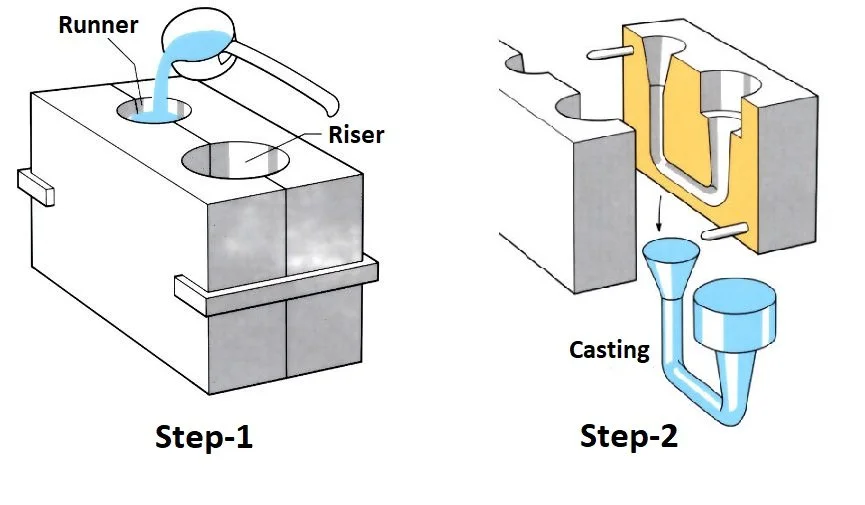
To start the hydraulic gravity die casting process, fixed steel molds are heated to the right temperature, which is usually between 200°C and 300°C for the metal being cast. Molten magnesium or aluminum alloy runs into the mold hole because of gravity. Hydraulic systems control the flow rate and the way the pressure is distributed. This controlled method lowers the amount of noise and flaws like porosity and inclusions that can damage the structure of the component. This method works great for making chassis parts, engine housings, transmission cases, and structural car parts that need accurate wall thickness and measurements. In sand casting, new models need to be made for each casting cycle. But in hydraulic gravity die casting, the molds stay in place and can make thousands of parts while still keeping the tolerances tight.
Key Benefits for Automotive Manufacturing
Using hydraulic gravity die casting to make parts with great surface finishes often means that extra machining processes are not needed, which is very helpful for the auto industry. The process works well for small to medium-sized batches, usually between 500 and 10,000 units per year. This means it can be used in specific car situations where large amounts of high-pressure die casting would be too much. Another very important benefit is that makers can work with different aluminum and magnesium metals while still meeting the same high standards of quality. The controlled filling process lowers oxidation and gas trapping, making parts with better mechanical qualities and higher fatigue resistance, which is very important for safety standards in cars.
Comparing Hydraulic Gravity Die Casting with Other Automotive Die Casting Methods
When choosing how to make metal parts for cars, automakers have to sort through a lot of different manufacturing choices. Knowing the pros and cons of hydraulic gravity die casting compared to other methods helps you make smart purchasing choices that balance quality, cost, and production needs.
Process Mechanics and Quality Considerations
High-pressure die casting uses pressures higher than 1000 PSI. Automotive die casting, which lets cavities fill quickly and produces a lot of parts, but the metal flow can be rough, which can cause flaws. This chaos is removed by hydraulic gravity die casting, which uses controlled gravitational flow to make a better internal structure with fewer holes. High-pressure ways are best for making a lot of things, but hydraulic gravity casting is better for parts that need to be stronger while also being lighter. Low-pressure die casting is a lot like hydraulic gravity ways, but it uses a small amount of pressure to help the metal move. But hydraulic systems let you finetune fill rates and pressure distribution more precisely, which improves stability in dimensions and lowers the amount of scrap. While sand casting is a cheap way to make samples and small quantities, it can't compete with hydraulic gravity die casting when it comes to surface finish and accuracy of size.
Cost Analysis and Production Efficiency
Investment casting can make surfaces with great edges and complicated shapes, but it costs a lot more per unit and takes longer to make. Hydraulic gravity die casting is the best way to get precise parts at a low cost, especially for parts for cars that need to be made in small quantities. The prices of the permanent tools are spread out over medium-sized production runs, which makes it a good investment for certain car uses.CNC cutting from solid billets gives the highest level of accuracy, but it wastes a lot of material and takes a long time. Hydraulic gravity die casting makes nearly net-shaped parts that don't need many extra steps to be done. This cuts down on material costs and production time while keeping the precise measurements needed for car uses.
Designing Automotive Parts for Hydraulic Gravity Die Casting
For hydraulic gravity die casting to work, it's important to pay close attention to design rules that make the parts as easy to make as possible while still meeting performance standards in the automobile business. Engineers can make parts that make the most of the process benefits while reducing output problems if they understand these design factors.
Essential Design Parameters
Draft angles of 1-3 degrees make it easy to take parts out of fixed molds without damaging the parts or the molds themselves. Wall thickness consistency, which is usually kept between 3 and 15 mm based on the size of the component, keeps cooling rates constant and stops interior stresses that could cause the material to warp or crack. By avoiding sharp edges and using large radii, usually at least 3 mm, you can make the metal move more smoothly and lower the stress levels in the final product. When placing a parting line, you need to think strategically to keep the aesthetic look of exposed surfaces and limit the amount of machining that needs to be done. Parting lines should be placed along the natural edges of components or in places where a little flash is easy to get rid of without changing the way the product works or looks.
Material Selection and Optimization
Aluminum alloys like A356 and A319 are great for casting and have good mechanical qualities that make them good for building parts for cars. For casting, these alloys are the best because they are fluid, suitable for automotive die casting, and they are strong and don't rust in car settings. Magnesium alloys, such as AZ91D, have better strength-to-weight ratios, but they need to be handled carefully because they respond when melted or cast.It is important to think about heat treatment during the planning phase because many car parts work best when they are tempered at T6 or T7 temperatures. When makers know how heat treatment changes the security of dimensions, they can make the right adjustments and avoid problems with distortion.
Prototyping and Validation Services
Making cars with rapid development lets companies check their ideas before they make full production tools. Before real samples are made, advanced casting modeling software helps guess fill patterns, find possible flaw locations, and improve gating systems. In the production phase, this validation method cuts down on the time it takes to build and the number of expensive design changes that need to be made.
Procurement and Supply Chain Considerations for Hydraulic Gravity Die Casting
To choose the right hydraulic gravity die casting providers, you need to look at their professional skills, quality systems, and how reliable their supply chains are. By knowing about these factors that affect procurement, automakers can build relationships that offer consistent quality while meeting tight production plans.
Supplier Qualification and Certification
ISO/TS 16949 certification is the strictest quality standard in the automotive business. It makes sure that suppliers keep up systems that can supply parts with no defects. This certification covers strong quality management systems, statistical process control, and methods for constant growth that are necessary for automotive supply lines. Suppliers should show they are following the rules by having third parties audit them on a regular basis and keeping full quality records that customers can look over. The ISO 9001:2015 standard sets the basic rules for quality management. Other certifications, like ISO 14001 for environmental management, show that a seller is dedicated to using sustainable manufacturing methods. Advanced suppliers often keep military certificates like AS9100, which shows that they can meet the strictest standards for quality and paperwork.
Supply Chain Integration and Logistics
Turnkey manufacturing options make it easier to complete a project by taking care of everything from improving the design to delivering the finished product. These unified methods make contact easier and get rid of problems that come up when there are multiple companies working together. Good suppliers offer technical help during the planning phase, which helps make parts easier to make while still meeting performance standards. Logistics prices and the speed with which the supply chain can respond are both affected by how close a location is to a center for making cars. Suppliers whose facilities are located in key places can offer just-in-time transport while also keeping extra stock on hand in case demand changes. Learning about the region's strengths and weaknesses in terms of capacity helps purchasing teams make strong supply plans that lower the risk of disruptions.
Cost Structure and Pricing Strategies
Costs for hydraulic gravity die casting include developing tools, buying raw materials, processing, and doing other work after the main process. Tooling costs usually run from $15,000 to $100,000, but they depend on how complicated the part is and how many cavities it needs. Because these beginning inputs are spread out over the amount of production, it is very important to accurately predict demand in order to keep costs low. Because the prices of materials change based on the markets for aluminum and magnesium, sellers must offer clear pricing systems that reflect the current prices of commodities. Value engineering chances often arise when technical experts from both the customer and the seller work together to find changes to the design that lower costs without affecting performance.
Industry Trends and Environmental Impact of Hydraulic Gravity Die Casting in Automotive
Hydraulic gravity die casting technologies are always getting better because the auto industry is moving toward electric cars and lightweight building. When procurement workers understand these trends, they can work with sellers who are open to new technology and environmentally friendly ways of making things.
Lightweighting and Material Innovation
To get the most out of batteries and improve speed, electric car development needs to cut weight by a lot. Hydraulic gravity die casting helps reach this goal by making it possible to make complex aluminum and magnesium parts that can be used instead of heavy steel parts without affecting the structure's strength. Advanced metals that use recovered materials keep their mechanical qualities while having less of an effect on the earth.In electric cars, structural battery cases, thermal control systems, and electric motor housings are some of the new uses for hydraulic gravity die casting. Aluminum castings are a good way to get the precise heat conductivity and electromagnetic shielding qualities that these parts need.
Digital Manufacturing and Industry 4.0 Integration
Smart production technologies improve hydraulic gravity die casting by letting you watch the process in real time and plan for future upkeep. Sensors built into casting tools keep an eye on temperature profiles, fill rates, and cooling cycles to make sure quality is always the same and to find ways to make things better. Machine learning systems look at old data to figure out what the best process factors are for designing new parts. Digital twin technology lets casting processes be improved virtually before they are made in real life. With these modeling tools, development time is cut down, first-pass return rates are raised, and scrap is produced less. When customer product lifecycle management systems are integrated, data can be shared easily, and designs can be improved by working together.
Sustainability and Environmental Performance
The carbon footprint of hydraulic gravity die casting is cut down by a large amount when heating automotive die casting and casting are done more efficiently. Modern burner technologies and waste heat recovery systems keep the temperature under tight control while using the least amount of energy possible. Closed-loop cooling devices use less water and don't pollute the air with heat. By turning casting returns and old parts into new raw materials, aluminum and magnesium alloy recycling programs support the ideas of a circular economy. High-quality casts made with hydraulic gravity die casting keep their properties even after being recycled many times, which helps meet long-term green goals.
Conclusion
For automotive uses that need a good mix of quality, cost, and production flexibility, hydraulic gravity die casting is a smart way to make things. The process produces high-quality surface finishes, accurate measurements, and strong mechanical qualities at a low cost for medium-sized production runs. Procurement experts can use this technology successfully in their automotive supply chains if they understand the technical benefits, design factors, and criteria for choosing suppliers. As the auto industry moves toward electric vehicles and lighter building materials, hydraulic gravity die casting will continue to be necessary to make high-performance car parts that meet strict quality standards and help the environment.
FAQ
1. What automotive components are best suited for hydraulic gravity die casting?
Hydraulic gravity die casting is great for making structural parts, engine blocks, transmission housings, suspension arms, and battery casings for electric vehicles. This process works best for parts that need to be made in modest quantities (500 to 10,000 units per year) and have complicated geometries and high-quality surface finishes.
2. How do lead times compare between hydraulic gravity die casting and alternative methods?
For hydraulic gravity die casting, it usually takes 8–12 weeks to make the molds and then another 2–4 weeks to set up production and get approval for the first piece. Production wait times vary from 4 to 8 weeks, based on how many items are ordered. High-pressure die casting can make things faster, but it takes longer to make the tools. Sand casting, on the other hand, can make things faster, but it takes longer to make the tools.
3. Which certifications should suppliers maintain for automotive applications?
ISO/TS 16949 is the most important quality certification for the car industry. It makes sure that suppliers keep up systems that can produce zero defects. Other certifications, like ISO 9001:2015, ISO 14001, and IATF 16949, show that the company has all the quality and environmental management skills needed for car supply lines.
Partner with Welong for Superior Automotive Die Casting Solutions
Welong offers excellent hydraulic gravity die casting services and automotive die casting that are especially made for automobile uses that need accuracy, dependability, and low cost. Our ISO 9001:2015-certified manufacturing methods guarantee uniform quality, and our experienced engineering team helps with all aspects of design optimization from the first idea to full production. We have worked with automakers in Europe, North America, and the Asia-Pacific region for more than 20 years, so we know how hard it is to keep up with the needs of modern car supply lines. Get in touch with our technical experts at info@welongpost.com right away to talk about your automotive die casting needs and find out how our proven production skills can improve the quality of your parts while lowering the risks of procurement.
References
1. Campbell, John. "Complete Casting Handbook: Metal Casting Processes, Techniques and Design." Butterworth-Heinemann, 2015.
2. Vinarcik, Edward J. "High Integrity Die Casting Processes." John Wiley & Sons, 2003.
3. Kaufman, J. Gilbert, and Elwin L. Rooy. "Aluminum Alloy Castings: Properties, Processes, and Applications." ASM International, 2004.
4. Beeley, Peter. "Foundry Technology." Butterworth-Heinemann, 2001.
5. Brown, John R. "Foseco Ferrous Foundryman's Handbook." Butterworth-Heinemann, 2000.
6. Stefanescu, Doru Michael. "Science and Engineering of Casting Solidification." Springer, 2015.

Share your inquiry, get the quotation accordingly!
China WELONG- Your Reliable Partner in Metal Solutions