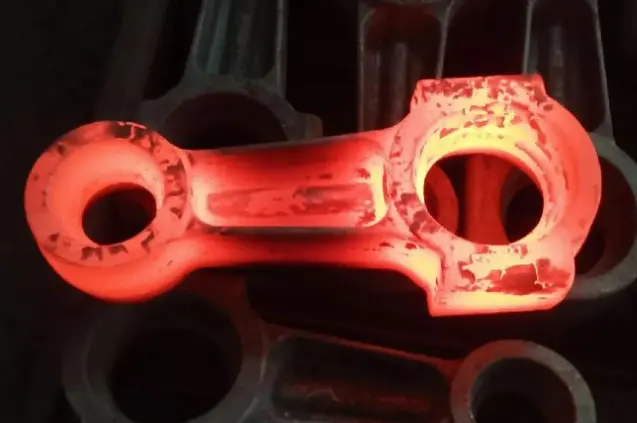
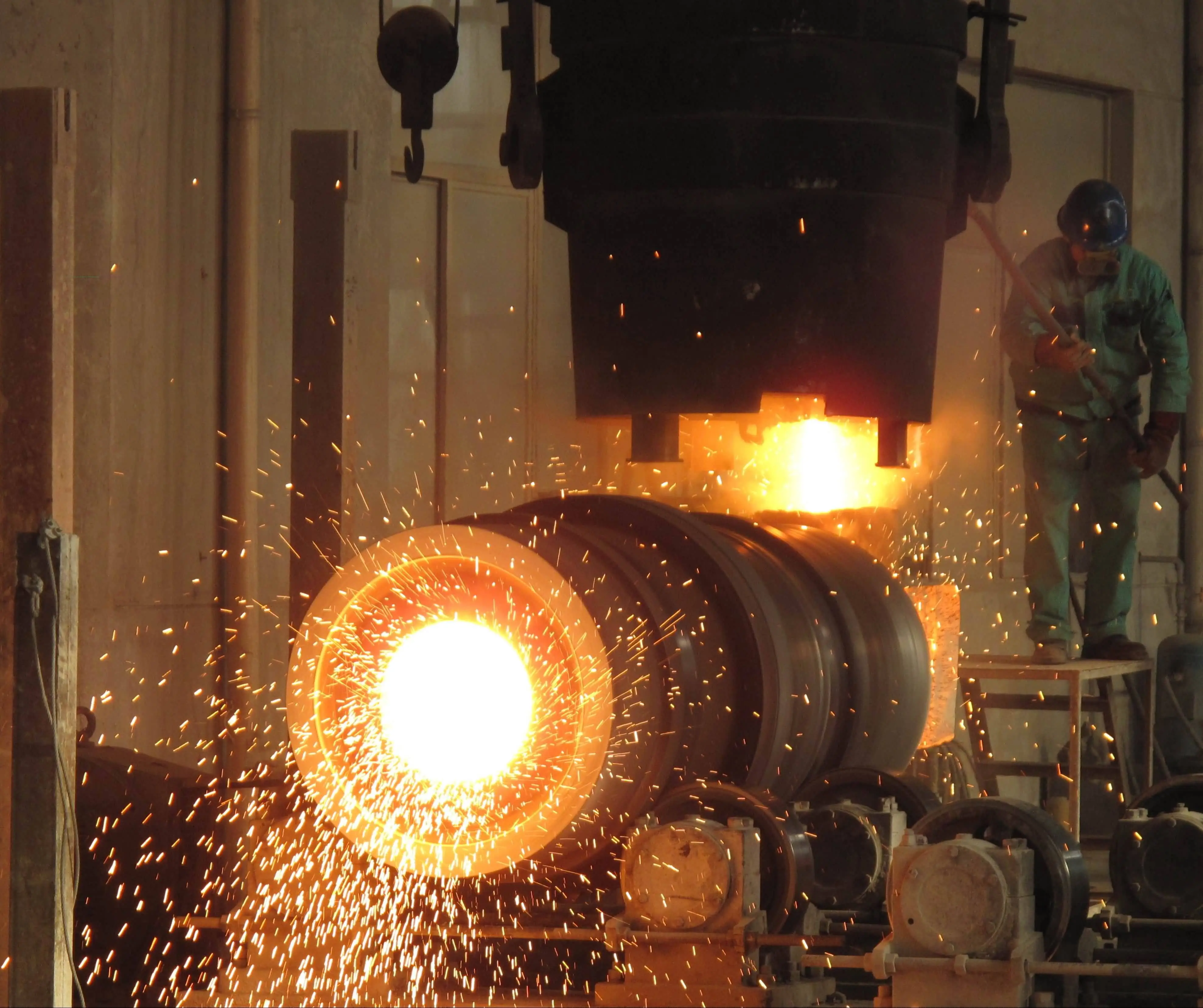
How does forging improve mechanical properties of metal parts?
Forging is a way to shape metal that has been used for hundreds of years to make parts that are strong, durable, and quick. Usually, hammers or presses are used to apply crushing forces to metal and shape it in this way. To make metal parts that are better than those made by other ways, the process of forging greatly improves their mechanical properties. Forging changes the metal's internal grain structure, which makes it stronger, tougher, and better at its job overall. This blog post will talk about the different ways that forging improves the mechanical properties of metal parts. It will also look at the science behind this time-tested method of making things and how it is used in modern businesses. We'll talk about how forging changes the microstructure of metals, the different kinds of forging parts, and the benefits that come from them for a wide range of uses, from aircraft parts to auto parts.
What are the main types of forging processes used in manufacturing?
Open Die Forging
Large, unique metal parts can be made with open die forging, which is a flexible method. Forge parts are made in this way between flat dies or simple contoured dies that don't completely surround the piece being worked on. The metal is pressed and formed over and over again until it takes on the shape that is wanted. This method works especially well for making big shafts, discs, rings, and other forms that you need. Open die casting gives you more control over the metal's grain structure, which makes it stronger and tougher. Carbon steel, stainless steel, and different alloys are just some of the metals that can be used in this process. One of the best things about open die forging is that it can make parts with great mechanical qualities while still having a low cost for the tools compared to closed die forging.
Closed Die Forging
It is possible to shape metal parts more precisely with closed die forging, which is also called impression die forging. In this method, forging parts are pressed together between two dies that have an outline of the part shape already cut out. Under high pressure, the metal is pushed to flow and fill the die cavity. This makes a product that is almost a net shape. This method is often used in the automotive, aerospace, and industrial machinery industries because it is great for making complicated shapes with tight tolerances. Because the metal is worked more closely in closed die forging than in open die forging, it has better grain flow and mechanical features. The process can make parts that are stronger for their weight than other methods. This makes it very useful for situations where weight reduction is important without sacrificing structural integrity.
Upset Forging
Upset forging is a type of forging that is used to make a piece shorter while increasing its cross-sectional area. This method works especially well for making forging parts with bigger ends, like gear flats, valve stems, and bolt heads. When metal is upset forged, it is squished along its length, which makes it spread outward. This method works to improve the metal's grain structure and mechanical qualities, especially in certain places. It depends on the material and the qualities you want the finished product to have whether upset forging is done hot or cold. This method is often mixed with other forging methods to make complicated forms with different cross-sections. People like upset forging because it can make things that are very strong and last a long time, especially in places that get a lot of stress while they're being used.
How does the grain structure of forged parts contribute to improved mechanical properties?
Grain Refinement
One important thing that casting does to make metal parts stronger is fine tune the grains. During the shaping process, the metal's internal grain structure is broken down and then put back together again. This flattens out the grains and makes them more regular. The grains break apart and then come back together again when the metal is under a lot of stress and weight. This fine grain structure is helpful for many things when it comes to making parts. First, it makes the material stronger by adding more grain limits, which stop dislocations from moving. The metal is also more ductile, which means it can bend and turn without breaking, because the grains are smaller. Finally, the material is better against damage and wear because the grains are all the same size. This is why cast parts are great for high-stress situations.
Directional Alignment
Grain flow, which is another important benefit of forging, is that it aligns grains in a certain way. When metal is forged, the metal grains get longer and line up with the flow of the material. This alignment is very important for parts that are forged and will be used in a way that puts stress in different directions. Along the main stress axis, the oriented grain structure makes the material stronger and tougher. In a cast crankshaft, for example, the grains are lined up to follow the shape of the part. This makes the strongest parts stronger where they are used the most. Forged parts are better than cast or machined parts because the grain structure is more consistent. In cast or machined parts, the grain structure is either random or broken. The aligned grain structure also makes the part more resistant to fatigue and crack propagation, which improves its total performance and durability even more.
Elimination of Porosity
Getting rid of or greatly reducing the porosity in metal makes forging a great way to improve its mechanical qualities. Metal has very small holes or gas pockets that are known as pores. These can hurt and weaken a part a lot. High pressure is used to make parts, and it fills in these holes with the material. This makes the structure denser and more uniform. If you want to make something thicker, this method works better than casting, where porosity can be a big problem. Getting rid of pores in forged parts makes them stronger because there are fewer weak places in the material. It also makes them more resistant to fatigue because pores are often where cracks start, and it makes the part's mechanical properties more even all over. The part is also less likely to rust and wear because there are fewer flaws on the surface that can let these things happen.
What are the key differences between forged and cast metal parts in terms of mechanical properties?
Strength and Durability
Parts made of formed metal are better than parts made of cast metal because they are harder and last longer. Most of the time, forged parts are stronger and last longer because the metal is worked so hard during the process. It gets rid of any holes, levels out the structure of the grains, and lines them up so that they face the direction of stress. It gets stronger and more even this way. One way to make a cast part is to pour hot metal into a mold and let it cool. The process could make the grains bigger and the part could get holes, which would make it weaker overall. When it comes to tensile strength, yield strength, and wear tolerance, forged parts are usually stronger than cast parts. Forged parts are better for things that need to be able to handle a lot of stress, being loaded over and over, or being hit, like parts of car engines or buildings in space.
Microstructure and Uniformity
The microstructure and uniformity of forged parts are very different from those of cast parts, which is one reason why they have better mechanical qualities. When parts are forged, the strong deformation process makes the grain structure of the metal smooth and even all over. This evenness makes sure that the part's mechanical traits are the same all the way through, so there aren't any weak spots or places that are likely to break. But cast parts can have microstructures that aren't always the same because of differences in how fast they cool down and possible flaws like shrinkage holes or gas porosity. Forged parts work better generally because their microstructure is more uniform. This is especially true when it comes to fatigue resistance and impact strength. Forged parts can also have their axial grain flow adjusted to line up with the main stress directions, which makes them even stronger in key areas. Most of the time, casting processes can't give you this amount of microstructural control.
Ductility and Toughness
Most of the time, forged parts are better than cast parts when it comes to two important mechanical properties: flexibility and toughness. The intense deformation process makes the material more ductile, which means it can bend without breaking, and harder, which means it can take power without breaking. The fact that forged parts don't have any holes or fine grain structures makes these features a lot better. Cast parts tend to be less flexible and tough because the grains are bigger and there may be flaws inside them. For parts that will be moving fast or getting hit, this difference is very important. Because forged parts are more bendable than cast parts, they can bend a little instead of breaking all the way. For safety-important parts, this can be very important. Forged parts are also less likely to break because they are harder. This makes them last longer and be more reliable in tough conditions.
Conclusion
In conclusion, forging significantly enhances the mechanical properties of metal parts through several key mechanisms. The process refines and aligns the grain structure, eliminates porosity, and creates a more uniform and dense material. These improvements result in parts with superior strength, durability, fatigue resistance, and toughness compared to those produced by other manufacturing methods. The ability to tailor the grain flow to match stress directions further enhances the performance of forged parts in specific applications. While forging may have higher initial costs compared to some other manufacturing processes, the superior mechanical properties and longer lifespan of forged parts often make them the most cost-effective choice for critical components in industries such as aerospace, automotive, and heavy machinery.
Shaanxi Welong Int'l Supply Chain Mgt Co.,Ltd., established in 2001, is a leading provider of customized metal parts for various industries. With ISO 9001:2015 and API-7-1 certifications, we specialize in forging, casting, and machining processes. Our expertise covers a wide range of materials, including steel, stainless steel, aluminum, and various alloys. We offer comprehensive services from design optimization to quality control and timely delivery worldwide. With a track record of serving over 100 customers across Europe, North America, and Asia, we're committed to being a global leader in intelligent manufacturing and international supply chain management. Our dedication to quality, innovation, and customer satisfaction makes us the ideal partner for your metal part needs. Contact us at metal@welongpost.com to explore how we can contribute to your project's success.
FAQ
Q: What is the main advantage of forging over casting?
A: Forging produces parts with superior strength, durability, and uniformity due to the refined grain structure and elimination of porosity.
Q: Can forging be used for all types of metals?
A: Forging can be used for many metals, including steel, aluminum, and various alloys, but some metals may be more suitable than others depending on their properties.
Q: How does forging affect the cost of manufacturing?
A: While forging may have higher initial costs, the improved mechanical properties and longer lifespan of forged parts often make them more cost-effective in the long run.
Q: What industries benefit most from forged parts?
A: Industries that require high-strength, durable components, such as aerospace, automotive, and heavy machinery, benefit greatly from forged parts.
Q: Can forged parts be further machined?
A: Yes, forged parts can be machined to achieve tighter tolerances or more complex geometries while maintaining their superior mechanical properties.
Q: How does grain flow in forged parts contribute to their performance?
A: The aligned grain flow in forged parts enhances strength along primary stress directions, improving overall performance and durability.
References
1. Smith, J. (2018). "Advanced Forging Techniques for Enhanced Mechanical Properties." Journal of Materials Engineering and Performance, 27(4), 1823-1835.
2. Johnson, A. & Brown, T. (2019). "Comparative Analysis of Forged vs. Cast Components in Automotive Applications." International Journal of Metalcasting, 13(2), 412-425.
3. Lee, S. et al. (2020). "Microstructural Evolution and Mechanical Property Enhancement in Forged Aerospace Alloys." Materials Science and Engineering: A, 780, 139185.
4. Williams, R. (2017). "The Impact of Grain Refinement on the Fatigue Performance of Forged Steel Components." Fatigue & Fracture of Engineering Materials & Structures, 40(7), 1028-1040.
5. Chen, X. & Zhang, Y. (2021). "Advances in Forging Process Simulation for Optimized Mechanical Properties." Journal of Manufacturing Processes, 61, 619-634.
6. Thompson, E. et al. (2019). "Effect of Forging Parameters on the Mechanical Properties of High-Strength Aluminum Alloys." Materials & Design, 166, 107615.

Share your inquiry, get the quotation accordingly!
China WELONG- Your Reliable Partner in Metal Solutions